What are the disadvantages or challenges of owning an electric car in South Africa?
Find out more about the challenges facing South Africans looking to buy into the electric revolution. It's not all doom and gloom, but there are a few unique challenges that only South Africans will experience.


It's no secret that AutoTrader is pro-electric vehicles (EV) and genuinely do enjoy being a part of this pivotal time in history where things are changing and developing at a rapid rate. We have a host of information on our site to help you understand EVs a little better as well as some great reviews in case you're thinking of making the switch.
Related: Are Electric Car Batteries Dangerous?
The fact that you're here, reading this, means that you have some interest in this relatively new take on mobility, even if the EV pre-dates the internal combustion engine (ICE) car! Your curiosity is justified and with nearly each and every manufacturer looking at introducing an electric product in the near future, it's good that you want to find out more.
Can electric cars work in South Africa?
It's human nature to be weary of something new, something that you don't necessarily understand in its entirety, and it's no different when you start hearing about these new ways of doing something that you've been doing one way all your life. This concern is compounded by the unique challenges that we face in South Africa, which begs the question; what are the disadvantages or challenges of owning an electric car in South Africa? Let's explore some of these.
1. Loadshedding
Scheduled power cuts and blackouts are, sadly, a way of life in South Africa at this moment. Loadshedding may help alleviate strain on the national power grid but it does little to keep us connected, lit up, fed, or charged. With EVs relying on a constant stream of electricity when charging, this is one of the first concerns when considering an electric car. While this initially sounds like a deal breaker, a slight shift in thinking will show that it's not as bad as one thinks.
Loadshedding doesn't last all day and while it can affect us for several hours, the remaining hours often give you more than enough time to charge an EV. If you treat your EV like a cellphone and plug it in every night after using it, not only will you just be topping it up, reducing the amount of time that is required to charge it, but you will awake to a full charge every morning will your full range available to use.
2. The price
Even before you own and EV, the price is the largest hurdle one has to overcome. EVs are exorbitantly taxed in South Africa as they are fully imported and subject to a much higher tax than their ICE counterparts. Locally, ICE vehicles see an amount of 18% imposed, while EVs face a tax of 25%. Once all is said and done, nearly 40% of the vehicle's price can be attributed to tax alone. This makes many EVs prohibitively expensive.
Manufacturers are trying every day to get the government to incentivise the purchase of EVs or at least relax their laws regarding the importation of such, but no joy has been experienced as yet. We will see more affordable EVs entering the market in the coming months, but one cannot expect the same tech and range from the products.
With that in mind, it's worth remembering that the running costs of EVs are significantly lower than that of ICE vehicles, and EVs have only a few moving parts, so they don't need services. Service intervals are few and far between, with only the brakes needing attention every few years. EV owners spend, on average, 60% less than ICE owners per KM travelled.
3. Limited range
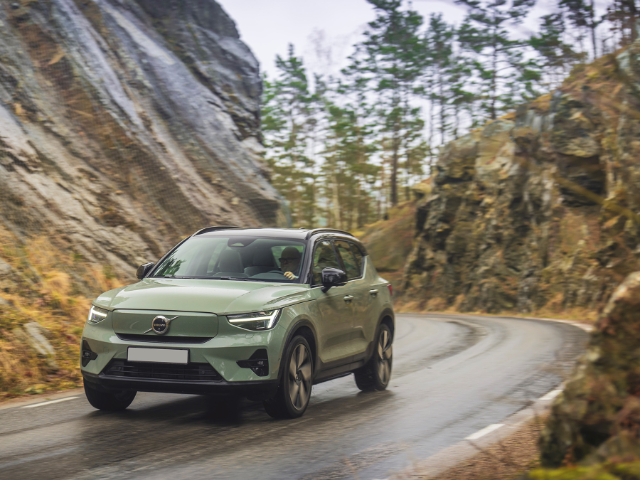
South Africa poses the unique challenge of having our major city centres and towns fairly spaced out with very little between them. Add to that the fact that we love driving through our country, especially on holiday, and the somewhat compromised range of an EV makes it no longer viable. Or does it?
We've shown that you can drive from Johannesburg to Cape Town in an Electric car, and while it does add some time to the journey, it's entirely doable and works out cheaper than flying or driving a petrol/diesel-powered vehicle.
Electric vehicles generally offer between 200 and 500 km range, depending on the size of the batteries and the number of motors those batteries need to supply. However, if you keep your car topped up as mentioned above, the daily commute shouldn't be a struggle at all.
4. Lack of public charging points
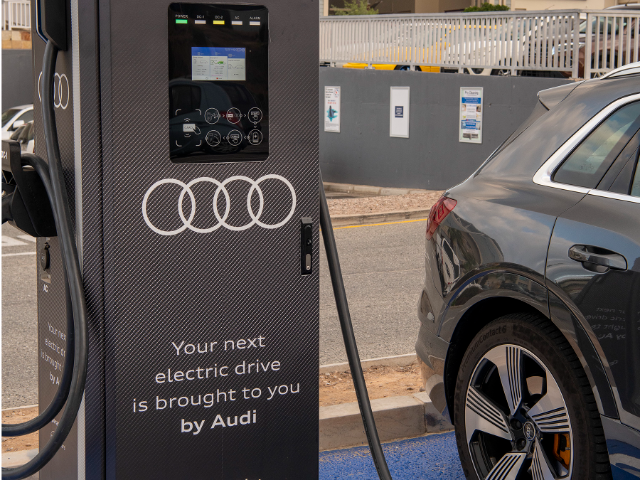
One of the early misconceptions around EVs is the public charging infrastructure. While this is true for many of the outlying areas, you may be pleasantly surprised at how many charging points there actually are. The network of charging points grows on a daily basis and local entity, GridCars, has been instrumental in rolling out charging points are key locations. Many of the dealerships that sell EVs are also equipped with public charging points and we're seeing many key malls and shopping centares installing them as well.
This shouldn't be a major concern though as the installation of a wallbox charging point in your garage at home should be used 99% of the time, with public charging points only used on longer journeys or when you've done more driving than anticipated. The fact that you can charge an electric car at home is probably the most convenient factor of EV ownership - it works out cheaper too!
Conclusion
There are several key challenges that face the local consumer when it comes to electric car purchase and ownership of an electric vehicle. While some of these are justified and valid, many have alternative solutions and or require a slight change in ownership behaviour.
It's easy to see why so many are against the mass adoption of EV and while much of this can be attributed to misinformation, it's difficult to deny that currently, a hybrid vehicle is the best 'one-size-fits-all' approach for those looking to save money on running costs and not have to alter their lifestyles too much.