
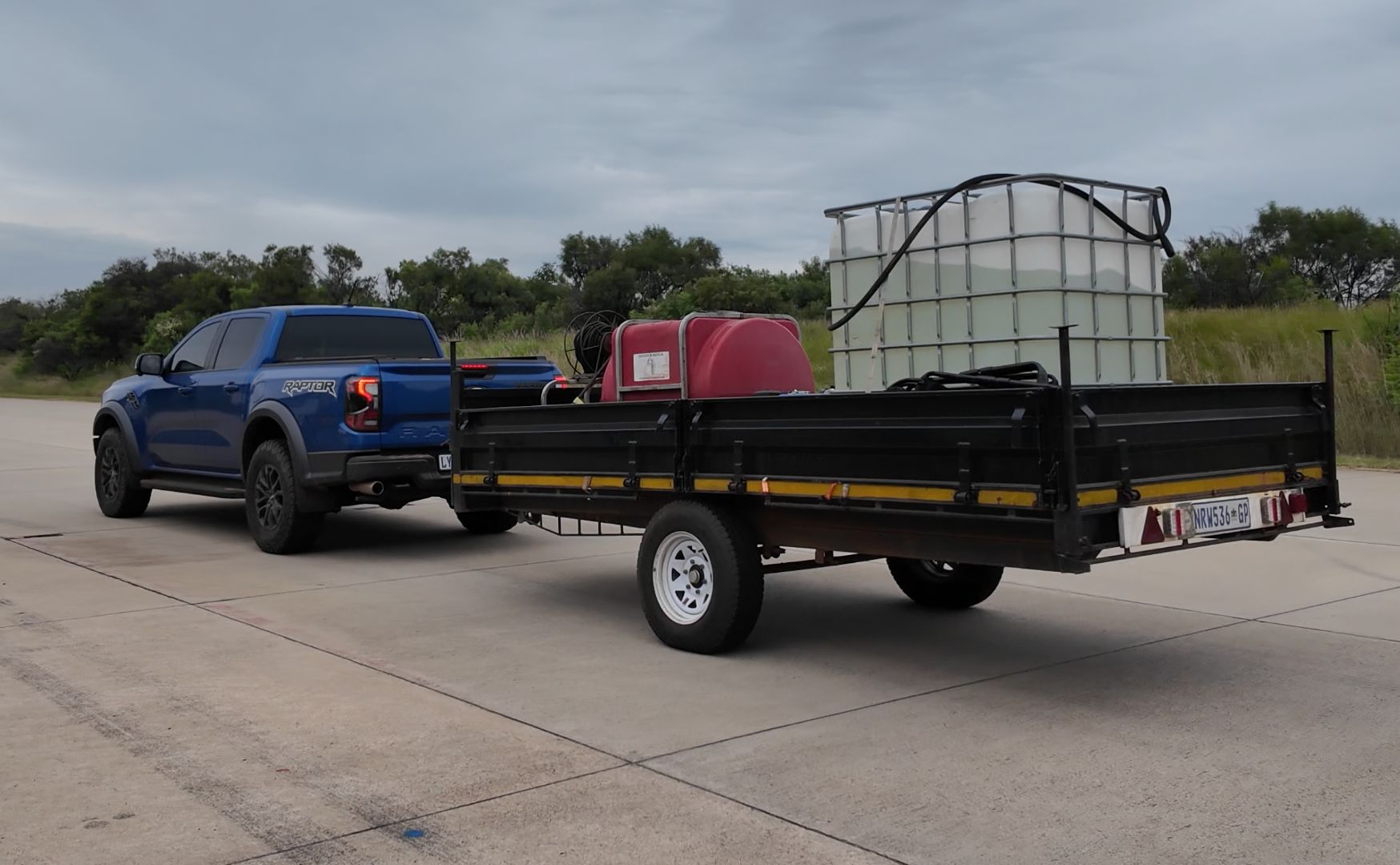
Do you consider yourself a pro at towing? Even when you need to reverse? Various Ford models come with a technology package called Pro Trailer Backup Assist that will make towing much easier for the novice and the experienced. Here is what you need to know about Ford's Pro Trailer Backup Assist and just towing before heading out for your long weekend.
Related: Can you tow with a Ford Everest Wildtrak?
But before you hitch your trailer, caravan or boat, remember that you can sell your car quickly and easily on our website here and search for new or used Ford models on AutoTrader here.
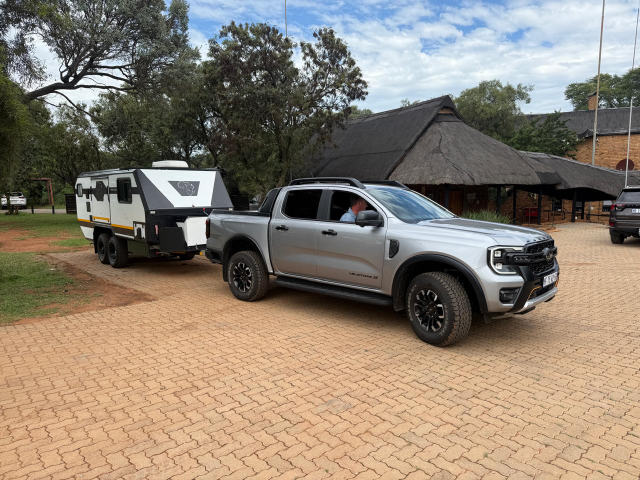
Things to consider before you tow
To tow safely and legally, there are some points of consideration beyond your experience. Firstly, the weight of the trailer and vehicle, as well as the tyres that your trailer or caravan is using. Let us explain why.
Weight
Every vehicle has a TARE weight (the weight of a standard vehicle with all its fluids but only 10 litres of fuel in the tank and no passengers). But each vehicle also has a Gross Vehicle Mass (GVM) weight rating, which is the total weight a vehicle with passengers and luggage is allowed to be. Then you have GCM or Gross Combined Mass, which is the combined weight of the vehicle, a trailer, and all the passengers and luggage. This is where most people who tow might misunderstand.
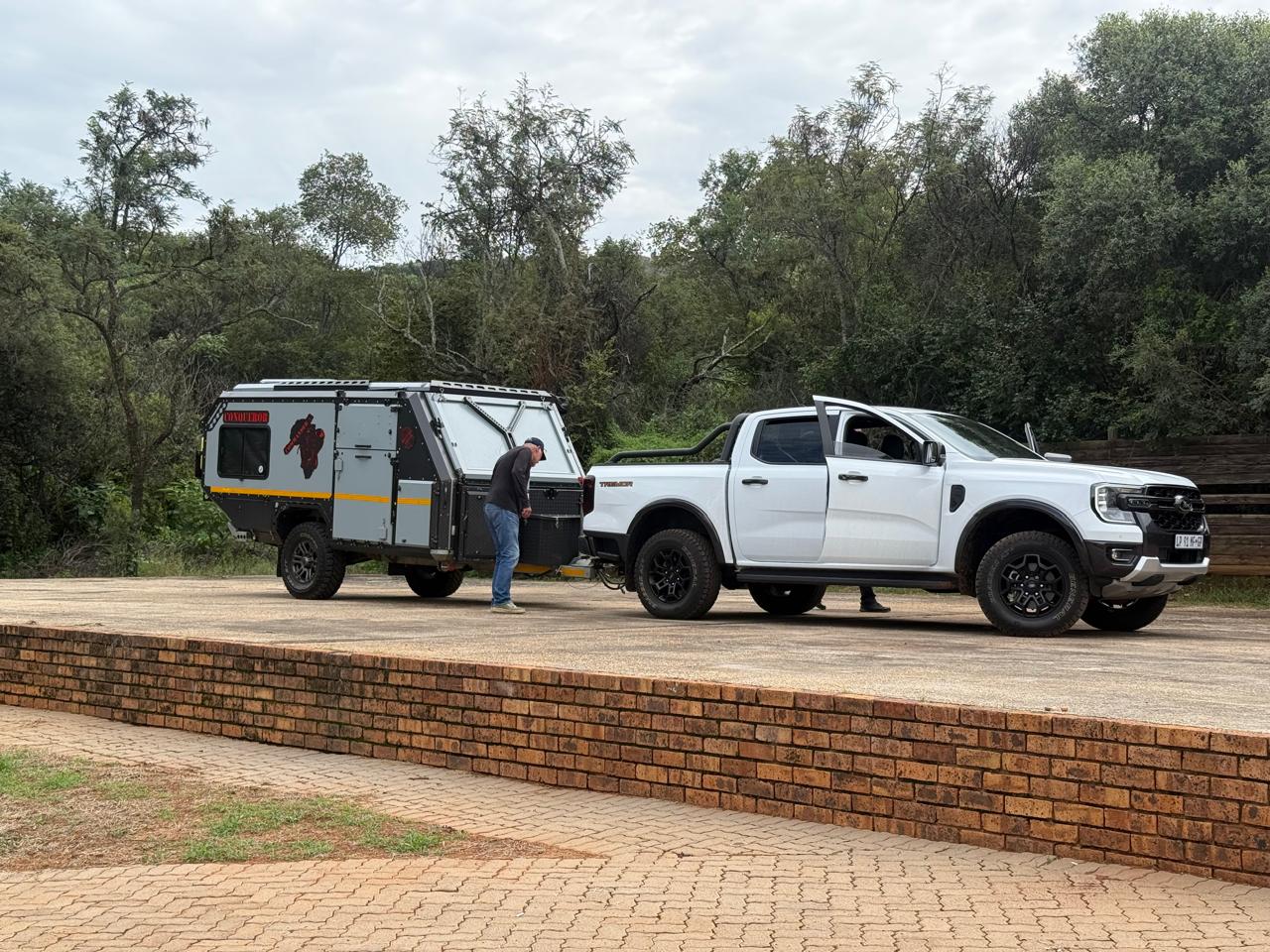
If we use our long-term test vehicle, the Ford Ranger Tremor, this model, according to www.duoporta.co.za, has a Gross Combined Mass (GCM) rating of 6 500 kg. But if you have a full tank of fuel and fully load the Ranger Tremor up to its allowed Gross Vehicle Mass (GVM) of 3 320 kg, that means that you only have 3 180 left for towing. However, given that any trailer with a gross combined mass over 750 kg needs to be braked, which could be rather heavy, not much could remain for actual luggage.
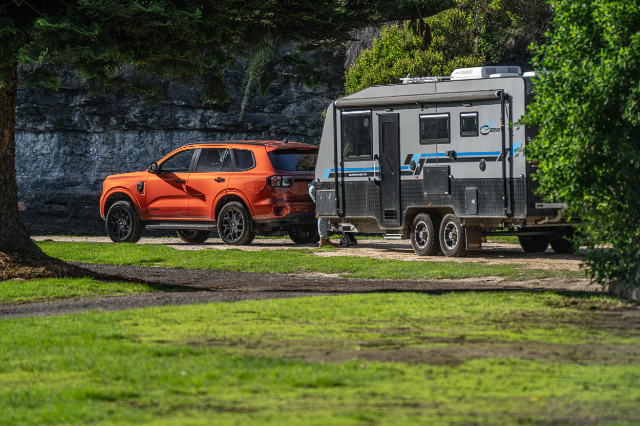
Thus, be very aware of the weight of your vehicle and the trailer and what you legally and safely can and cannot tow. Also, remember to consider your passengers and their luggage in the load bay.
Tyres
For your safety and, of course, for legal purposes, it is essential to inspect your trailer or caravan tyres to ensure you do not overload or drive too fast for the tyres fitted. The overall condition, age and tread are very important, but there are also numbers on the side of your tyres that indicate the maximum load and speed the tyre can drive. In addition to the tyre size, profile, and tread with indicators, numbers indicate the load index and the speed rating symbol.
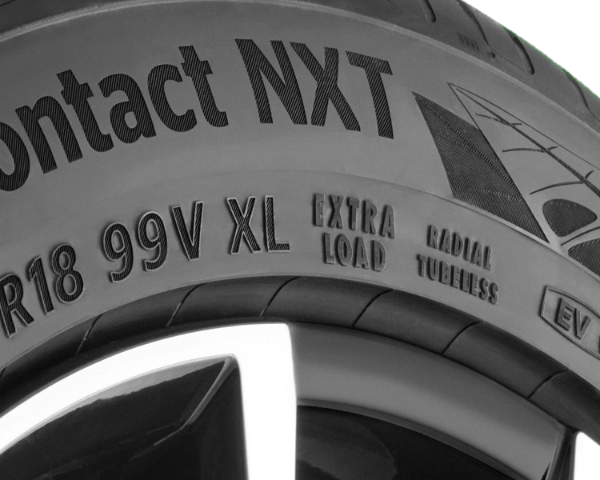
Take, for instance, your tyre's load index is 123 / 120 R; this means that if there is a single tyre on each side of the trailer, you will use the 123 rating, which means each wheel is capable of carrying up to 1 550 kg per tyre and travel up to 170 km/h. If two of these tyres are fitted side-by-side, as you find on trucks or larger trailers, you will use the 120 rating, indicating that each tyre can carry up to 1 400 kg. It is the lack of heat dissipation that reduces the tyre load-carrying capability.

Ford Pro Trailer Backup Assist
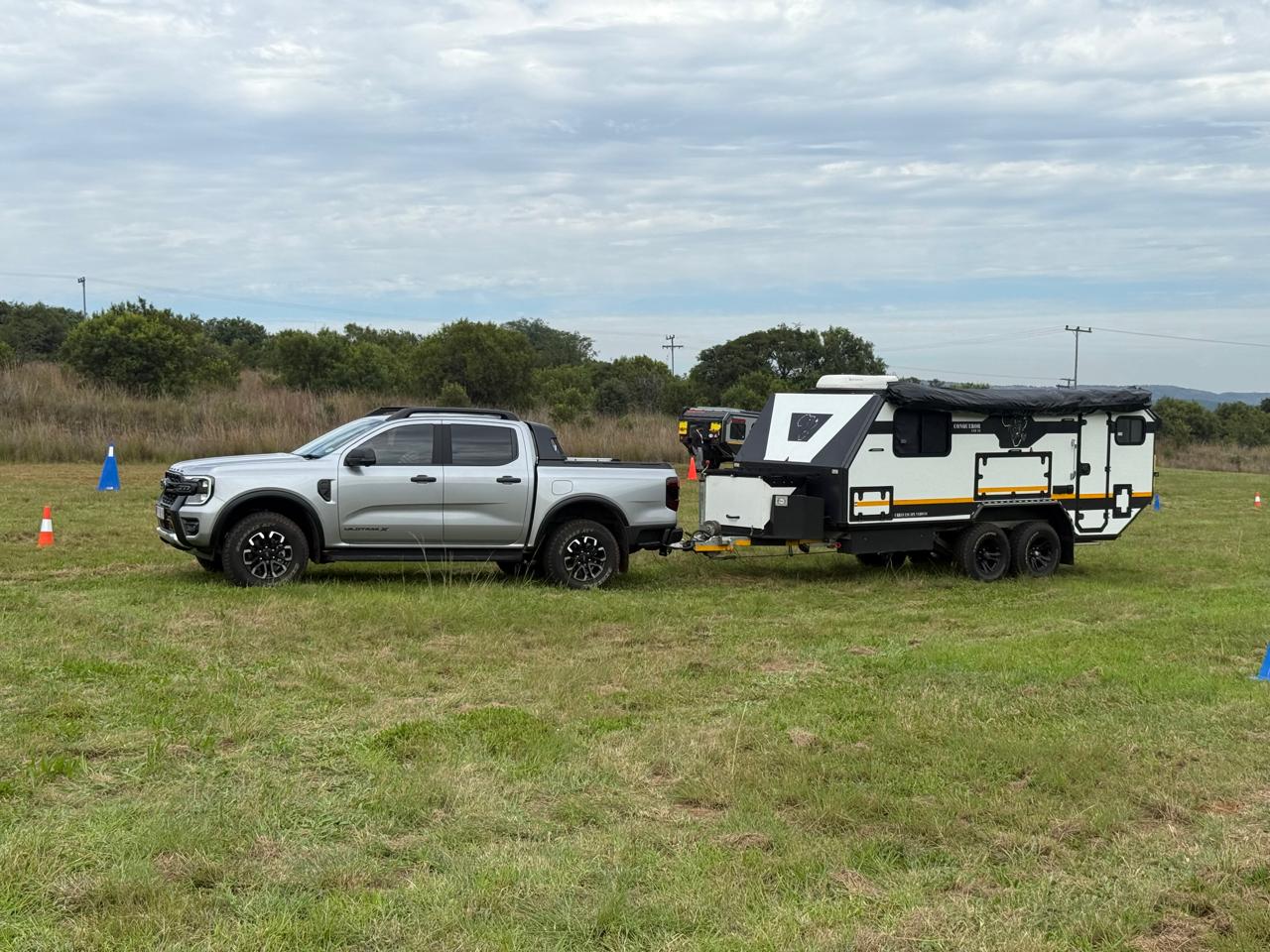
Ford invited us to the Gerotek testing facility outside Pretoria to get first-hand experience with its Pro Trailer Backup Assist systems. During the briefing, it seemed like a tedious exercise; however, once we experienced how easy the system is to set up and the benefits it offers, it quickly became apparent that everyone needs to know about this technology.
Every Ford sold with Pro Trailer Backup Assist comes with three stickers with a chequered pattern that owners must apply to a flat horizontal surface just behind the trailer's tow head. The system uses this point of reference, but more on that later. Reversing to your trailer is made easy with dynamic reverse guides with a centre line, and the camera view can even be changed to a top view for those last few centimetres as you align your tow hook with the trailer hitch.

In the trailer menu accessed from the main home screen, you can add up to 10 trailers to Ford's SYNC system. During the setup, you will be prompted to supply the trailer's length, width, and height, among other details. You can also name the trailer for future selection. Once you have correctly connected the trailer, you can activate it in the menu on the Ford SYNC system.
Once you have selected the trailer, either through the infotainment screen or optionally through your smartphone's Ford SYNC app, will go through a safety checklist. This includes a function where the system will cycle through all trailer lights five times and through voltage checks to ensure all the lights are working. Once all the safety checks have been completed, the system will identify the aforementioned chequered sticker, which will provide the system with the position and angle of the trailer at all times. You are now set up and ready to tow.
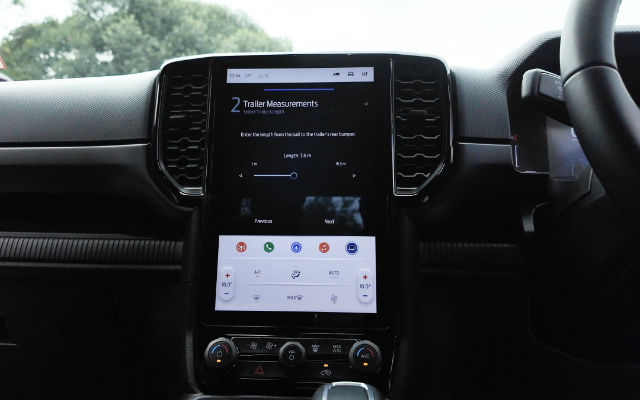
Why does the system require all of this information, you might ask? While safety features such as Rear Park Distance Control and Rear Cross Traffic Alert are deactivated because of the trailer, the Ford BLIS or Blind Spot Information System will extend its coverage to compensate for the trailer length. The BLIS system can cover a distance of up to 17 meters for those with slightly longer trailers or caravans. In addition, the information provides the safety systems, such as the Trailer Sway Control, with more details for more accurate control, but more on this later.
A complimentary feature of the BLIS system is the rear-facing cameras fitted under the side view mirrors. While driving, once the driver activates the indicators, the camera in the direction indicated will display on the infotainment screen to provide the driver with a clear view down the side toward the rear of the vehicle to avoid either changing lanes. At the same time, there is a vehicle or curb with the trailer wheels on sidewalks. Should a vehicle be alongside the Ford, the BLIS warning indicators will activate in the side view mirror and on the infotainment screen to warn the driver that there is a vehicle alongside. Once again, this covers the trailer, too.
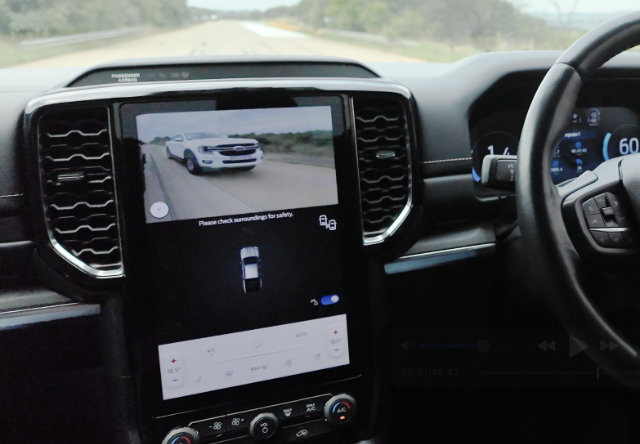
But how does the system benefit you while parking? Both side cameras activate once the transmission is reversed to provide a clear view of what is happening behind the car. When the Pro Trailer Backup Assist is activated, you no longer use the steering wheel to steer the vehicle. Instead, the central drive-mode dial is used. But let us explain.
The system is calibrated to permanently straighten the trailer and vehicle; the driver must control the reversing speed with the accelerator pedal. But if you want the trailer to sway right, you turn this central dial to the right, and the steering will automatically input the correct direction to turn the trailer in the right direction and vice versa. But how does it do this? Well, that aforementioned chequered sticker provides the system with the position and angle of the trailer.

When you turn the dial more, the directional input will come more from the vehicle. However, because the car knows the position of the trailer, it will try to prevent a jackknife scenario, although it will also warn the driver should the angle be dangerously close. This makes reversing a trailer much more intuitive and safe.

Trailer Sway Control
Trailer sway occurs when, while driving, the trailer starts swaying from side to side, causing the vehicle to sway, too. This can be very dangerous, and the driver can easily lose control of the vehicle. Various factors can cause this phenomenon, but an incorrectly loaded trailer is the most common. To mitigate this scenario, you can distribute the weight evenly, with approximately 60% of the load positioned over the front half of the trailer and the centre of gravity slightly ahead of the trailer axle.
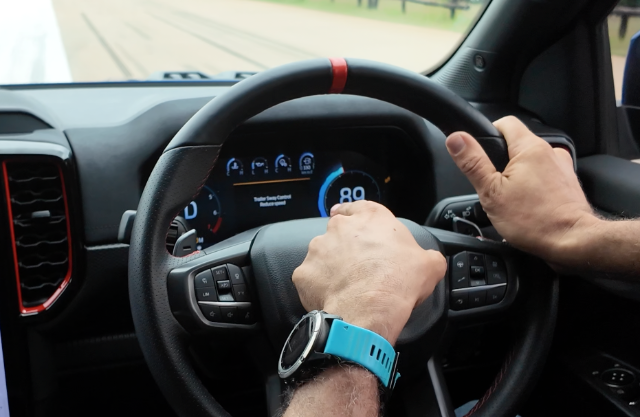
But if your vehicle comes with Trailer Sway Control, the system will activate when the yaw, pitch and roll sensors detect that the trailer is causing sway. The system works with the vehicle's Electronic Stability Control. It will first warn the driver on the driver instrument cluster that it detects trailer sway and will help the driver reduce the vehicle speed. Should the sway worsen, the system automatically applies ABS braking to individual wheels while reducing engine power.
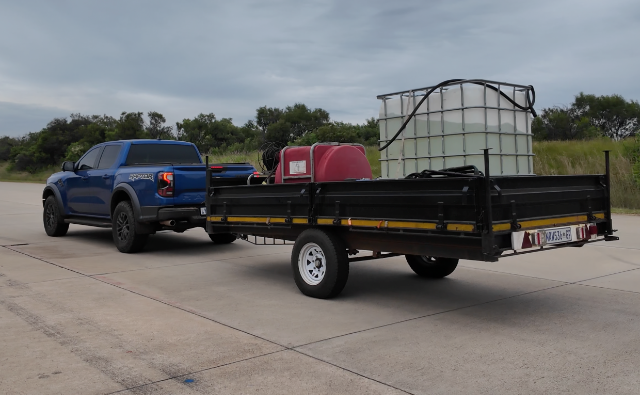
This stabilises the sway and gives the driver more control over the situation. After regaining control, proceed with caution and at a reduced speed. However, it is recommended that the trailer be repacked and weight distributed correctly at the first safe opportunity.
Conclusion
While most drivers will not tow regularly, the Ford Ranger models we used during the day impressed us with built-in features that are ready to assist. Even with simulating trailer sway, which could have gone poorly rather quickly, the technology managed to regain control test after test, instilling confidence. But while you might own a Ford Ranger or Everest fitted with all these features, you must ensure that you tow safely and legally.