Complete guide to buying, owning and selling your Toyota Hilux
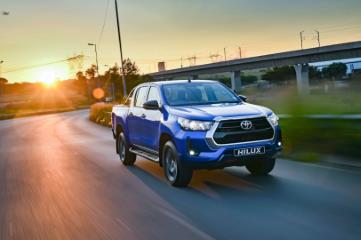
From a slow start as a purely commercial vehicle, the Toyota Hilux has, over decades, expanded its appeal to cover personal transport and leisure use on top of becoming the default workhorse in our market. We look at this popular model’s recent history and tell you everything you need to know about buying, owning and selling your Toyota Hilux.


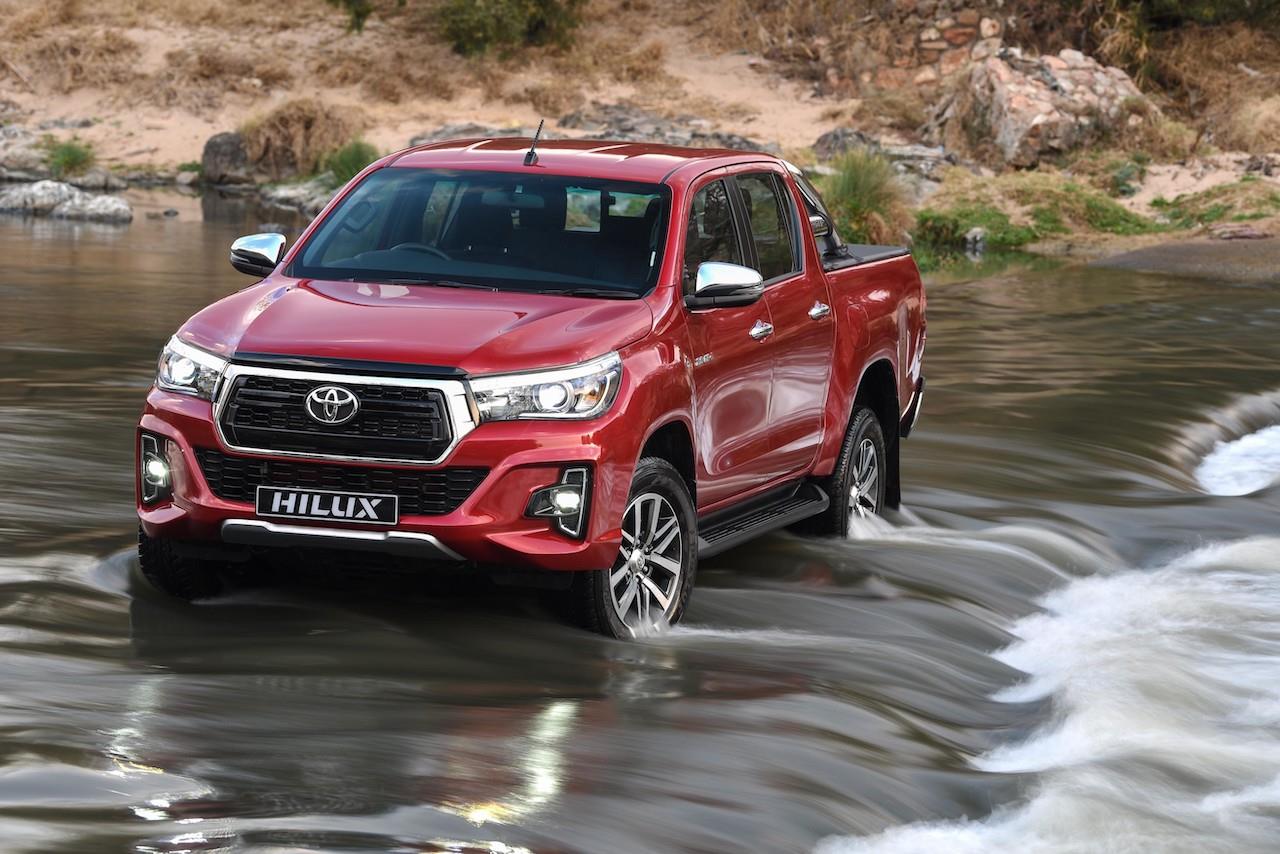
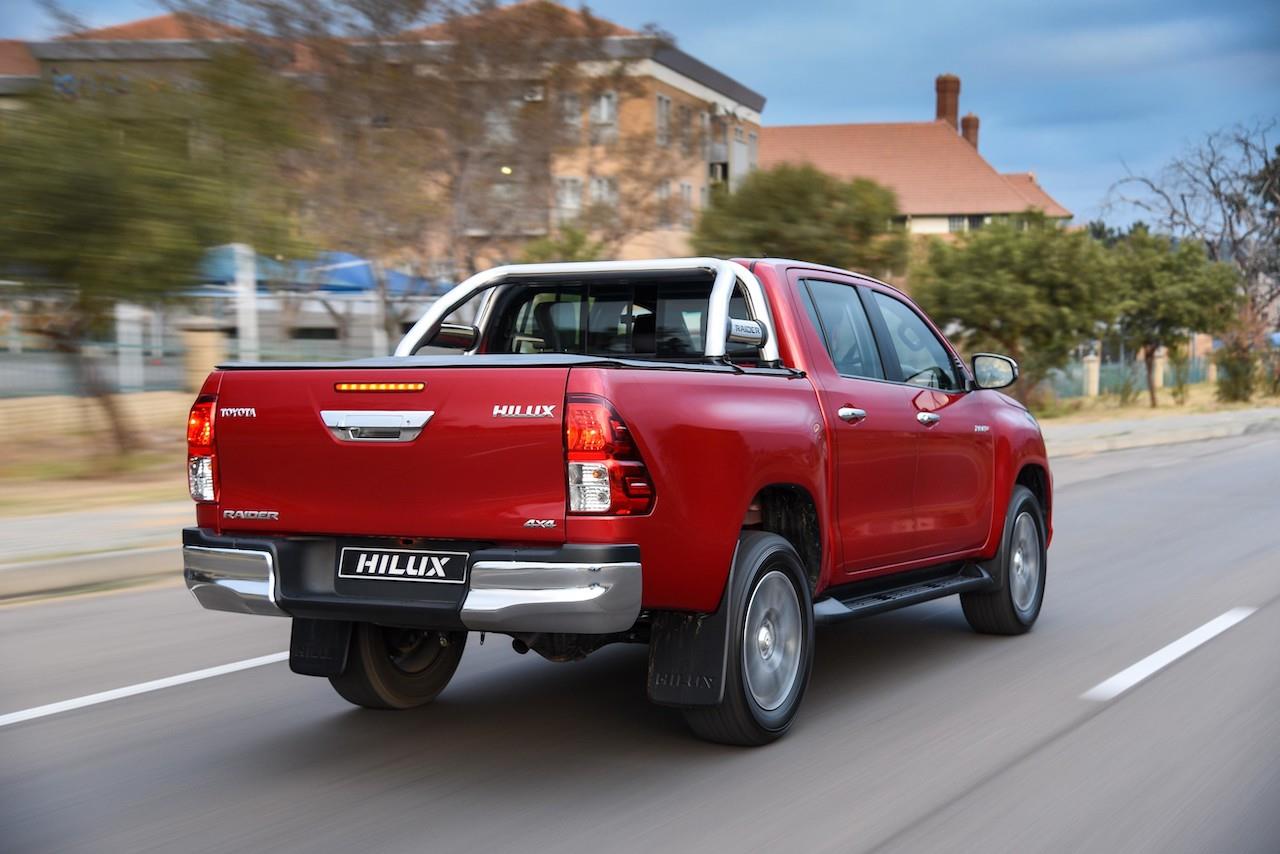
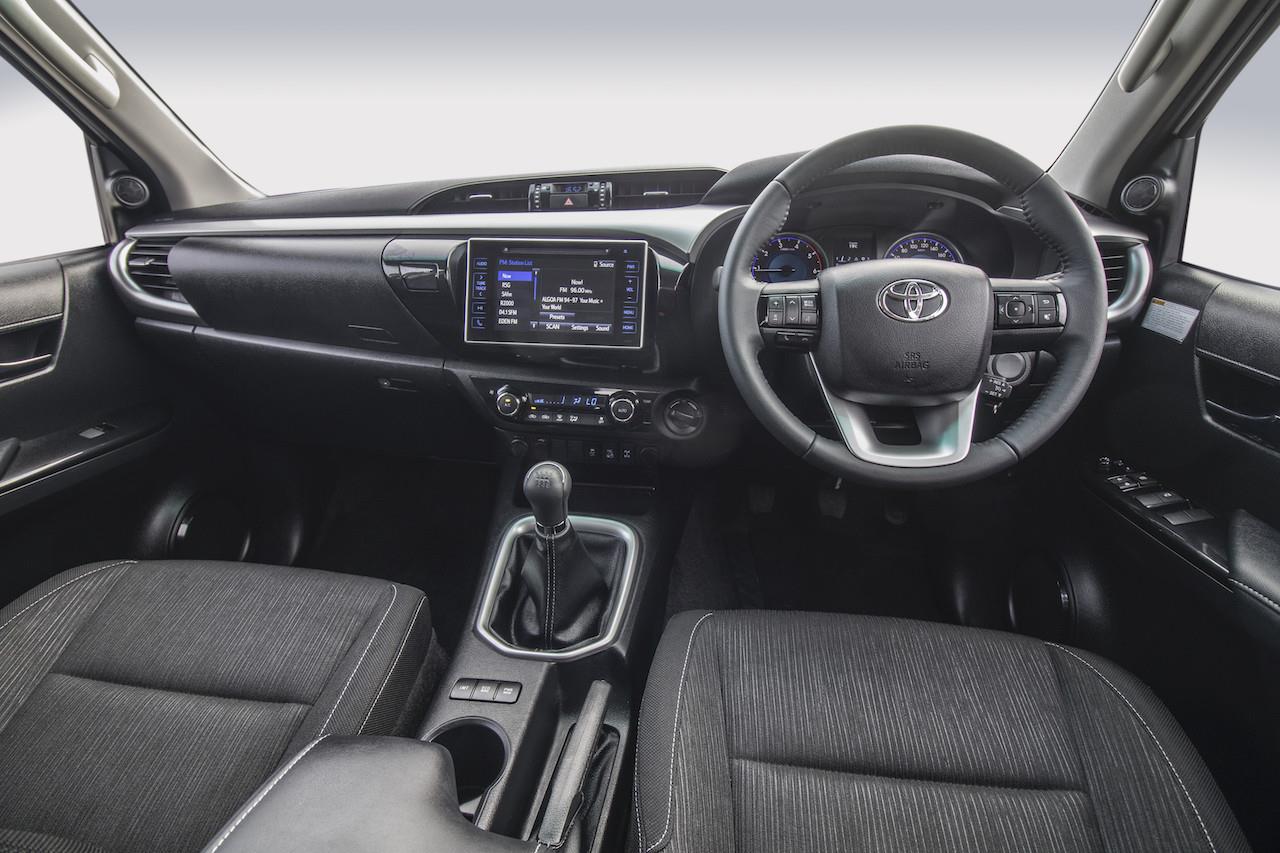
5 key facts you should know about the Toyota Hilux.
Don’t let the leather upholstery and touchscreen audio system fool you into thinking that the Toyota Hilux has become a soft-roader. Even though the Hilux has become a bit of a status symbol over time, thanks to the proliferation of high-trim family- and leisure-oriented variants, it’s still a workhorse at its core. This reality brings advantages and disadvantages, but one thing’s certain: the Hilux is still a very accomplished commercial vehicle.
1. Today’s Hilux can be had with a choice of three petrol engines, or with types of diesel in three output levels. The two four-cylinder petrol engines are aimed at the entry-level workhorse market, but the diesels cover the whole spectrum from bare-bones utility to luxurious family transport.
2. All variants have the same wheelbase length (and similar overall length), but there is a choice between narrow and wide body styles, along with three cabin designs.
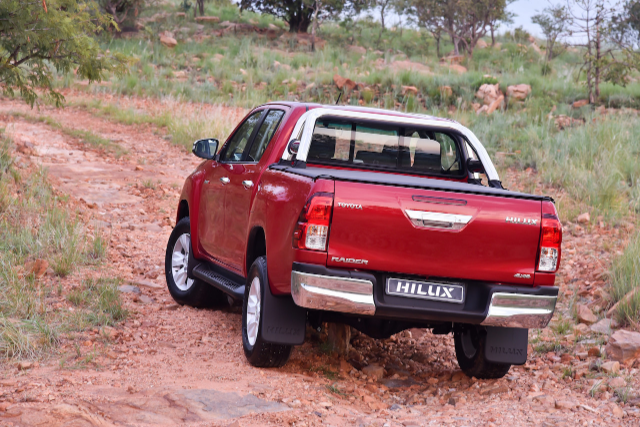
3. Four-wheel drive models are very accomplished off-road but are probably surplus to most buyers’ requirements. That’s why almost all trim levels can be had with either rear- or four-wheel drive.
4. While the current generation (launched in 2015) has all-new diesel engines, the three petrol powertrains are largely carry-over units from the older model.
5. The current Hilux is more of a thorough redesign of its predecessor than it is an all-new vehicle but there is very little in the way of parts interchangeability between the last two generations.
Summary
It’s amazing that Toyota managed to keep the previous-generation Hilux competitive for as long as they did because its opponents started catching up to this class leader about halfway through the old model’s 11-year lifecycle. But, when the current generation arrived in 2015, it represented a real all-around improvement on the outgoing model. While its market segment is getting ever more competitive, today’s Hilux still manages to capitalize on its historic popularity, capability, and reputation for innate toughness to lure buyers into showrooms. Meanwhile, judicious updates have kept the current Hilux up to date and added new equipment and some special editions along the way.
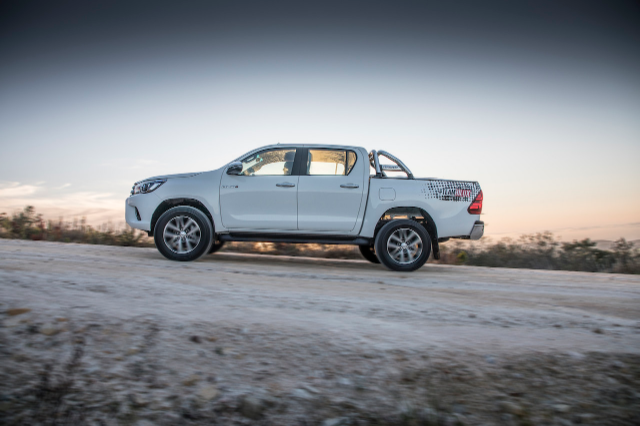
Pros & cons
Pros
- Being a Hilux, durability and longevity is practically a given. This means added appeal to those buyers who’ll use their Hiluxes to do real work, and who demand a long service life and cost-effective maintenance.
- Seeing as the Hilux was designed to cope with hard work and bad roads, normal use as a family vehicle won’t even come close to stretching its abilities to handle anything you can throw at it.
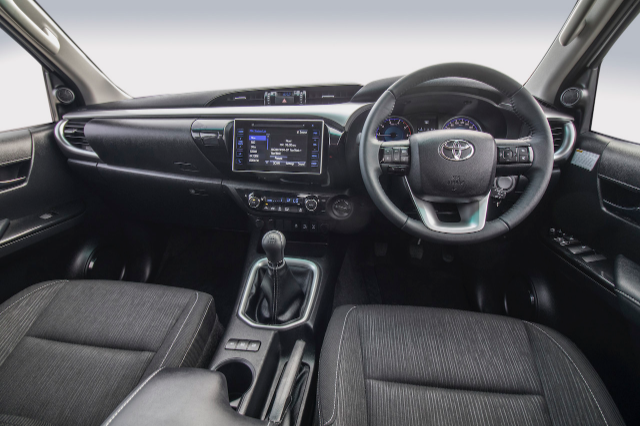
- One of the current model’s major improvements over its predecessor is in overall comfort and refinement. Many of its opponents still better it in this regard, but the Hilux is nonetheless a lot easier to live with than its predecessors.
- There’s also a fair amount of modern technology on offer, with touchscreen audio systems, standard navigation and LED lighting available in some derivatives.
- Even in entry-level trim, the Hilux is equipped with ABS, 3 airbags (two frontal and one for the driver’s knees), and power steering. Higher-trim variants add more safety features and nicer toys, to go with their higher list prices.
- 4x4 derivatives are pretty much unstoppable off-road, which explains their popularity with the bundu-bashing crowd.
- In the same vein, aftermarket accessories are widely available and generally of high quality, which will help those who wish to customise their Hilux beyond the original design parameters.
Cons
- Overall refinement isn’t bad for a vehicle of this type, with noise levels being particularly well-contained. Ride quality isn’t a strong suit for any Hilux, however, in spite of the improvements applied to the current generation model.
- OEM Toyota service- and spare parts are surprisingly expensive, as are dealership labour rates. However, once the warranty has expired, owners can choose from a plethora of workshops that’ll be able to keep their vehicles maintained at a very reasonable cost.
- Even after its 2015 redesign, double-cab variants don’t have a huge amount of rear-seat space.
- Considering their standard equipment levels, new Hiluxes are priced near the top of their category, so value for money isn’t that great at face value. However, strong value retention alleviates some of the pain of those steep-ish pricetags.
- Because of strong demand across South Africa’s borders (and other reasons such as parts compatibility with other Toyota commercial vehicles), Hiluxes are unfortunately very popular theft- and hijacking targets.
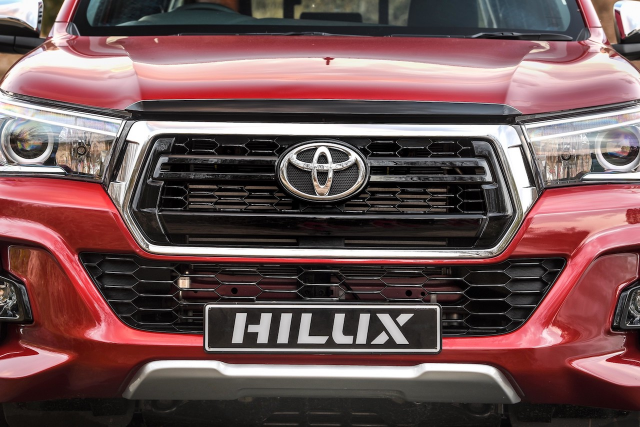
Similar cars to the Toyota Hilux
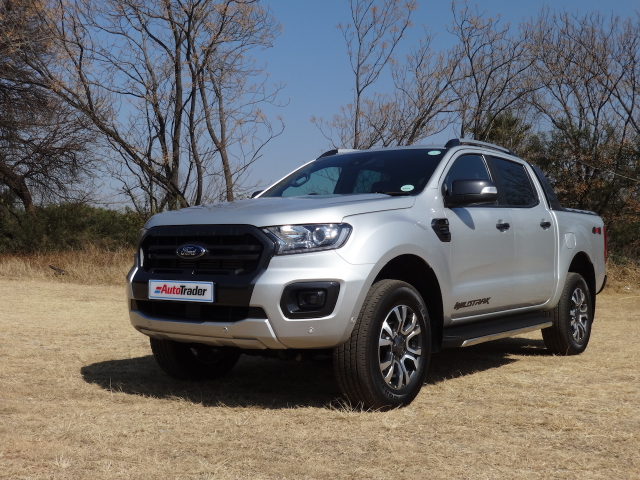
Available with a similar range of body styles and closely matched under the bonnet, Ford’s Ranger is the Hilux’s closest competitor. As with the Hilux, the Ranger range opens up with competitively-priced, low-trim single-cab workers, and runs upwards from there. High-spec Rangers offer more driver aids and an all-around upgrade in available technology, however, and costs about the same as their Hilux opponents.
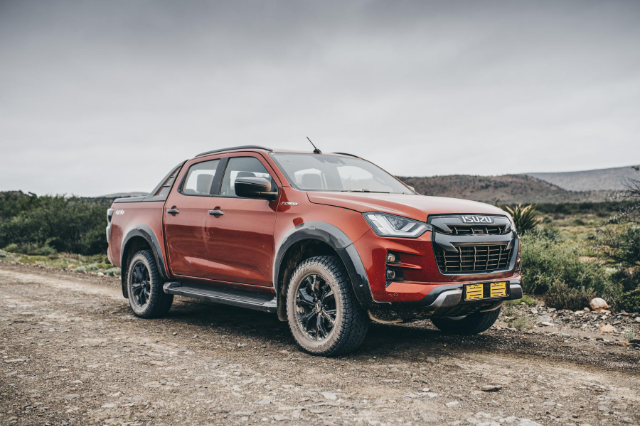
Formerly known as the Isuzu KB series, Isuzu changed the name to D-Max and has recently introduced a brand new model range. It lags behind the Hilux on refinement and power but has proven its durability and robustness over the years. V-Cross D-Max variants do offer many of the Hilux’s creature comforts, however, and at a bit of a discount. It’s also a great workhorse, which challenges low-end Hiluxes in their ability to rack up intergalactic mileages.
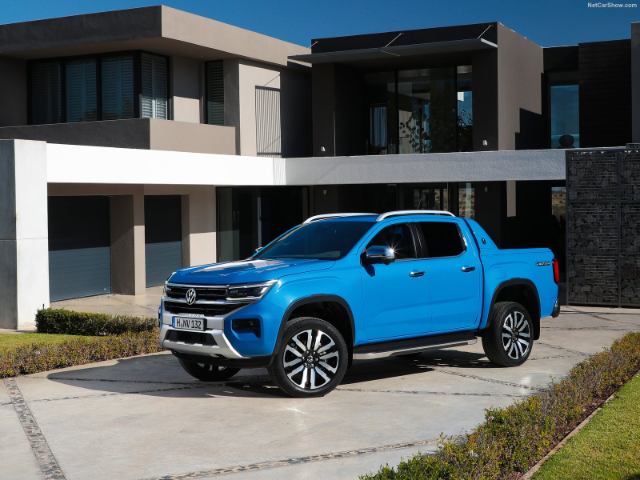
As the current line-up of Amarok models is nearing the end of its lifecycle, the Hilux range faces stiff competition as some information about the upcoming model has been revealed and it is going to provide a strong challenge.
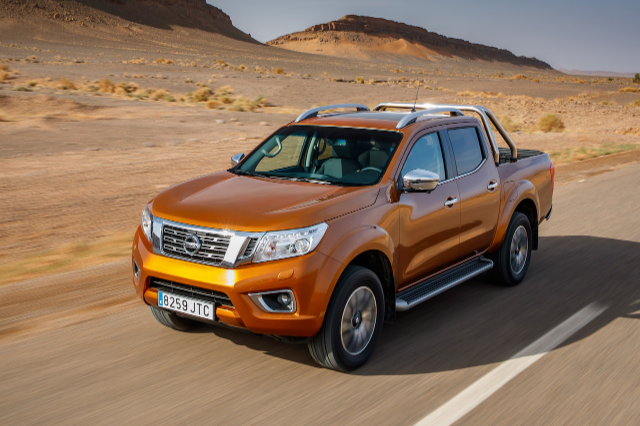
Sadly overlooked by many bakkie buyers, the Navara offers a nice blend of the best features you’ll find in any of its opponents – and with high-value pricing, to boot. It’s also more comfortable, thanks to its coil-sprung rear suspension, but the Navara range doesn’t cater for the workhorse market at all.
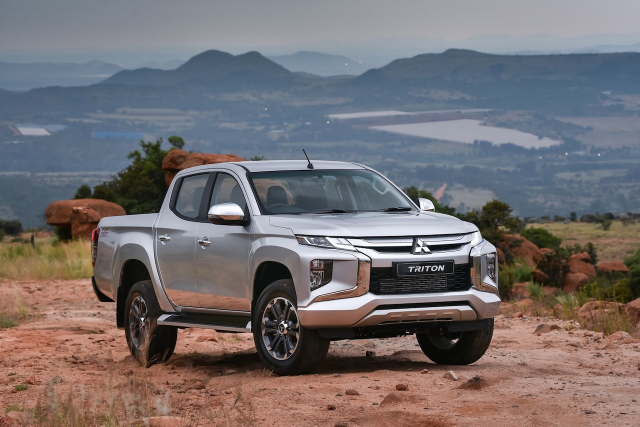
Priced around the same point as the high-trim (leisure-oriented) Hilux variants, the Triton doesn’t compete in the workhorse market, either. Instead, the Triton takes aim at the more-expensive Hilux and Ranger models with plenty of modern gizmos fitted as standard. 4x4 Tritons benefit from the best 4WD system out there and feature a host of electronic driver aids as well.
New vs used Toyota Hilux
Barring mild model updates since 2015, today’s Hilux is still essentially the same vehicle as early examples of the current generation, with no mechanical changes or dramatic spec level increases along the way. However, the 2018 range update has brought an added focus on safety features in low-trim variants, while high-trim Hilux variants now benefit from LED main beams and upgraded infotainment systems.
Thanks to its stellar reliability record, there’s no reason to fear buying an older Hilux, even if the standard warranty for 3 years or 100 000 km has expired. The only real reason to insist on a new Hilux (apart from the new-car smell) is if you want a full-term warranty and service plan for 9 services (90 000 km).
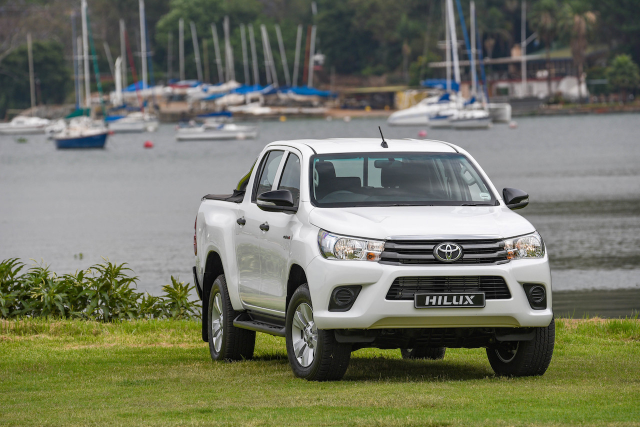
But, once the warranty has expired, there’s only one reason to keep servicing the car at the dealership: the service history. A dealership service record may stand you in good stead when it’s time to sell your Hilux because such a full-service record could add a few thousand Rands to your trade-in value. You will however have to pay dealership labour rates, which are generally much higher than those of non-OEM (private) service centres.
Fortunately, it’s not hugely expensive to service a Hilux, and, because they’re so easy to work on, it’s easy to find a workshop that’ll perform basic servicing and even more-major repairs for a lot less than you’d pay at a dealership.
There’s one major upside to buying an older Hilux, though, and that’s the initial purchase price. These vehicles don’t depreciate very quickly, but their values do nonetheless drop once they’re a few years old or the odometer shows some distance.
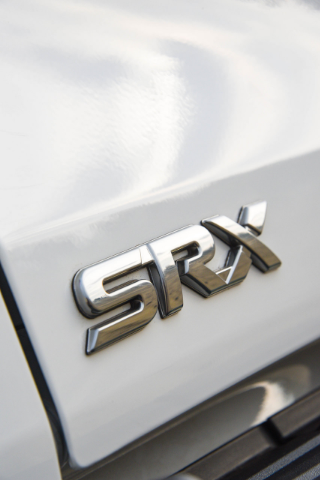
Take the relatively undesirable single-cab 4x2 2.4GD-6 SRX as an illustration: 2016 examples with fairly high mileages still command surprisingly high prices and are only about 25% less expensive than brand-new (2019) examples of the same variant. This can largely be ascribed to the perpetual popularity of Hilux models, but also demonstrate the high regard in which these vehicles are held in the used-car market. Consequently, value retention has become a major drawcard for Hilux buyers.
Car finance options explained
Leasing
This will be the preferred option for fleet managers, because it’s a pay-to-use deal, but can also be applied to private buyers. The buyer pays a certain amount every month for the privilege of using the car, and simply returns the car at the end of the lease period. These cars then generally end up on pre-owned floors or at fleet sales outlets. Lease agreements generally run for a fixed term, and most of them have an upper yearly mileage limit, so make sure that such an arrangement will fit your usage needs.
The upside of leasing is that the burden of getting rid of the used car is removed from the buyer and that there will be no further outstanding balance to settle, such as the buyer would find in a hire-purchase deal with a residual value. The downside is that the buyer will end up paying for a car for a number of years, without gaining any tangible asset to show for the money afterwards.
Hire purchase and balloon payments
Some dealerships and finance houses also offer different financing options, with hire-purchase transactions being the most common. In such a transaction, the buyer will put down a deposit on the car, and then proceed to pay monthly instalments until the car, along with interest and finance charges, are fully paid.
So far, so good. But hire-purchase deals have a nastier sibling, which works in mostly the same way, but with an outstanding value at the end of the payment period. Many financing deals are structured in this way, to make the monthly instalments seem more affordable, but in the longer term, these deals end up costing a lot more than they do at first glance.
This outstanding value is known as a residual value or a balloon payment and is usually due along with the final “normal” instalment. Most banks and finance houses will allow the buyer to finance this residual value, provided the car’s value is still higher than the outstanding amount (which, given the Hilux’s very high resale values, should not pose any obstacle).
Average costs of running a Toyota Hilux
While it’s impossible to accurately predict how much any vehicle will cost to run in the short- or long term, it’s worth noting a few points:
- All new Hilux vehicles come standard with a warranty for 3 years or 100 000 km, along with a service plan for 9 services (which translates to 90 000 km). Toyota also offers a warranty extension plan for used cars at a comparatively small cost, so enquire at your dealership about this option.
- Non-OEM servicing will be considerably less expensive than having it performed by a dealership, but we’d recommend using genuine (OEM) service parts even at non-OEM workshops.
- The Toyota Hilux is considered to be a very high-risk vehicle by the insurance industry, purely based on its popularity among the long-fingered. As a result, a Hilux may be surprisingly expensive to insure. However, remember that an insurance risk profile is extremely dependent on the car’s storage security arrangements, areas in which it travels, and even total mileage accumulated in business use.
- Various Hilux variants deliver similar fuel consumption figures, depending on the drivetrain- and bodyshell choices. Single-cab, manual-gearbox 4x2 diesel should return mid-7 L/100 km averages, rising to more than 12 L/100 km for the automatic 4.0 V6 4x4 double-cab. However, most diesel derivatives should average better than 9.5 L/100 km, unless fitted with off-road accessories, roof racks, or bigger wheels.
- Depending on the trim level, Hiluxes feature anything from 205/70R15 commercial-vehicle tyres to 265/60R18 all-terrain items as a standard. As a result, replacement tyre costs vary widely across the model range, although all derivatives should extract at least 80 000 km from a set of tyres (excepting severe off-roading or potential tyre damage due to poor road conditions).
Where to buy a car
Seeing as the Hilux has been around for years, you’ll be able to find swarms of them at Toyota dealerships, on Automark floors (Toyota’s used-car sales outlet), as well as on used-car showroom floors. Cars will be advertised by individual dealerships, which may be part of larger dealership groups or operate as independent dealers. Either way, each dealer is responsible for their own operations, and it may be a good idea to compare different deals from the various dealerships to find the most beneficial terms for your needs.
How to get the best car deal
You might be surprised to learn that buying a car often has some opportunity for haggling. Don’t imagine that you’ll get a 50% discount off the purchase price, but you might be able to score a few thousand here or there, under certain conditions:
- If the car has been standing at a dealership for a few weeks, chances are that the dealer will be willing to drop his asking price, just to get rid of old stock. This is because old (slow-selling) stock costs them money to keep around, and they might be willing to even accept a smaller profit margin, just to get rid of that specific car. However, dealers say that Hiluxes never linger on the floor for very long, so the chances are slim that this negotiating angle will work.
- If it’s close to a manufacturer’s year-end, there’s added pressure on dealers to sell their allocated quotas of vehicles. This means that the manufacturer might incentivise new vehicle transactions, just to meet yearly sales figures. Keep an eye open for such offers, often advertised as “cash back” or “trade assistance”, and you may just score a great deal.
- Close to the end of the calendar year, or when a model update is imminent, new cars can sometimes be bought with remarkable discounts, to clear dealer inventory of older-specification cars and make room for fresh stock.
- Be aware that “On The Road” fees have been deemed illegal to finance, so insist that the dealer itemise those items on your invoice. Once you have that information, you will be able to negotiate a reduction in those fees.
Maintaining your Toyota Hilux
If you buy a used Hilux with an expired warranty, you can choose to have it serviced and maintained at either the Toyota dealership or at a private service centre. Toyota parts are generally on the expensive side of reasonable from the agents, and dealer workshop labour rates are quite high as well. If your Hilux has an active service plan, you’ll have no reason to take it anywhere else, though, as it’s all included in that perk.
Private (or non-OEM) service centres have much lower labour rates than the agents, and they will have access to second-tier (non-OEM branded, but still produced according to OEM specifications) parts supplies as well. Aftermarket support for Toyota body- and mechanical components are very strong, so you may find that most components can be found at either the agents or from non-OEM parts shops. However, going the non-OEM route may adversely affect your car’s resale value, as this also means that the car won’t have a full dealership service record.
The Hilux has been on the market long enough for any flaws and failings to be fairly well-known. Fortunately, and maintaining the Hilux’s rock-solid reputation, there are very few reports regarding problems with its mechanical components. Even wear items such as clutches and brakes appear to have above-average longevity, which should ease long-term maintenance concerns somewhat.
The only possible point for concern would relate to very high-mileage examples, which may require attention to cam belts or cam-drive chains, and diesel engines which may require their turbochargers or injectors to be re-conditioned or replaced. This is not limited to the Hilux, however, and applies to any used, high-mileage diesel engine.
Selling your car
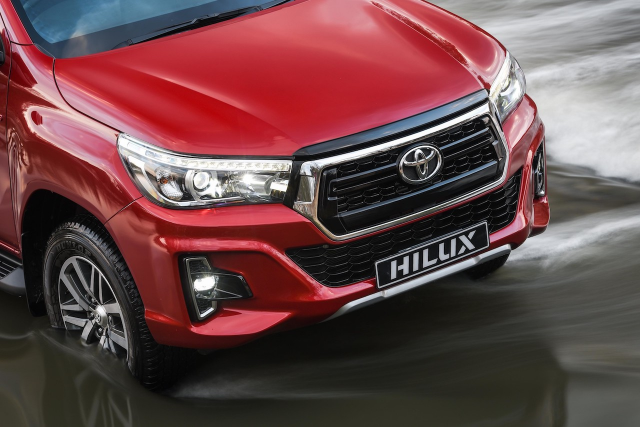
You most likely will be able to get a lot of your money back when you sell your Hilux, especially if you’ve only had it only for a short while. Putting it simply, almost all cars lose value on a continuous basis from the moment they’re first sold, but the Hilux is less prone to depreciation than most others. Depreciation does allow you to find good-condition, low-mileage Hiluxes at mildly discounted rates, though, so you could save a neat bundle by going for a lightly-used bakkie instead of a brand-new one.
There are however some things you could do to get the best price for your car when you decide to sell it.
- The first is simply trading it in on something newer or different. Taking this route will net you a lower value (trade price or thereabouts), but it simplifies the transaction and will be a quicker process.
- Any outstanding balance on your finance agreement will have to be settled first before the proceeds from the sale could go towards a down payment on your next car. For this reason, you should make sure that your trade-in offer (or selling price) is actually more than the amount you still owe on the car, else you’ll just end up deeper in debt than strictly necessary.
- Because the Toyota Hilux is very popular in the pre-owned market, you likely won’t struggle much to sell it privately. This will fetch a higher value than simply trading it in, albeit with some extra effort on your part.
- Do your research: Your expectation of your car’s worth may not necessarily align with the dictates of market forces. Knowing beforehand how much a car like yours is worth in the used market will give you a better idea of the real value of your car, giving you a target for which to aim.
- Presentation is key: If you arrive at a dealership (or want to show your car to a private buyer), but your Hilux looks like it just drove across the Kalahari or through a mud pit, it will appear as though the poor thing has had a hard life. This will make for a lower offer from the buyer. The same applies to minor dings and scratches, where a little bit of pre-sale repair work can give the car’s value a useful boost.
- Keep records: This pertains to service records, as well as any maintenance- or repair work that’s been performed on the vehicle. If you can prove that your car was well-maintained and regularly serviced, the buyer will be less concerned about unknown flaws hiding below the surface. This should lead to a better offer when you want to sell it.
Want to know more about the Hilux? We've got your back!
Celebrating 50 years of Toyota Hilux in South Africa – The Legend 50 and Hilux GR-Sport.
Our Top 10 must-know facts about the Hilux.
Interested in knowing more of the Hilux's model history? Click here for a quick history lesson.
Undecided about buying a petrol- or diesel Hilux? This guide will help you make the right choice.
Click here to see how the Hilux stacks up against its competitors in the value for money stakes.
How does the Hilux infotainment system measure up against those of its competitors?
Read our review of the Hilux 2.8GD-6 here.
Curious about the differences between OEM and independent dealers? We explain it all.
We answer up your questions about "On The Road fees"
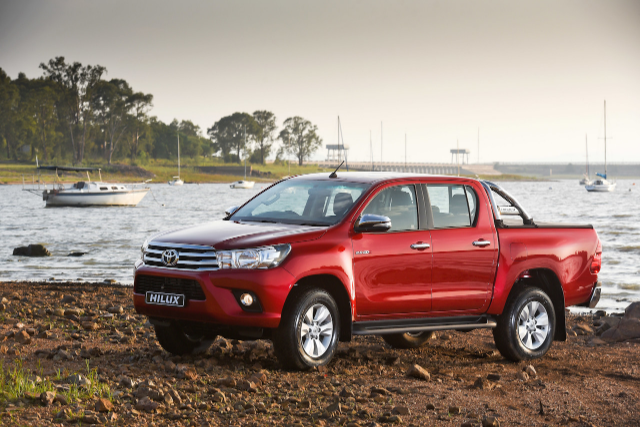
Looking for a current-generation double-cab Hilux? We have a horde listed right here.