Can I just add oil to my car instead of getting an oil change?
Changing the engine oil on your vehicle as per manufacturer recommendations is important for the longevity of its engine, but what about simply topping up your oil regularly, will this suffice in place on an oil change? We answer this question in this article.

The basics of the internal combustion engine (ICE)
The internal combustion engine (ICE) that has been used in vehicles for well over a century now has evolved dramatically, but in essence, is still the same in principle. The popular method for simplifying what a four-stroke engine does to produce power is ‘…suck, squeeze, bang, blow’.
This means that the engine takes in a predetermined mixture of air and fuel, it then compresses it creating a controlled explosion before expelling it from the exhaust. For this process to take places billions of times throughout an engine’s lifecycle, proper lubrication is required, which is where engine oil comes in.
What is engine oil?
Engine oil comes in many forms, but all of it serves the same purpose, to ensure that there is minimal friction and therefore, less wear on the metal components within an engine. Since heat causes friction, without proper lubrication, an engine will wear quickly and stop functioning, making motor oil vitally important. Engine oils come in the form of a mineral, semi-synthetic and fully synthetic oil and various viscosities made to suit various climates and engine types.
Mineral oils, or those extracted from the earth, are cheaper to buy and will not last as long as semi-synthetic, which include a combination of synthesized oil and mineral oil, while the longest lasting and most expensive engine oils are the synthetic type, which most modern vehicle engines run on. To determine which oil should be used for your engine.
Can I just add oil to my car instead of getting an oil change?
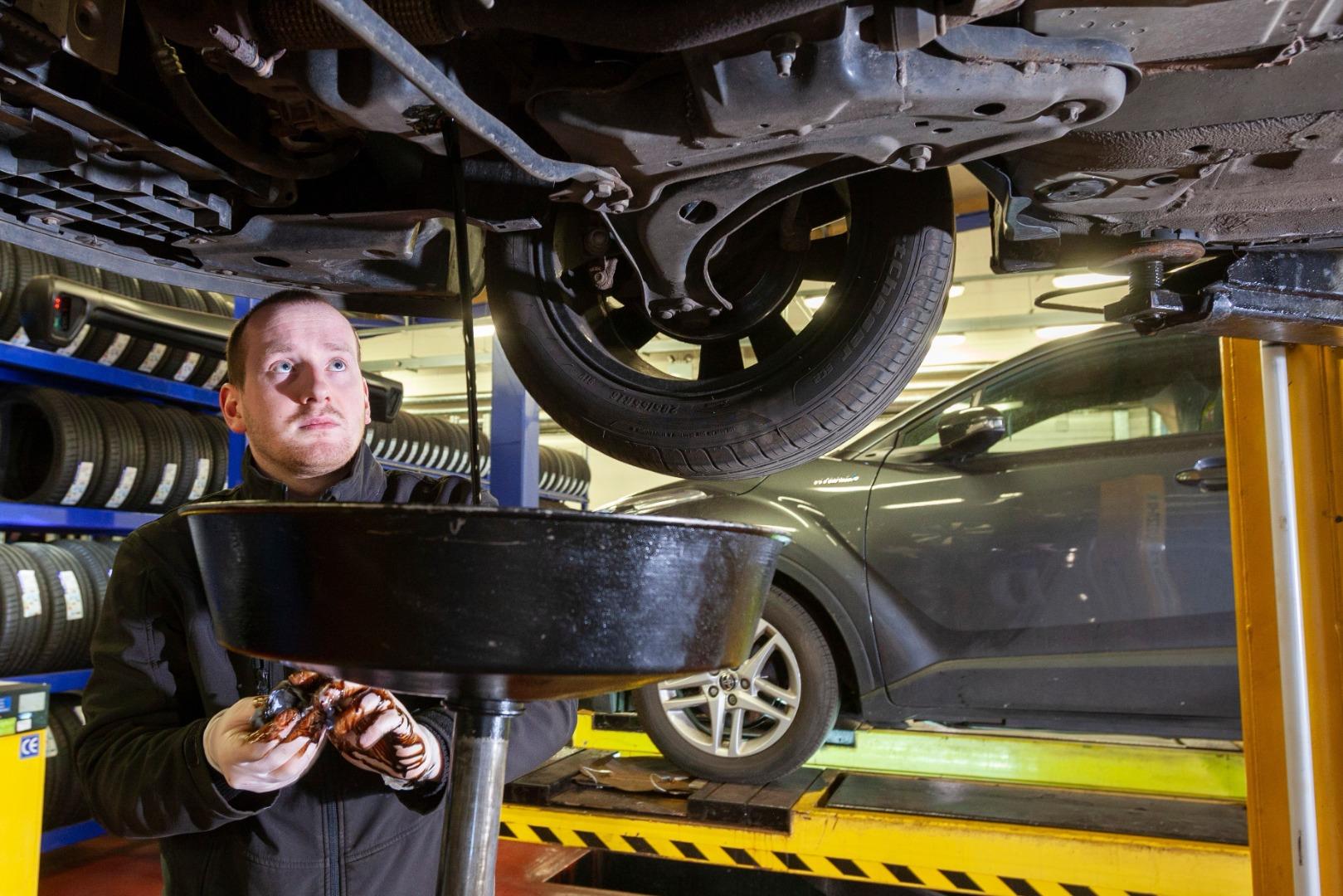
Since the job of engine oil is to reduce friction and heat during the combustion process, it absorbs a lot of energy and therefore degrades and oxidises over time, making it far less effective at doing its job. The oil filter will also wear over time, making it less effective at filtering the precious liquid. Manufacturers generally recommend that oil and oil filters are changed annually or every 15 000km, while some engines require a change every 10 000km and others 20 000km, depending on the vehicle in question.
A vehicle also has a specific oil capacity, so adding oil to a vehicle that does not need a top-up, would mean that there is too much oil, which can lead to engine issues. It is therefore recommended that you replace your vehicle’s oil and oil filter timeously to ensure that it protects your engine at all times. We also encourage checking oil regularly and topping it up with the correct brand and viscosity if need be.