We had a look at two locally produced double-cab bakkies and pitched them against another locally made model, the soon-to-be-replaced Ford Ranger, to see which one gets our vote. Seeing as value for money is the main focal point in this comparison, we steered clear of the highest-specification models.
Instead, we set a budget cap of R550 000 as the starting point and selected three bakkies with similar pricing. In each case, this means a double-cab configuration, with a diesel engine, manual gearbox, and 2WD. Let’s see how they compare.
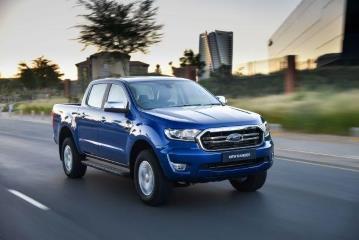
Ford Ranger 2.2 Double Cab Hi-Rider XLS
With a list price of R538 60, this Ranger comfortably slides in below our budget limit, and comes with most of the nice bells and whistles as standard, despite the fact that it is due to be replaced in the very near future.
You’ll find dual-zone climate control in the cabin, along with a decent infotainment system and steering wheel controls, navigation, parking sensors front and rear (with a reversing camera), cruise control, leather trim, a rear diff lock, and automatic controls for the headlights and wipers (among other things).
Safety is pretty well taken care of as well, with six airbags and stability control keeping you and your family safe, while its engine delivers a respectable 118 kW and 385 Nm, allowing for a braked towing capacity of 3 500kg. It needs all that power, of course, because it’s quite a hefty beast with a kerb weight of more than 2 tons. In addition, the Ranger carries a four year/120 000 km warranty and comes with a service plan for six years or 90 000 km. Not shabby at all, especially coming in below the half-a-million Rand mark.
Toyota Hilux 2.4 GD-6 Double Cab Raider
Toyota’s manual double cab 2.4-litre Raider comes in below budget too, at R535 000. As with the Ranger, there's a diff lock, front and rear electric windows, an air conditioner, cloth seats, parking sensors and a rear-view camera as standard. The infotainment system is likewise operated by a touch screen, and there is a multifunction steering wheel and cruise control.
Safety specification is also less comprehensive: ABS and stability control are present, and the airbag count is an impressive seven. With 110 kW on tap, there’s a bit less power as well, but the Hilux beats the Ranger on torque, with a peak output of 400 Nm, however, its braked towing capacity is 2 750kg. Meanwhile, the Hilux has a warranty for three years or 100 000 km, while its service plan applies for 90 000 km (9 services), with no limitation on the vehicle’s age.
Nissan Navara 2.3D Double Cab SE Plus
With its price tag of R529 900, the Navara is the least expensive and indeed, the most recently updated product in this comparison, with the Navara now being built locally. In terms of specification, this Navara variant does lack some of the items seen on both the Hilux and Ranger, with a regular audio system instead of an infotainment system, no reverse camera or parking sensors and more basic features such as front and rear electric windows, a multifunction steering wheel, cloth seats, cruise control and a diff lock, among others. Safety specification is comparable, with seven airbags and stability control as standard.
In the powertrain department, the Navara is comparable, with a 2.5-litre turbodiesel motor that produces the best power and torque figures here, with 120kW and 403Nm of torque, with the same 3 500kg braked towing capacity as the Ranger. Its service plan runs for six years or 90 000 km and its warranty for 6 years or 150 000 km is class-leading.
Verdict
Giving all these factors due consideration, all three of these products would offer those in the market for a more basic double cab bakkie with solid options, however, looking at the specification, the Hilux and Ranger are superior for less than R10 000 more. Since the Ranger is due to be replaced imminently, we are granting the Toyota Hilux the victory in this comparison.