
Hilux Refresher: Our top10 did-you-know facts and features
Hilux Refresher: Our top10 did-you-know facts and features




By Stuart Johnston
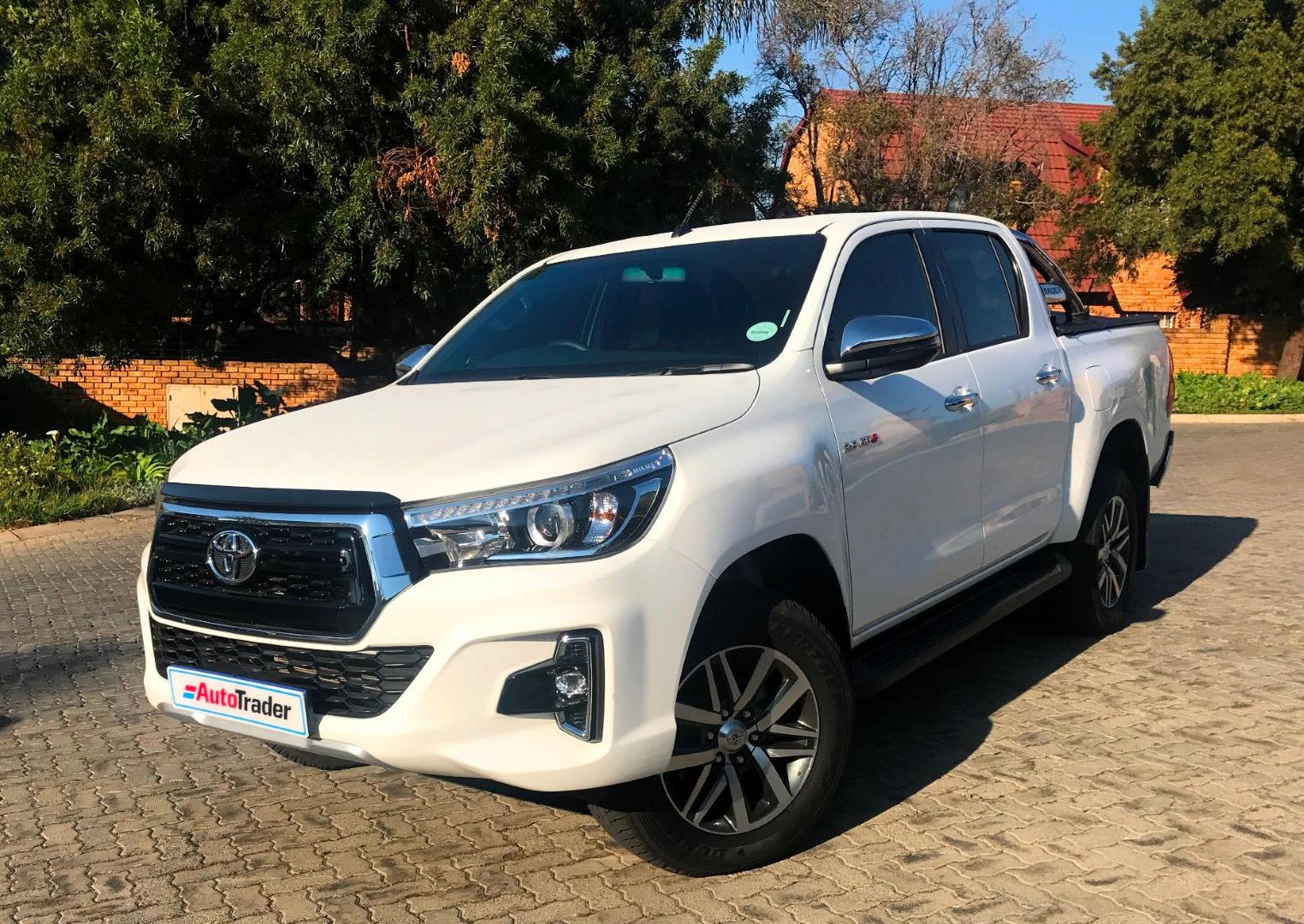
The Toyota Hilux has been King of the new Vehicle Sales Castle in South Africa for close on four decades. In this Hilux refresher, after time spent in the 2.8 GD-6 Double Cab 4X4 Raider, we point out some interesting facts and features you might like to check out in this perennial top-seller.
Toyota’s Hilux is one of the phenomena of the South African new vehicle market. For 46 out of the past 49 years it has been the top-selling bakkie range here, and for many of those years it has been the top selling vehicle overall, outgunning the top selling passenger cars, the Volkswagen Polo and Polo Vivo
Toyota recently supplied us with one of their most favoured Hilux models for test, in the form of the 2.8 GD-6 Double Cab Raiser Automatic which currently sells for (deep breath) R637 500. It was a nice refresher on the Hilux, especially in this form, which is the second-most expensive Hilux model on the market here. The most expensive model is the petrol-fueled 40 V6 Double Cab, which costs some R42 900 more, at R680 400.
Recent Hilux history
The latest (eighth) rendition of the Hilux range was launched here in 2016, and featured a much “tougher” look than before, with buffed-out wheel arches and a more aggressive front end, as well as a re-designed roof section.
More recently the Hilux has been further emboldened looks-wise with a trapezoidal edging to the grille. The current Raider models feature a chrome surround to the grille with attractive black slats that make this top-end bakkie look both tough and classy. The Hilux needed this more aggressive look, in the face of increased sales opposition from Ford’s much-lauded (and very “tough” looking) Ranger model range. For a comprehensive history on the Toyota Hilux in South Africa, click here.
We enjoyed our refresher with the Hilux, once again noting the impeccable build quality of this vehicle that is produced for sale here, and for many of the world’s markets, in Toyota’s Prospecton plant, just outside Durban.
We expected better fuel consumption
We were expecting better fuel consumption from the 2.7 GD-6 Raider model, however. It is rated with an overall fuel consumption figure of 8,5 litres/100 km by the manufacturer, but we were only managing 12,2 litres/100 km. However, the bulk of our driving was done in urban conditions, and a larger percentage of highway cruising would have improved this, probably to the 10,5 litres./100 km range.
Rather than re-tread territory that is already comprehensively charted on the Hilux, we hereby present 10 facts and features you may or may not know about the Toyota Hilux.
Hilux: Top 10 Did you knows?
- Navigation as a standard feature was introduced to the Hilux Raider models in August 2018.
- A reverse camera is also standard on the Raider, which is a very useful feature, given the overall length of 5,33 metres!
- The new grille shape introduced initially on the special Dakar model in June 2018 became standard on Raider and SRX models in August 2018
- Shifting to a higher gear in the automatic 2.8 GD-6 model when it is in Sport (Manual) mode is not always possible. This is because the transmission has a so-called “smart” function that won’t let you shift to fifth or sixth until it deems the speed is appropriate to pull those higher gears.
- Climbing into the high-off-the-ground Hilux double cab can be tricky if you are tall. You can easily bump your head on the A-Pillar (windscreen post).
- In March 2019 a total of 4 252 Hiluxes were sold in South Africa. This meant that one in every three LCVs (light commercial vehicles) sold in our country in March 2019 was a Hilux!
- There are a total of 33 Toyota Hilux models currently on sale here. The cheapest is the 2.0 petrol pick up at R259 600. The most expensive is the 4.0 V6 Double Cab 4X4 Raider at R680 400.
- Toyota Hiluxes have the best resale values of any bakkie make in South Africa. Second-best is the now-discontinued Chevrolet Utility, and third-best is the Isuzu D-Max. And the Ranger? It is fifth best, behind the Nissan NP200, and just ahead of the Volkswagen Amarok in sixth place. These figures come to us courtesy of TruePrice, which surveys auction prices held across the country.
- Before the Hilux’s epic win in January this year in the Dakar Rally, it had placed in the top-five every year since 2012. These results included three second places, two third places, a fourth and a fifth. So Nasser Al Attiyah’s win in 2019 was long overdue! The V8-engined race-spec Dakar Hilux is built by Hallspeed in Midrand, for Toyota Gazoo Racing.
- Toyota’s service plan for the Hilux is not only distance related. It stipulates that a service be carried out every year, or every 10 000 km, whichever comes first. A total of nine services are covered by the service plan.
For more reading on the Toyota Hilux, click here.