
Toyota Hilux 2.8 GD-6 4x4 Double Cab Raider Dakar: A taste of things to come
Toyota Hilux 2.8 GD-6 4x4 Double Cab Raider Dakar: A taste of things to come


By Martin Pretorius
The Toyota Hilux is much like an old friend to me. After all, I attended this generation’s massive launch event at Kyalami more than two years ago, and have subsequently had just about every derivative to review. As for the generation before that, I’ve had one on extended test years ago, ventured into the Karoo on an overland expedition to celebrate the arrival of the Legend 45, used one in an off-road challenge, and taken yet another one into the mountains for a long weekend of off-roading.
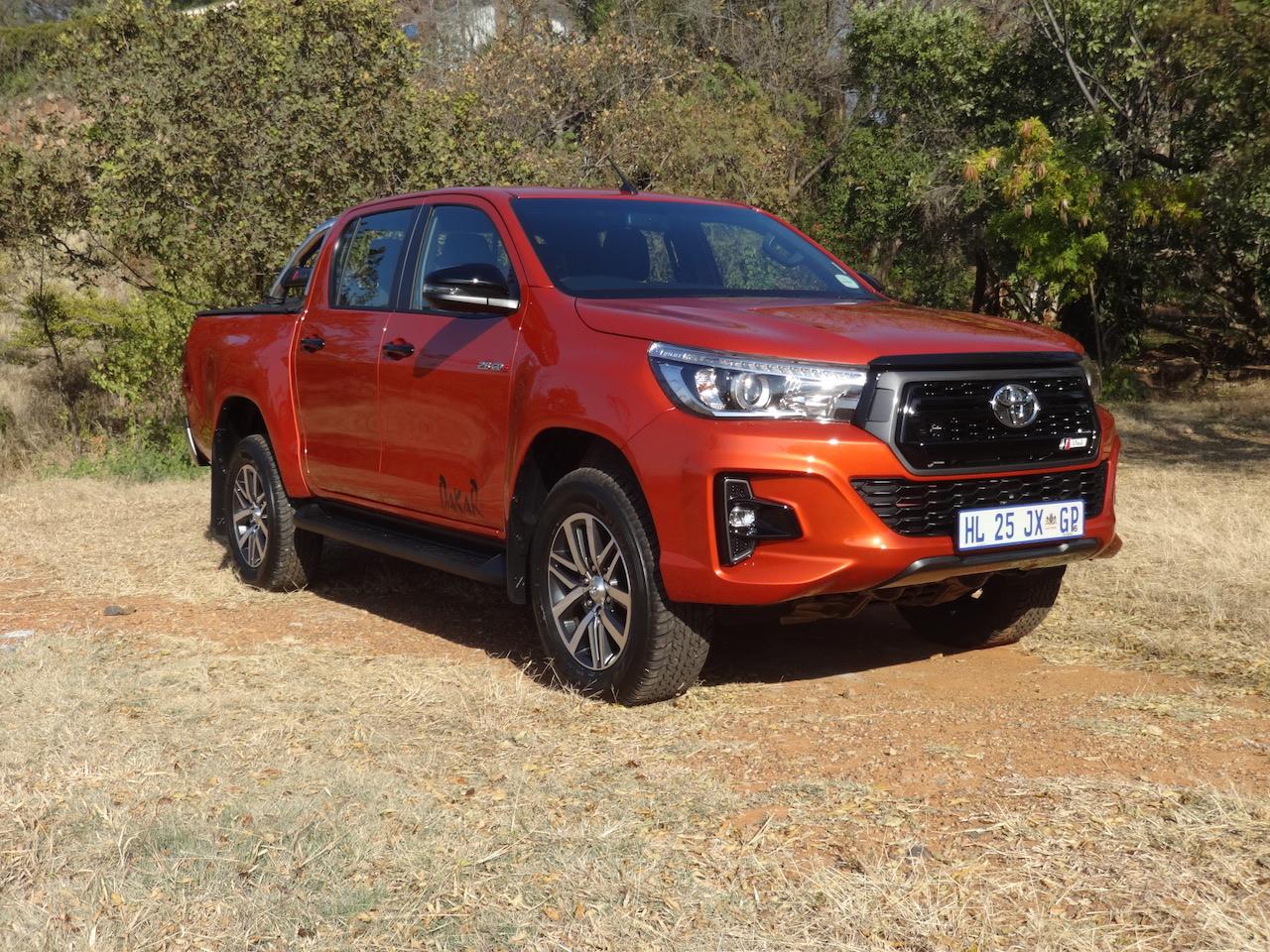
It follows quite naturally that I knew exactly what to expect from the latest Hilux Dakar, long before it arrived in my driveway. After all, it’s still a Hilux, with all the positives and quirks that implies. However, I never expected the public’s reaction to this limited-run Hilux derivative. Perhaps it was the vivid “Inferno Orange” colour, or maybe it was the bluff new front-end styling, but this is easily the Hilux which drew the most admiring glances of them all.
Previewing the (near) future
These universal nods of approval are perhaps indicative of a public which is somewhat relieved to see a different face on the current-generation Hilux. After the bluff, handsome front end of the previous generation, the newcomer caused voices of concern to be raised about its new styling direction from the moment it arrived, mainly due to the radiator grille’s pronounced “overbite” and that steeply-sloping lower bumper section. It certainly isn’t the best-looking bakkie out there, not even in Raider trim with all the bells and whistles.
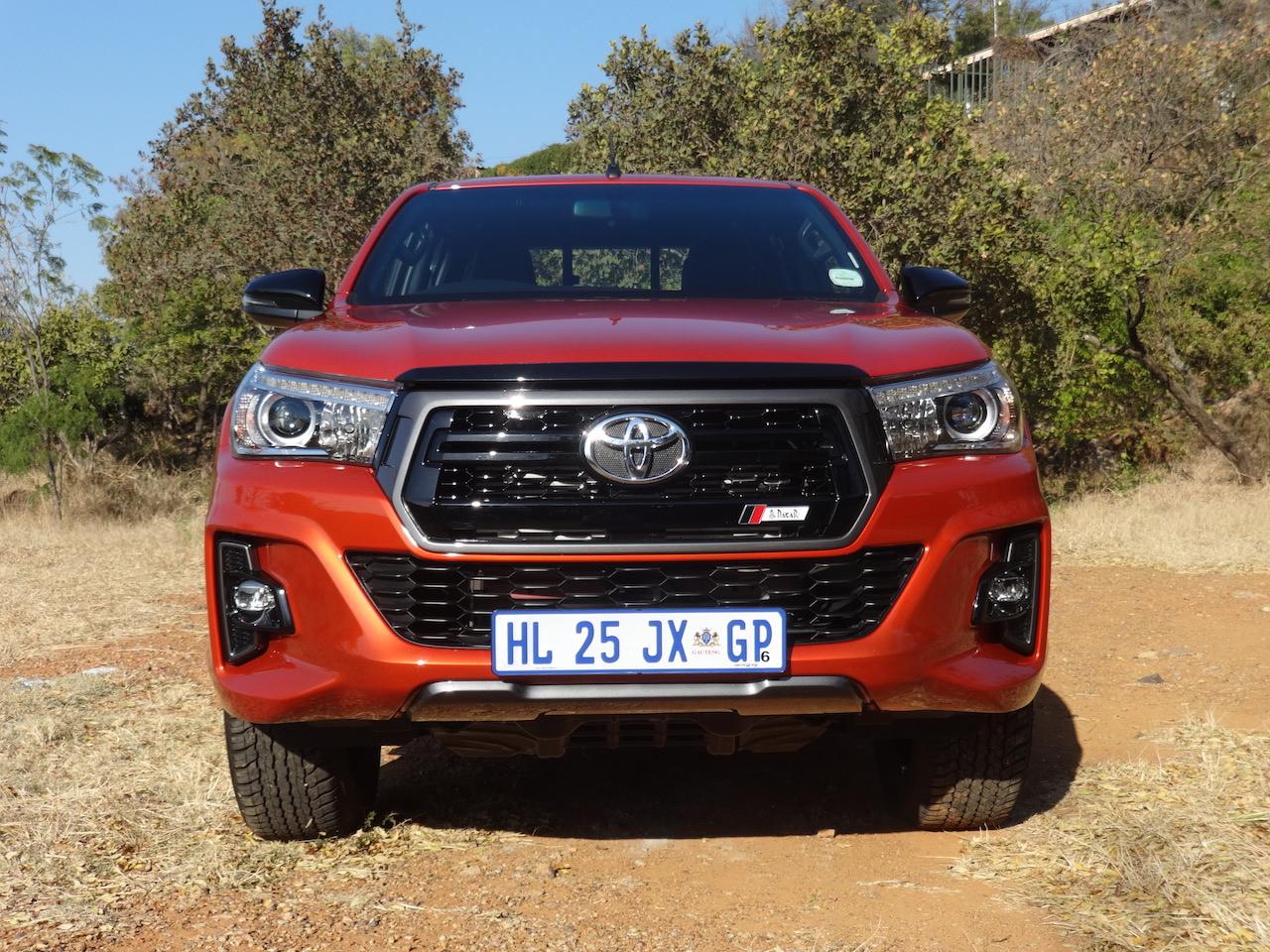
Consequently, the Dakar’s new front-end treatment was cause for much celebration, along with universal praise heaped on its appearance. Off goes the pointy snout and protruding beak, and on goes a new, wider and squarer bumper. Away goes the chromed Raider grille with its inane grin, and in comes a gloss-black, squared-off, and very butch replacement. In the process of squaring off the front end, the Hilux Dakar gained a macho stance and a quietly menacing attitude, finally adding the confident visage thus far absent from the other Hiluxes.
But the Dakar brings great news for the rest of the Hilux range, as it is the first variant to showcase a facelift which will be applied to the other Hiluxes around the end of 2018. While the Dakar itself is only available in limited numbers, the rest of the range will soon receive some version of this assertive new face, and although some details might differ on the other variants, this general re-styling will nonetheless create a definite uptick in Hilux sales. Meanwhile, the Dakar gets some extra stickers, just to make sure that everybody knows what it is...
It’s a bit different inside as well
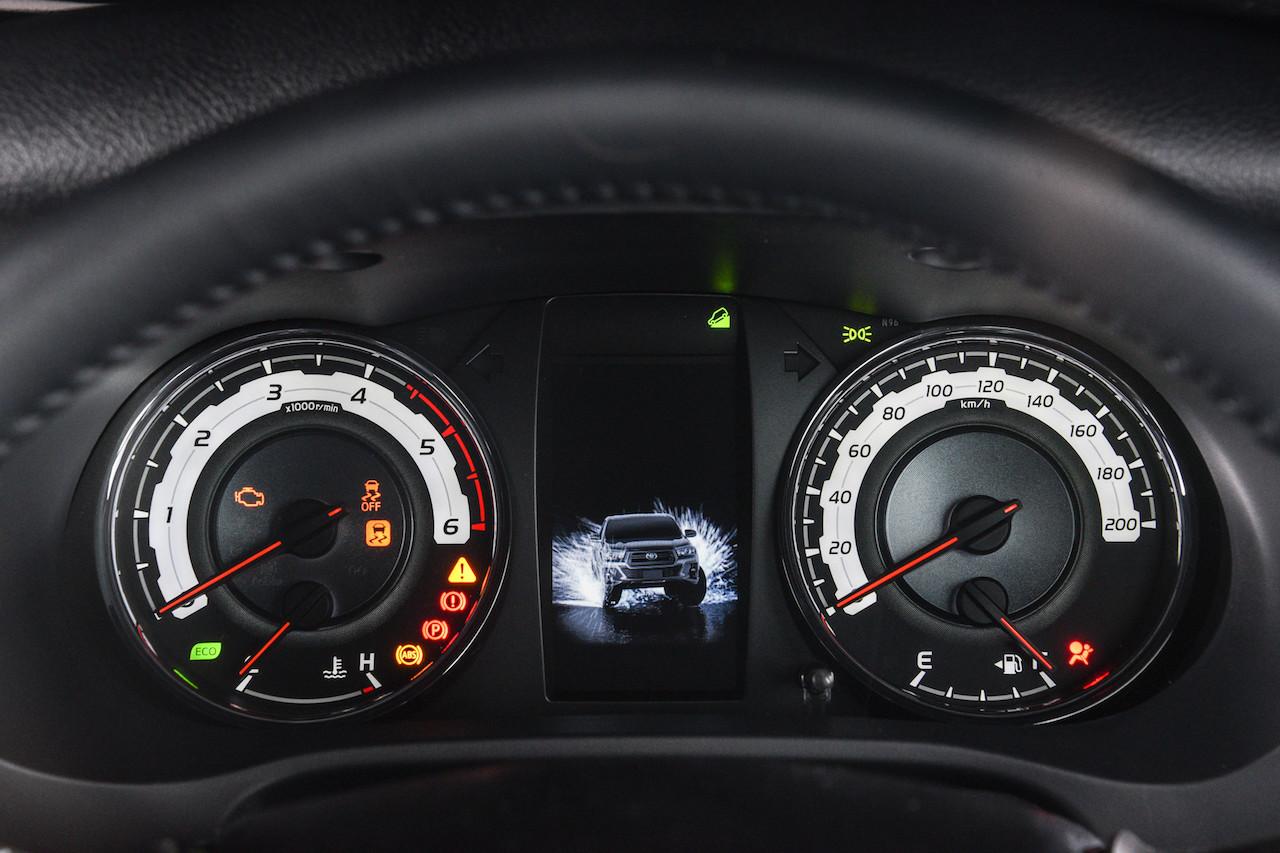
Cabin trimmings are much as you’d expect, barring the Dakar-specific detailing applied all over. The instrument cluster receives white-faced dials, and the leather-trimmed interior gets a blackout treatment from top to bottom, complemented by grey stitching. This colour combination looks somewhat more upmarket than the other variants manage, and it would be nice if this could also spill over to the rest of the range in the future.
The other upgrade happens to the Dakar’s touch-screen audio system, which is enhanced through the addition of navigation. This is the first time I’ve ever encountered factory navigation in a Hilux, so I was obviously very eager to try it out. Unfortunately, the news really isn’t good: the navigation is cumbersome to use, the system is slow to react to inputs, the graphics are coarse and grainy, and the user interface is confusing and old-fashioned.
Given Toyota’s expertise at just about everything else, it’s quite amazing to see them struggle with a simple navigation system. If this becomes an option on other Hiluxes, rather skip ticking that box – trust me, your phone works infinitely better, especially given the seamless USB- and Bluetooth integration of the standard infotainment systems.
Comfort and convenience
Aside from the different trimmings, the Dakar is still very much a Hilux underneath, with no mechanical changes at all. That means a ride quality that is much smoother than the previous generation, but still somewhat behind the class leaders (Mitsubishi Triton, VW Amarok and Nissan Navara). The same applies to the handling, where it’s still about as agile and athletic as you’d expect a big, 4WD double-cab to be – that is, not at all.
Still, it’s entirely class-competitive in these areas, with the promise of a long and productive life just about guaranteed by its name and deserved reputation. Standard equipment includes 7 airbags, stability control, climate control, and the LED headlights which were introduced to Raider derivatives during the Hilux’s first model update a little while ago.
My excitement about those LED lights was somewhat tempered by a shocking discovery, though: high beam (bright) still originates from old-fashioned halogen globes, even though the low (dipped) beam, daytime running lights and fog lights are all LED-based. This is a puzzling decision on the part of Toyota, as the benefits of LED headlights are amplified when high beam is selected – and now the Hilux misses out on that advantage. Very strange indeed, especially considering that Toyota is actually a leader in the adoption of LED headlights.
It’s still a very good bakkie
While the normal Hiluxes (currently) aren’t the prettiest things out there, they are genuinely capable machines. Whether you’re mounting a kerb at a shopping centre or scrabbling over a mountain, the Hilux is guaranteed to handle whatever you throw at it with nary a shrug or a rattle. This applies in equal measure to the Dakar: it’s still exactly as competent as you’d expect, it’s just wearing a much nicer outfit.
Dakar drivetrain
The 2.8-litre turbo-diesel engine, here mated to a 6-speed manual gearbox, isn’t the most refined thing out there (though it’s also far from the roughest), but it’s a very willing power unit with a fairly wide operating range and an unstoppable character. Performance is about what you’d expect from a diesel 4x4 with 130 kW and 420 Nm (sufficient), and fuel consumption is about par for the course (9.6 liter/100 km average over the test period), though it must be said that there are alternatives which sip their 50ppm diesel rather more parsimoniously.
The 6-speed manual gearbox has a satisfyingly accurate shift quality, and the clutch is reasonably low in effort, which helps to make driving in traffic much less of a chore than it could be. Another helpful gadget comes in the form of something Toyota calls “iMT”, which is exclusive to 2.8-litre engines in manual form, and is activated via a pushbutton switch behind the gear lever.
Electronic trickery
iMT performs a nifty trick by synchronizing the engine- and road speeds when you select a different gear: shift up, and it drops the revs to the ideal point for a smooth clutch engagement; shift down, and it performs a cute little “throttle blip” to achieve the same result. This may sound like a gimmick, but it really does smooth out city driving to a large degree.
Next to the iMT switch is another pushbutton, this one to select “Eco”, Normal, or “Power” modes. These modes change absolutely nothing about the engine’s outputs when the accelerator pedal is mashed into the carpet, but they do change the way the engine responds to varying accelerator inputs. Eco mode obviously mutes the engine’s response and Power mode makes it more aggressive, but ultimately, Normal still gives the most agreeable compromise between pedal response and smoothness.
Leading the way
Cheesy though Toyota’s marketing slogan “Lead the Way” may be, it’s genuinely appropriate to the Hilux Dakar – not for the fact that it’s in any way a radical step forward for bakkie-dom (because it isn’t) but for the fresh new face it previews. With the Hilux being as competent as it is, it’s a bit of a pity that it never looked as good as it performed. Once the new styling has spread through the rest of the range, the Hilux will finally get the appearance it’s been asking for all along, and that can only mean good things for Toyota in the local bakkie sales race. We’re waiting with bated breath.