
Complete guide to buying, owning and selling a Toyota Etios
Since its first arrival on local soil in 2012, the Toyota Etios has seen sustained demand in the used car market. There’s very little real difference between early cars and later examples, with its periodic updates leading to a gradual evolution rather than outright revolutions. It’s not the prettiest thing out there, but the Etios is practical, durable and affordable to run, and that’s exactly what budget-conscious buyers crave.


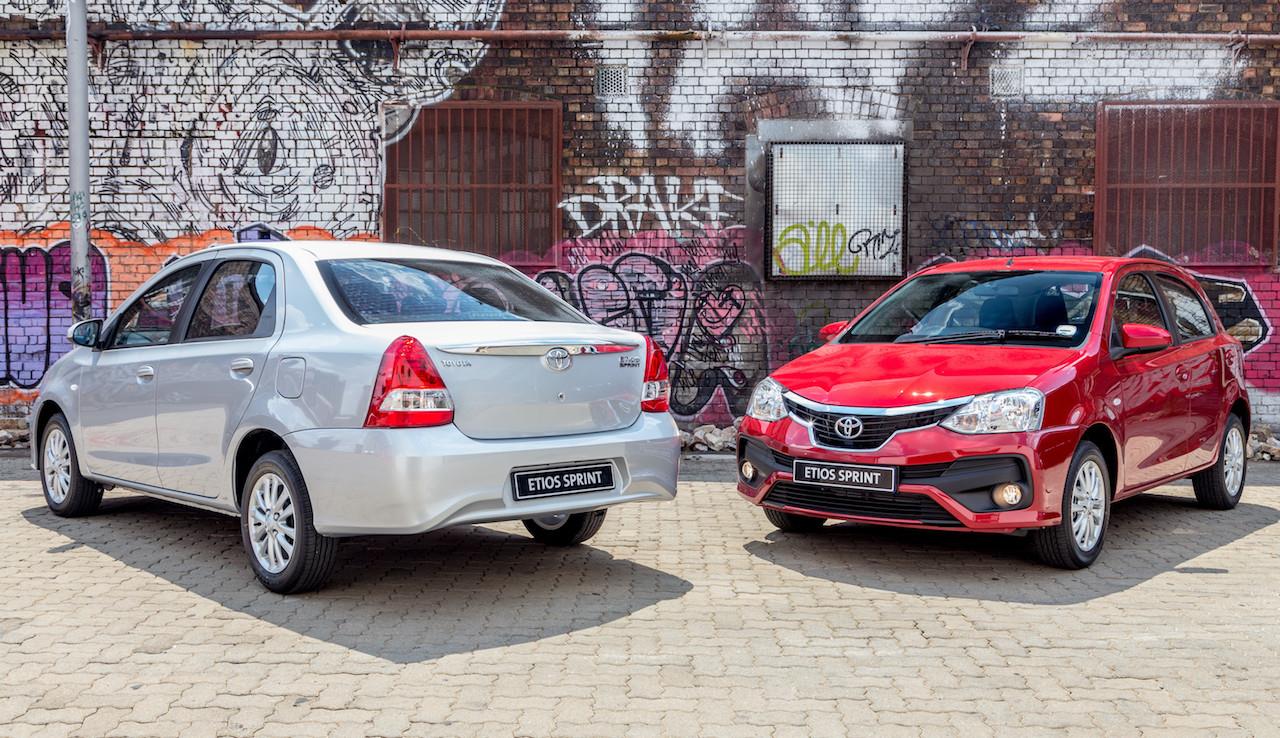
5 key facts you should know about the Toyota Etios
A favourite among fleet owners and private customers alike, there’s much to commend about Toyota’s budget hatchback. Forget about pretty or frivolous: the Toyota Etios is all about value and durability. With bulletproof mechanical bits and easy serviceability, there’s a lot of clever engineering that’s gone into giving the Etios a long, drama-free and safe service life.
- 1. There’s only one drivetrain available in the Toyota Etios: a 1.5-litre 4-cylinder engine, paired with a 5-speed manual gearbox driving the front wheels.
- 2. Buyers can choose between hatchback- and sedan body styles, and three trim levels.
- 3. While the interior panels are made of hard, scratchy plastics, it’s been proven to hold up well with age. Trim rattles are very common, however.
- 4. Today’s Etios is mechanically almost identical to the earliest ones, with only minor running changes introduced since it was launched.
- 5. While the Etios was developed with an earlier Yaris platform as a starting point, there is very little parts interchangeability between the two models.
Get an Instant Offer on your old Etios here

Summary
By the time the Toyota Tazz was finally phased out in 2006, the first-generation (in South Africa) Yaris did a pretty decent job of covering the entry-level market. But, as that car started growing up, Toyota realized that the new-generation model’s increasing sophistication had kick-started an unavoidable move upmarket. What Toyota needed was something Yaris-sized, that could be priced against the wildly successful Polo Vivo.
Fortunately, help was at hand, in the form of the Indian-built Etios. Arriving to mixed initial press reviews, the Etios nonetheless went on to become one of South Africa’s most popular cars. As the years went by, the Etios proved itself to be a rugged and dependable purchase, easy to service and inexpensive to run: the embodiment of traditional Toyota values. Add above-average safety ratings to the mix, and the low-cost Toyota becomes an attractive choice for buyers who place a premium on value and peace of mind.

Pros & Cons
Pros
- The drivetrain is almost indestructible, and the conservative engineering employed throughout the car means that there isn’t a lot that can go wrong.
- With the road conditions in developing markets in mind, the engineers devised a simple and compliant long-travel suspension. This gives the Etios a surprisingly smooth ride quality for its size.
- The Toyota Etios is a very compact car (especially in short wheelbase hatchback form), but there’s a surprising amount of cabin space hiding in that small shell.
- With its longer wheelbase and larger rear overhang, the Etios sedan has plenty of stretching room for four large-ish adults, as well as a cavernous luggage compartment.
- Thanks to a high percentage of high-strength steel in its construction, the Etios has a very sturdy passenger cell, helping it score 4 stars in Global NCAP testing.
- It’s not nearly luxuriously appointed even in top-level trim, but all Etios derivatives are fitted with ABS, power steering, air conditioning, and two airbags.
- Thanks to its large-for-its-class engine and very lightweight construction, the Etios is one of the stronger performers in its price bracket.
- Easy to drive, with a light clutch and steering, and accurate gear change.

Cons
- Overall refinement isn’t too bad for a car in this class, but don’t expect it to be Lexus-like on the freeway, as there’s not a lot of sound insulation installed.
- Road holding is mostly up to the engine’s demands, but body roll is the name of the game.
- While front-seat passengers have plenty of stretching room, those in the rear seats of the short hatchback will find their accommodations to be rather cramped.
- The luggage space in the hatchback is pretty poor, which makes it better suited to single people. Families and shuttle services should stick to the sedan.
- Hard plastics and coarse-weave cloth cover the cabin, so the interior’s ambience is obviously down-market. Don’t be too surprised to find some rattles with age, either.

Similar cars to the Toyota Etios
-
Ford Figo:
Like the Etios, the Ford Figo is only available as a used vehicle. It is more powerful than the Toyota, with more standard equipment in high-spec versions, and a fair bit nicer inside as well.
-
Volkswagen Polo Vivo:
Only the 1.4-litre Vivos overlap with the Etios range, but the entry-level Vivo 1.4 Trendline hatchback isn’t a huge lot more expensive than a high-spec Etios Sprint, can’t match the Toyota on performance, but features superior quality and refinement.
-
Nissan Micra Active:
Sometimes overlooked by buyers, the Micra Active is less expensive than the entry-level Etios Xi, but almost matches the much more expensive Etios Sprint on the standard feature count. The trade-off is less power, although the Nissan’s little 1.2-litre 3-cylinder engine does a decent enough job for this class.
-
Suzuki Swift and DZire:
Also less expensive than the Etios, the earlier Swift hatchback is an altogether more sophisticated design than the Toyota, with a nicer cabin and lower fuel consumption. The DZire sedan shares this sophistication but loses out against the Etios sedan’s massive boot. The main downside is the Swift/DZire’s smaller engine, which almost matches the Toyota on power, but loses ground on torque. Either one is available with a manual gearbox, or with an automated manual.
-
Haval H1:
Doing battle with the range-topping Etios Cross (which is basically an Etios Sprint with some plastic cladding), the Haval H1 is a crossover-ish small hatchback from China. Based on an older-generation Toyota platform, the Haval H1 has similar power and equipment to the Etios Cross, but weighs a lot more. The H1 is great value for money, though, and actually undercuts the cheapest Etios by a decent margin.

Used Toyota Etios
Because the 2019 Etios is still essentially the same car as the 2012 Etios, newer ones are pretty much identical to cars dating from 2017, which themselves are basically just the 2015 update with different bumpers, a new radio, and standard alloy wheels to go with the name change from Etios XS to Etios Sprint. But even though the frosting has seen some minor updates through the years, the basic car underneath is almost identical.
And, thanks to its stellar reliability record, there’s no reason to fear buying an older Etios, even though the standard warranty for 3 years or 100 000 km has expired. There’s only one reason to keep servicing the car at the dealership: the service history. A dealership service record may stand you in good stead when it’s time to sell your Etios because such a full-service record could add a few thousand Rands to your trade-in value. You will however have to pay dealership labour rates, which are generally much higher than those of non-OEM (private) service centres.
Fortunately, it’s not hugely expensive to service an Etios, and, because they’re so easy to work on, it’s easy to find a workshop that’ll perform basic servicing or even major repairs for a lot less than you’d pay at a dealership.
There’s one major upside to buying an older Etios, though, and that’s the initial purchase price. These cars don’t depreciate very quickly, but their values do drop once they’re a few years old or the odometer shows some distance. Very early cars can be had for about half the price of a newer one. We have a massive variety of pre-owned Etios models listed here on AutoTrader, and many of them are amazingly affordable.

Car finance options explained
Leasing
This will be the preferred option for fleet managers, because it’s a pay-to-use deal, but can also be applied to private buyers. The buyer pays a certain amount every month for the privilege of using the car and simply returns the car at the end of the lease period. These cars generally end up on pre-owned floors or at fleet sales outlets. Lease agreements generally run for a fixed term, and most of them have an upper yearly mileage limit, so make sure that such an arrangement will fit your usage needs.
The upsides of leasing are that the burden of getting rid of the used car is removed from the buyer and that there will be no further outstanding balance to settle, such as the buyer would find in a hire-purchase deal with a residual value. The downside is that the buyer will end up paying for a car for a number of years but have no tangible asset to show afterwards.
Hire purchase and balloon payments
Some dealerships and finance houses also offer different financing options, with hire-purchase transactions being the most common. In such a transaction, the buyer will put down a deposit on the car, and then proceed to pay monthly instalments until the car, along with interest and finance charges, are fully paid.
So far, so good. But hire-purchase deals have a nastier sibling, which works in mostly the same way, but with an outstanding value due at the end of the payment period. Many financing deals are structured in this way, to make the monthly instalments seem more affordable, but in the longer term, these deals end up costing a lot more than they do at first glance.
This outstanding value is known as a residual value or a balloon payment and is usually due along with the final “normal” instalment. Most banks and finance houses will allow the buyer to finance this residual value, provided the car’s value is still higher than the outstanding amount (which, given the Etios’s strong resale value, should not pose any obstacle).

Average costs of running a Toyota Etios
While it’s impossible to accurately predict how much any car will cost to run in the short- or long-term, it’s worth noting a few points:
- All new Etioses came standard with a warranty for 3 years or 100 000 km, along with a service plan for 3 services (30 000 km). Toyota also offers a warranty extension plan for used cars at a comparatively small cost, so enquire at your dealership about this option.
- Non-OEM servicing will be considerably less expensive than having it performed by a dealership, but we’d recommend using genuine (OEM) service parts.
- The Toyota Etios is considered to be a high-risk vehicle by the insurance industry, purely based on its popularity among the long-fingered. As a result, an Etios may be surprisingly expensive to insure. However, remember that an insurance risk profile is extremely dependent on the car’s storage security arrangements, areas in which it travels, and even total mileage accumulated in business use.
- With its single drivetrain offering, the various Etios variants deliver similar fuel consumption figures. Toyota quotes an average fuel consumption figure of 6.0 litres/100 km, but owners report an average consumption of around 7.2 litres/100 km.
- The Etios has only ever been available with two tyre sizes: 175/65R14 or 185/60R15. Both of these tyres are easy to find and fairly affordable to replace.
Where to buy a car
Seeing as the Etios have been around for years, you’ll be able to find swarms of them on Automark floors (Toyota’s used-car sales outlet), as well as on other used-car showroom floors. But the best place to compare the price, condition and mileage of a variety of examples from a host of dealerships is of course by searching for a used Toyota Etios model on AutoTrader.

How to get the best car deal
You might be surprised to learn that buying a car often has some opportunity for haggling. Don’t imagine that you’ll get 50% off the purchase price, but you might be able to score a few thousand here or there, under certain conditions:
- If the car has been standing at a dealership for a few weeks, chances are that the dealer will be willing to drop his asking price, just to get rid of old stock. This is because old (slow-selling) stock costs them money to keep around, and they might be willing to even accept a smaller profit margin, just to get rid of that specific car. However, dealers say that an Etios never lingers for very long, so the chances are slim that this negotiating angle will work.
- Be aware that “On The Road” fees have been deemed illegal to finance, so insist that the dealer itemise those items on your invoice. Once you have that information, you will be able to negotiate a reduction in those fees.

Maintaining your Toyota Etios
If you buy a used Etios with an expired warranty, you can choose to have it serviced and maintained at either the Toyota dealership or at a private service centre. Toyota parts are generally on the expensive side of reasonable from the agents, and dealer workshop labour rates are quite high as well. If your Etios has an active service plan, you’ll have no reason to take it anywhere else, though, as it’s all included in that perk.
Private (or non-OEM) service centres have much lower labour rates than the agents, and they will have access to second-tier (non-OEM branded, but still produced according to OEM specifications) parts supplies as well. Aftermarket support for Toyota body- and mechanical components is very strong, so you may find that most components can be found at either the agents or from non-OEM parts shops. However, going the non-OEM route may adversely affect your car’s resale value, as this also means that the car won’t have a full dealership service record. It's also advisable to stick to the OEM oil filter: on account of its very small capacity, you want the best possible oil filtration.
The Etios has been on the market long enough for any flaws and failings to be fairly well-known. Fortunately, there are very few reports regarding problems with its mechanical components, with the few known issues relating mostly to the electronically-controlled throttle – usually easily remedied by just cleaning the throttle body.
Additionally, some 2014-2015 vintage Etios models may have a noisy cam timing chain, due to a gradual failure of the hydraulic tensioner, so listen out for prolonged rattling from a cold start. Lastly, very early (2012-2013) Etios models may present leaking shock absorbers and rattling front strut mountings. The former are off-the-shelf Monroe parts and can be bought at most non-OEM spares shops, and the latter will be available from the agents. For the rest, the Etios appear to be as sturdy and durable as you’d expect from a Toyota.

Selling your car
You most likely won’t be able to get your money back when you sell your Etios, even if you’ve only had it for a short while, although they do retain their value surprisingly well for a car in this segment. Putting it simply, almost all cars lose value on a continuous basis from the moment they’re first sold. Depreciation does allow you to find good-condition, low-mileage Etios models at relatively bargain prices, though.
There are however some things you could do to get the best price for your car when you decide to sell it.
- The first is simply trading it in on something newer or different. Taking this route will net you a lower value (trade price or thereabouts), but it simplifies the transaction and will be a quicker process.
- Any outstanding balance on your finance agreement will have to be settled first before the proceeds from the sale can go towards a down payment on your next car. For this reason, you should make sure that your trade-in offer (or selling price) is actually more than the amount you still owe on the car, or else you’ll just end up deeper in debt than is strictly necessary.
- Because Toyota Etios models are very popular in the pre-owned market, you likely won’t struggle to sell them privately. This will fetch a higher value than simply trading it in, albeit with some extra effort on your part.
- Do your research: Your expectation of your car’s worth may not necessarily align with the dictates of market forces. Knowing beforehand how much a car like yours is worth in the used market will give you a better idea of the real value of your car, giving you a target for which to aim.
- Presentation is key: If you arrive at a dealership (or want to show your car to a private buyer), but your car looks like it just drove across the Kalahari or through a mud pit, it will appear as though the poor thing has had a hard life. This will make for a lower offer from the buyer. The same applies to minor dings and scratches, where a little bit of pre-sale repair work can give the car’s value a useful boost.
- Keep records: This pertains to service records, as well as any maintenance- or repair work that’s been performed on the car. If you can prove that your car was well-maintained and regularly serviced, the buyer will be less concerned about unknown flaws hiding below the surface. This should lead to a better offer when you want to sell it.


