Mahindra Thar vs Suzuki Jimny vs Mahindra Pik Up: which one is the best value for money?
Serious off-road enthusiasts often bemoan the increasing complexity of modern 4x4s. They may have a point, because today’s electronic driveline control systems and fancy trimmings lead to increasing pricetags, and they make it more difficult to customise vehicles for specific tasks. Mahindra’s Thar is the perfect antidote to such complaints: it’s as complex as a brick, and its bare-boned nature makes it easy to retrofit specialist off-roading hardware. But is it good value for money?


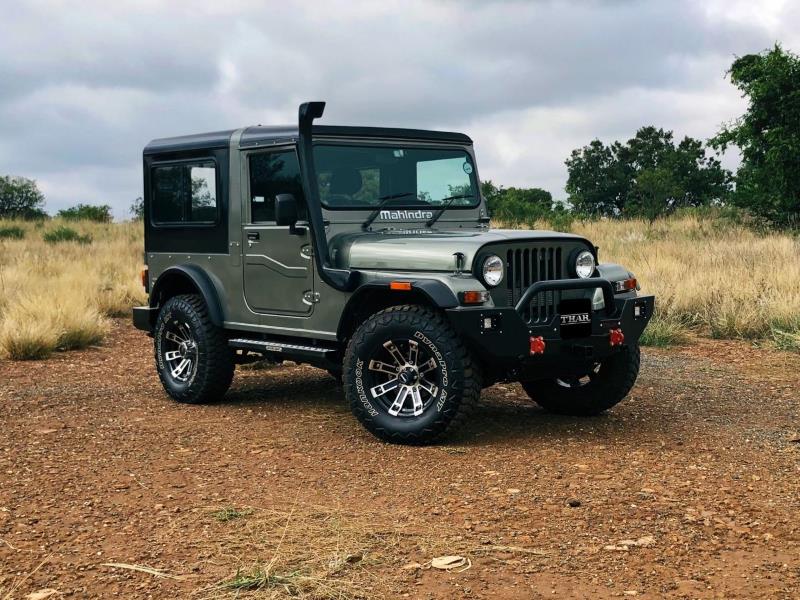
Back to basics off-roaders head for the hills.
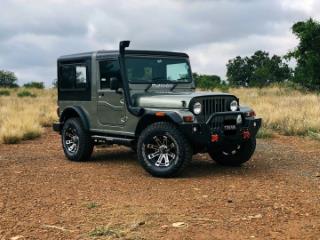
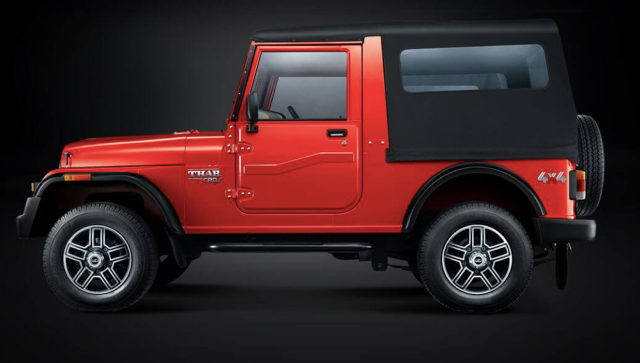
Many casual observers might view the Mahindra Thar as a shameless copy of an old (as in very, very old) Jeep. Those observers would be partially correct, because Mahindra bought the licence to build the US military Jeep in India in 1949. Those licence-built Jeeps were the first vehicles built by the fledgling Mahindra, and have essentially been in production ever since, gradually evolving into the Thar we get today.
As it stands at the moment, the Mahindra Thar is the most affordable new off-road-capable 4x4 on our market, and by quite a margin, too. The Thar range opens at R236 999, with the most expensive variant (barely) slipping in below the R300 000 mark. That’s a seriously compelling price for a new 4x4 from the (very) old school, and gets you a fresh warranty to go with its go-anywhere abilities.
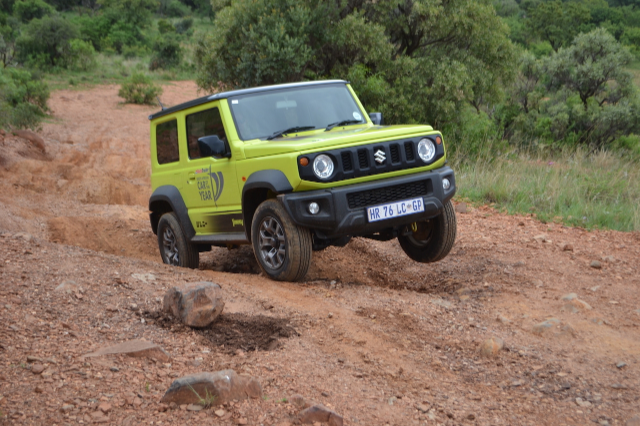
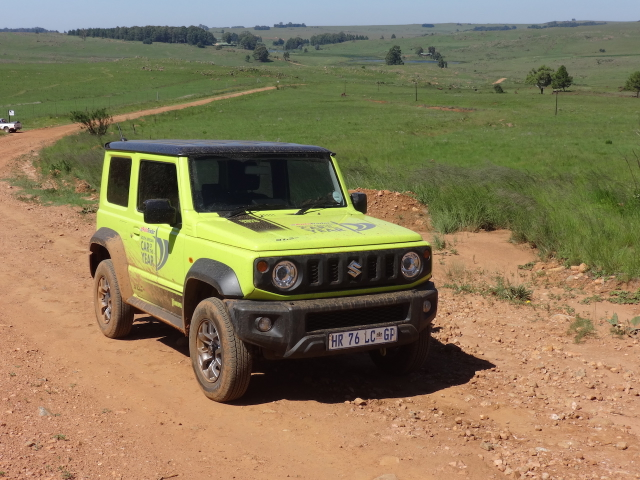
But the world has changed since the days of the post-war Jeep. Rock climbing and scurrying up sandy dunes are now well within the reach of much more mundane vehicles, while the original Jeep concept (for compact, simple and light off-road machine) has been updated many times over. The Suzuki Jimny is a great example of this fact, and perhaps presents the most accurate modern interpretation of the classic Jeep – in both its dimensions and its all-terrain capability, albeit with a massive shot of extra sophistication.
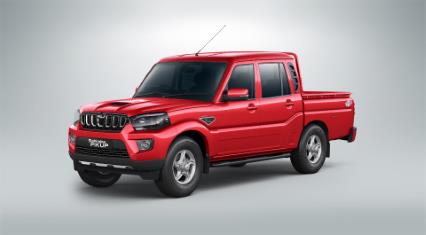
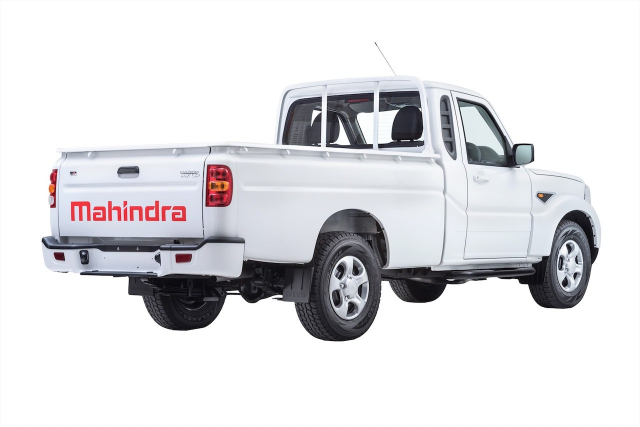
Bakkies have also moved into this marketplace, with 4WD variants of normal workhorses often matching (or even beating) this segment’s pioneers when the tarmac ends. In fact, Mahindra themselves offer one of the least-expensive 4WD bakkies out there, with their most affordable 4x4 Pik Up variant exactly matching the pricetag of the most expensive Thar (but offering only a single-cab layout).
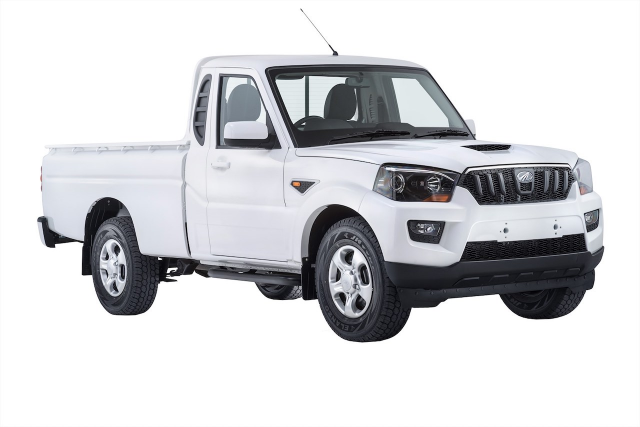
In this value comparison, we’ve selected the top-spec Thar “Adventure”, and pitched it against the least-expensive Suzuki Jimny and the aforementioned Pik Up 4x4 in S6 single-cab trim. Their pricing varies by about R 20 000, with the two Mahindras being the most expensive choices here. In the face of such compelling opponents, is the Mahindra Thar still a good value proposition, and are the trade-offs inherent in its ancient design roots worth the cash savings?
Facts and figures:
|
Mahindra Thar 2.5CRDe 4x4 Adventure |
Suzuki Jimny 1.5 GA AllGrip |
Mahindra Pik Up 2.2CRDe 4x4 S6 |
|
|
Engine size (cyl/size) |
4-cyl, 2.5-litre turbodiesel |
4-cyl, 1.5-litre petrol |
4-cyl, 2.2-litre turbodiesel |
|
Power/Torque |
79 kW/247 Nm |
75 kW/130 Nm |
103 kW/320 Nm |
|
Kerb Weight |
1 745 kg |
1 095 kg |
2 090 kg |
|
Power-to-Weight |
45.3 kW/ton |
68.5 kW/ton |
49.3 kW/ton |
|
Length (mm) |
3 920 |
3 625 |
5 175 |
|
Airbag count |
0 |
2 |
2 |
|
Ave Consumption * |
7.5 ℓ/100 km |
6.3 ℓ/100 km |
7.9 ℓ/100 km |
|
Warranty |
2 yr/50 000 km |
3 yr/100 000 km |
4 yr/120 000 km |
|
Price |
R 299 999 |
R 279 900 |
R 299 999 |
*Manufacturer's official claimed figures.
Analysis
Power, performance, and drivetrains
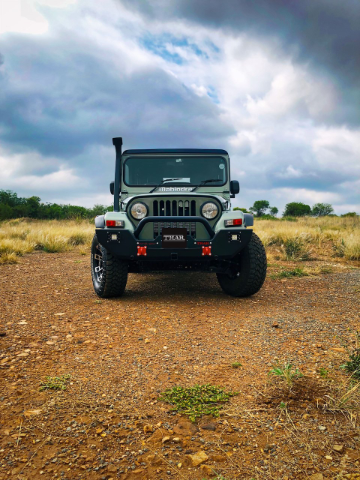
To be brutally honest, none of these contenders offers anything more than acceptable performance (for their class, at least). The Thar runs into its first obstacle here, with its substantial kerb weight and low-powered 2.5-litre turbodiesel handing it a power-to-weight ratio of only 45.3 kW/ton. Combine that rather feeble number with short gear ratios (ideally suited to off-road use, but not much good everywhere else), and it becomes clear why its performance is sure to be the slowest of this bunch.
The 2.2-litre Pik Up isn’t much better off, though, with its significant power advantage (in this company) being thoroughly offset by its rather portly kerb weight of 2 090 kg – almost a ton heavier than the little Suzuki. It must be noted that the Jimny is exceptionally light for a vehicle of this type, which means that it has easily the best power-to-weight ratio (and thus the strongest straight-line performance) among these three.
Add a full load to the mix, and the picture changes somewhat. Because the Jimny has a small, naturally-aspirated petrol engine, it lags behind the other two in terms of torque. With only a driver and passenger on board, this torque disadvantage isn’t as prominent, but when you add oversized tyres and a roof rack to the mix, the Jimny’s little 1.5-litre engine will begin to struggle a bit.
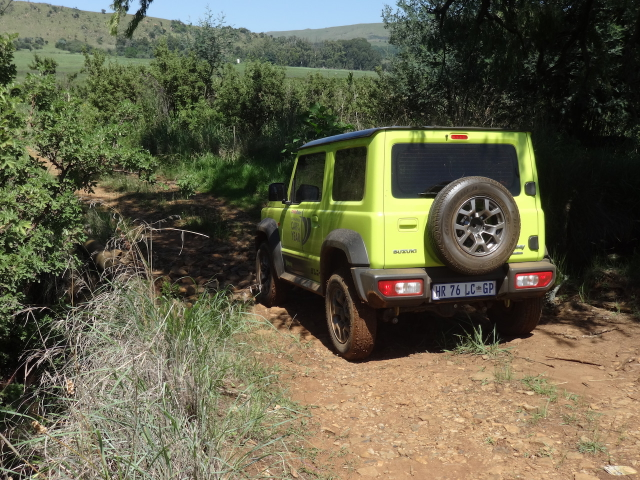
In contrast, the other two both have quite a lot more torque, which will negate the effect of added weight to some extent: the Jimny will lose more performance (when subjected to extra weight) than the others, while both Mahindras will likely lose less of their get-up-and-go. Still, given the likely dual-purpose usage envisaged for these vehicles, the Jimny will come out on top, with the very torquey Pik Up taking second place and the elderly Thar following quite far behind.
Off-road
Being based on the original Jeep’s recipe, the Mahindra Thar’s off-road capabilities should be close to peerless. Or rather, it would have been – 30 years ago. The march of progress has relegated it to a mid-pack finish here, behind the Jimny, but ahead of the Pik Up. There’s a very simple reason for this: the Jimny is much lighter and more agile than the other two.
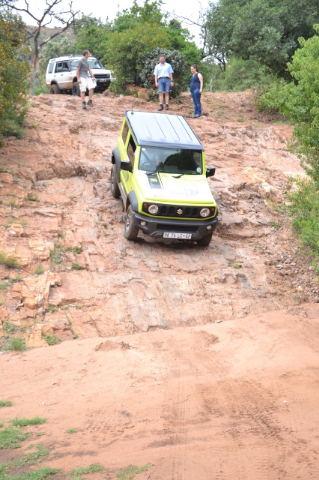
It’s much smaller, too (almost 300 mm shorter than the Thar), and its extremely short overhangs and diminutive wheelbase gives the Jimny far superior approach-, breakover-, and departure angles in extreme off-road situations. It’s almost unfair to lump the other two with the Jimny, simply because it holds every single trump card in the rough-terrain stakes.
The Thar doesn’t put in a poor showing in this department, either. Its breakover angle might be the same as the Pik Up’s, but it trounces its sibling in every other off-roading metric except ground clearance (200 mm, compared the 210 mm on offer in both the Jimny and Pik Up). Combined with a lower kerb weight than the Pik Up, these attributes give it the upper hand among the two Mahindras. The Pik Up is still respectable in this regard, but its basic configuration hampers it in the same way as it hampers any other bakkie, which drops it down to third place in the rough stuff.
Economy
The Jimny grabs the fuel efficiency crown for the same reason why it’s also the performance champ here: there’s less weight to move around, which requires less power, and thus less fuel. It doesn’t hurt that it’s physically the smallest of this group, either, and that it’s boxy body shape is still more slippery than either of the others’ even-boxier body shapes.
With a manual gearbox, the Jimny is claimed to use only 6.3 ℓ/100 km on average, compared to 7.5 ℓ/100 km for the Thar and 7.9 ℓ/100 km for the Pik Up. Suzuki’s claims for the Jimny aren’t far off the mark in the real world, either, with general use likely to see average consumption around the 7.0 ℓ/100 km mark, and even some off-road use unlikely to see it passing 9.0 ℓ/100 km.
In contrast, the other two will average more than 9.0 ℓ/100 km in mixed-cycle driving. However, its lower average claim gets the Thar its second mid-pack finish here, and pushes the (theoretically) marginally thirstier Pik Up into the third place. Once again, the picture will change a bit when carrying heavy loads, where the Pik Up’s significant torque advantage may give it the upper hand, especially over long distances.
Practicality
Seeing as it’s the only bakkie in this group, the Pik Up easily walks away with the practicality crown. There’s a massive load bed in the back, and a 2 500 kg braked towing weight to work with. Meanwhile, its added size also makes for the widest cabin of this trio, and its height adds usable headroom. The only area where it scores less than full marks is when oddments stowage is considered, because the Pik Up doesn’t have many hidey-holes in which to store odds and ends.
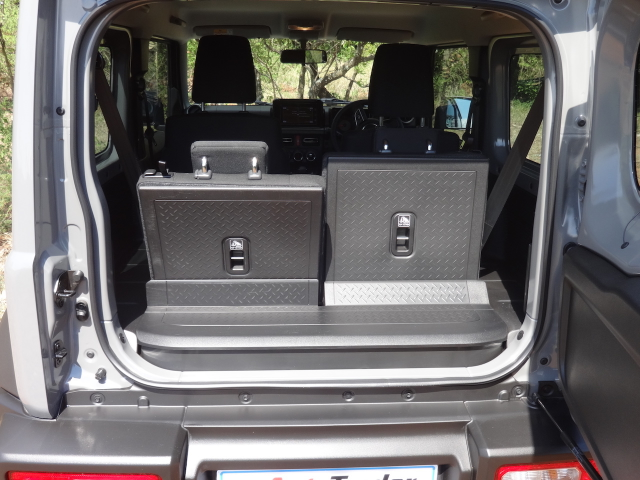
The Thar comes second in this department, because its extra length (compared to the Jimny) makes for a more usable luggage bay, and this applies equally when the rear seats are in use or when they’re stowed away. There’s no doubt that the Jimny is the least practical of this trio – the same factors which give it unbeatable performance and off-road ability (in this price class) count against it when the time comes to carry lots of stuff around.
Related: Even if you buy a Jimny in bare GA trim, you can spruce it up with these cool accessories.
Equipment and safety
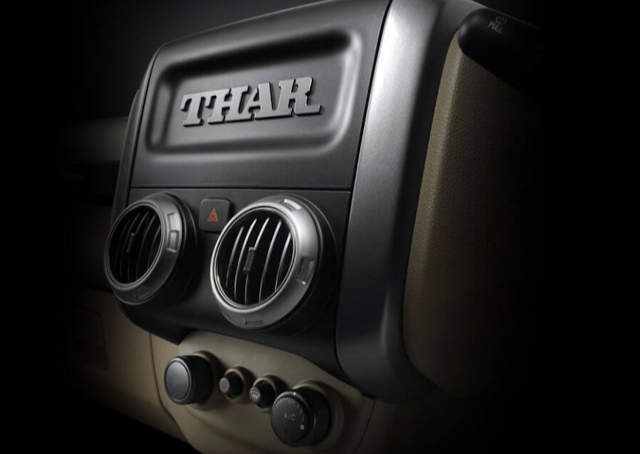
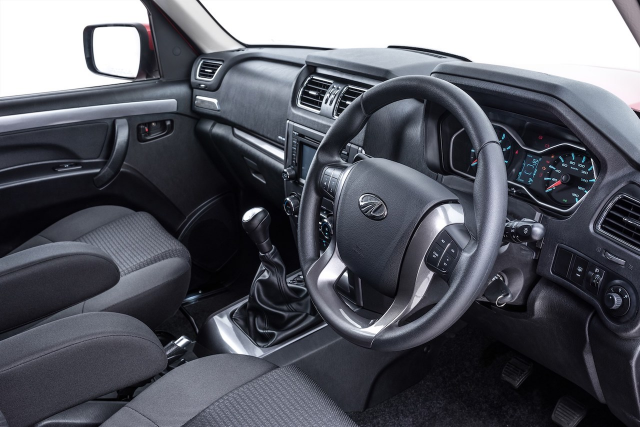
We’ve chosen the up-specced Thar for this comparison, because it gets at least some cosmetic enhancements and a hard top. There is no real boost in interior comfort items, though – both Thar derivatives are about as barren inside as you could imagine. The creature comfort list runs to power steering and air conditioning, and... ummm... that’s about it, really. Forget about fancy infotainment systems, electric anything, or cruise control, because none of those things feature on either Thar’s specification sheet.
The Jimny fares somewhat better, but not by much. While the high-trim (and more expensive) GLX variants offer a fancy touchscreen infotainment system with (amongst many other things) smartphone mirroring and USB/Bluetooth capability, along with electric windows and mirrors, cruise control, push-button start, and LED headlamps, the basic GA makes do without any of that. In fact, its unadorned façade is amazingly close to that on the entry-level Thar, right down to its painted steel wheels.
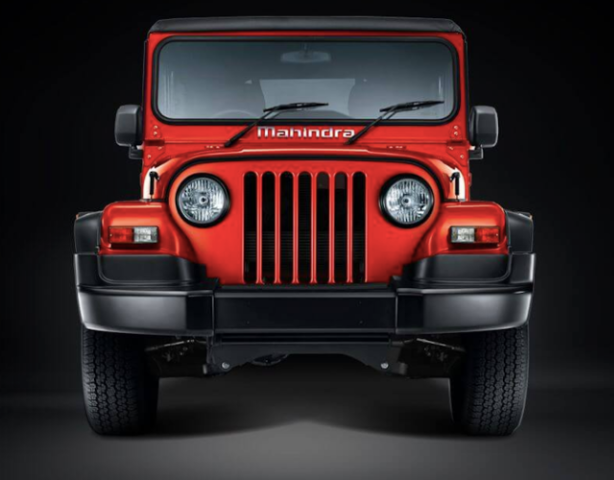
In comparison, the Pik Up in S6 trim is positively luxurious, with electric windows, central locking, keyless entry and an integrated audio system all featuring on the standard spec sheet. As far as creature comforts go, this a clear win for the Mahindra Pik Up, then – not because it’s extraordinarily well-equipped, but mainly because the other two really are stripped to the bone. Call it a second place for the Thar Adventure, because it at least has alloy wheels, funkier bumpers, and a snorkel...
Related: Read more about the 5 cheapest 4x4s on our market.
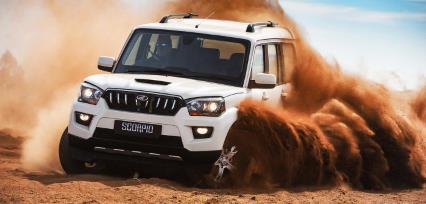
The safety comparison swings matters back into the Jimny’s favour, however. Sure, it only scored 3 stars in Euro-NCAP crash testing, but that’s still bound to be a far sight better than the ancient design of the Thar would manage. Neither the latest (and comprehensively strengthened) Mahindra Pik Up nor its Scorpio SUV sibling has been tested by any NCAP agency yet, but the 2016 edition of the Scorpio scored a dismal 0 stars, with no airbags and an unstable body structure. It remains to be seen how well the latest Pik Up would perform in these tests, but the addition of two airbags certainly add some welcome peace of mind for the occupants.
Standard safety equipment in the Thar is non-existent, with no ABS or airbags in sight, let alone ISOFIX child seat anchors. Both the Pik Up and Jimny feature the former two, but the Jimny is the only one to include ISOFIX anchors as well. This, combined with its proven crashworthiness, nets the Jimny a first place in the safety department, with the Pik Up in second position and the Thar coming in stone last.
Related: What is covered by the Mahindra Pik Up's manufacturer warranty?
Verdict
We selected the up-spec Thar Adventure for this comparison, based on its price point, but in reality, the entry-level Thar would have turned in almost identical results. Seen in this light, the high-trim Thar doesn’t really make a lot of sense, because it carries a significant R 63 000 price premium for very real benefit. It finishes last in most of this comparison’s criteria, and only really makes sense as a bargain-basement off-roader – in which case it makes more sense to buy the cheapest one you can get. But in this company and in this trim, the Thar is soundly outclassed in almost every respect.
Separating the Pik Up S6 and the Jimny is a bit more difficult. This Mahindra Pik Up is pretty well-equipped, a lot more load-friendly, and has more potent engine with more torque. However, because we’re comparing it to the Thar, off-road ability has to come into the equation as well, and that’s where it falls short against the Jimny.
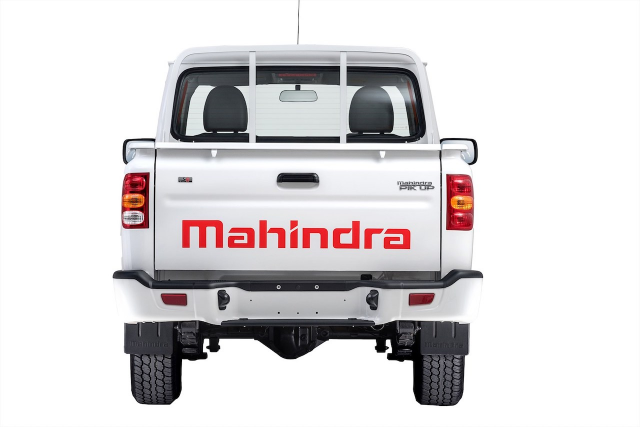
Put it this way: if you need to carry large loads but still want reasonable off-road ability, the Pik Up should be your choice. But if practical aspects are of secondary importance, and your primary requirement is for amazing off-road ability, the Jimny is unbeatable. Sure, the Jimny in GA trim is very spartan, but it’s also a lot less expensive than either of the Mahindras in this comparison, and that makes it the value winner here. The only way the Thar should be your first choice is if you want to spend the absolute minimum, because the basic Thar costs even less than a Jimny GA...
* Pricing was accurate at the time of writing, but may change without prior notice.
Recommended next:
Find a new or used Mahindra Pik Up in any trim you could want in our listing pages.
Interested in the best little 4x4 out there? Find a new or used Suzuki Jimny by clicking here.