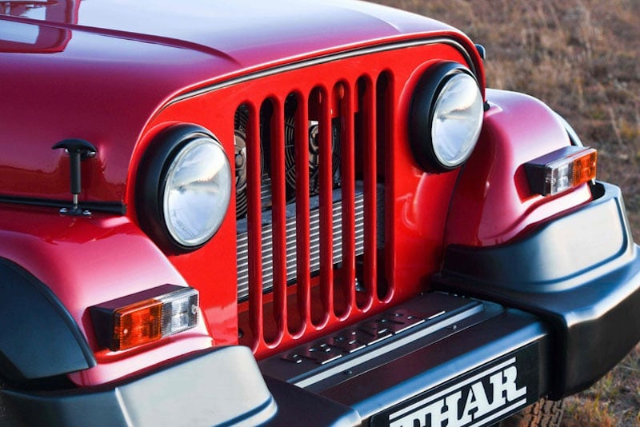
The Mahindra Thar is often mistaken for a Jeep Wrangler and it's easy to see why. The Thar carries a striking resemblance to that of the Jeep CJ (the Wrangler predecessor) and the Willys Jeep.
The story starts with Mahindra & Mahindra, an Indian firm that was awarded the license to produce the Willys Jeep for the Indian market in 1949. They produced the Jeep, using genuine parts from Willys, including the legendary Hurricane engine and this saw them carve a niche into their market, providing a robust and reliable off-road offering for the Indian population.
Related: Mahindra Thar vs Suzuki Jimny vs Mahindra Pik Up: which one is the best value for money?
The second version, the CJ3B is where the wheel truly got rolling and resulted in the Thar predecessor, the MM540. The MM540 was largely credited with bringing the car to the masses. The Thar nameplate was only introduced in 2010 and since then has enjoyed global success, particularly in the adventurous off-road circles.
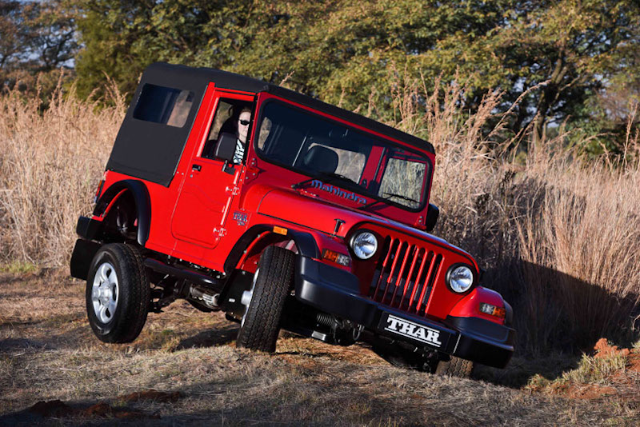
But which is better; the diesel or petrol?
This is an easy one to answer as the Mahindra Thar is only available in diesel form, relying on the NEF TCI-CRDe 2.5-litre engine.
This engine produces 79 kW and 247 Nm torque, sending power to all four wheels through a Borg-Warner 4WD system with locking front hubs and a mechanical locking rear differential. A 5-speed manual gearbox is used and allows for on-the-fly switching between high- and low-range. The low-range features a ration of 2.48:1.
This engine is said to return combined cycle figures of 7.5 l/100km.
The Mahindra Thar has an approach angle of 44-deg and a departure angle of 27-deg with its break-over angle coming in at 15-deg with the standard 200mm ground clearance.
Recommended next:
Breaking news: Mahindra unveils new compact SUV