
Mercedes-Benz GLC vs Jaguar F-Pace vs Alfa Romeo Stelvio: Here's our winner!
Mercedes-Benz recently updated their GLC-class mid-range crossover/SUV, with improvements all-round and a very subtle restyling job. How does it compare to the Jaguar F-Pace and Alfa Romeo Stelvio, specifically in four-cylinder turbopetrol format? We take a closer look.



Not every premium SUV has to come from Germany.
It helps that the Germans helped to invent the modern formula for premium SUVs, of course – both Mercedes-Benz and BMW have been at it for more than two decades, with Audi just a few years behind them but fully caught up now. But, in spite of their wide model ranges, there’s a “sameness” about the German Big Three’s recent products.
This is all due to convergent engineering: designing cars according to a pre-determined set of parameters will eventually lead to very similar cars being made by various manufacturers. In the case of the Germans, the recipe states that their lower-to-mid level SUVs have to have permanent all-wheel drive (ideally with some form of traction management), a 2.0-litre, 4-cylinder turbo engine, and a gearbox with as many ratios as they can fit in.
And, because everybody copies the Germans, a slew of competitors have come up with their own interpretations of this theme. Instead of a Mercedes-Benz GLC, BMW X3 or Audi Q5, you can have a Jaguar F-Pace or and Alfa Stelvio, both of which follow the same recipe and achieve remarkably similar results as a consequence. So, seeing as the Mercedes-Benz GLC was updated at the end of 2019, we decided to see how the newest GLC would compare to the more-unusual choices in its segment.

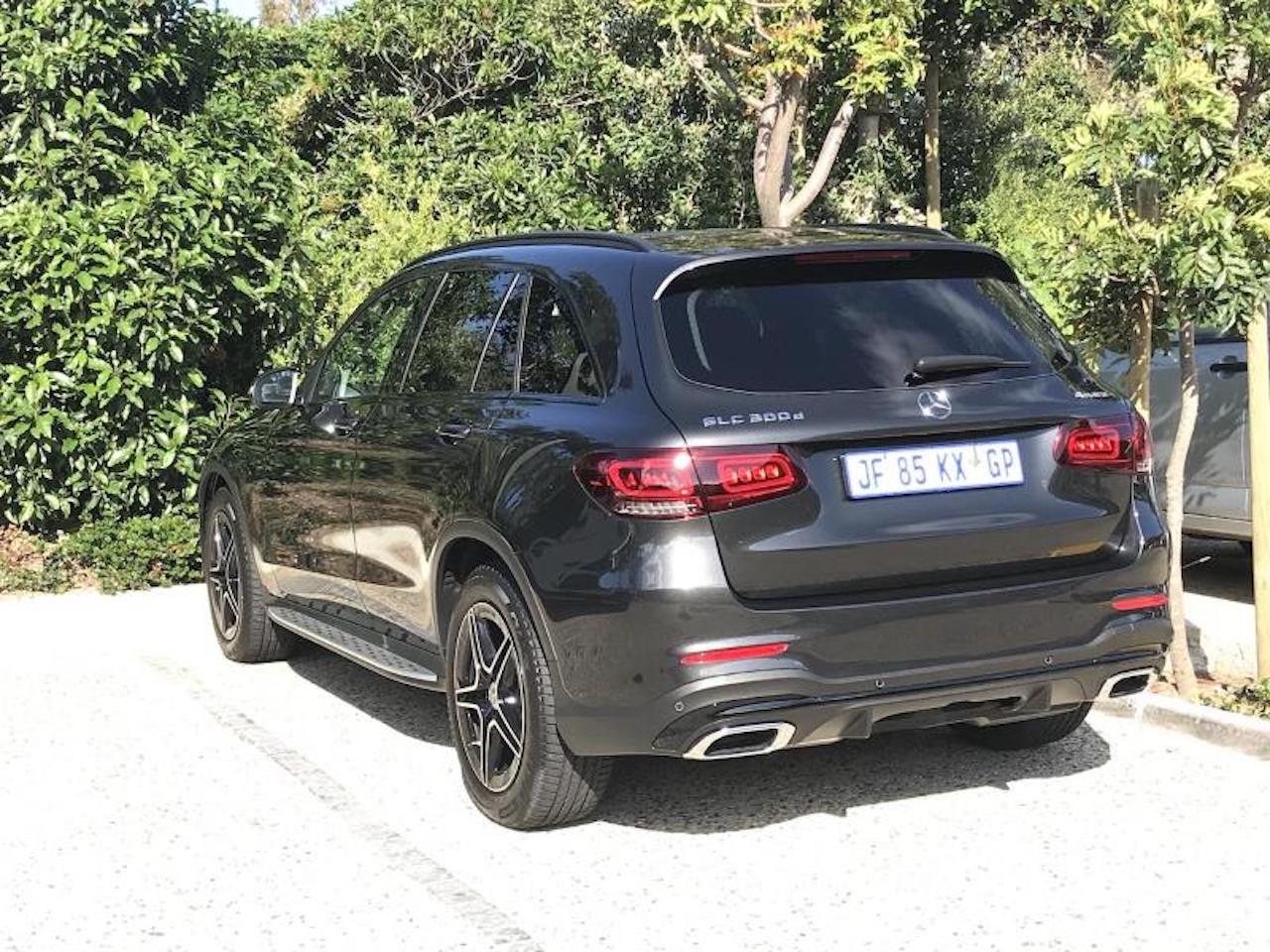
Mercedes-Benz GLC300 4Matic
Our GLC benchmark is the least-expensive petrol variant on sale, and conforms to The German Standard in every way. As part of its recent mid-life refresh, the GLC range received new powerplants, mildly enhanced styling, and modernised infotainment systems, along with a few driver aid add-ons. These improvements have subtly enhanced the GLC’s dynamic abilities, post lower fuel consumption claims, and boosts performance quite substantially. The latest GLC is also easier to operate and nicer to look at, so it warrants a re-evaluation against its peers.
Related: Find out more about the Mercedes-Benz GLC’s mid-life facelift here.
Engine, performance and consumption
The petrol-GLC’s new powerplant might only be a 2.0-litre 4-cylinder, but it posts some decent figures. Baseline outputs are 190 kW and 370 Nm, with an extra 10 kW added by a mild-hybrid system. The resulting 200 kW is quite sufficient, so performance is pretty decent. Between the engine and the electronically-controlled AWD system sits a 9-speed automatic gearbox, and it is, as expected, very good indeed. Gearshifts are generally imperceptible, and the gearshift programming is intuitive and makes the most of the engine’s efforts.
Mercedes-Benz claims a 0 – 100 km/h sprint time of 6.2 seconds, and a top speed of 240 km/h, so it is quite rapid enough– especially for a base model. On top of the performance improvements, official claimed fuel efficiency has also improved (for this power level), and is supposed to return 7.4 ℓ/100 km on average. Mixed-cycle driving should show low-8 ℓ/100 km average consumption, although that will largely depend on the frequency with which the driver deploys all that newfound power.

Related: Which Mercedes-Benz GLC is better – petrol or diesel?
Standard equipment
Part of the GLC’s mid-life update includes some new toys. The most obvious feature is the addition of the MBUX user interface, which is used in a similar way to an iPhone’s Siri or an Amazon Alexa. That’s all very well, but the big and bright centre display screen is optional – the standard colour centre display is still disappointingly small.
This is really the only cause for complaint in the GLC’s standard equipment pack. It has everything you’d expect from a premium SUV around this price point, but most of the cool features are optional. Buyers will have to tick some boxes to get a panoramic sunroof, adaptive air suspension, adaptive cruise control, blind-spot monitoring, electric front seat adjustment with memory, and lane-keeping assist; but dual-zone climate control and LED headlamps are standard (with adaptive Multibeam LEDs optional, of course).

Safety
Even though some of the nicer safety add-ons are optional, the GLC still comes with a decent standard safety spec. ABS, stability control, 7 airbags, rear ISOFIX child seat anchors, automatic emergency braking, and a 5-star Euro-NCAP crash test rating ensures top-level safety credentials even in the most-basic trim.
Available upgrades include rear side airbags (for a total of 9) and improved Pre-Safe, but it’s disappointing to see parking sensors (front and rear) and even a rear-view camera on the options list. These safety features are standard on a multitude of lesser vehicles, and one should consequently also expect them as standard fare at this price point.
Related: Five must-have optional extras for your Mercedes-Benz GLC.

Practicality
This is one area where the GLC didn’t have to improve with the facelift, because it has always been a very practical vehicle – especially in SUV guise instead of as a “coupé”. There’s ample cabin space for a quartet of six-footers, and large door apertures for easy entry and exit.
The luggage compartment is equally capacious, with 550 litres on offer with the rear seats in use. This can be expanded up to 1 600 litres by folding down the split rear seat, with an even shape and a large tailgate opening with a reasonably low loading sill (for and SUV).
Price and value proposition
With a list price of R 940 200 (before options), the Mercedes-Benz GLC300 is competitively priced within its market segment, but buyers will need to add some options to reach the ideal configuration. What really makes it worth the money is that lovely new engine, which endows the GLC300 with a pretty decent turn of speed, and the improved technology on offer. It’s still not great value for money, though, so budget-conscious buyers are, as always, advised to rather look at something without a premium badge.

Related: We compared the Mercedes-Benz GLC’s value for money to two popular alternatives.
The competition

Jaguar F-Pace 25t AWD Pure
It’s been around since 2016, and it hasn’t aged a bit in the last four years. Even discounting the Jaguar F-Pace’s other virtues, its beauty alone warrants consideration. This is a car that appeals to your emotional side, and in a world of bland conformity, that makes for a nice change.
It’s also really good to drive, being built on a variation of Jaguar’s aluminium platform, and it can even be specified in a reasonably affordable trim. Mind you, the closest Jaguar-badged competitor to the Mercedes GLC300 costs a fair bit more, and has to be taken in base spec to get down to that price. That’s no great hardship, though, as even base-spec Jaguars are pretty nice places to spend time.

Related: Which Jaguar F-Pace is better – petrol or diesel?
Under the bonnet resides Jaguar Land Rover’s Ingenium 2.0-litre turbopetrol, tuned to produce 184 kW and 365 Nm in this application. It’s mated to an 8-speed ZF automatic gearbox and a rear-wheel-biased AWD system. Predictably, performance is somewhat down on the GLC300, needing 6.8 seconds to get to 100 km/h, and running out of puff at 217 km/h. Its fuel consumption figures match the GLC300’s, though, with a claimed average of 7.4 ℓ/100 km, but it will likely return mid-8 ℓ/100 km figures in the hands of a conservative driver.
The Jaguar F-Pace aces the practicality tests, though, with its greater overall length paying dividends particularly in luggage space. Rear-seat space is reasonably generous, but that aluminium body necessitates smaller door apertures to maintain the required structural integrity. There’s 650 litres available with all seats in use, growing to 1 740 litres with the seat folded away. This is particularly impressive when you consider that there’s a full-sized spare wheel underneath as well...

Standard equipment is once again fair for this price point, with a similar specification sheet to the GLC’s. The main difference is that LED headlights are optional, while xenons are standard fitment in “entry-level” Pure trim. Not ideal, but not a terrible compromise, either.
Related: Five extras you should fit to your Jaguar F-Pace.
The F-Pace has a similar suite of safety systems, but adds highly appreciated parking sensors front and rear, along with a rear-view camera. It loses one airbag compared to the GLC, however, with 6 airbags being standard and no option to upgrade. Similar driver aids are optionally available, although lane-keeping assist is included as standard. The Jaguar certainly compensates for the loss of that airbag with a few very welcome safety additions…

Things look a little shakier when the value proposition comes under the spotlight though: with a list price of R 969 750 before options, the Jaguar starts off on the back foot. It does however have a distinct advantage over the Mercedes in the standard equipment- and practicality stakes, which largely compensates for the slightly lazier performance and higher price. The Jaguar F-Pace’s warranty and maintenance plan both run 5 years or 100 000 km, bettering the Benz’s warranty of 2 years with unlimited mileage and matching its maintenance plan.
Related: Is the Jaguar F-Pace good for families?

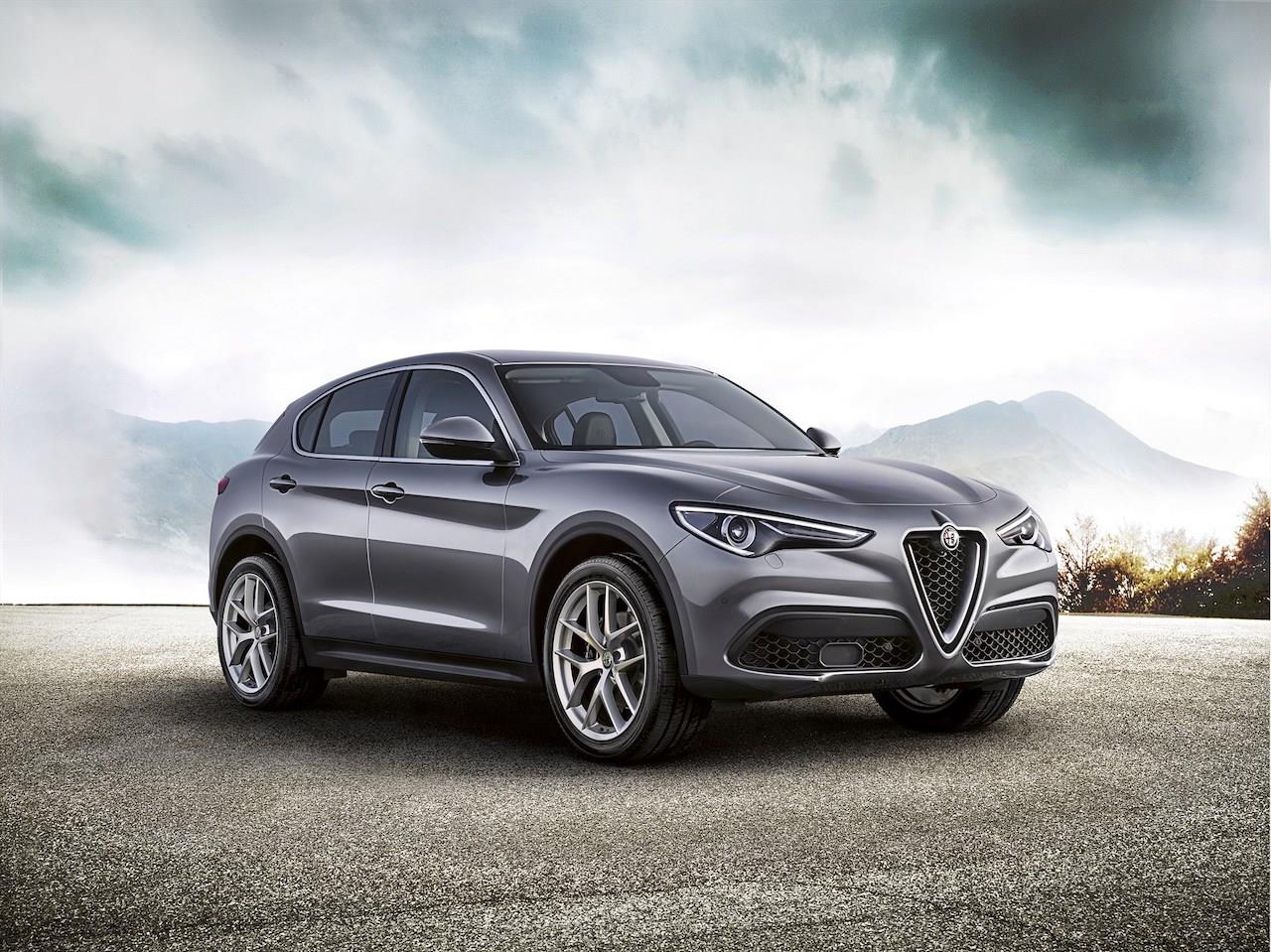
Alfa Romeo Stelvio 2.0T B-Tech Q4
This is the most expensive 4-cylinder Stelvio available, and consequently receives a number of enhancements over the base Stelvio Super. Black trim accents give the B-Tech Stelvio a more menacing appearance on the outside, and the package upgrades some of the in-car technology as well.
Related: Our review of the Alfa Romeo Stelvio 2.0T Super found a lot to adore.
But underneath the tinsel is the same Alfa Stelvio we already love. It’s arguably the most athletic car in this trio (the other contender being the Jaguar), and it has (barely) the most power in this group. 206 kW and 400 Nm, combined with the lowest kerb weight of these three, is enough to send the Stelvio to 100 km/h in 5.7 seconds, before ending the rush at 230 km/h. Like the Jaguar, the Alfa's engine is also hooked up to an 8-speed ZF automatic gearbox and a rear-biased AWD system. It also has the lowest claimed average fuel consumption here, at 7.0 ℓ/100 km, but conservative drivers should again expect mid-8 ℓ/100 km figures in mixed-cycle driving.

Inside the cabin, the Alfa offers loads of passenger space, thanks to very clever packaging. It has the most rear seat head- and legroom, but it also has the smallest boot of this trio: 525 litres with all seats in use isn’t a disgrace, but it’s less than you’d see in the Mercedes and a lot less than you’d get in the (larger) Jaguar.
Related: Which Alfa Romeo Stelvio trim depreciates the fastest?
B-Tech trim brings a number of tech updates, with the addition of bi-xenon lights, adaptive cruise control, an 8.8-inch colour infotainment display with full smartphone mirroring, and standard navigation. Lane departure warning is standard, but blind-spot monitoring is optional. For the rest, the safety spec reads much like the Jaguar’s, right down to the rear-view camera and parking sensors at both ends. The Stelvio B-Tech is certainly comparable with the others in terms of equipment, and even offers a little bit extra as standard.

This added value (compared to the others) doesn’t come with a commensurate price increase, either. While its base price of R 919 822 can definitely not be called inexpensive, the B-Tech is more than R 20 000 less expensive than the Mercedes-Benz and almost R 50 000 cheaper than the Jaguar. While the Alfa’s warranty only runs for 3 years or 100 000 km, its maintenance plan stretches to 6 years or 100 000 km, further improving its value proposition.
Related: What is covered by the Alfa Romeo Stelvio’s manufacturer warranty?
Which one do we like best?
Let’s recap the important numbers first:
|
|
Mercedes-Benz GLC300 4Matic |
Jaguar F-Pace 25t AWD Pure |
Alfa Romeo Stelvio 2.0T B-Tech Q4 |
|
Engine (cyl/size) |
4-cyl, 2.0-litre turbopetrol |
4-cyl, 2.0-litre turbopetrol |
4-cyl, 2.0-litre turbopetrol |
|
Power/Torque |
200 kW/370 Nm |
184 kW/365 Nm |
206 kW/400 Nm |
|
Transmission |
9-speed automatic |
8-speed automatic |
8-speed automatic |
|
Kerb Weight |
1 735 kg |
1 760 kg |
1 660 kg |
|
Length (mm) |
4 656 |
4 731 |
4 687 |
|
Airbag count |
7 (opt 9) |
6 |
6 |
|
Load Volume* |
550-1600 litres |
650-1740 litres |
525-1600 litres |
|
0-100 km/h** |
6.2 seconds |
6.8 seconds |
5.7 seconds |
|
Top Speed** |
240 km/h |
217 km/h |
230 km/h |
|
Ave Consumption** |
7.4 ℓ/100 km |
7.4 ℓ/100 km |
7.0 ℓ/100 km |
|
Warranty |
2 yr/unlimited km |
5 yr/100 000 km |
3 yr/100 000 km |
|
Base Price |
R 940 200 |
R 969 750 |
R 919 822 |
* With 5 seats in use.
** Manufacturer's official claimed figures.
Verdict
These three cars go about their premium-SUV business is rather different ways. While they are close to equal in most respects, there are also some brand-specific idiosyncrasies coming through. Our benchmark Mercedes-Benz GLC300 unfortunately finishes last in this group, but it’s not far behind the Jaguar F-Pace 25t Pure.

They’re both very good at what they do, but the Jaguar focuses on practicality and sporty handling, while the Mercedes has mainly strong performance counting in its favour. The crucial differentiating factor comes when the specifications are brought into consideration, where the GLC300’s base trim is simply too spartan to offset its price advantage.
Adding niceties such as the larger infotainment screen and parking sensors should get the Mercedes on par with the Jaguar, but it still won’t be as pleasurable to drive – and likely more expensive. There’s no disgrace in either second- or third places here, though: both the Mercedes-Benz and the Jaguar are hugely appealing, but they fall a little short on the value front.

All of which hands the Alfa Romeo Stelvio 2.0T B-Tech Q4 a surprise victory. The only area where it can’t quite stand eye-to-eye with these opponents is in the practicality stakes, but the penalty there isn’t significant enough to offset the Alfa’s higher standard spec level, performance- and economy advantages, stronger maintenance plan, and smaller pricetag.
*Pricing was accurate at the time of writing, but may change without prior notice.
Recommended Next:
Shop for new and used Mercedes-Benz GLC-Class cars for sale here.
Shop for new and used Jaguar F-Pace cars for sale here.
Shop for new and used Alfa Romeo Stelvio cars for sale here.