The rise of vehicles that offer space and practicality and a higher driver's vantage point has seen manufacturers pivot heavily toward these types of cars. The proliferation of these types of cars in modern society has seen the steady decline of the traditional sedan and hatchback car. In the past, countries would build roads to handle cars. Still, in a reversal, car manufacturers now build vehicles to handle the ever increasingly bad roads, which is another reason consumers cite as their new buying habits.
Related: Top 5 Budget-friendly cars under R300k for South African women: Crossovers
Several terms describe these types of vehicles, and although folks intend for the terms they use to be all-encompassing, there are big differences. The terms "crossover" and "SUV" are often used interchangeably, but a key technical difference traditionally separates them: the way they are built.
Ford Focus coming back to SA?

The Key Difference
SUV (Sport Utility Vehicle): Traditionally, an SUV is built using a body-on-frame chassis. This means the vehicle's body is built separately from the frame (a sturdy, ladder-like structure similar to a truck chassis) and then placed on top. This construction makes SUVs more rugged, durable, and capable of handling off-road conditions and heavy-duty tasks like towing. Think of it as a truck with a passenger car body. The Toyota Fortuner, Isuzu D Max, GWM Tank series and Ford Everest are examples of this type of construction.
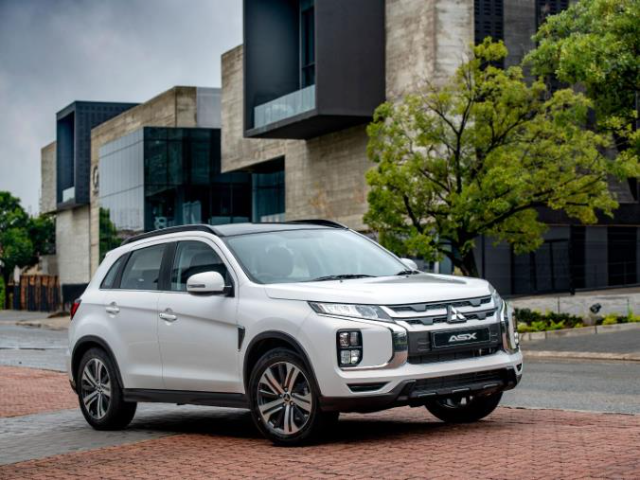
Crossover (or CUV for Crossover Utility Vehicle): A crossover is built using a unibody construction, where the body and frame are integrated into a cohesive unit. This is the same type of construction used for most modern cars. Because of this, crossovers tend to be lighter, more fuel-efficient, and have a smoother, more comfortable ride closer to a sedan or hatchback. Typical examples of this are vehicles such as the Hyundai Tucson and Kia Sportage, Chery Tiggo Range, Haval H range, Toyota Rav4 and Ford Territory.
Other Differences
Because of this fundamental difference in construction, other characteristics tend to follow.
| Crossover | SUV | |
| Platform | Built on a car platform. | Traditionally built on a bakkie-type platform. |
| Ride & Handling | Car-like, smooth, and comfortable. Easier to manoeuvre and park. | More rugged and bakkie-like. Sturdier and more capable on rough terrain. |
| Fuel Economy | Generally better due to lighter weight. | Typically lower due to heavier construction. |
| Towing & Hauling | Limited towing capacity; best for light loads. | Greater towing and payload capacity. |
| Drivetrain | Typically front-wheel drive (FWD) with all-wheel drive (AWD) as an option. | Traditionally, rear-wheel drive (RWD) with 4-wheel drive (4WD) for off-roading. |
| Target Driver | Families and commuters who want the practicality of an SUV with the comfort and efficiency of a car. | Drivers who need a vehicle for heavy-duty work, off-roading, or towing. |

Blurring Lines
It's important to note that these definitions have become increasingly blurred. Many modern SUVs are now built with a unibody construction to improve fuel efficiency and on-road comfort. This has led to the term "crossover" being used more broadly, and some manufacturers may refer to both types of vehicles as "SUVs." Just because a manufacturer employs a unibody construction for a vehicle does not necessarily make it a crossover; for example, models such as the Land Rover Range Rover Defender 110 and 130 have the size and shape of a body-on-frame construction but are in fact unibody.
What it really boils down to is size. Smaller compact vehicles are usually called crossovers, while large seven-seater cars tend to receive the SUV moniker.