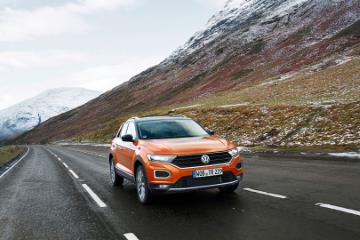
VW T-Roc vs Hyundai Creta vs Peugeot 2008: Which compact crossover has the lowest running costs?
In a wide field of capable compact crossovers, the Volkswagen T-Roc, Hyundai Creta and Peugeot 2008 are among the newest arrivals on our shores. We consider these three contenders from a running cost perspective – which one will be the least expensive for new owners to run?


In the not-too-distant past, buyers in this size- and price class would have considered a hatchback or sedan body style, but, seeing as crossovers are all the rage these days, manufacturers are only too happy to oblige. As a result, a constant stream of new crossovers has been flooding our market with some very appealing offerings. But which one will have the lowest running costs?
Can you pre-determine your car’s running costs?
When considering a car’s running costs, it’s important to look at it over its entire life-cycle. This allows third or fourth owners of older cars to get a clearer picture of possible future expenses, and it can help first owners to determine at what age their cars may become too expensive to run.
There are certain key points which could give an idea of a car’s general upkeep requirements. This includes the length of the service intervals, the cost of replacement tyres and service- and maintenance parts, and the prices of service parts. However, seeing as these cars are all very new on our market, the jury is still out regarding long-term running costs, so we’ll investigate from the perspective of a new-car buyer instead.
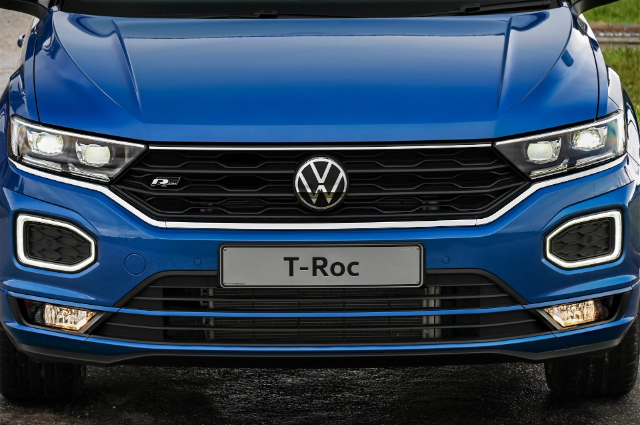
Seeing as the Volkswagen T-Roc range is aimed at a slightly higher market segment than the other two, its pricier derivatives are quite a lot more expensive. But, in entry-level trim, it goes up against some serious opponents, many of which are positioned at the apexes of their respective line-ups.
With this in mind, we selected the top-trim Hyundai Creta and Peugeot 2008, to compare their running costs. Less than R 10 000 separates the most- and least expensive cars here, making for a very tight price grouping indeed.
Let’s meet the contenders
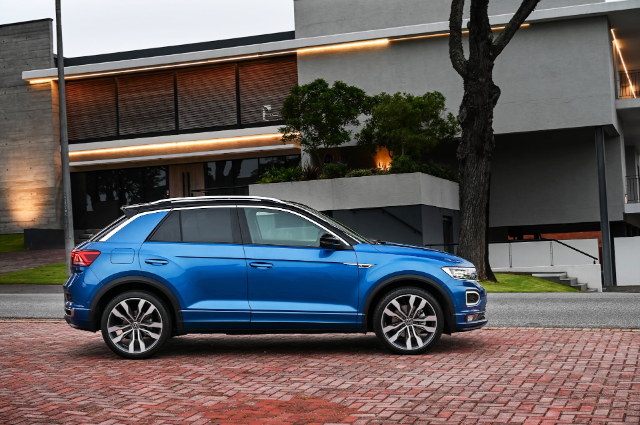
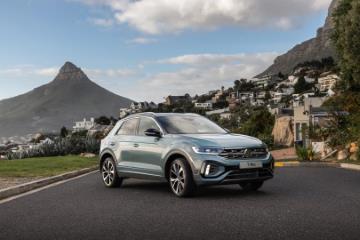
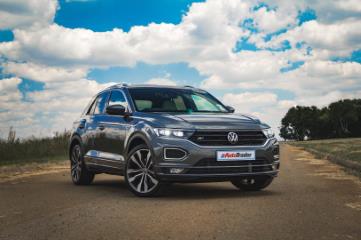
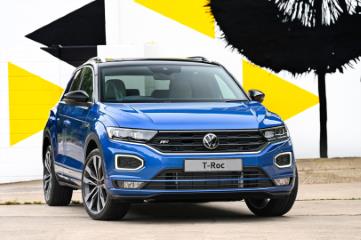
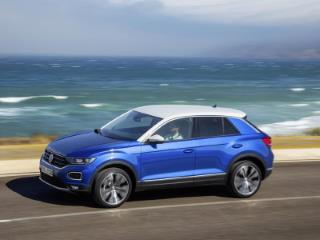
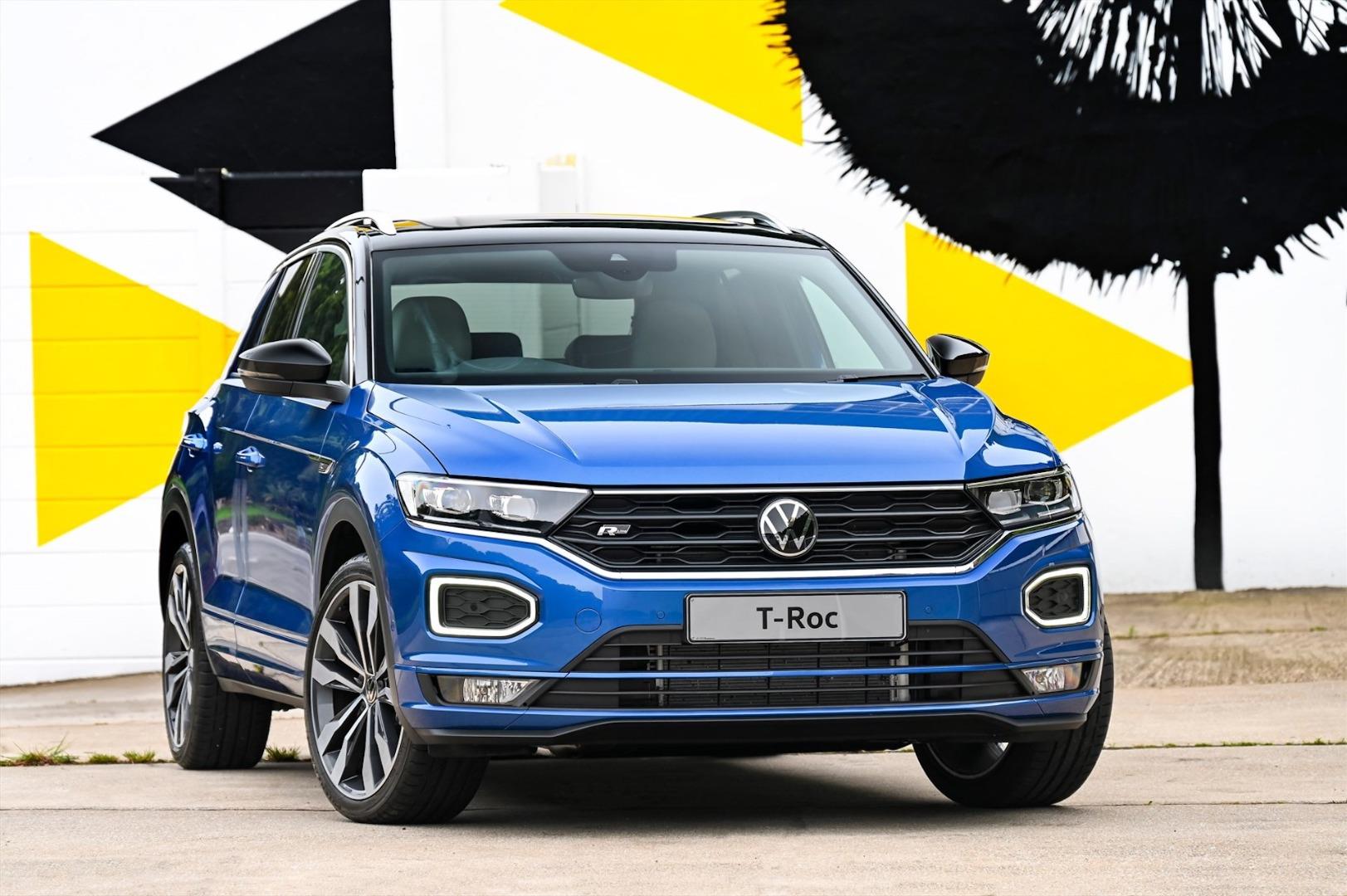
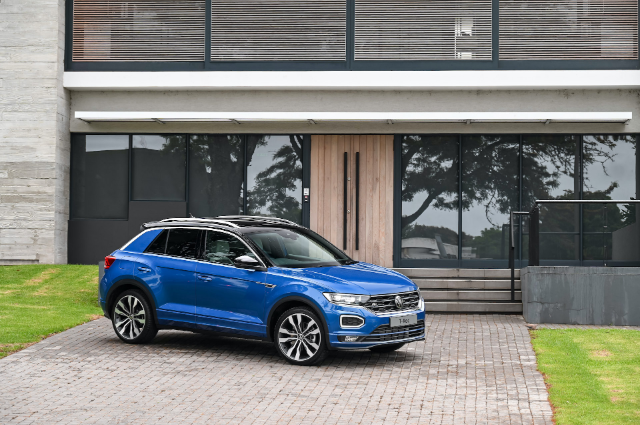
Volkswagen T-Roc 1.4TSI 110 kW Design (R489 400)
This derivative marks the entry point in the T-Roc line-up, with the only 1.4-litre engine and FWD layout in its range. Its upper-class siblings employ a 2.0-litre turbo mill, and are only available with AWD, which means that they’re also a lot more expensive – there’s a jump of almost R 60 000 to the mid-level trim, placing the AWD T-Roc variants in a different (and tougher) class altogether.
Power is supplied by a 1.4-litre turbo engine, sending 110 kW and 250 Nm to the front wheels through an 8-speed torque-converter automatic transmission. Performance is decent if not blistering, with a claimed 0 – 100 km/h dash in 8.4 seconds and a top speed of 205 km/h.
Related: Shop for new and used Volkswagen T-Roc cars for sale here.
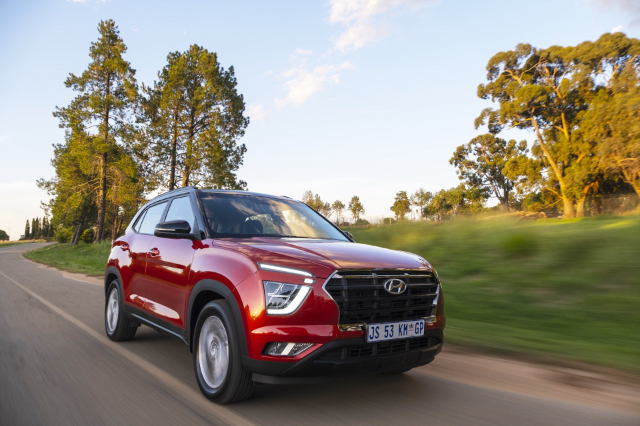
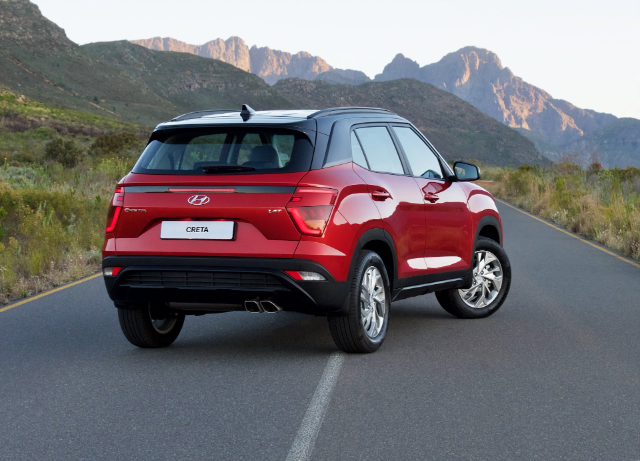
Hyundai Creta 1.4T Executive (R 487 900)
Capping off a range that opens at R 377 900, the Creta 1.4T Executive is loaded with all the latest equipment and the most power in its range, to justify its price premium. If you want to pay less for an automatic Creta, you can select either the 1.5-litre petrol variant with a CVT (only if you really hate operating a clutch), or the 1.5D Executive with a 6-speed torque converter automatic – the latter would be our choice in the range, in any case.
Like the entry-level T-Roc, the top-trim Creta employs a 1.4-litre turbocharged 4-cylinder petrol, which produces a reasonable (but not outstanding) 103 kW and 242 Nm. This is channelled to the front wheels through a 7-speed dual-clutch automatic gearbox, giving claimed performance stats of 9.7 seconds for the 0 – 100 km/h sprint, and a top speed of 185 km/h.
Related: Shop for new and used Hyundai Creta cars for sale here.
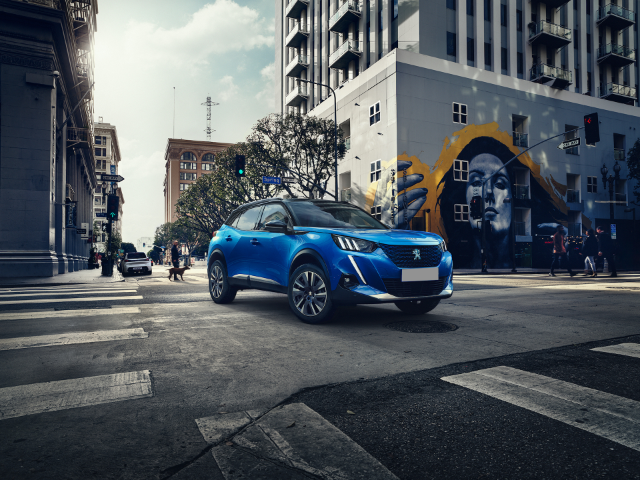
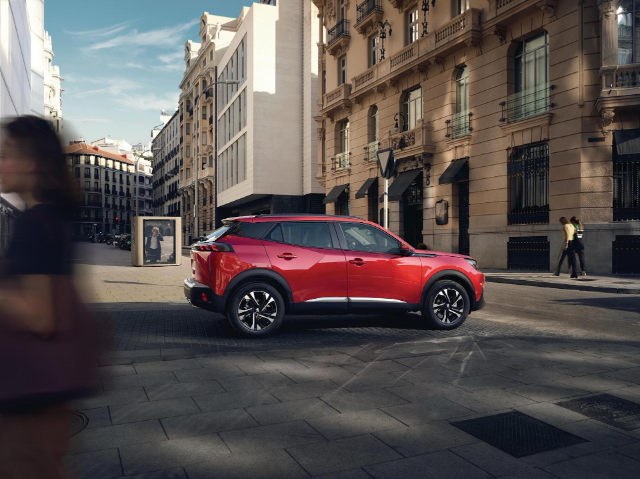
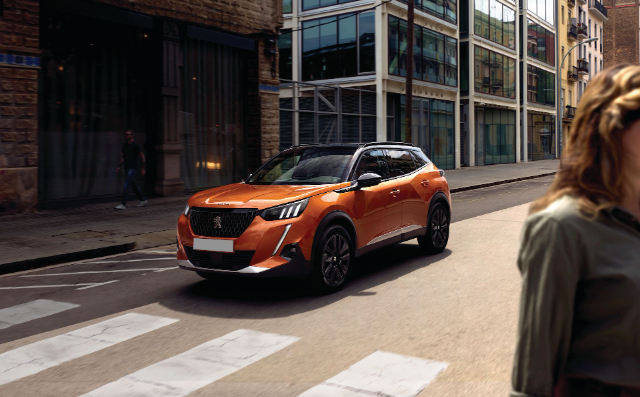
Peugeot 2008 1.2T 96 kW GT (R 479 900)
As with the Creta, this Peugeot 2008 is the most-expensive variant of a model range that starts much lower down the price list. In this case, you could have a Peugeot 2008 for R 359 900, but that means that you’ll have to be okay with the power output dropping to only 74 kW, and a lot less standard equipment.
The Peugeot 2008 in GT trim is fully-loaded, however, and includes some equipment that is optional in the similarly-priced Volkswagen. It has the least power in this group, with 96 kW and 230 Nm going to the front wheels through a 6-speed automatic gearbox, but performs quite well in spite of its relative lack of power and gear ratios. The 0 – 100 km/h dash is dispatched in a claimed 9.1 seconds (and it runs on to a top speed of 198 km/h).
Related: Shop for new and used Peugeot 2008 cars for sale here.
Which one has the lowest running costs?
Purchase price and depreciation
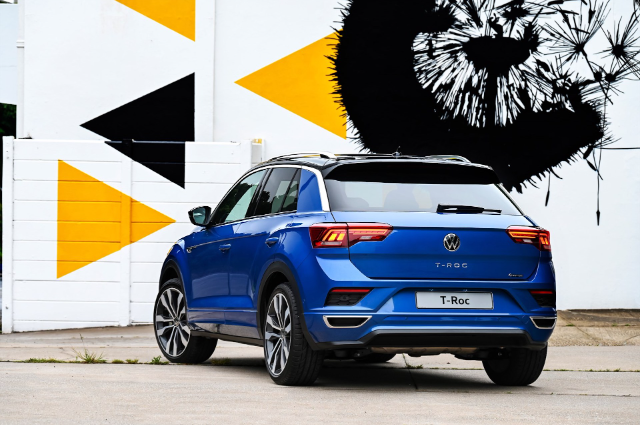
The Peugeot has a slight advantage out of the starting blocks, with marginally the lowest list price in this group. However, it is bound to lose out quite badly in the depreciation stakes, as this is an area in which Peugeot has been stumbling for a while. But, while the latest 2008 is too new to accurately judge on resale value, examples of its predecessor listed on AutoTrader show 2-year depreciation around the 25% mark at the time of writing, so this aspect may slowly be looking up.
Slotting midway between the others on the price ladder, the Hyundai Creta isn’t very far shy of the T-Roc’s pricetag – there’s exactly R 1 500 between them, and they’re both a bit more expensive than the Peugeot. The Creta performs a fair bit better than the 2008 in terms of depreciation, though, since 2019-model Cretas listed here on AutoTrader retain around 81% of their value after two years. This earns it second position in this department, in spite of its higher purchase price.
The most-expensive car here is the one for which we can’t draw any concrete parallels with its predecessor as far as depreciation goes. However, a look at other VW SUVs, such as the 2019 Tiguans listed here on AutoTrader, shows that they retain an amazing 94% of their value after two years, and there’s little reason to suspect that the T-Roc will be much different to its bigger sibling. This turns it into the winner in this department.
Instalment calculator
*Calculated according to the AutoTrader Car Finance Calculator, with a 72-month finance agreement, 10% interest rate, 10% deposit, and no residual value.
All prices listed in this article were accurate at the time of writing, but may change without prior notice.
Volkswagen T-Roc 1.4TSI 110 kW Design
List price: R 489 400
Instalment: R 8 610/month
Hyundai Creta 1.4T Executive
List price: R 487 900
Instalment: R 8 135/month
Peugeot 2008 1.2T 96 kW GT
List Price: R 479 900
Instalment: R 8 001/month
Fuel efficiency
While it’s unlikely that any of these cars will achieve their claimed average fuel consumption figures in real-world driving, at least those figures were obtained using a standardised method, thus providing us with a viable baseline for this aspect of our comparison.
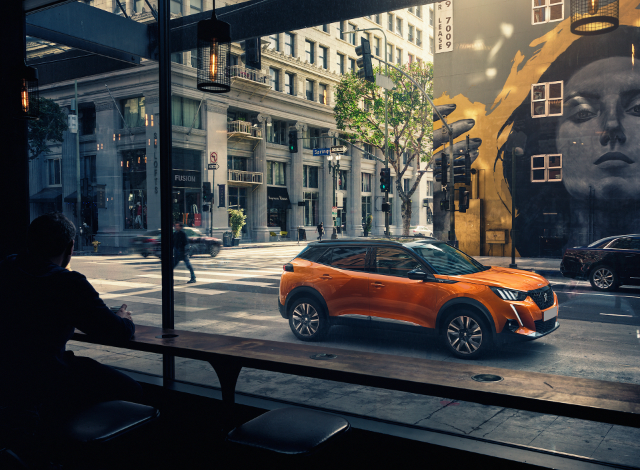
The Volkswagen T-Roc that we’re using as a reference point posts a claimed average fuel consumption of 6.2 ℓ/100 km, which places it ahead of both these opponents. The Peugeot’s 6.5 ℓ/100 km average claim is pretty close to that of the VW, though, and equally as unlikely to be obtained in normal mixed-cycle driving. The Hyundai brings up the rear with a claimed 7.2 ℓ/100 km, but in reality, they’re all capable of averaging in the low-to-mid 7 ℓ/100 km bracket, in the hands of a conservative driver.
Related: Which engines have the best efficiency?
Warranties, maintenance plans, and service intervals
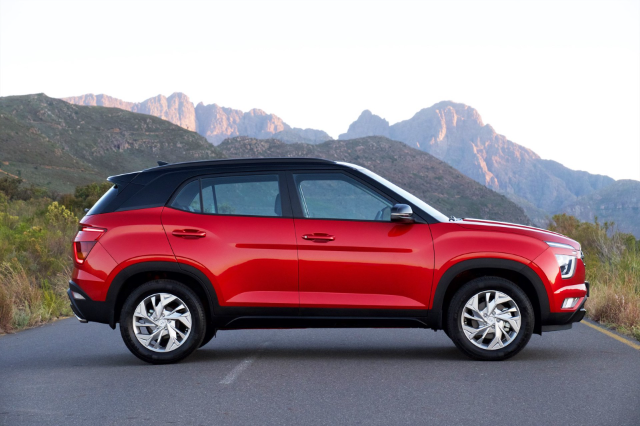
When it comes to the aftersales package, it’s a virtual certainty that the Hyundai will grab an easy win. The car’s warranty extends to 5 years or 150 000 km, but the drivetrain warranty adds another 2 years and 50 000 km to that already-impressive number. Add to this a service plan for 4 years or 60 000 km, and it’s easy to understand why the Hyundai Creta takes the first spot.
It's also in this criterion where we’d expect the Volkswagen to fall a bit short of the Hyundai, a reality that’s at first confirmed by the T-Roc’s warranty for “only” 3 years or 120 000 km. But then the service plan comes into play, which runs for 5 years or 90 000 km – a timespan and distance which actually outstrips both the Peugeot and the Hyundai. The complete package can’t quite beat Hyundai’s offering, but it gets pretty close.
Well done to Volkswagen, then, but it’s not like the Peugeot is very far behind, either. The new 2008 carries a warranty for 5 years or 100 000 km, alongside a 3 year/60 000 km service plan. That’s a pretty good package, but in the face of such strong opposition, the Peugeot has to be dropped to third place.
Related: What is usually covered under a manufacturer’s warranty?
Parts prices
None of these cars have featured in any AA Kinsey Report on parts prices, because they’re still far too new on the market (they all launched locally after the 2020 report was published). What we do know is that, thanks to a large degree of mechanical commonality with other VW Group products and extensive aftermarket support, long-term servicing and maintenance for the T-Roc is likely to be less-expensive than for the other two. Meanwhile, that excellent service plan is to the benefit of first owners.
Hyundai spares are also in fairly plentiful supply in South Africa – if not really from the aftermarket, then certainly from the agents. However, the Hyundai Venue (which competes downmarket from the Creta) that was evaluated in the 2020 AA Kinsey Report had a more-expensive parts basket than the Citroën C3 Aircross, which is mechanically related to the Peugeot.
Call it a draw for the Peugeot and Hyundai in second place, then – a conclusion we may amend as new information becomes available...
Insurance
A victim of its own popularity, the T-Roc is considered a higher insurance risk than either of the other two cars, mainly thanks to the Volkswagen brand’s popularity with the long-fingered set. The highest replacement cost, thanks to that (assumed) slow depreciation and highest purchase price, deals the T-Roc another blow, and relegates it to third place in terms of insurance costs.
Conversely, the Peugeot grabs a slight edge over the Hyundai, thanks to its lower initial price and projected lower replacement value (that’s the steep depreciation working for you). As a result, the Creta ends up midway between these opponents on insurance costs as well as on pricing.
Also remember that insurance premiums will vary, mostly based on the projected mileage to be covered and where the cars are kept and driven, both in the daytime and overnight. Younger drivers or those with prior accident histories will experience additional penalties, due to their higher collision risk.
Related: Top tips to save on your car insurance.
Tyre replacement
Standard tyre prices play a significant part in any running cost evaluation, but it’s not always a given that smaller tyres will be less expensive – if they’re less commonly used, they might be harder to find and more expensive to replace than larger tyres which are in wider use.
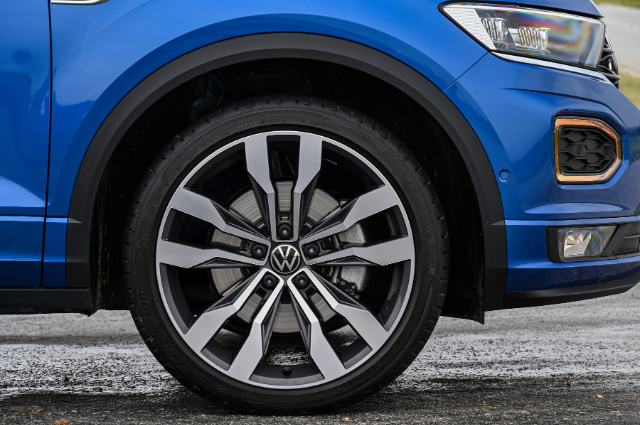
Between these three contenders, the Volkswagen T-Roc rolls on the largest (sidewall) tyre, with 215/65 R17 tyres fitted as standard. Replacement costs vary between about R 1 200 apiece for “store-brand” tyres, to R 3 300 for high-performance replacements. But, based on the T-Roc’s modest performance aspirations, reputable-name tyres priced around the R 2 000 mark should do the trick.
The Peugeot 2008 GT and Hyundai Creta 1.4T both use 215/60 R17 tyres as standard, indicating a slightly lower profile (shallower sidewall) than the Volkswagen’s rubberwear. This is an even more-commonly used tyre, with dozens of suitable replacements available, ranging from less than R 1 000 apiece for lower-end tyres to R 2 300 for high-performance replacements. Consequently, the Creta and 2008 share the honours in this department, and push the T-Roc into a still-respectable third place.
Related: How long is a tyre supposed to last?
Verdict
While it has plenty of positive attributes and offers great value for money, in the end it has to be the Peugeot 2008 that has to fall first. Steep depreciation will likely be its undoing, along with the weakest warranty/service plan combination – but these are issues that would mainly affect first owners.
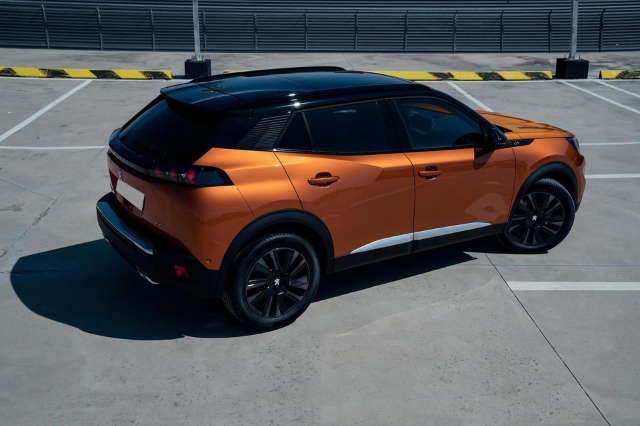
The Peugeot’s big surprise is a possible conclusion that, combined with its affordable tyre prices and competitive fuel consumption, it will also be the least-expensive to insure, and (probably) surprisingly affordable to maintain once the service plan has expired. If you don’t care about resale value and want to keep their car for a long time, the Peugeot 2008 may be just what you want.
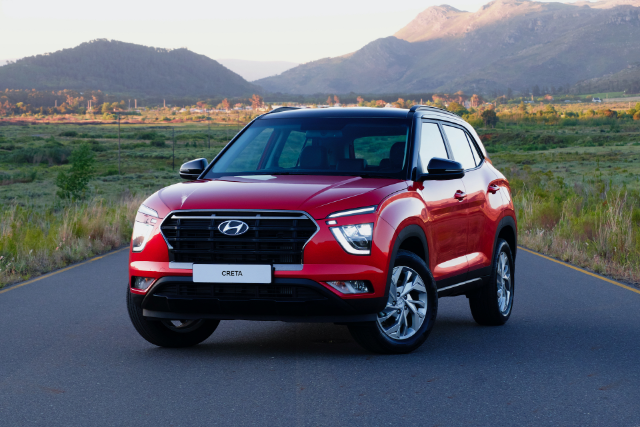
A very strong aftersales package is, as usual, one of the Hyundai Creta’s strong suits. This will undoubtedly make it the favourite for first owners who want to keep their cars for a long time. Its only downsides involve its slight fuel consumption- and performance deficit, compared to the other two cars. And, if the T-Roc’s value retention turns out to be not quite as solid as we suspect it would be, the Creta could indeed emerge as the contender with the lowest running costs.
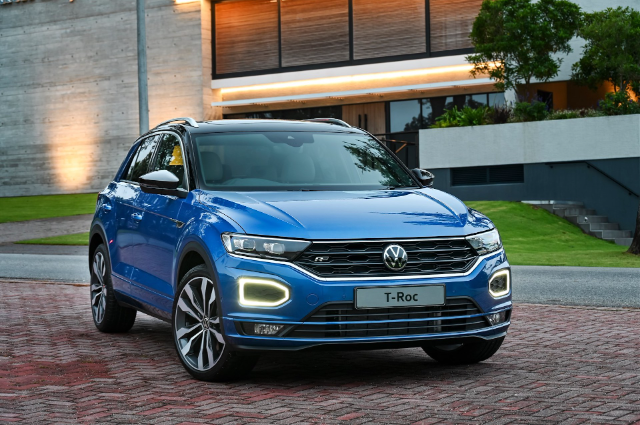
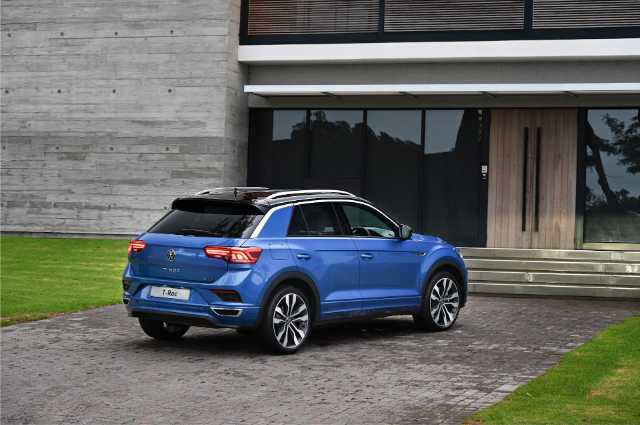
But, in the end, the Volkswagen T-Roc will most likely have the lowest running costs in the long term, mainly on account of its oily bits’ ubiquity and strong aftermarket support. In addition, there's the likelihood that a torque converter automatic should prove a bit more durable than the DSG (twin-clutch) units in many other VWs. It’s also very good in the short term, thanks to a generous service plan and the lowest fuel consumption in this trio. And, when you want to sell it on, the chances are that a T-Roc will get you the most of your money back. That is a win all round.