
Which engines give maximum fuel efficiency?
Which engines give maximum fuel efficiency?


By Stuart Johnston
For the purposes of this article, we are going to concentrate on the differences between diesel and petrol engines.
Let’s ignore electric engines now. That’s for another day..
“Pure” electric-engined cars are still in their infancy here in South Africa, with relatively high electricity costs, and inefficient methods (burning coal) of producing electricity. Our country, with long distances separating towns and cities, as yet doesn’t lend itself to cars powered by “pure” electric engines.
Electric cars, although they are improving in this aspect, suffer from ranges that are, at best, limited to a few hundred km per full charge. Whilst there have been a couple of electric-only driven cars for sale here during the past few years (the BMW i3 and the Nissan Leaf), their sales have to date been limited to a few hundred examples, out of an annual passenger car market of some 350 000 cars.
Generally speaking, smaller engines use less fuel
In general terms, a small engine is always going to use less fuel than a larger engine. It’s simply a matter of how much fuel and air is introduced into the engine, so smaller in capacity means less air is sucked in, and thus less fuel is needed. Generally.
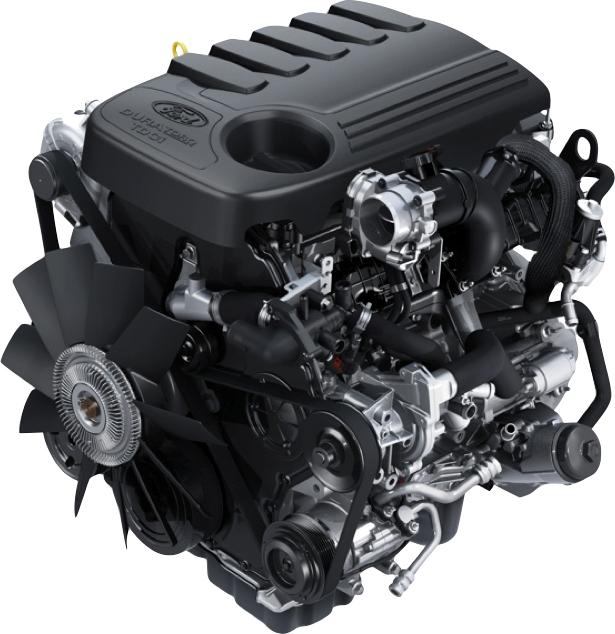
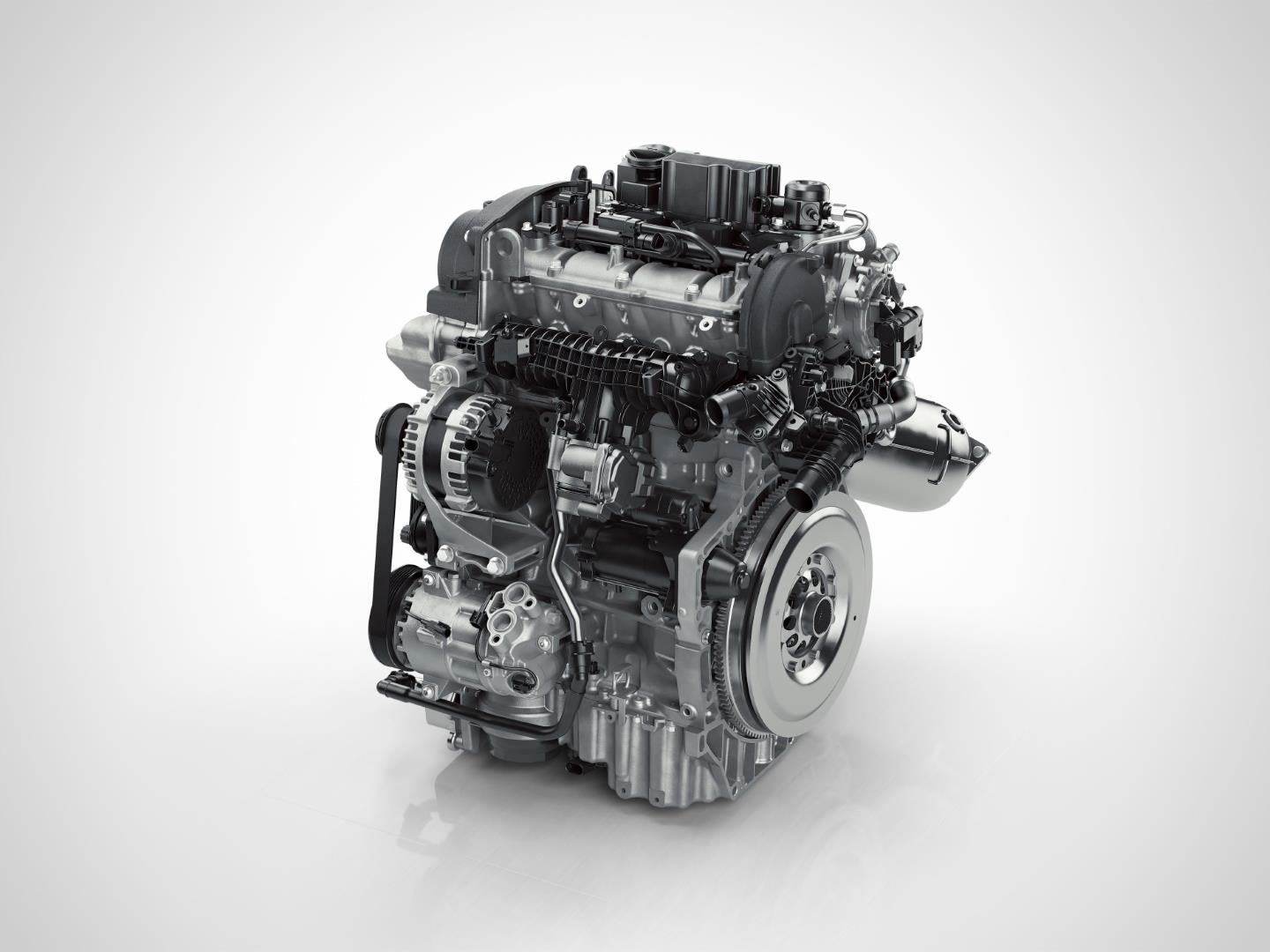
In recent years, with the increasing sophistication of turbocharging, computerised engine management and direct fuel injection, manufacturers have been down-sizing their engines, in both petrol and diesel form, to produce equivalent amounts of power to the “old-gen” larger engines. The number of cylinders have also dropped, with many manufacturers building turbo three-cylinder engines, to reduce the amount of friction in an engine. Less friction means more efficiency.
But, small isn’t always better, regarding engines
But whilst smaller engines give great test-bed economy and emissions read-outs, in some cases small isn’t always better. Often in real-world driving, a larger engine in a light body can give excellent fuel consumption. Small-capacity turbocharged engines fitted to larger sedans and SUVs often have to work too hard to achieve similar performance to larger engines, especially when they are coupled to automatic transmissions.
Don’t believe the claimed fuel consumption figures by manufacturers
Those amazing consumption figures you see in car ads and often in sloppily-presented road tests, should by and large be ignored! Those consumption tests are done in laboratory conditions, according to out-moded test models that were initiated as far back as 1998.
In September last year an all new standardised fuel consumption test model was introduced, known as World Harmonised Light Vehicle Test Procedure, which is said to be much closer to “real world” driving conditions. The results of these new test procedures, however, are yet to filter through to published economy figures on a large scale.
A recent UK study showed that, on average, real-world driving conditions resulted in fuel consumption that was 25 per cent heavier than the figures published by European manufacturers. Manufacturers from Asia and America have also used similar out-moded test models that are virtually impossible to produce outside of a laboratory. The only value these figures have is that they compare apples with apples: in other words, the tests are all done under identical conditions, with a simulated driving situation that is identical.
Diesel engines are the most efficient
When it comes to converting fuel and air into energy, diesel engines are more efficient than petrol engines, although the gap is narrowing. A big reason for this is that, litre-for-litre, diesel contains more energy than petrol. Another reason for this is that, traditionally, diesel engines run a higher compression ratio than petrol engines.
What is compression ratio?
The compression ratio refers to the volume of air (or an air-fuel mixture, depending on the design) drawn into an engine on each piston’s downward induction stroke, and by how much the mixture is then compressed when the piston reaches its uppermost point of the following compression stroke. Broadly speaking, the more the compression, the bigger the “bang ” that ends up propelling a car.
Diesel fuel is less volatile than petrol, and thus can be compressed more than petrol, without igniting (burning) prematurely, which can happen if you try to raise the compression ratio too high on a petrol engine.
In fact, diesels don’t have a throttle system that chokes off the air at lower speeds, like a petrol engine does. The diesel simply draws air in, compresses it, and at close to the full-compression point, fuel is introduced into the combustion chamber. The rate of compression in a diesel produces temperatures high enough to cause instant combustion, and this “ burn ” between the piston crown and cylinder head releases energy and forces the piston down again on the power stroke
Diesels produce more energy at low revs
Diesels have traditionally produced more torque (twisting energy on the flywheel) at lower engine revolutions than equivalently-sized petrol engines, due to the more “explosive” power of each diesel-fuel charge in the engine cylinders.
This can often, but not always, be seen when comparing the amount of torque (measured in Newton metres, or Nm) on specification lists on cars with similar engine sizes, diesel versus petrol.
But direct fuel injection and turbocharging in petrol engines has narrowed the efficiency gap.
However, it should be noted that modern petrol engines with direct fuel injection and turbocharging have narrowed the fuel efficiency gap. The writer recently used a Volkswagen Polo 1.0 TSI petrol-fueled three-cylinder hatchback to cover a holiday trip of around 5 000 km. The consumption ranged between 4,8 and 5,2 litres/100 km! Those are diesel-type figures indeed, although it must be admitted that most of the running was on the open road, and the car was driven with economy in mind, at slower speeds than normal.
It has been estimated that in general use, a diesel is about 25 per cent more fuel-efficient than an equivalent petrol engine, and this holds true particularly in large SUVs and large double cab pick-ups.
Diesel disadvantages
Diesel engines, because they need high precision parts to operate, using very high fuel injection pressures, as well as heavier items like pistons, crankshafts and bearings, are more expensive to produce than petrol engines.
At Reef altitudes, turbocharged diesel engines (they are all turbos these days) see the turbos run at very high temperatures to maintain boost pressures by spinning faster than they would at coastal air pressures.
Thus the incidence of turbo failures is quite high amongst diesel engines that work hard for their money up at the Reef. Another reason for relatively high diesel engine problems, such as injector and injector pump failures, is the relatively poor quality of our diesel, compared to European or Asian countries.
Diesels can’t rev high, so they make less ultimate power than petrol engines
A diesel engine cannot revolve much beyond 5 000 rpm and this is pretty much true even of racing Audi diesels competing at Le Mans. The reason is that combustion in a diesel engine cannot happen quickly enough when it revs higher than around 5 000 rpm. Combustion in a diesel occurs purely due to the compression of the air-diesel mixture, and as diesel is less volatile, flame travel in the combustion process is slower.
Petrol engines use spark ignition
A petrol engine, however, is designed to combust its fuel using a spark from the spark plug, and the engine management can thus be controlled to combust as much fuel as possible more quickly, at much higher rpm. A petrol-fueled Formula One engine, for instance, can rev to between 15 000 and 18 000 rpm! Typically, turbocharged petrol production engines have a maximum rev limit of between 6 000 and 7 000 rpm. Modern high performance turbo petrol engines can, in some cases, make similar torque at low rpm to that of a diesel, but by revving them higher, they make more ultimate power.
However, generally, diesel-powered cars are about 25 per cent lighter on fuel than their petrol equivalents
The innate superior energy of diesel fuel, versus petrol, remains, however, a factor for the average motorist. Generally speaking, diesels are about 25 per cent more fuel efficient than petrol engines in normal urban and highway use.
The Hybrid alternative
However, hybrid engine installations have progressed to the point where they are the most efficient of all. In the early days when Toyota introduced its Prius here (just over a decade ago), it wasn’t all that fuel efficient, and owners typically found overall consumption in the 7.0 litres/100 km range, whereas good diesels in lighter cars were already returning consumption figures in the 6.0-to 6.5 litres/100 km range in everyday use.
The latest Prius models are far more fuel efficient, with overall consumption easily in the 5,0 to 5,5 litres/100 km ballpark.
And the Toyota Yaris hybrid is even more efficient.
Hybrids are the way forward, for the next decade
Other larger hybrids, available from BMW, Mercedes, Lexus and the like, are also very efficient. And plug-in hybrids, which combine wall-plug charging with regenerative charging from the conventional engine when decelerating or braking, are very efficient. Overall consumption in these cars is potentially the most fuel-efficient of all engine type/combinations, especially in stop-start city driving, where driving on electric power alone means zero consumption and emissions.
In the short-term, hybrid electric-petrol cars (there very few electric-diesel models on sale) are seen to be the way forward as far as combining realistic range with low emissions and fuel economy. They remain expensive, but this will change as more and more manufacturers produce hybrid models in the next five to 10 years.