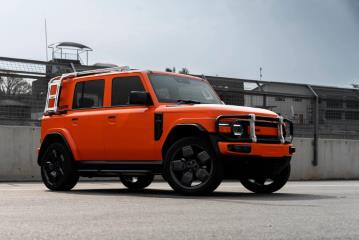
The South African bakkie market is famously traditional. We like our diesels, our ladder-frame chassis, and our conventional four-wheel-drive systems. When a brand introduces something as radical as the Changan Hunter REEV, it naturally raises a few eyebrows.
At R799 900, it undercuts many conventionally powered premium rivals, but it brings a highly complex drivetrain to the table. Here are the pros and cons to help you decide if the Hunter REEV deserves a spot in your garage.

What is a REEV anyway?
REEV stands for Range Extended Electric Vehicle. It is crucial to note that this is not a traditional Plug-in Hybrid (PHEV). In a standard PHEV (like the BYD Shark 6), both the electric motors and the petrol engine can drive the wheels mechanically.
The Hunter REEV is basically a pure-electric bakkie. It features a 31.2 kWh battery and two independent electric motors driving the front and rear axles. The 2.0-litre turbocharged petrol engine under the bonnet never drives the wheels. Its sole purpose is to act as an onboard generator to charge the battery while you drive. You get the instant torque and silent operation of an EV, but you can fill it up with petrol at any garage to keep going.
To make this simpler, we compare it with the BYD Shark 6 Premium below. (The Shark 6 Performance has just been released.)
| Specification | Changan Hunter REEV | BYD Shark 6 Premium |
| Starting Price | R799 900 | R989 900 |
| Drivetrain Type | REEV (Range Extended EV) | PHEV (Plug-in Hybrid) |
| Engine | 2.0L turbo-petrol (Generator only) | 1.5L turbo-petrol (Drives wheels + Generator) |
| Electric Motors | Dual (Front & Rear) | Dual (Front & Rear) |
| Combined Power | 200 kW | 321 kW |
| Combined Torque | 470 Nm | 650 Nm |
| 0-100 km/h | 7.9 seconds | 5.7 seconds |
| Battery Capacity | 31.2 kWh | 29.58 kWh |
Related: Hilux vs Ranger - Which retains more value?

What we loved about the Hunter REEV
1. Instant electric performance
Because it is entirely driven by electric motors, the Hunter REEV is seriously quick for a two-tonne double cab. The electric motors pump out 200 kW and 470 Nm of torque, which translates to a 0-100 km/h sprint of 7.9 seconds. That easily outpaces most top-tier diesel bakkies on the market. The instant torque makes overtaking on the highway completely effortless. And, you can choose between Eco, Normal, and Sport modes.
Related: Which Chinese double cab should you buy in '26?
2. A thoroughly modern cabin that keeps some physical buttons
Inside, you'll find that the Hunter feels more like a luxury SUV than a workhorse. We like the quiet cabin, comfortable seats, and clean, spacious layout up front. You get massive digital displays and wireless charging, but thankfully, there are still physical climate controls, so you do not have to tap a screen just to turn up the fan speed. The large central armrest cubby, as well as sufficient USB charging ports, are a highlight.

3. Zero range anxiety
Pure electric bakkies are largely impractical in South Africa for cross-country road trips. The Hunter solves this. You can plug it in at home and run entirely on battery power for your daily commute. When you hit the open road, the petrol generator kicks in to keep the battery fed. You can also choose when you want the Hunter REEV to use petrol, electricity, or a combination of both. The battery recharges nicely in Eco mode.
Related: LDV T60 vs GWM P300 vs JAC T9
4. A built-in 220V power station
This is not a weak 12V cigarette lighter socket that will kill your starter battery if you plug in a laptop. The Hunter REEV features a proper Vehicle-to-Load (V2L) inverter that outputs 3.3 kW of 220V AC power directly from the main high-voltage battery into the load bin. You can plug in an air fryer, a Nespresso machine, heavy-duty power tools, or run essential household appliances during load-shedding. If the battery runs low while powering your house, the bakkie just fires up its petrol generator to keep the lights on.

Things we didn't like so much about the Hunter REEV
1. Off-road vulnerabilities and no spare wheel
It boasts 220 mm of ground clearance and a central differential lock, but serious off-roaders have raised concerns about the packaging. The rear electric motor sits quite low and exposed underneath the vehicle. Worse still, to make room for the battery and rear motor, the Hunter REEV does not come with a spare wheel. If you tear a sidewall on a rocky trail, you are going to be stranded.
Related: Hilux vs Ranger in 2026: Running costs and hidden features, compared
2. Fuel consumption is not quite what the brochure claims
Changan markets a combined range of 1 000 km, but real-world testing tells a different story. If you deplete the battery and rely heavily on the 2.0-litre petrol generator on the highway, fuel consumption hovers around 10.0 L/100 km. However, in mixed everyday driving conditions, the overall average consumption settles closer to a very respectable 8.5 L/100 km.
3. The wallbox charger is not included
Unlike some EV brands that throw in a free home charger, the R799 900 asking price does not include a wallbox installation. You only get a standard portable 3-pin charging cable that plugs into a normal wall socket, which takes over 10 hours to charge the battery. You will need to budget an extra R15 000 to R25 000 to have a dedicated 7 kW wallbox professionally installed at your house.

4. Substandard styling at the back doesn't echo the stylish front end
While the front end looks sexy, upmarket, and futuristic, the black Changan lettering on the bland rear reminds one more of a general workhorse bakkie.
5. Tech can sometimes be glitchy
While the cabin looks great, living with the infotainment system can be a little frustrating. Smartphone mirroring is inconsistent and sometimes refuses to pair; Android worked with my husband's phone, but I couldn't get Apple CarPlay to work. Important functions, such as headlight controls, are also buried within the touchscreen menu, but you find them pretty quickly.

Verdict
The Changan Hunter REEV is not for the hardcore off-road enthusiast who wants to tackle Grade 5 trails every weekend. The lack of a spare wheel and the exposed rear motor make it too vulnerable for serious rock crawling.
However, if you use a bakkie primarily for urban commuting, towing, and lifestyle activities like mountain biking or light camping, it is a very solid option. It offers impressive performance, a luxurious interior, very good ride quality, and the ability to commute purely on electricity without the fear of being stranded on a long road trip. You just need to be willing to budget for a home charger and manage your fuel economy expectations on the open road.