When South Africans compare family crossovers, the conversation usually revolves around price, features, and fuel economy claims. But there is a silent, critical metric that defines real-world ownership value: dealership footprint and local industrial backing.
Historically, legacy brands held an unshakeable trust premium because of their massive nationwide networks and local factories. Let's call this the SA value factor index. However, the game has just changed. Chery Group’s official takeover of the historic Nissan manufacturing plant in Rosslyn completely resets the board. This move transforms Chery and its sub-brands (Jetour and Omoda/Jaecoo) from aggressive importers into deeply rooted local manufacturers.
New Chinese cars under R500k in SA: The mid-year wrap
SA's favourite crossovers from January to June 2026
Based on aggregated monthly NAAMSA figures from January 2026 to June 2026, here is the cumulative sales ranking of the best-selling crossovers and compact SUVs in South Africa.
Cumulative Crossover / Compact SUV Sales (Jan – June 2026)
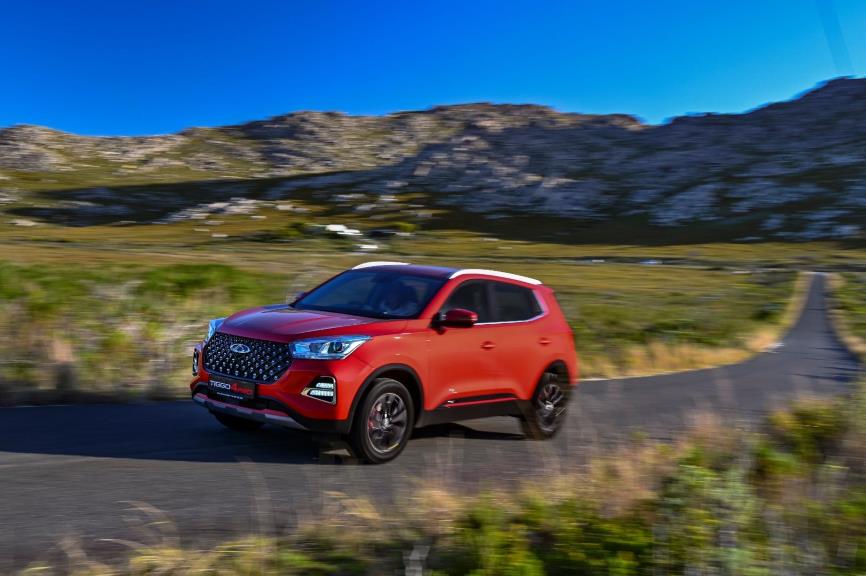
1. Chery Tiggo 4 Pro / Cross – 11 325 units
The undisputed king of the segment for H1 (first half) of 2026, consistently fighting at the very top of the overall passenger vehicle charts. Search new and used Chery Tiggo 4 Pro models.
2. Toyota Corolla Cross – 7 412 units
Prospecton’s locally-built hero remains a massive favourite, offering bulletproof reliability and popular hybrid options. Find new and used Toyota Corolla Cross models.
3. Haval Jolion – 7 588 units
GWM's value champion maintained a rock-solid, highly consistent sales volume every single month. Look for new and used Haval Jolion and Jolion Pro models.
4. Suzuki Fronx – 6 869 units
Suzuki’s stylish coupe-crossover proved incredibly popular, accounting for a large share of the brand's volume. Search for new and pre-loved Suzuki Fronx models.
5. Toyota Starlet Cross – 4 923 units
The newcomer (sharing DNA with the Fronx) quickly gained significant market traction following its launch. Find Toyota Starlet Cross models here.
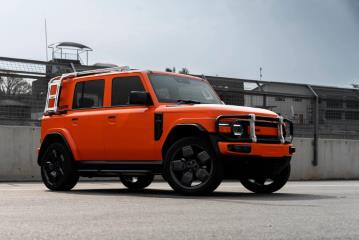
6. Jetour T2 – 3 150 units
The breakout star of 2026, this boxy newcomer rapidly scaled the charts to become a top-10 passenger car staple. Look for Jetour T2 models on AutoTrader.
7. Toyota Urban Cruiser – 2,980 units
Maintained strong, steady mid-tier numbers, closing out H1 with a massive June performance. Find pre-loved and new Toyota Urban Cruisers.
8. Mahindra XUV 3XO – 2 640 units
The heavily revised compact SUV firmly established Mahindra as a major volume player in the passenger space. Find used and new Mahindra XUV 3XO models here.
9. Omoda C5 – 2 354 units
Chery’s luxury-focused crossover sub-brand carved out a highly respectable niche in the premium-compact tier. Find Omoda C5s here.
Read: 5 Chinese SUVs under R500k loaded with tech.
Using NAAMSA sales data from the first half of 2026, we have ranked SA’s favourite crossovers based on their physical footprint and local manufacturing security.
Is it wise to buy a Chinese car?
The dealership footprint and manufacturing leaderboard
1. Toyota (Corolla Cross, Starlet Cross, Urban Cruiser)

Estimated dealer network: 220+ dealerships
Local production status: Fully localised (Corolla Cross built in Prospecton, Durban)
The index verdict: Toyota remains the heavyweight champion of pure geographic reach. Whether you are in Bryanston or Springbok, you can have your Toyota serviced. Because the Corolla Cross is built locally, parts supply chains are short and highly stable. For absolute regional coverage, Toyota still holds the top spot, but the wall around its fortress is getting shorter.
2. Chery Group (Tiggo 4 Pro / Cross, Jetour T2, Omoda C5)
Estimated dealer network: 80+ Chery dealers, plus separate networks for Jetour and Omoda/Jaecoo (roughly 150 total group touchpoints)
Local production status: Local assembly confirmed for mid-2027 at the newly acquired Rosslyn plant.
The index verdict: This is the ultimate disruptor. Chery already dominated the H1 2026 sales charts with the Tiggo 4, but its footprint was its only bottleneck. By taking over Rosslyn, Chery is securing long-term parts availability and vehicle production for itself, the Jetour T-series, and the incoming Jaecoo J5. The index significantly improves Chery's position here: buying one is no longer a gamble on import duties or shipping lines. It is a vote for local industrial backing.
3. Suzuki (Fronx)

Estimated dealer network: 100+ dealerships
Local production status: Pure importer (vehicles sourced primarily from India)
The index verdict: Suzuki has done a phenomenal job expanding its dealer network to triple digits to support the booming sales of the Fronx. While they lack a local assembly plant, their massive dealership footprint across secondary towns offers great peace of mind, keeping them firmly in the top tier of the value index.
4. GWM / Haval (Jolion)

Estimated dealer network: 90+ dealerships
Local production status: Pure importer
The index verdict: GWM has a highly established dealer footprint in SA thanks to its historical bakkie sales, which gives the Haval Jolion great regional support. However, with rival Chery buying a local factory, pressure is now on GWM to match the move with a manufacturing commitment of its own to protect its market share.
5. Mahindra (XUV 3XO)

Estimated dealer network: 75+ dealerships
Local production status: Local bakkie assembly (Durban), but the XUV 3XO crossover is imported.
The index verdict: Mahindra’s network is deeply entrenched in SA’s rural and agricultural sectors. This gives the new XUV 3XO a unique footprint advantage over city-bound crossovers, as you can easily find support outside major metropolitan hubs.
Why the Rosslyn factor rewrites the crossover rulebook
The sub-brand safety net: Previously, boutique brands like Jetour and Omoda were viewed as riskier buys due to smaller, metro-focused dealer networks. With parent company Chery owning Rosslyn, these sub-brands now share the ultimate safety net of a massive local corporate infrastructure.
Parts and repair turnaround: A local factory means a massive, centralised domestic parts hub. It transitions a brand from waiting weeks on container ships to having parts dispatched overnight by truck to local dealerships.
Resale value protection: The biggest killer of resale value for newer brands is consumer fear that the brand will exit the market. Investing millions into a historic local assembly plant sends a clear message to the used-car market: these cars are here to stay.
The first half of 2026 showed that South Africans value the new crossovers. Now that the manufacturing footprints are aligning with the sales numbers, the legacy brands have a real fight on their hands.
Read: Beyond the badge - How 'Guao Chao' is redefining the Chinese car for SA
Did you know?
Chery isn't actually the first Chinese brand to put down manufacturing roots in South Africa, just the most recent and the biggest headline.
BAIC got there first, back in 2018, with its R11-billion plant in the Coega Special Economic Zone near Gqeberha. The B40 Plus and X55 Plus have long been associated with the plant, and the B30 joined the line-up at launch in late 2025. But a parliamentary reply from January 2026 shows the plant's actual local content has mostly relied on lighter, semi-knocked-down (SKD) assembly rather than full manufacturing, with proper CKD production only officially starting on 2 January 2026.
Foton shares that same Coega plant, building its Tunland G7 bakkie there, though as recently as late 2025 that meant one bakkie, not a production line. Most G7s on the road today were likely shipped in from China rather than built locally, since Foton only began local CKD assembly in September 2025 and isn't targeting real volume (10,000 units a year) until 2027.
Further reading
- IndustriALL Global Union, "South African autoworkers strike over wages at BAIC plant" (25 June 2026)
- News24/City Press, "Baic and IDC's R11 billion plant in Gqeberha has built only 300 cars in six years" (14 August 2024)