Buying a Chinese car in South Africa in 2026 is no longer a reckless gamble, but it’s also not a no‑brainer. It can be a brilliant move if you pick the right brand, dealer, and deal (as with any other car), and a painful one if you don’t. For some buyers, the value is excellent; for others, the risks around resale and support remain a deal‑breaker.

How Chinese brands have changed
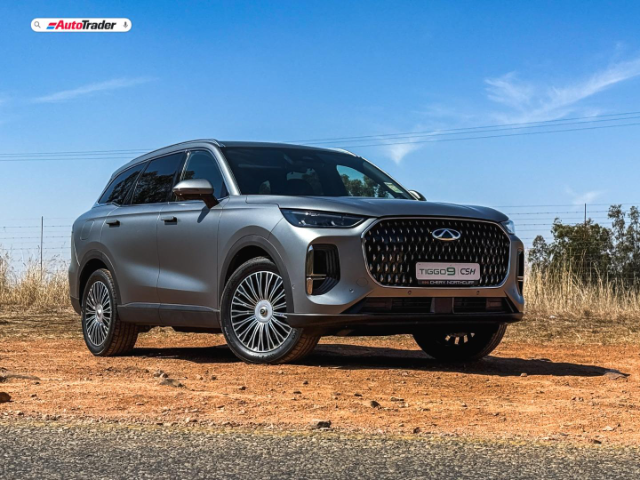
Established players like Chery and its sub-brands (Omoda, Jaecoo, Jetour), GWM/Haval and BYD now sell in serious volumes, with full ranges of SUVs, bakkies and in some cases EVs. Brands such as MG, GAC, LDV and BAIC/Beijing are also building a presence, although with smaller networks and shorter local track records.
Safety, refinement and perceived quality have improved dramatically; many new‑generation Chinese models now score 5‑star crash ratings in major test regimes and offer dynamics and interiors that feel properly upmarket for the price.
In short, the typical Chinese SUV or bakkie you’re cross‑shopping in 2026 is no longer a substandard outlier – it’s a credible alternative, provided the brand and dealer behind it are solid.
Related: China's auto regulatory shift: The end of SA's 'cheap import' era?

Big structural signal: Chery buys Rosslyn
The most important recent development is Chery’s move from importer to local manufacturer‑in‑waiting.
Nissan and Chery South Africa have agreed that Chery will acquire Nissan’s manufacturing assets at Rosslyn, Pretoria, including the vehicle plant and nearby stamping facility, subject to regulatory approvals, with completion expected around mid‑2026.
Chery plans to retain most of the existing workforce on similar terms, while Nissan exits local manufacturing but remains a sales brand as Navara production winds down.
For buyers this means:
Stronger long‑term commitment to SA than a pure importer.
Potentially better parts availability and pricing once local assembly of high‑volume Chery‑group models ramps up.
That significantly strengthens the case for considering Chery‑group products. Insurers like Auto & General have mentioned that insurance prices for these cars are coming down due to improved parts availability.
Related: The Chinese car influx - Why so many brands are entering SA

Why dealers are under pressure
Chinese brands aren’t reshaping only consumer options – they’re reshaping dealer economics.
- Motus’ SA Vehicle Retail division went through a restructuring in late 2025, initially flagging 259 admin/support roles; after redeployments, 67 employees were ultimately retrenched from 1 January 2026.
- Around 570 staff face changes to incentive structures, company‑car perks and allowances; unions are contesting this as a unilateral change to conditions of employment.
- Motus explicitly cites intensifying competition from cheaper Chinese brands as a key reason for cost-cutting and margin pressure.
Local buyers' appetite for a well‑specced, affordable Chinese SUV is part of what’s forcing old‑guard groups to adapt – and that means after-sales performance will become a crucial differentiator between brands.

Read our MG ZS Pro review here.
The upside of buying Chinese in 2026
If you pick well, there are clear advantages.
Spec and tech for the price
Chinese brands routinely give you more: large infotainment screens, digital clusters, ADAS suites (AEB, lane‑keep, adaptive cruise) and plush interiors at prices where rivals still feel basic.Long warranties and decent running costs
Many models carry 5–7‑year warranties and multi‑year service plans, which help to offset brand‑trust and resale concerns. Combined with efficient turbo‑petrols, HEVs and EVs, total running costs can be low if you keep the car.Improving used‑market acceptance
Chinese badges are gaining real traction in SA’s used-car market; vehicles like the Chery Tiggo and Haval Jolion/H6 are now appearing in meaningful volumes, often at relatively young ages and low mileages. That’s a significant shift from a decade ago.Ecosystem and industrial commitment
With Chery investing in Rosslyn, BYD rolling out charging infrastructure and Changan arriving with a full line‑up, the bigger Chinese OEMs look set to be permanent fixtures rather than short‑term experiments.
The downside you can’t ignore
There are still real trade‑offs compared with established Japanese and German nameplates.
Resale remains weaker
Even with improving acceptance, Chinese brands typically trail Toyota, VW, and some premium German brands in 5‑year residual values. If you trade every 2–3 years, depreciation can easily cancel out the savings you made up front.Brand and dealer unevenness
Top‑tier Chinese players now have decent networks; newer entrants and niche EV‑only brands often don’t. A great car is a bad purchase if the nearest competent dealer is 300 km away or parts take months to arrive.Software and calibration quirks
Infotainment stability, driver‑assistance tuning and throttle/gearbox calibration can still feel a step behind the segment leaders. Over‑the‑air updates help, but some systems are inconsistent in daily use or too intrusive.Early‑adopter risk on the freshest badges
You’re in the first few waves of SA owners; there isn’t a deep pool of data yet on 7–10‑year durability, parts pricing and long‑term resale.

How to make a wise Chinese car purchase
If you’re going to take the plunge, do it like this:
1. Choose a well‑established Chinese brand
Not all Chinese badges in SA are at the same stage of maturity. Some have bigger dealer networks, stronger sales and more used‑market traction, which makes them a more comfortable starting point for cautious buyers.
Better‑established Chinese brands in SA (wider presence, more data):
Chery and its sister marques Omoda, Jaecoo, Jetour; GWM and Haval; BYD; MG; GAC; LDV; BAIC/Beijing.Newer but promising entrants (growing range, shorter track record):
Changan (Alsvin, CS75 Pro, Hunter, Deepal S07), Leapmotor and a few EV‑focused marques backed by larger Chinese groups.Niche or very early‑stage brands:
Smaller names with only one or two models and minimal dealer coverage; treat these as early‑adopter choices.
If you’re risk‑averse and plan to keep the car for a long time, start your shopping list with the better‑established group and then work outward from there.

2. Audit the dealer and after-sales
Before signing:
Visit the dealer and workshop; ask about parts lead times, warranty claim turnaround and courtesy‑car policy.
Check owner forums and social groups for recurring issues with that specific brand and dealer, not just the global name. You'd be surprised how many people complain about electrical issues and software glitches in some new Chinese cars in Facebook ownership groups.
3. Test drive like you’ll live with it
Don’t just do a quick spin around the block.
Pair your phone; test CarPlay/Android Auto, cameras, sensors and all driver‑assist modes exactly as you’d use them.
Drive in traffic, on the highway and on rougher stretches. Pay attention to low‑speed creep, gearbox behaviour and how intrusive the safety systems are.
Chinese car brands in SA: Are they worth buying?

4. Run a 5–7‑year cost‑of‑ownership calculation
Include:
Instalments/finance.
Fuel at realistic consumption.
Insurance.
Service/maintenance plan top‑ups if needed.
A conservative estimate of what the car will be worth in five years compared with a non‑Chinese rival.
In many cases, a Chinese SUV still works out cheaper overall; in some cases, a pricier Japanese or German rival ends up similar when strong residuals are factored in.

Verdict: when is it wise – and when isn’t it?
It’s wise to buy a Chinese car in South Africa in 2026 if you:
Prioritise spec, comfort, warranty cover and price over badge prestige
Have a strong, nearby dealer for that specific brand
Plan to keep the car for at least 5–7 years, absorbing early depreciation while enjoying the long warranty.
It’s less wise if you:
Flip cars every 2–3 years and rely on strong resale
Live far from the nearest dealer or don’t have confidence in the network
Are extremely sensitive to software/ADAS quirks and don’t enjoy being an early adopter.
Chinese brands are now reshaping everything from local manufacturing (Chery at Rosslyn) to dealer pay structures (Motus under pressure). If you buy with a clear understanding of those dynamics – and treat brand and dealer choice as seriously as you treat the spec sheet – a Chinese car can be a savvy purchase in 2026.