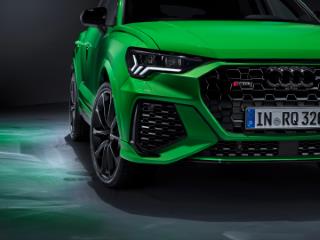
New vs used Audi RS Q3: What are the top 4 differences?
Audi has recently launched a massive high-performance offensive in South Africa, and one of their most-important new models is the brand-new Audi RS Q3. Combining the body styles of their (recently completely redesigned) popular compact SUV range with the latest version of their charismatic 5-cylinder engine and all-wheel drive traction, it’s a real stormer. We highlight the four most-important differences between the first- and second-generation Audi RS Q3.


Compact performance SUVs is a highly niche market, but it’s still important enough for every premium brand to field a competitor of their own. The Audi RS Q3 has traditionally been a cut above most of its opponents, however, largely due to its warbling 5-cylinder engine.
But, seeing as we’re still waiting for the second-generation Mercedes-AMG GLA to arrive, and because the conceptually similar BMW X2-M35i is nowhere near as potent, the new RS Q3 effectively plays in a class of its own. It packs enough ammunition to again dominate this sub-segment, however, because it rides on a new platform and yet more power than before. Here’s what’s new for the new Audi RS Q3.

1. Moved over to MQB
For some strange reason, the Audi Q3 was one of the last compact models in its manufacturer’s stable to switch from the old PQ35 platform (as used in the Golf Mk 6 and second-generation A3) to the newer MQB component set. But, while the first-generation Q3 missed out on the MQB’s excellence, the second-generation model skipped right to the latest evolution of this platform, named “MQB A2”.
This means that the new RS Q3 is a larger car than before in every dimension except height, but the expected weight gain is partially offset by more-extensive use of aluminium – including in the new car’s all-aluminium engine. But, of greater significance in a performance car is the enhanced driving experience wrought by the newer platform’s superior suspension geometry and lower centre of gravity.
Related: Shop for new and used Audi RS Q3 cars for sale here.

2. New(er) engine
While the RS Q3’s 2.5-litre turbocharged five-cylinder is new to this model, it’s been available locally in the TT RS and RS 3 since 2017. Its powertrain layout is familiar from the same source as well, sending power from the flywheel to the tarmac via a 7-speed dual-clutch gearbox and Haldex-based quattro all-wheel drive.
The current engine is a rather different beast to the old model’s, thanks to an aluminium block, revised fuel injection system, and optimised boost system. Consequently, outputs rise from 250 kW and 450 Nm in the old car, to 294 kW and 480 Nm in the new one. It still sounds as it should, though, with the off-beat rumble that can only come from the traditional 1-2-4-5-3 firing order.
3. Much more-modern tech
Perhaps the greatest improvement brought with the new car’s change in platform can be found in its electronic architecture, which contributes to a much more-modern interior design and increased functionality. The latest version of Audi’s digital cockpit finds its way to the new RS Q3, encompassing a configurable instrument cluster screen and MMI touchscreen display in the centre console.
Of course, model-specific touches can be found everywhere, including RS Sports seats with “tombstone” back rests in front. The cluster also has special RS displays with information such as engine outputs, acceleration measurements, and even lap times – because, you know, it’s very likely that you’ll want to fling an SUV around a racetrack...

4. Choice between two body styles
As with the normal Q3 range, the new RS Q3 also offers a choice between two body shapes. The first one is the familiar SUV style, with its emphasis on practicality, and the other has a sportier-looking "Sportback" roofline. The stylish Sportback body carries some penalties, however, because it has less luggage space, less overall utility volume, and slightly impaired rear-seat space. We suspect that this will be a small price to pay for those with a yearning for something different, however.