
New GWM Steed 6 vs used Isuzu KB vs used Ford Ranger: here's our winner.
When evaluating a new GWM (or really, any budget-focused) bakkie, we usually recommend it mostly as an alternative to buying a used example with a mainstream brand name. We decided to see for ourselves what you can get in the used bakkie market for similar money to a range-topping GWM Steed 6, and investigated whether buying new is really a better idea than buying used.



What is better: a new budget bakkie or a used favourite?
Seeing as double cab bakkies are so popular in our market, we chose the GWM Steed 6 Xscape, which retails at a smidge under R 320 000 (at the time of writing) as our benchmark. We then went hunting through the AutoTrader SA listings pages for other diesel, RWD, manual double cabs around that pricetag. The parameters we set were firm in other respects as well: an upper age limit of four years (2016-models and younger), and less than 60 000 km on the odo (equating to at most 15 000 km per year).
GWM Steed 6 2.0 VGT double cab Xscape
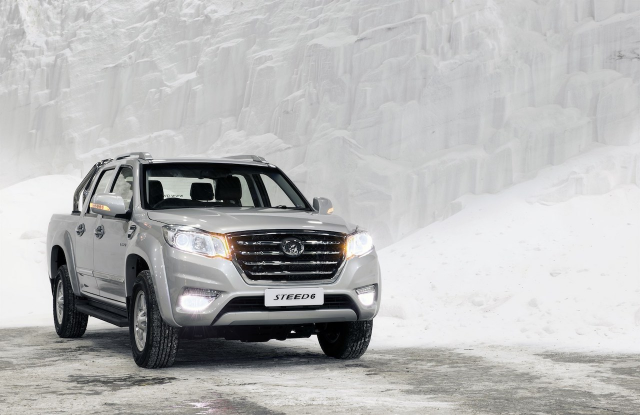
At the moment, this is the pinnacle of GWM’s local bakkie offerings, and the newest evolution of the Isuzu-based platform this company has been using for years. Because it has value for money as one of its main selling points, the Steed 6 Xscape is crammed full of every possible convenience feature at GWM’s disposal, to match far more-expensive alternatives on the spec sheet for a lot less money.
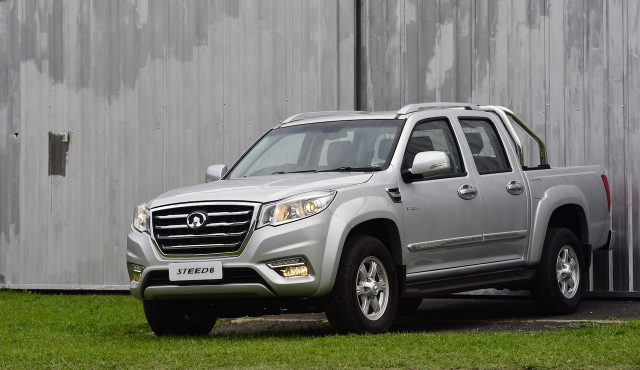
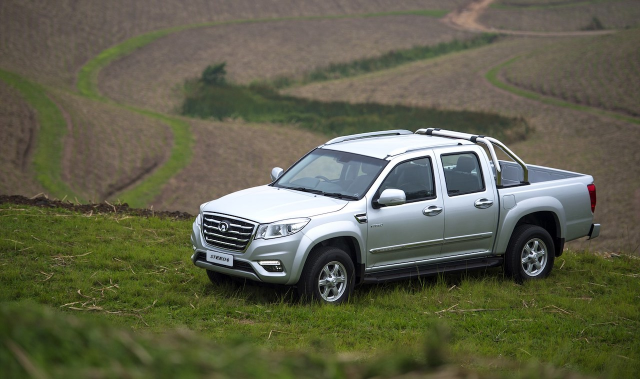
The Steed 6 is styled to look the part as well, with a bold grille in front, bulky fender flares, and a good share of brightwork. It only comes in double-cab format, and appears to be rather newer and more upmarket than the closely-related Steed 5 and 5E pick-ups, if not quite as modern as the current “big-brand” bakkies.
Related: Six GWM Steed accessories you didn’t know you needed.
Engine, performance and consumption

Motive power comes from a 2.0-litre, 4-cylinder turbodiesel engine, mated to a 6-speed manual gearbox. It’s not terribly powerful, with 105 kW and 305 Nm on offer and noticeable boost lag on pull-away – perhaps the one real area where the GWM’s engine could do with some improvement. GWM doesn’t mention a 0 – 100 km/h sprint time for this bakkie, but a claimed top speed of only 150 km/h makes it clear that the Steed 6 isn’t a high-performance machine.
Once on the move, though, there’s adequate mid-range torque to maintain reasonable cruising speeds and overtake without too much stress. The Steed 6 is claimed to consume an average of 8.8 ℓ/100 km, and is proven to be capable of delivering low-to-mid-9 ℓ/100 km figures in normal use. This is comparable to most other diesel double cabs, so at least owners won’t pay much of a penalty at the pumps.
Standard equipment
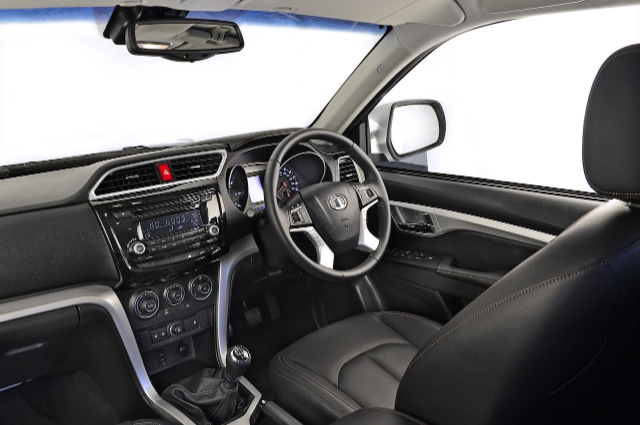
This is where the GWM Steed 6 compensates for its limited motor skills with an absolutely loaded standard spec sheet for the money. Included in the top-level Xscape trim is a set of 16-inch alloy wheels, leather upholstery, cruise control, a multi-function steering wheel, electric adjustment for the driver’s seat, auto-on headlights and wipers, full-function trip computer, an auto-dim interior rear-view mirror, rear parking sensors, electric-folding external mirrors, remote central locking, climate control, and an audio system with Bluetooth/USB/Aux functionality.
Related: We compared a cheaper GWM Steed 5E to its natural (budget) opponents.
That’s a lot of kit for a new bakkie that retails for less than R 320 000, and for this reason alone, turns a new Steed 6 Xscape into a value winner right out of the blocks. There’s also a modern-looking cabin, with a bespoke dashboard design and decent-quality materials all over setting it apart from the lower-level Steed 5 models (which are still stuck with the old, obviously Isuzu-designed interior).
Safety
Xscape trim is the GWM bakkie with the most comprehensive standard safety specification, with an upgrade from 2 airbags in the XS variant to a new total of 6 and the addition of stability control with hill-start assist, with ABS and rear ISOFIX child seat anchors common to both Steed 6 variants. There are still some question marks regarding its actual crash safety, though, because it only scored 2 stars in Australian NCAP testing.
Related: The top 5 things you need to know about the GWM Steed 6.
Practicality

The Steed 6’s older origins also shows up in the practicality stakes: its smaller overall size means that cabin space isn’t very generous. It’s fine for the front seat occupants, mind you, but rear-seat passengers will soon complain about the short, low-mounted seat base and limited legroom. In this regard, the Steed 6 is still some way behind its newer mainstream opponents.
It’s not exceptional at carrying loads, either, with a maximum payload of only 625 kg (plus passengers) and a braked towing rating of 1 900 kg. Essentially, the GWM Steed 6 will be fine for normal family- and leisure use, but it’s not really a workhorse.
Price and value proposition
Along with its brimming equipment list, the Steed 6’s ultimate selling point is its list price. Xscape trim’s list price of R 319 900 gets you a diesel double-cab bakkie with a pile of standard toys, backed by a warranty for 5 years or 100 000 km, a 4-year/40 000 km service plan, and free 24-hour roadside assistance for 5 years. When all is said and done, that low-low list price has significant allure for buyers, and paying so little for a bakkie with everything included as standard along with a fresh warranty definitely has significant appeal.
The competition
Used Isuzu KB 250D-Teq DC Hi-Ride
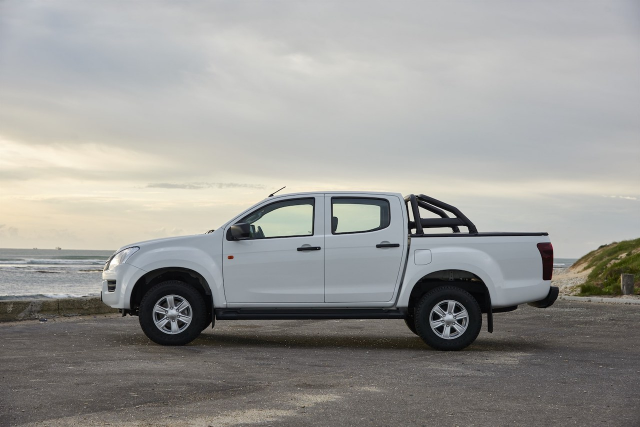
This model dates from the era before Isuzu SA gave their bakkie the new “D-Max” model name, and it’s a well-proven machine with a loyal fanbase. There are a number of KB 300 bakkies available around this price point as well, but most of them have significantly higher mileages, so we rather stuck to newer KB 250s instead. Additionally, the KB 250D-Teq has similar outputs to the GWM’s smaller engine, bringing them closer to parity in this regard.
Power is delivered by a 2.5-litre, 4-cylinder turbodiesel with 100 kW and 320 Nm, mated to a 5-speed manual gearbox. Once again, there’s nothing to blow your hair back on the performance front, but there’s really very little to choose between the Isuzu and the GWM in this regard. Fuel efficiency is claimed to be better than the GWM’s, with an official average consumption of 7.7 ℓ/100 km, while the KB 250D-Teq is known to return low-to-mid 8 ℓ/100 km averages in mixed-cycle driving.
Related: Read our review of the slightly more-upscale Isuzu KB 250D-Teq X-Rider here.

To meet our price- and age targets, we selected the low-ish Hi-Ride trim level, so it’s nowhere near as well-equipped as the Steed 6. You do get an audio system with USB/USB/Aux capability, remote central locking, and electric windows all round; but the steering wheel doesn’t include any audio remotes, the air-conditioning is manually-operated, and alloy wheels are optional. Leather upholstery, cruise control, auto-wipers and rear PDC are not included in this trim level, either, so score one for the GWM.
Safety gear also has to take a back seat to the Steed 6 Xscape, because the KB only has two airbags instead of six, although stability control and rear ISOFIX child seat anchors are included. However, the KB/D-Max received a 4-star rating in Euro-NCAP crash testing in 2012 already, so it’s most likely a fair whack more crash-worthy than the GWM.
Related: The Isuzu KB/D-Max has a long history in South Africa. We look back over the years.
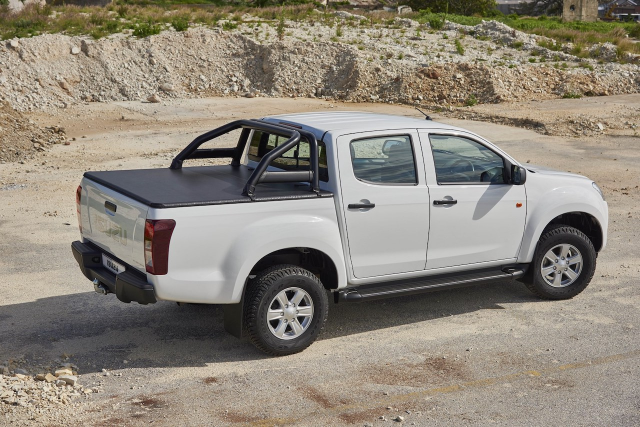
It’s slightly more practical than the GWM, too, with more rear-seat room, a load capacity of 780 kg (plus passengers), and it can tow a braked trailer of up to 2 000 kg. Apart from its dearth of standard equipment (compared to the Steed 6), there’s also the reality that, when buying such an Isuzu for similar money to a new GWM, you will likely get a three-year-old KB with around 50 000 km on the odometer.
That only leaves about 2 years and 70 000 km of remaining manufacturer’s warranty, while the remaining service plan would be roughly the equal to the GWM’s plan from new. However, an almost-identical new D-Max 250 DC Hi-Ride will cost more than R 100 000 more, so there’s good value to be found when buying used if you're set on an Isuzu.
Related: The top 3 things you need to know about the Isuzu KB.
Ford Ranger 2.2 TDCi XL

Sticking to the mileage- and age restrictions we set at the outset, you’ll soon find that the best Ranger available in this price bracket is likely to be in XL 4x2 trim. This is the second-lowest available trim level, with only the most basic items fitted as standard. If you find one in this price bracket with alloy wheels, they will have been fitted by a previous owner, as steel wheels are standard equipment.
As with the Isuzu Hi-Ride, the basic convenience features are included, with electric windows and -mirrors, remote central locking, manual air conditioning, and a basic USB/Bluetooth/Aux audio system as part of the standard package. Rear parking sensors are optional when new, so it would be a nice bonus if the first owner specified them.
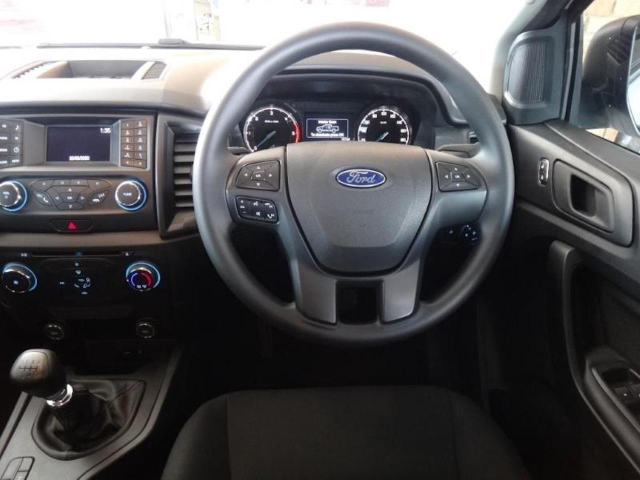
Safety equipment is roughly equivalent to that of the Isuzu, with ABS, stability control, 2 airbags and rear ISOFIX child seat anchors as part of the standard package. The Ranger scored even better in crash testing, though, with a 5-star Euro-NCAP safety rating earned in 2012.
Related: The Ford Ranger received a comprehensive facelift in 2015 – get the details here.
The Ranger also has a few more tricks up its sleeve: it has the strongest engine in this group (a 2.2-litre 4-cylinder turbodiesel with 118 kW and 385 Nm, mated to a 6-speed gearbox), the most cabin space here, a carrying capacity approaching 1000 kg plus passengers, and a 3 500 kg braked towing capacity. Its performance advantage over the others will really show when carrying a full load, where that extra torque will move more weight with less effort.

Like the other two manufacturers, Ford doesn’t quote performance figures for the 2.2 DC Ranger, but it’s safe to say that it will also be quite leisurely on the road (if likely quicker than the other two). Ford claims an average fuel consumption figure of 6.5 ℓ/100 km, but mixed-cycle use will probably hover around the 9 ℓ/100 km mark – it takes plenty of energy to lug a big, heavy bakkie around, and that energy has to come from the fuel tank.
Related: Which Ford Ranger is better – petrol or diesel?
At this price point, available Ranger 2.2 XL bakkies will likely be around 3 years old, which would leave a year or about 70 000 km left of the manufacturer’s warranty, but around 3 years or 40 000 km remaining in its the service plan - again, nearly matching what's on offer with a new GWM. As with the Isuzu, a new Ranger 2.2 TDCi DC XL costs about R 100 000 more, which makes a used Ranger a strong value proposition in own right.
Let’s recap the important numbers:
|
|
GWM Steed 6 2.0 VGT DC Xscape |
Isuzu KB 250D-Teq DC Hi-Rider (used) |
Ford Ranger 2.2TDCi DC Hi-Rider XL (used) |
|
Engine (cyl/size) |
4-cylinder, 2.0-litre turbodiesel |
4-cylinder, 2.5-litre turbodiesel |
4-cylinder, 2.2-litre turbodiesel |
|
Power/Torque |
105 kW/305 Nm |
100 kW/320 Nm |
118 kW/385 Nm |
|
Transmission |
6-speed manual |
5-speed manual |
6-speed manual |
|
Kerb Weight |
1 820 kg |
1 845 kg |
1 866 kg |
|
Length (mm) |
5 345 |
5 294 |
5 354 |
|
Airbag count |
6 |
2 |
2 |
|
Cargo capacity |
625 kg |
780 kg |
965 kg |
|
Ave Consumption* |
8.8 ℓ/100 km |
7.7 ℓ/100 km |
6.5 ℓ/100 km |
|
Price |
R 319 900 |
~R 320 000 |
~R 320 000 |
* Manufacturer's official claimed figures.
Verdict

All three of these bakkies do roughly the same job, but excel at different things. The used Isuzu KB under evaluation has a well-balanced spread of abilities and an excellent reputation for long-term ownership, but, like a Ford Ranger in XL trim, is rather barren inside and out.

The used Ranger compensates with a larger cabin, stronger performance, and higher load- and towing ratings, and will share value retention honours with the Isuzu. They’re both more practical than the GWM, have stronger workhorse attributes, offer superior crash safety, and they’ll probably both have higher resale value in a few years’ time as well. Just ensure that you choose one that still has an active manufacturer's warranty and service plan.

However, at this price point, neither the Isuzu nor the Ford will have a fresh warranty or service plan, although these factors should still be fairly competitive with those of a new Steed 6. It’s hard to ignore the fact that you’ll start with a brand-new vehicle when you opt for the GWM, though, and its vastly more-comprehensive spec sheet ensures a whole load of added luxury in the cabin.
In the end, it comes down to the buyer’s personal preferences. If semi-luxury-appointments are important in a bakkie, and the buyer doesn’t plan to perform serious workhorse duties with it, the GWM ticks most of the boxes. But, if long-term value retention, working capability, and crash safety are of prime importance, prudent buyers will likely be willing to sacrifice some luxuries and settle for a (new-ish) used Ranger or Isuzu instead.
Pricing was accurate at the time of writing, but may change without prior notice.
Recommended Next:
Shop for new and used GWM Steed 6 cars for sale here.
Shop for used Isuzu KB cars for sale here.
Shop for new and used Ford Ranger cars for sale here.