
Top 3 things you need to know about the Isuzu KB
Top 3 things you need to know about the Isuzu KB


By Farzana Chaumoo
It all started with a name change and then Isuzu moved on to the engine and enriched its safety equipment.
1. Name change
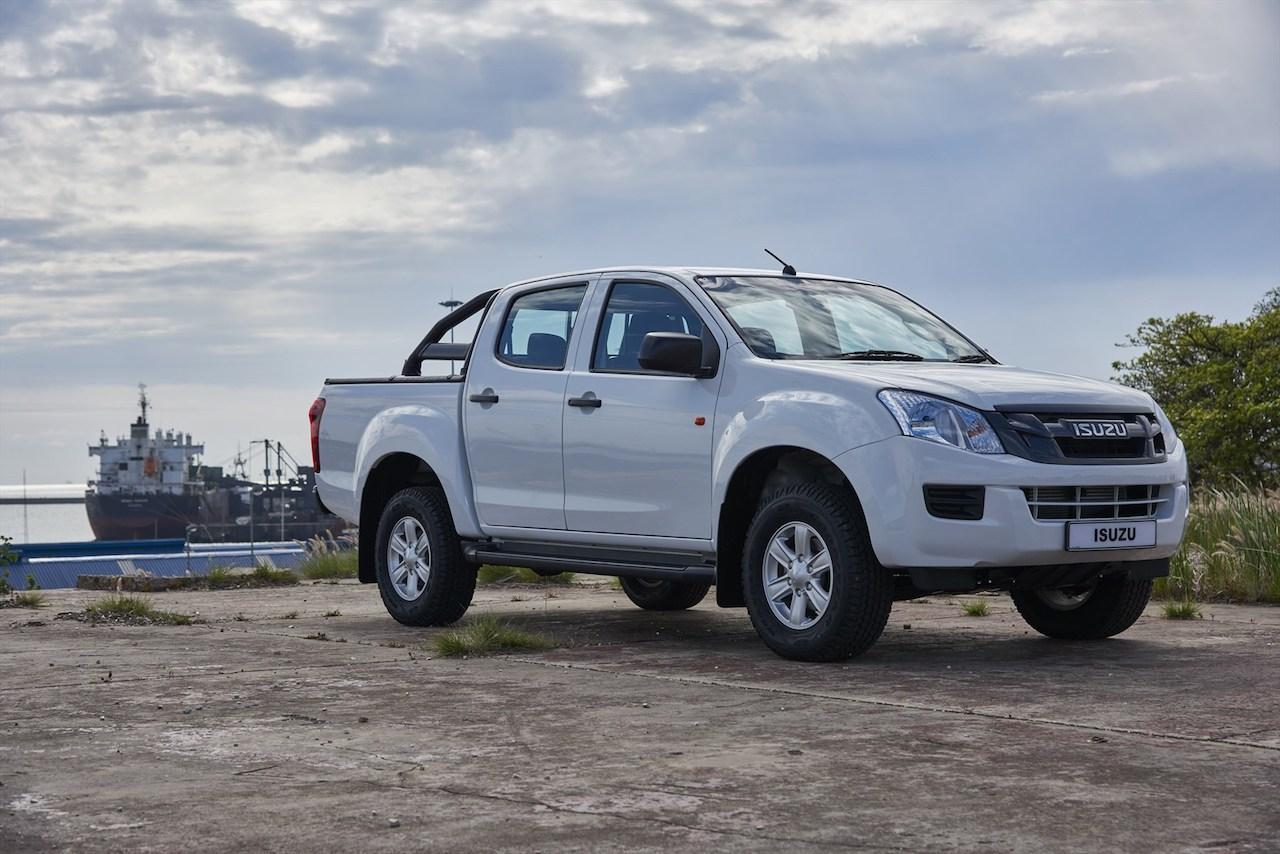
Back in October 2018, Isuzu Motors South Africa refreshed its KB bakkie range while also giving it a new name and higher levels of specification, quality and efficiency to make its popular light commercial vehicle more appealing than ever.
The KB moniker was changed to the D-MAX to put it in line with international markets. The Isuzu bakkie range spans an extensive portfolio comprising of 30 models for South Africa and 13 models for export markets, with the top-spec derivatives gaining a more luxurious execution that reflects the more sophisticated requirements of top-end buyers in this segment.
The D-MAX name originated in Thailand, with the ‘D’ originally referring to the 2000 model year Isuzu bakkie which boasted the flush “Dragon Eyes” headlamp design. It also represents Isuzu’s proud legacy in the production of diesel engines, the use of industry-defining direct injection, as well as ground-breaking design and durability. ‘Max’ signifies Isuzu’s maximum approach to design, size, comfort, technology, performance, safety, durability and line-up.
2. Safety
On the safety front, the ABS brakes on all D-MAX LX models are now equipped with Isuzu’s Brake Override System (BOS) for the first time. The system restricts accelerator input if the brake pedal is applied simultaneously, thereby reducing stopping distances in an emergency.
The standard Electronic Stability Control (ESC) with Traction Control has also been bolstered with the addition of Trailer Sway Control (TSC) that detects and minimises the effect of a trailer or caravan beginning to sway from side-to-side. The Hi-Rider and LE models can be equipped with an optional towbar package rated to tow a braked trailer up to a maximum load of 2.1 tons, while the standard heavy-duty unit on the 3.0-Litre 4X4 LX derivatives comes standard and is capable of hauling 3.5 tons.
As before, Electronic Stability Control (ESC), Hill Start Assist (HSA) and Hill Descent Control (HDC) are included to assist the driver in all types of driving situations. These active safety features are available as a standard feature from the Fleetside Safety to the LX trim. The LX is also fitted with six airbags for you and your passenger's safety.
3. All-new six-speed transmissions
One of the most significant new features of the 2018 Isuzu D-MAX range is the introduction of an all-new six-speed gearbox on the high-spec 3.0-Litre LX derivatives, replacing the five-speed versions used on the outgoing models.
The six-speed manual benefits from optimised gear ratios and an improved shift action, and makes the most of the strong torque delivery and superb fuel economy of Isuzu’s dependable 3.0-Litre four-cylinder intercooled turbodiesel engine, which produces 130 kW of power and 380 Nm of torque.
For fans of smooth-shifting automatics, the D-MAX offers the same six-speed transmission that debuted in the Isuzu mu-X SUV. This sophisticated gearbox delivers the ideal combination of refinement and responsive performance.
The six-speed automatic incorporates a sequential sport mode that enables the driver to select a specific gear manually, which is helpful when towing as the engine speed can be maintained in the ideal torque range for maximum pulling power.
This mode is also ideally suited to off-road driving, allowing the driver to engage the appropriate gear ratio for the specific terrain. Combined with Hill Descent Control (HDC), manually selecting the lowest gear on downhills ensures optimal control of the vehicle as it maintains the vehicle at the set speed on steep descents.
Recommended: Isuzu KB vs. new D-MAX: Top 5 differences