Ford Ranger vs Toyota Hilux vs Isuzu D-Max: which one has the lowest running costs?
The Ranger, Hilux, and D-Max are staples in the LCV segment, but how cost-effective are they when considering a used example? See how their fuel economy and parts prices contribute to their overall running costs.


Figuring out whether or not you can afford the repayments on a double cab is one thing; calculating how much it will cost you to run it is another thing. Factoring in the fuel consumption, service and repair costs will give you a considerably different amount at the end of the day. It could be the difference between variants or even between brands.
Related: South Africa's best double cabs
The current-generation Ford Ranger is less than a year old and the latest Isuzu D-Max is a little over a year old. As such, these models are still covered by manufacturer warranties and service plans that will cover the majority of the costs that you will incur when visiting a dealership for a service or concern. A new Toyota Hilux will offer the same peace of mind.
Shopping for a used double cab helps reduce your monthly premiums but presents higher running costs as many of these used vehicles are out of their warranty and service plan periods, leaving you to pick up the bill at the end of the day. This all needs to be factored in when purchasing a used double cab.
Below, we look at three of the more popular offerings on the market, the previous generation Ford Ranger, 6th-generation Isuzu D-Max, and the Toyota Hilux and sample them to find out their claimed fuel consumption, service parts cost and percentage of the purchase price when looking at a parts basket that includes service parts, repair parts and crash parts.

Ford Ranger
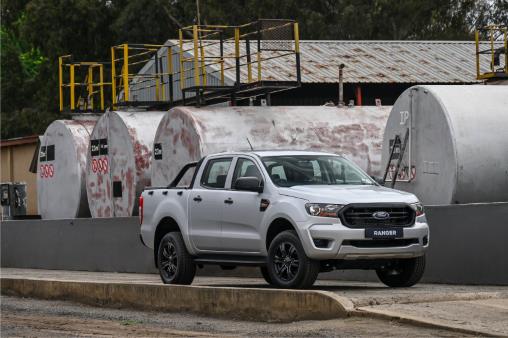
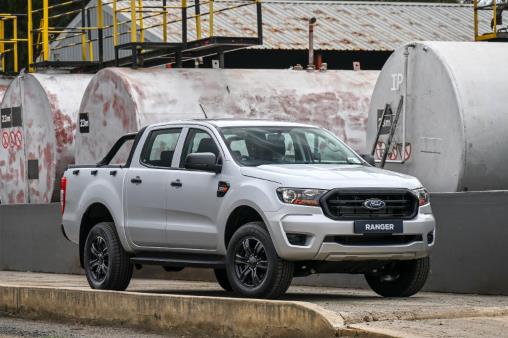
With 44 different Ford Ranger variations having been made available at the time, selecting the right Ranger for you can be a challenge. While most spring for the more practical double cab offerings, you can choose from single and SuperCabs as well. These models have slightly different power outputs and trim levels. Four engines are on offer across the range, depending on individual specifications. You can choose from two 2.2-litre turbodiesels with varying power outputs, a 3.2-litre 5-cylinder turbodiesel and two 2.0-litre 4-cylinder offerings in either single or BiTurbo format. Not all models are afforded all engine options, though.
2.2-litre turbodiesel
Inline 4-cylinder
88 kW and 285 Nm
6.5 l/100km
2.2-litre turbodiesel (High-Power)
Inline 4-cylinder
118 kW and 385 Nm
7.2 to 8.2 l/100km (depending on driven wheels and gearbox)
3.2-litre turbodiesel
Inline 5-cylinder
147 kW and 470 Nm
8.2l/100km (manual)
8.5l/100km (auto)
2.0-litre single turbodiesel
Inline 4-cylinder
132 kW and 420 Nm
7.2 to 7.5 l/100km (depending on driven wheels)
2.0-litre BiTurbo turbodiesel
Inline 4-cylinder
157 kW and 500 Nm
8.1 l/100km (8.2 for Raptor derivatives)
The 2020 AA Kinsey report listed the Ford Ranger 2.0 XLT Double Cab as having a general service parts basket price of R5 066.00, including items like pollen filters, glow plugs and wiper blades. It had the lowest overall cost of the vehicles sampled, and the combined parts total only formed 13.86% of the initial purchase price.

Toyota Hilux
Toyota offers 39 different variations of the Hilux with two petrol engines and two diesel engine combinations. The 2.4-litre turbodiesel engine is available in two power outputs, giving you a total of five engines to choose from. We're looking at the two most popular diesel engine models as the petrol engines do not offer the same low running costs and fuel consumption as the diesels.
2.4-litre GD-6 turbodiesel
Inline 4-cylinder
110 kW and 400 Nm
7.1l/100km
2.8-litre GD-6 turbodiesel
Inline 4-cylinder
150 kW and 500 Nm
7.4 to 8.0 l/100km (depending on drivetrain arrangement)
The 2.7-litre petrol engine returns a fuel consumption figure of 10.7l/100km by comparison, producing 122 kW and 245 Nm in the process.
The 2020 Kinsey report listed the Toyota Hilux 2.8 GD-6 Legend auto as having a general service parts basket price of R5 059.30, which includes items such as oil filters, air filters and brake pads. This parts basket formed 14.20% of the initial purchase price.
Read more about the Hilux here: Toyota Hilux 2.0 GD-6 Dakar

Isuzu D-Max
Loved by hard-working farmers and 4x4 enthusiasts, the Isuzu D-Max has a long and illustrious history in South Africa. Known for many years as the Isuzu KB, the 6th-genration D-Max is still the same, dependable workhorse. Isuzu recently released a new D-Max, improved in virtually all aspects with fresh styling to boot. This next foray into the leisure market is bound to sell well.
This previous model was sold up until the start of 2022. This should give some indication as to what the running costs of an Isuzu look like. It's worth noting that the previous generation, the Gen 6, is sold alongside the new one in a stripped-down trim level for those looking for a dependable, affordable workhorse.
The 6th-generation was available with three diesel engines, the 250C, 250 TD and 300 TD.
250C
2.5-litre turbodiesel
Inline 4-cylinder
58 kW and 176 Nm
7.9l/100km
250 TD
2.5-litre turbodiesel
Inline 4-cylinder
100 kW and 320 Nm
7.6 to 8.2 l/100km (depending on drivetrain arrangement)
300 TD
3.0-litre turbodiesel
Inline 4-cylinder
130 kW and 380 Nm
7.5 to 8.6 l/100km (depending on drivetrain arrangement)
The 2020 Kinsey report listed the Isuzu D-Max 300 3.0TD LX Auto as having a general service parts basket price of R5 589.75 which includes items such as filters, plugs, and brake pads, giving it a total parts basket cost of 19.59% of the initial purchase price.