Can you charge an electric vehicle in the rain?
South Africa is blessed with more sunny days than cloudy, wet days. Nevertheless, rain and bad weather will happen and chances are that at some point in time, you will need to recharge your electric car while it's pouring outside. Is this safe to do so? We find out why you need not worry about squalls and thunder when charging an electric vehicle.


Electric vehicles (EVs) have ushered in a new age of mobility. Adopting this new method of travel and commuting requires a few shifts in one's mindset, an alteration to accommodate the differences and variations in this modern technology. Aside from the ownership behaviours, one has to consider charging and all the various situations that could arise. One such situation is that of requiring a charge when it's raining out. How does one go about this and is it safe?
Related: Can an electric car be charged at home?
Despite all we were taught as children about water and electricity being a volatile combination, it is in fact perfectly safe to charge an electric car in the rain. The designers of the electric vehicle charging systems understood that there would be occasions when charging an EV in poor weather would arise and catered for it accordingly. This means that you will be able to charge an electric car in rain, sleet, snow, wind... virtually any weather imaginable, provided you are prepared to get out of the car and get wet!
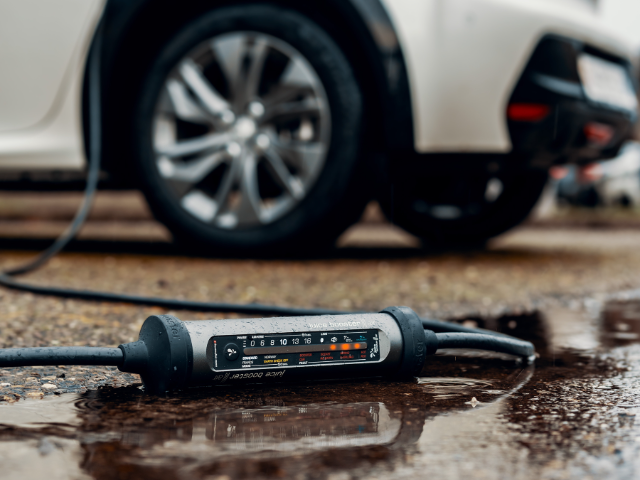
Why it's safe
To ensure that the charging process is simple and foolproof, the design of the chargers, cables, and plugs have all been carefully considered. The safe design has been standardised and approved by safety committees to ensure that several safety features are present in all charger systems.
The cable itself is only energised once a secure connection has been established and an electronic handshake has taken place, confirming that both connectors are secure and safe. It's only then that the current is passed through the cable. This means that any cable that isn't connected on both sides will be 'dead'.
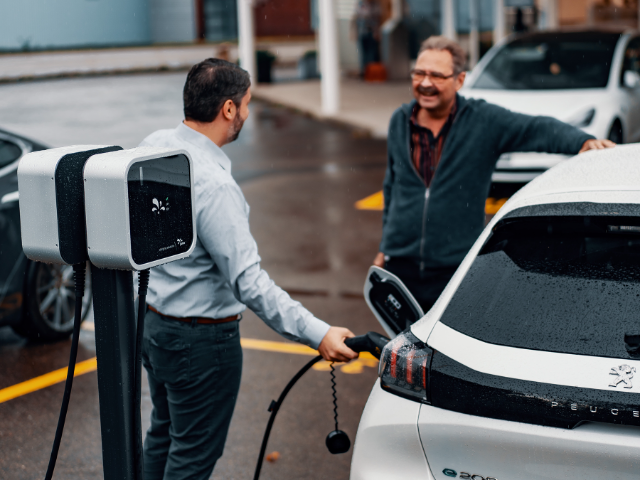
The plugs themselves are designed to meet IP44 standards, ensuring that the plugs are splashproof. This will not ensure a completely watertight seal meaning that submersion or pressure washers can still force water into the connection, in which case a further set of failsafe measures are called upon to ensure safe operation or cessation of the charging current.
Similar to your three-pin plugs at home, the earth prong is the longest and the first to make contact. This helps ensure that the shortest path of least resistance is taken, discharging to a safe earthing point should there be a fault in the line. This diverts the current way from the user and will trigger one of the aforementioned failsafe measures.
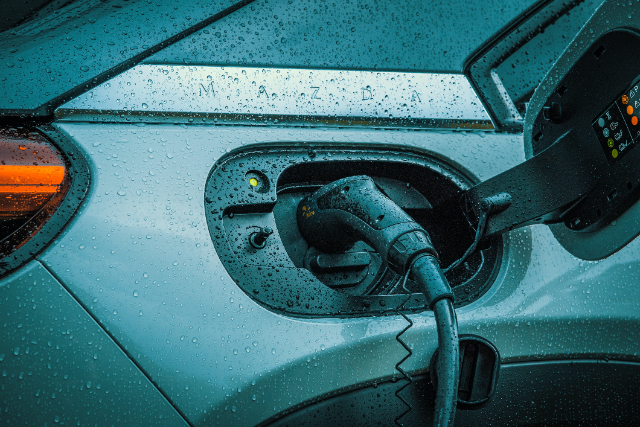
What chargers are safe to use in the rain?
The safety measures listed above apply to all chargers, domestic and public. This means it's perfectly safe to connect your car, start, end, and disconnect your vehicle from the charger in inclement weather whether it's a public charger, home charger or even your portable charging system. All of these are designed to be safe in the rain, just in case you happen to have started charging in the dry and get caught out by a thundershower.