Organised and hosted by Lachezar Apostolov, editor-in-chief of KAMIONI magazine, and his colleagues at Bulgarian Transport Press, the three-day programme (29 September–1 October) gathered five finalists for a mix of on-road and off-road assessments, plus fuel consumption tests and dimensional checks. The event followed the successful 2023 tests in Greece and was adjudicated by members of the International Van of the Year (IVOTY) jury, who also vote for the IPUA. Charleen Clarke represents South Africa on both juries.

How the test worked
Final preparations had taken place in Sofia, before the convoy headed south and west around Samokov and Sapareva Banya, climbing into the Rila Mountains with the resort of Borovets as a waypoint. The route offered precisely what a credible group test needs: motorway stretches, undulating secondary roads, and climbing, twisting sections that exposed chassis balance and powertrain flexibility.
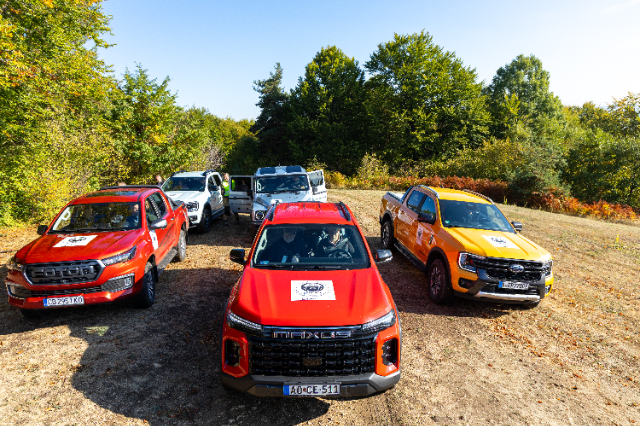
The dedicated 4x4 testing began near St Peter in the Verila Mountains and threaded across rough, rutted tracks and woodland lanes towards Belchin and Klisura, finishing at Tsari Mali Grad, the restored Thracian and Roman fort. The terrain varied from loose stone to slick clay, with steep pitches, axle-twisters and tight switchbacks. Alongside the subjective road and trail loops, the jury recorded fuel figures on set sections and measured turning circles, cargo areas and hitch heights. It was a demanding, balanced programme designed to separate marketing noise from mechanical substance.
Notably, three of the five contenders hailed from Asia, reflecting a market that has become more global, more hybrid-curious and keenly priced.
The finalists
Ford Ranger Plug-in Hybrid

Europe’s best-seller was tested in PHEV form, pairing a 2.3-litre EcoBoost petrol engine with a 75kW e-motor and an 11.8kWh usable battery, driving through Ford’s familiar 10-speed automatic. Power and torque are quoted at 207kW and 697Nm, making it the most powerful Ranger derivative. Towing capacity and workhorse credibility are central to this vehicle (Ford says 89% of customers tow; many up to 3.5 tonnes). Our verdict? The PHEV felt immediately familiar to anyone who had driven a Ranger diesel: direct steering, planted stance and an impressive powertrain.
Foton Tunland G7

Foton’s G7 boasts a 2.0-litre turbodiesel (up to 120kW and 390Nm), a ZF eight-speed automatic, and either 2WD or part-time BorgWarner 4WD with multiple terrain modes. Our verdict? On the road, the G7 felt robust and settled; off it, low-range gearing and throttle calibration mattered more than outright grunt. Fit and finish are good. The Foton’s biggest selling point is its competitive pricing.
Foton Tunland V9 (Mild Hybrid)

The V9 – which has a 2.0-litre Aucan turbodiesel and a 48V mild hybrid (up to 120kW and 450Nm) – is the grand dame of bakkies. Our verdict? The ZF eight-speed with paddle shifters and manual mode suited the mixed terrain, while the ladder-frame chassis, independent double-wishbone front and multi-link rear targeted improved ride control. With 3.5-tonne towing and 2WD/4WD options, the V9 felt refined on the tar, and it didn’t flinch when we headed off into the bushes.
Ineos Grenadier Quartermaster
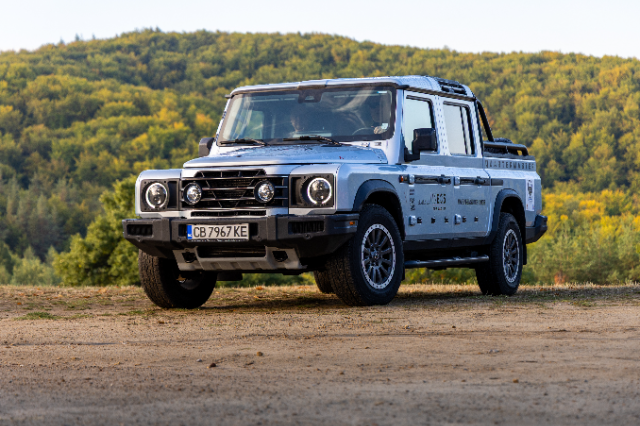
The Grenadier pick-up has taken the marque’s unashamedly utilitarian 4x4 DNA and added a load bed large enough for a standard Euro pallet. Under the bonnet sit BMW 3.0-litre turbocharged inline-six petrol or diesel engines, paired with a ZF eight-speed. The ladder-frame construction, Carraro axles, Bosch electronics and a cabin with switchgear designed for use with gloves underline the fact that this is a real workhorse. Our verdict? Approach and departure angles were excellent; the 3,500kg towing capacity and payloads of 760kg (diesel) and 835kg (petrol) reinforced its ability to work hard. This was the best bakkie offroad – by far.
Maxus T60 Max
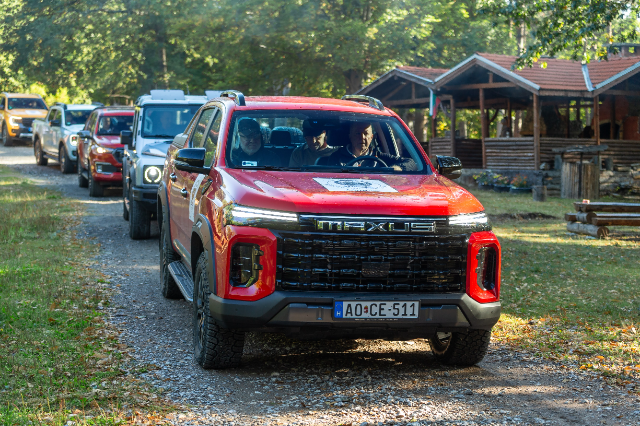
Maxus fielded the T60 with a 2.0-litre diesel (158.5kW, 500Nm) and an eight-speed automatic. Dimensions and wheelbase give it a generous load bed; the 3,500kg towing capacity and modern infotainment broaden its remit beyond pure graft. Our verdict? On the tar, the T60 rode securely and steered cleanly; on the rough loops it relied on measured throttle inputs and momentum rather than electronics to keep progress tidy.
So, which was best?
That depended on how “best” is defined. The Ranger PHEV impressed for its powertrain integration and everyday familiarity; the Grenadier felt purpose-built for punishment; the Foton duo made a strong value case with improving refinement; and the Maxus delivered a well-judged blend of performance and practicality.

What the Sofia-area tests ultimately showed was a maturing global bakkie market: electrification in different flavours, traditional ladder-frames refined rather than abandoned, and a spread of contenders capable of handling highways, mountain climbs and gravel alike.

Previous IPUA winners include the Volkswagen Amarok (three titles), Ford Ranger (three), Nissan Navara and Toyota Hilux. The 2026/27 winner will be announced at Solutrans 2025 (Eurexpo Lyon) on 19 November.
- The jury would like to thank the sponsors – which included Glavbolgarstroy, the Municipality of Samokov, Belchin Garden, Pobeda and Bulgarian Rose – and our hosts, Lachezar Apostolov, editor-in-chief of KAMIONI magazine, and his colleagues at Bulgarian Transport Press.
Photographs by Marin Apostolov, Tero Lahtinen and Charleen Clarke.