Renault celebrates 60th anniversary of world’s first R&D centre
In 1965, Renault became the first automaker to create a site entirely dedicated to research and development for commercial vehicles. As a member of the International Van of the Year jury, we travelled to France to visit this ground-breaking facility.


Many historical moments
Nineteen sixty-five was a year of headlines. Malcolm X was assassinated in New York in February. The Vietnam War escalated in March as the first United States combat troops landed at Da Nang. That same month, Soviet cosmonaut Alexei Leonov carried out the first human spacewalk and survived a risky re-entry to his capsule.

In July, NASA’s Mariner 4 flew past Mars and sent back the first close-up images of another planet. In August, Singapore became independent. In November, Rhodesia announced a unilateral declaration of independence and, days earlier, the Great Northeast Blackout left millions without power in the United States and Canada.

Nineteen sixty-five was also the year Renault opened a site dedicated entirely to research and development for light commercial vehicles at Villiers-Saint-Frédéric near Paris – an initiative the company says was a world first.
Dedicated site near Paris
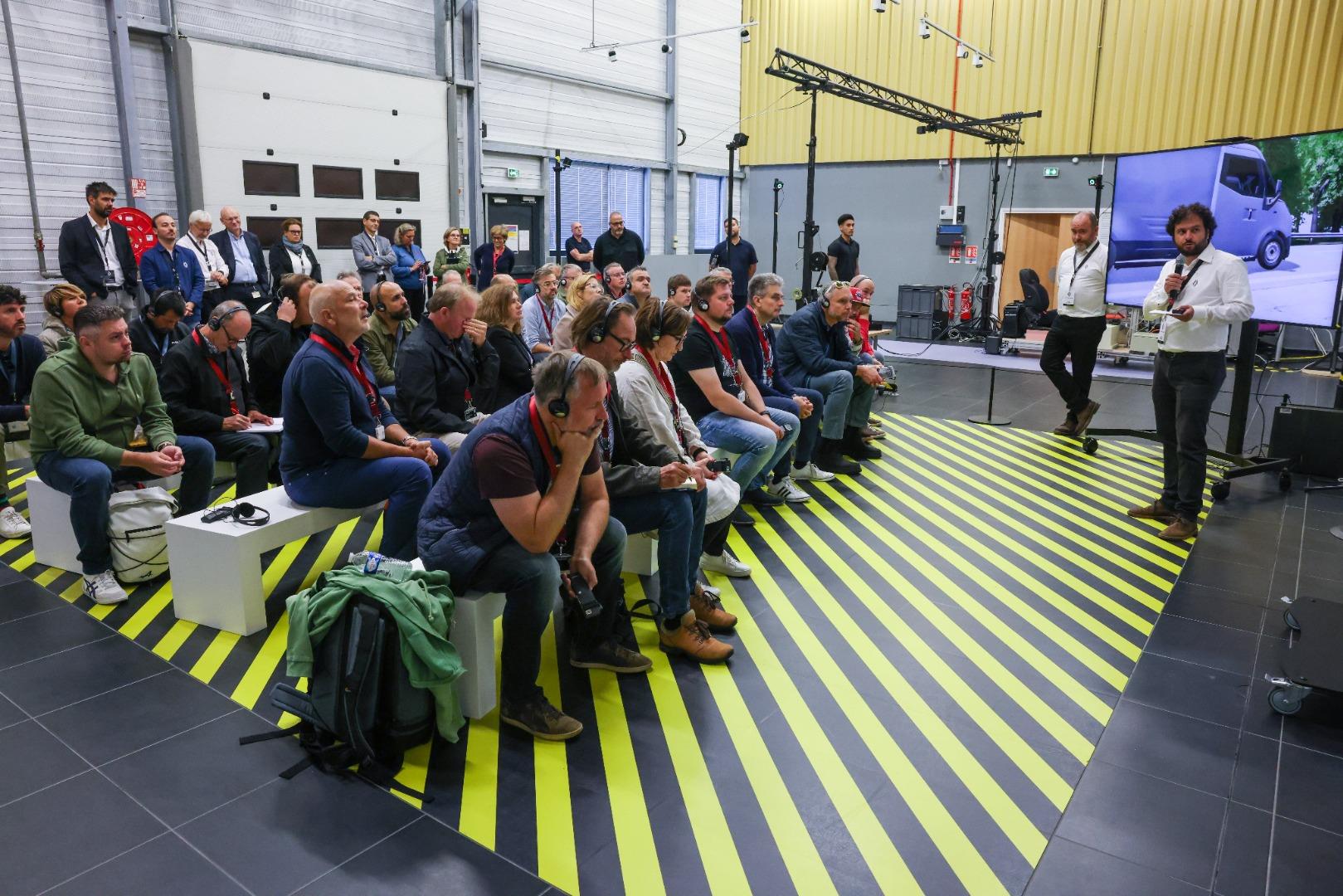
Villiers-Saint-Frédéric lies about 36 kilometres south-west of Paris. The campus covers 15 hectares and today employs around 1,000 people. From the outset, its role has been clear: to design, test and sign off the engineering that underpins Renault’s light commercial vehicles. To mark the 60th anniversary, the International Van of the Year jury was invited to tour the site and see its current programmes and laboratories.

The centre supports a very wide variety of commercial vehicles. Renault’s range spans vans, platform cabs and chassis cabs from roughly 3.3 m³ to more than 20 m³. Models are offered in multiple lengths and heights, with varied door and glazing options and a choice of petrol, diesel and electric powertrains.
Six disciplines under one roof
The R&D centre brings together six areas of expertise: test facilities and acoustics, prototypes, engine studies with dedicated benches, competitive quality assessments, engineering studies and a “phygital” workshop that links physical and digital development. The laboratories are sized for the weight and dimensions of vans and chassis cabs, which face different loads, duty cycles and regulatory requirements from passenger cars.

Testing, validation and durability
The test benches validate parts and systems before they reach production. They complement digital modelling and enable targeted regulatory checks. The site lists around 30 test resources dedicated to light commercial vehicles and more than 80 types of tests. Some 80 engineers and technicians run the benches around the clock using about 2,000 sensors and measurement systems. The objective is repeatable data that can be transferred directly into design changes and production standards.

Durability work runs alongside these benches. The reliability-durability team operates a structured programme that targets more than 200 parts identified as frequent sources of incidents. Accelerated routines can simulate 400,000 kilometres – or around 20 years of use – in 18 months. Test protocols include up to 900,000 door open-close cycles and about 450,000 entries and exits from the driver’s seat. Duty cycles reflect annual mileages of up to 120,000 kilometres for high-utilisation fleets.
Noise, vibration and driver comfort
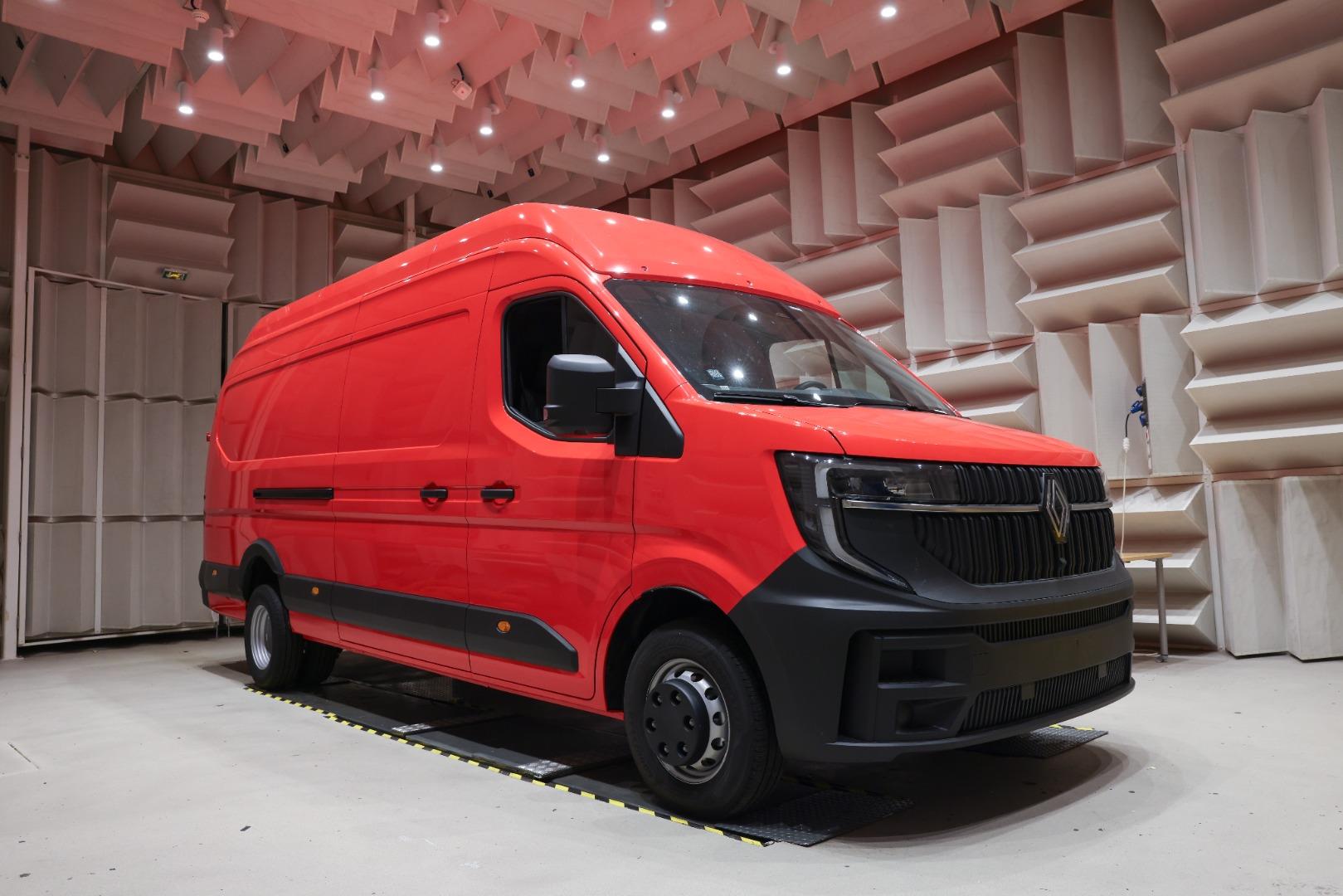
Noise and vibration are measured for comfort and regulatory compliance. The acoustics team focuses on aero noise, road noise, ventilation noise and the vibrations felt in the steering wheel and seat. In 2024, the site ran about 200 measurement campaigns and around ten wind-tunnel sessions, using a semi-anechoic chamber sized for large vans. The intention is straightforward: reduce fatigue and improve the environment for drivers who may spend long hours in the cab.

Phygital development tools
The “phygital” workshop connects a full-scale 3D mock-up in virtual reality to software that will run in the vehicle and to selected physical components. Teams can test layouts, compare options and assess the customer journey in one continuous simulation. Project stakeholders, including converters and, when needed, customers, can use the tool to validate choices before tooling is committed.

Electric vans: a long programme
Electric light commercial vehicles have been part of the centre’s work for decades. Renault tested electric versions of the Express and Trafic, using nickel-zinc batteries, back in the 1980s. In 2002, the Kangoo served as a development platform in electric and hybrid form.

In 2011, the Kangoo Z.E. became the first all-electric vehicle to win International Van of the Year. Numerous other electric vehicle launches followed – including the Master in the large van electric segment in 2017, with the Trafic then entering the all-electric medium van segment.
From laboratory to road
Recent projects show how the laboratory work reaches the road. The Kangoo’s 1.45-metre “Open Sesame by Renault” side aperture, made possible by removing the central pillar, improved access in tight spaces and contributed to the model winning the 2022 International Van of the Year award. The current Master took the 2025 title with its “Aerovan” body and a multi-energy platform designed to house both thermal and electric powertrains efficiently.
Meeting all customers’ needs
The commercial vehicle business is a tricky game – and customers have diverse needs. Thabo the plumber runs his business from his van. Pieter the baker uses his van to deliver bread. Grocery, convenience and food-service distributor Lerato wants an electric van for quiet early-morning drops. Susan uses her van to deliver flowers.
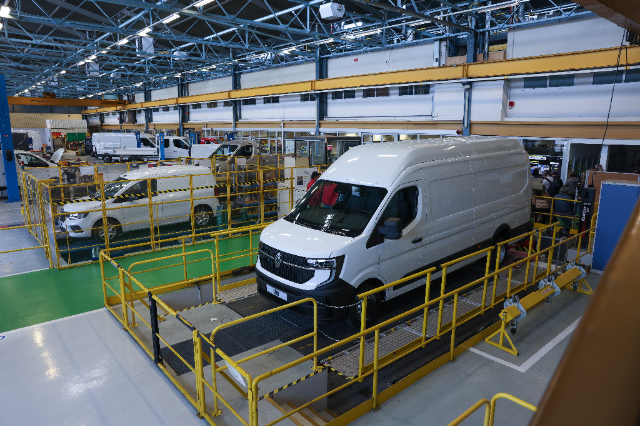
If there is one recurring theme that runs through the R&D centre in Villiers-Saint-Frédéric, it is customer satisfaction. The experts at the R&D centre have shaped the LCV landscape with iconic models such as Estafette, Trafic, Master and Kangoo, while also pioneering all-electric models. Thanks to them, customers like Thabo, Pieter, Lerato and Susan can do their work, shift after shift, in vans that are safe, efficient, advanced and productive.