This is not the company’s first entry into South Africa. Its previous, short-lived attempt took place more than a decade ago. At the time, Ashok Leyland’s presence was minimal, its market impact negligible, and aftersales support virtually non-existent. With limited distribution and a narrow product offering, that earlier foray understandably failed to gain traction.

Now, in 2025, the Indian commercial vehicle manufacturer – part of the Hinduja Group – is making a renewed effort, underpinned by strategic local partnerships and a focused product portfolio.
Ashok Leyland is India’s second-largest commercial vehicle manufacturer and the fourth-largest bus manufacturer globally. It ranks among the top 20 truck makers worldwide and is targeting a top-10 position in the near future. Headquartered in Chennai, with nine manufacturing facilities, the US$4.5 billion company already exports to over 50 countries.

Strategic local partnerships
In its re-entry strategy, Ashok Leyland has partnered with two well-established players in the region. ETG Logistics (ETGL) is handling distribution and brings strong pan-African experience and logistics capacity. The Hallmark Motor Group adds local credibility and a dealership network with deep expertise in South African automotive retail.

Together, they aim to provide market coverage, aftersales support, and build trust – critical elements in a service-focused, price-sensitive commercial vehicle landscape.
Three models
Ashok Leyland’s re-entry into the South African market is centred on three core models designed to appeal to SMEs and fleet operators: the Dost, Phoenix, and Partner. The rollout begins with the Dost, followed by the Phoenix and Partner, positioning the company squarely in the high-demand workhorse bakkie and light truck segments.
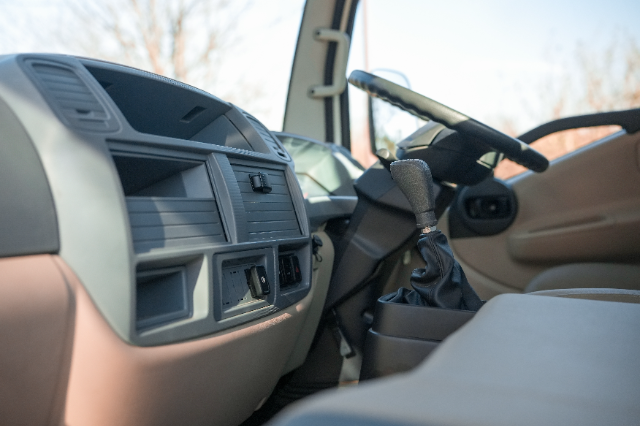
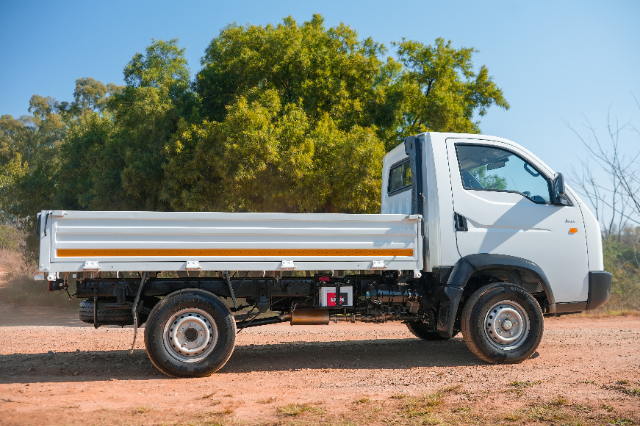
The Dost, priced at R169,900, is the entry point to the range. It features a 1.5-litre three-cylinder turbodiesel engine producing 44.1kW of power and 158Nm of torque. With a GVM of 2,525kg and payload capacity of 1,250kg, it is aimed at business owners seeking basic, affordable reliability. It offers an impressive fuel economy of 16km/litre.

Next in the line-up is the Phoenix, a slightly larger, air-conditioned model with a GVM of 3,490kg and payload of 1,810kg. It uses a similar engine layout – a 1.5-litre three-cylinder turbodiesel – but delivers 59kW of power and 190Nm of torque. Priced at R269,900, it balances efficiency (14km/litre) with added comfort and capacity, targeting small businesses with higher transport demands.

At the top end of the initial range is the Partner, a larger and more powerful truck. It features a 2,933cc four-cylinder turbodiesel engine, offering 103kW and 360Nm of torque. With a GVM of 7,200kg and payload of 4,101kg, the Partner enters the light truck category. At R369,900, it is priced competitively in a segment typically dominated by Japanese and European brands. All three vehicles feature a five-year/150,000km warranty.

All three vehicles are designed with rugged utility in mind and are built to handle South Africa’s mix of urban and rural operating environments. Ashok Leyland is targeting operators seeking affordable, serviceable, and reliable alternatives to established players in the market.
Why South Africa – and why now?
South Africa is an important node in Africa’s freight and logistics network. More than 85% of the country’s goods are transported by road, and infrastructure limitations in rail and port logistics have increased reliance on road-based haulage. For Ashok Leyland, this creates a timely opportunity to serve the country’s three million SMEs — many of which require cost-effective transport options.

Moreover, Ashok Leyland no doubt sees South Africa as a gateway to the rest of the continent. Its local strategy includes exploring local assembly operations if demand justifies it, replicating successful models implemented in the Middle East and other regions.
Challenges ahead
These are grandiose plans – but it won’t be a case of plain sailing ahead. South African buyers are typically cautious, especially when it comes to aftersales support, parts availability, and warranty fulfilment – all of which were shortcomings in Ashok Leyland’s earlier stint. However, to be fair, this time around, the company insists it has a robust plan.
Will Ashok Leyland be able to maintain competitive pricing while delivering consistent service and product reliability? Will it give the entrenched Japanese, Chinese, and European rivals a run for their money? Only time will tell. We will certainly watch the company’s progress with great interest.