Hyundai tosses its hat into the hydrogen ring
While most other truck manufacturers are singing the praise of electric propulsion right now, with hydrogen coming later for long-haul trucks, one company is singing from a different song sheet. That company is Hyundai – and its future will be centred on hydrogen.



Why? Does this mean that we will get trucks powered by hydrogen in South Africa? We’re about to answer these – and many other – questions:
Why is Hyundai going down the hydrogen path?

Hyundai is opting for hydrogen for a bunch of reasons – some environmental, some practical. According to the Hydrogen Council, fuel cell electric vehicles (also called FCEVs) are more efficient than conventional internal combustion engine vehicles. As is commonly known, they produce no tailpipe emissions. Practical advantages include a long range and fast refuelling times.
The environmental benefits are massive. The Council has reported that, by 2050, 113 million FCEVs could save up to 68 million tonnes of fuel and eliminate almost 200 million tonnes of carbon emissions.
When will Hyundai’s trucks be powered by hydrogen?

Hyundai will equip all its trucks, buses and coaches with fuel cells by 2028.
Is this news something special?

Yes indeed. If it achieves its goal (and we have no doubt that it will), Hyundai will be the first global automaker to realise such ambitions within the sphere of commercial vehicle transportation. Importantly, for this to be something special, the vehicles will also need to run on so-called “green hydrogen” – because this is the only hydrogen that is produced sustainably and creates no carbon emissions in its production.
Is the emphasis on hydrogen something new for the company?
Not really. Hyundai’s foray into fuel cells began in 1998 when it first established a fuel cell development unit. In 2013, the Tucson ix35 FCEV was introduced, opening the door to the mass production of FCEVs. Then, in 2018, the company launched the next-generation fuel cell SUV, the NEXO.
And what about trucks powered by hydrogen?

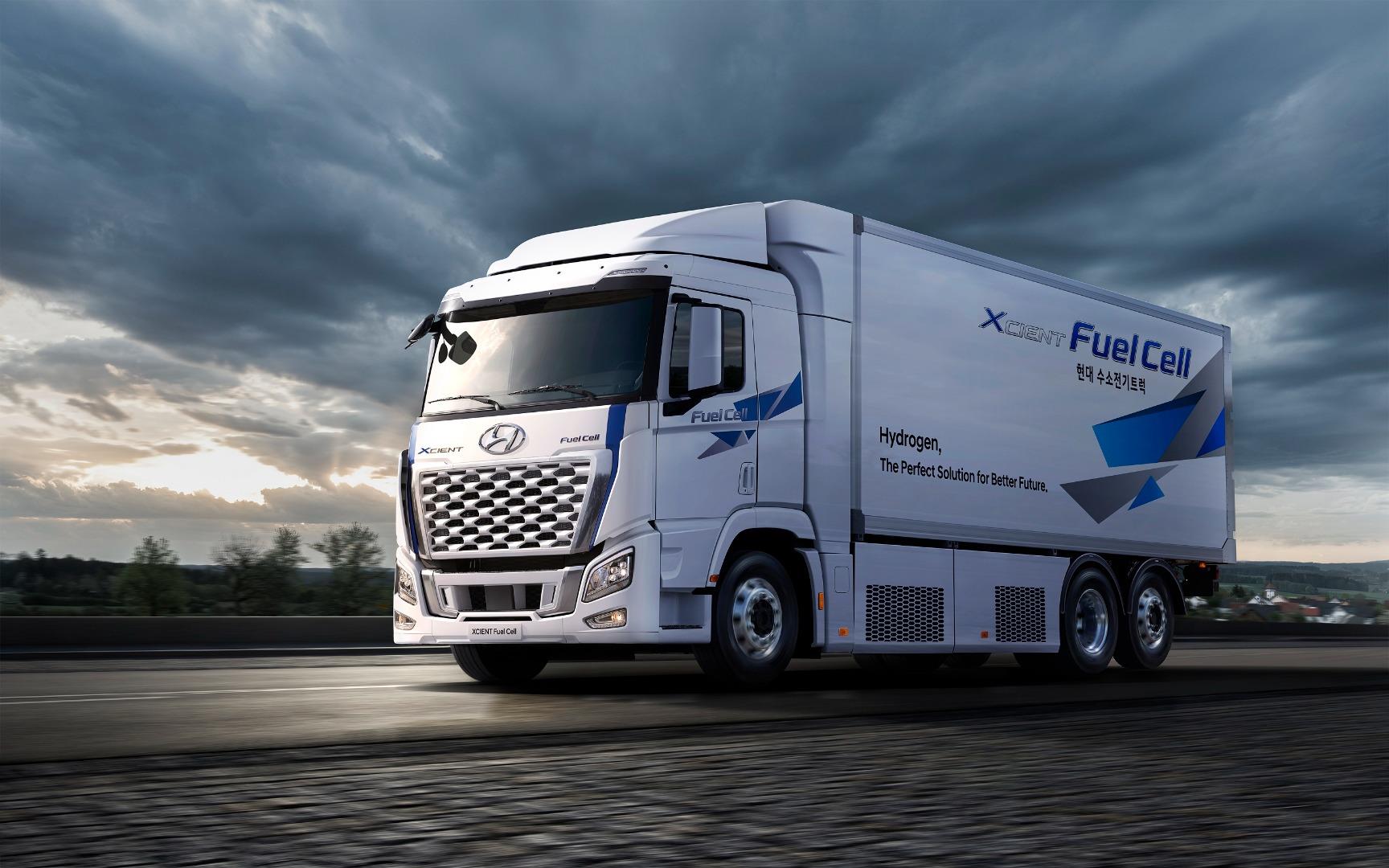
The world’s first fuel cell heavy-duty truck, the XCIENT Fuel Cell, was launched by Hyundai in 2020. Since then, the company has started mass-producing a greatly improved version of the vehicle. Some 46 of these trucks are already operating in Switzerland and a total of 1600 XCIENT Fuel Cell trucks will be deployed in that country by the end of 2025.
The Swiss project is now being mimicked in the United States. The company has been awarded a $500,000 grant from the South Coast Air Quality Management District to demonstrate two Class 8 XCIENT Fuel Cell trucks in Southern California. Hyundai Motor and its fleet partner started operating these trucks in August. They will be used for long-haul freight operations between warehouses in southern California for a 12-month period. And, in 2023, Hyundai will deploy 30 XCIENT Fuel Cell trucks in what has been described as “the largest commercial deployment of Class 8 hydrogen-powered fuel cell trucks in the US”.
Returning to Korea, Hyundai is developing a tractor based on the XCIENT Fuel Cell that will be released in 2023. A hydrogen-powered bakkie is planned too.
The company also intends to work towards the complete transition of Korea’s public transportation and logistics systems to hydrogen-based solutions – with a view to setting a global benchmark. Naturally, it will supply all the necessary products to meet this goal. All-new buses powered by hydrogen are already on the drawing cards.
Won’t these vehicles be expensive?
Well, this depends on what you’re comparing them to – and, in 2023, Hyundai is promising to release a cheaper new generation fuel cell that offers “significantly improved durability and output”. It explains that, thanks to ongoing research and development, the company has been “able to reduce fuel cell costs drastically over the last 20 years”. And, by 2030, it wants to achieve a fuel cell vehicle price point comparable to a battery-electric vehicle.

Prototypes of these fuel cells – 100kW and 200kW versions – have already been shown to the media. The former is 30% smaller than its predecessor while the latter is similar in size to the current NEXO system, but the power output has doubled. Significantly, the stacks for commercial vehicles will have a lifespan of 500,000 km. (To demonstrate how good this is, with the current second-generation fuel cell stack launched in 2018, the company achieved 160,000 km.)
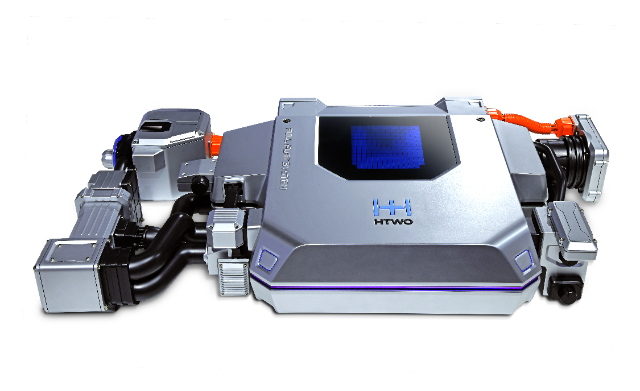
In future, these fuel cells will also be more versatile than ever before. For instance, Hyundai has come up with an innovative fuel cell “Full-Flat System” that lowers the stack height to 25cm, allowing it to be used for various applications such as MPVs, buses and trams (the system can be mounted to either the upper or lower body of the vehicle).

The clever engineers at Hyundai have also come up with a number of other futuristic concepts. For instance, they’ve developed the Trailer Drone, a hydrogen-powered container transportation system, which is popped onto the equally futuristic Fuel Cell e-Bogie (it sits under the container just like a rail bogie and is a fully enclosed system with fuel cell propulsion and fully independent four-wheel steering).

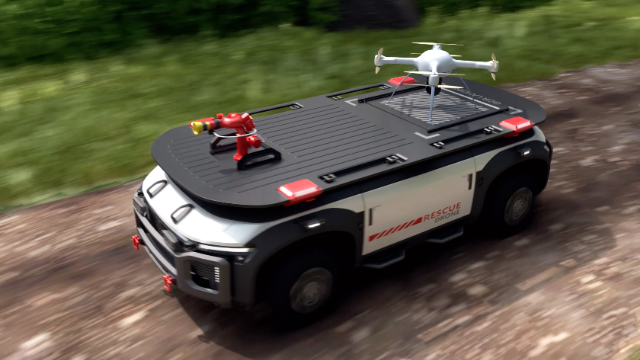
Plus, they’ve come up with the H Moving Station, a heavy-duty vehicle equipped with charging facilities for FCEVs, and the Rescue Hydrogen Generator Vehicle, which supplies power to vehicles in aid of urgent assistance in remote, off-road areas.
Is Hyundai’s hydrogen strategy only focused on vehicles?
No. It applies to anything and everything – from cars to trucks and beyond. During an event in September 2021 called “Hydrogen Wave”, Hyundai declared its vision “to realise a hydrogen society where hydrogen energy can be easily and conveniently used by everyone, everything, everywhere by 2040”.
“Hyundai Motor Group’s vision is to apply hydrogen energy in all areas of life and industry such as our homes, workplaces and factories. We want to offer practical solutions for the sustainable development of humanity and with these breakthroughs, we aim to help foster a worldwide hydrogen society by 2040,” said Chairman of the Group, Euisun Chung.

Is Hyundai alone in this mission or belief?
Definitely not. According to the Hydrogen Council, a global CEO-led initiative of leading energy, transport, industry and investment companies, hydrogen energy will account for 18% of global energy demand by 2050, with a market size of USD 2.5 trillion. The popularization of hydrogen energy will also help cut CO2 emissions by more than six billion tonnes a year, while creating over 30 million new jobs.

Finally, what about South Africa?
So, when will we see hydrogen-powered Hyundai vehicles on our roads? We’re not sure. We contacted Hyundai in Korea and a spokesperson told us the following: “Hyundai's launching plan for both passenger and commercial vehicles in South Africa has not been set at this stage. We will continue to develop our business plan in line with each region's environment.”
Hyundai Automotive South Africa is also unable to give a firm local launch date. “There are a number of unknown factors that we need to take into consideration – from import duties and cost to infrastructure. There also has to be a firm commitment from government to make it work. So, due to practical considerations, it probably won’t happen in the foreseeable future. But we don’t know what lies ahead in the next five years. A timeline can shrink,” says Deon Sonnekus, its General Manager: Corporate Communications.
We hope it does!