Fossil fuels fade

Metcalfe is one of the authors of a fascinating study titled Unlocking South Africa’s hydrogen potential, which points out that the global energy economy is facing an unprecedented challenge. Fossil fuels are becoming harder to extract cost-effectively. “The effects of fossil fuel-based climate change are being felt all over the globe and new renewable energy technologies are proving more efficient than their carbon-intensive counterparts. Suddenly the economic worth of a fossil fuel-based global energy economy is not looking so promising,” the report notes.

But PwC’s study points out that, at the current global levels of consumption of fossil fuels, the Paris Agreement – which seeks to limit the global increase in temperatures to less than 2°C this century – is going to be hard to achieve. So too will the statement by Europe’s truck makers: that, by 2040, all new trucks sold need to be fossil-free. The transport industry currently accounts for 23% of global carbon emissions.
But there is a potential solution: hydrogen – which the PwC report maintains can provide “a compelling solution to the decarbonisation of the transport sector”. “We all know about Anglo American’s hydrogen-powered truck, which will begin testing at the company’s Mogalakwena platinum mine early this year. This truck is part of a much bigger strategy. They’re aiming for 40 hydrogen truck deployments by 2024 and for seven operations to be completely transformed to hydrogen fleets by 2030,” reveals Metcalfe.
Grey, blue or green?

There are three different ways of making hydrogen and, while the end result is the same, the carbon emissions during the manufacturing process differ. “Grey hydrogen accounts for the vast majority of hydrogen supply and is produced from fossil fuels, mainly coal and natural gas. This produces significant volumes of carbon emissions. Blue hydrogen production uses the same fossil-fuel based sources as grey hydrogen (coal or natural gas), but uses carbon capture, utilisation and storage (CCUS) technology at the end of the extraction process, which traps up to 90% of the greenhouse gas emissions,” the study explains.
Green hydrogen, on the other hand, is produced in a sustainable way and creates no carbon emissions in its production. The main way of producing green hydrogen is through the electrolysis of water, and this is the type of hydrogen that is powering the Anglo truck.
What of BEVs?

So, trucks running on green hydrogen are clearly the way to go. Which is all very well. But what about battery electric vehicles (BEVs) such as Elon Musk’s Tesla Semi? Musk, who – it must be said – knows a thing or two about launching successful products (either on this planet or into outer space) has famously called fuel cells “fool cells” – because he believes BEVs are the future.
The PwC report points out that hydrogen-powered trucks – generally referred to as fuel cell electric vehicles (FCEVs) – have a number of advantages over BEVs. One is range. “The relative energy density of hydrogen means that even at current technological levels, FCEVs have significantly higher fuel efficiency against both internal combustion engine vehicles (ICEVs) and BEVs,” the study notes.
Another is charging. “FCEVs also have a significant refuelling advantage over BEVs. Even with hydrogen refuelling technology in its relative infancy, it takes the same amount of time to refuel an FCEV high-pressure tank as it does an ICEV fuel tank. In contrast, even utilising ‘fast-charge’ points, the best BEVs take 30 minutes or more to achieve a full charge.”
This will become especially significant when the shift to self-driving trucks takes place. “The move to autonomous vehicles will remove the need for drivers to stop for rest breaks. The ability for fast refuelling to maintain maximum utilisation/time on the road will then become even more critical,” Metcalfe points out.
Carbon footprint is vital

Plus, there is the important issue of a truck’s carbon footprint which, of course, is more than just the carbon dioxide it emits while in use (this includes the carbon attributable to its entire lifecycle). “In this respect, FCEVs offer a significant advantage over both BEVs and ICEVs. An ICEV creates a significant amount of emissions through the numerous materials needed for its construction, as well as its emissions through use. In a BEV, although it has fewer components, the materials required to produce the vast quantities of lithium-ion batteries to power it are relatively rare and create significant emissions in their extraction. In comparison, an FCEV contains fewer components than an ICEV and utilises an onboard battery a fraction the size of the one needed in BEVs,” the study notes.
Accordingly, FCEVs are the clear winner when it comes to long-haul transport. However, the study does note that “for inner-city transport outside of the commercial sector, BEVs will likely be more suitable, as access to plug points is easy and there is no need to travel long distances or carry heavy loads”.
Opportunities for South Africa
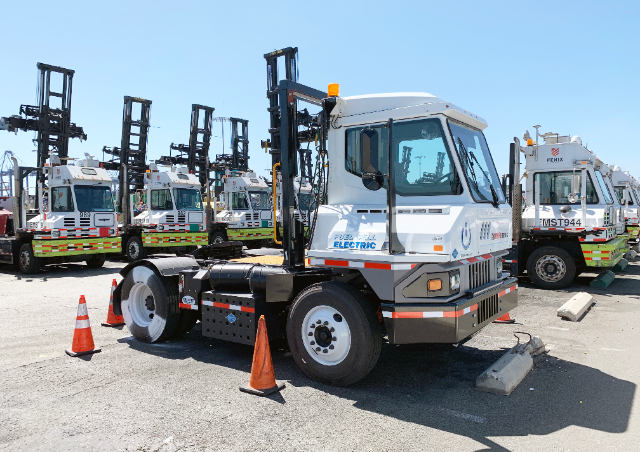
There are a number of opportunities within the field of hydrogen for South Africa. According to the PwC study, given its immense renewable energy potential, South Africa could become an exporter of cost-effective green hydrogen to the world. The country could also begin manufacturing fuel-cell catalysts and also manufacture the actual FCEVs.
This potential doesn’t come without its challenges. “Clarity is needed on both the taxation of carbon emissions and on the taxation of hydrogen. Carbon emissions need to be properly disincentivised and penalties need to be enforced, while uptake of hydrogen technology needs to be incentivised through tax relief,” the study notes.
However, assuming that these (and other) challenges are overcome, there is pretty massive potential for the deployment of FCEVs in South Africa. “If you look at the Platinum Corridor or Platinum Valley Project, the bigger picture is transitioning the concentrate trucks running from the mines to the smelters,” says Metcalfe. “That is a massive market, and it is way bigger than the fleets on the mines. It will involve thousands of trucks.”
The next big market will be the Northern Cape mining companies. “There is a big trucking fleet in the region that could be an early adopter for the technology due to their high frequency on certain transport corridors. As such, they are a prefect target for a centralised hydrogen refuelling infrastructure,” says
The other big area of opportunity for hydrogen is the mining areas in Zimbabwe. “A lot of those companies truck their concentrate back into South Africa,” Metcalfe reveals.
On-site hydrogen production

One of the reasons why the mining companies will drive the move to hydrogen is because they are starting to produce hydrogen on their sites. “Accordingly, it makes sense that they will be the first movers. And they are not the only companies that are looking to do this in future,” says Metcalfe.
All the buses on the mines will be running on hydrogen in future too – and there are thousands of those. “It is likely that they will do plug and play conversions in the short term (they will simply drop in fuel cell powertrains during the mid-life engine refurbishment) and then, when the buses are defleeted, they will be replaced by custom-made fuel cell buses,” Metcalfe predicts.
And the good news is that, while shifting to hydrogen is definitely good for our planet, it will become increasingly good news for transport operators’ bottom lines. “We have built parity models for mining fleet conversion and, in July 2020, my parity point sat at 2032. With various developments, it’s now sitting at 2026. So, people who say that that the shift to hydrogen is a pipe dream are making an ever-diminishing argument,” notes Metcalfe.
The naysayers can claim that hydrogen is a pipe dream, but one thing is clear: we’ll soon be seeing a lot more hydrogen-powered trucks on roads.