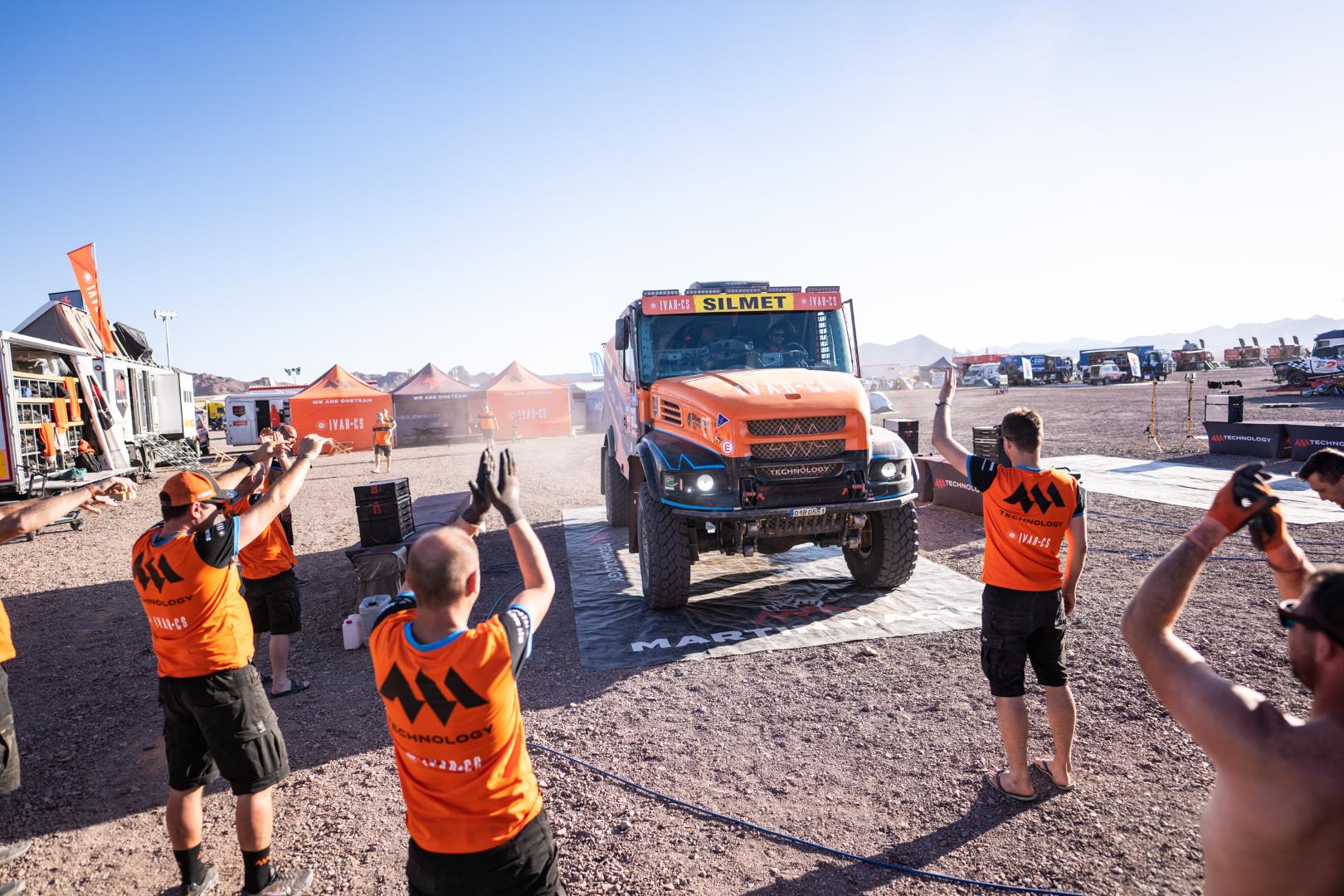
Who is Martin Macík?
But first, an introduction to Macík. The 34-year-old Czech was introduced to the world of motorsport by his father, Martin Macík Senior, who regularly participated in off-road races. The younger Macík started racing motorbikes at “the age of five or six”. However, his foray into serious racing came only when he was 20.

“In 2009, I navigated for my father in his truck the whole year except for the Dakar (so, I took part in the Silk Way Rally, Baja Aragon and Hungarian Baja). ‘First university, then Dakar,’ my father said. So, I graduated and started as a navigator in 2013 and 2014. After getting along and knowing what to do, I started on my own behind the steering wheel in 2015,” he explains.

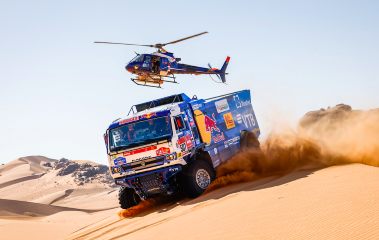
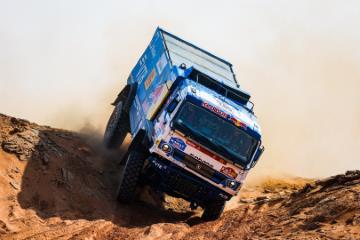
Macík has since done the Dakar 12 times. Last year, he came second. This year, he was one of the favourites to win the race – although he insisted that the challenge of winning the Dakar was as hefty as his 10-tonne Iveco Powerstar, which is called “Cenda”.
Driving style plays a role
So, how did he do it? How did he finally get that win? Clearly, driving style plays an important role – and Macík says he does “what’s needed in the moment of the race”. “I drive with my head and don’t do crazy stuff. I manage the truck in order to be able to go faster every kilometre and day. My goal is to compete until the end of Dakar. It’s cross country and a navigational rally, you can be aggressive and win a stage but that won’t win you a Dakar. But, of course, you must be fast, and consistent and you must have a great truck, which we have with our Iveco,” he notes.

Patience is also extremely important. Initially this year, Janus van Kasteren appeared unbeatable in the battle for the title. Aleš Loprais was also in with a chance. Loprais looked promising at the start of the race, but Van Kasteren consistently maintained a lead. Meanwhile, Macík took some time to find his rhythm. Despite trailing by three-quarters of an hour by the end of stage four, Macík exercised patience, biding his time and capitalizing on the other competitors’ errors.

As the adage goes, patience is a virtue. During the 48-hour Chrono stage (the sixth stage, spanning two days and considered the toughest), Loprais lost over an hour navigating the dunes of the Empty Quarter. Van Kasteren fared even worse, dashing his hopes of a win.

This propelled Macík to the forefront of the overall standings. At the wheel of Cenda, Macík consistently secured a spot in the top three for each stage starting from day five of the rally. With four stage victories under his belt and a nearly two-hour lead over his rivals, the Czech and his Italian truck took top honours. And the rest, as they say, is history…
Vehicle is vital
While a driving style and the temperament of the driver are massively important, these amount to nothing without a reliable vehicle – which is exactly what Macík has.

“The key to winning the Dakar is having a really great vehicle,” he explains. “The truck I drive is an MM Technology development. It is powered by the Iveco 13 Cursor (which generates over 1,000hp of power and over 5,000Nm of torque) and the gearbox is an automatic Allison. It’s really fun to drive even though I miss a manual, which allows me to play with the truck more.”

The humble Czech gives massive credit to his Iveco. “Our truck was 50% of our achievement thanks to its performance and reliability. This is very important. The biggest advantage of our truck is for sure the compactness of the whole truck with low weight balance and easy control. I just love it. The event was seamless for us thanks to our truck,” he enthuses.

So, there you have it. In order to win the Dakar, you need to have a measured driving style, patience and an incredible truck. Sounds easy, doesn’t it?