Meet the Dakar winner
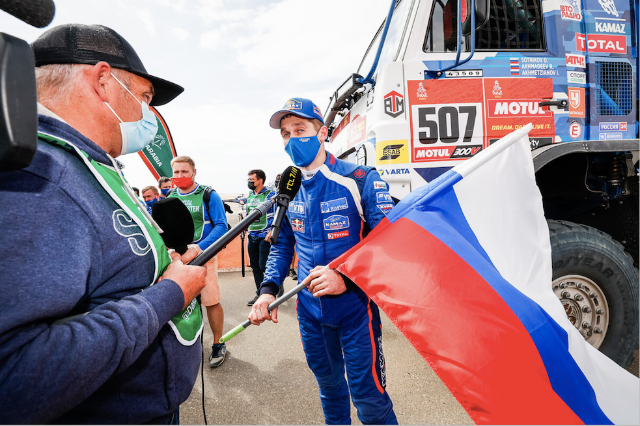
Dmitry Sotnikov delivered a stunning performance at this year’s Dakar – winning the event after finishing in the top three of every single stage barring one. In this exclusive interview, the Kamaz-master Team driver explains just how he managed to achieve the 18th title for the Russian truck producer.

Born racer
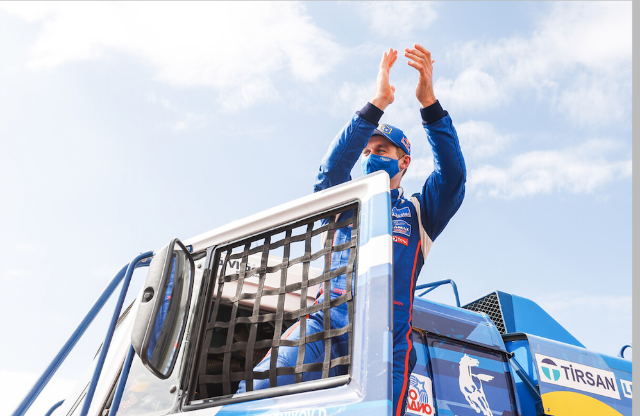
Born and raised in Naberezhnye Chelny (the home of Kamaz), 34-year-old Sotnikov has been racing for most of his life. “My racing career started at the age of eight when my father and I joined a karting club. At the age of nine, I started taking part in competitions. I did this until I turned 15,” he reveals.
For the next three years, he participated in circuit racing. After a short break from racing (in order to complete university), Sotnikov raced buggies for three seasons. He started racing trucks in 2011. “In that year, I tried out trucks for the first time. Then, in 2012, I drove the whole season. Since then, I’ve been a professional pilot,” he reports.
In 2013, he won the Silk Way and the Africa Eco Race. His first outing at the Dakar was in 2014, and he crossed the finish line fourth. In 2017 and 2019, he came second.
The magic eight
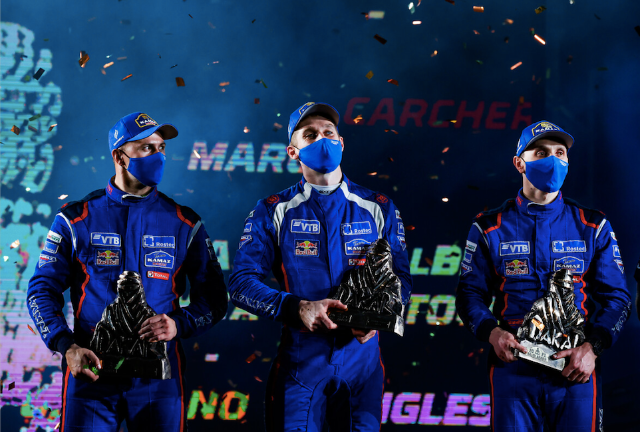
The 2021 Dakar was Sotnikov’s eighth crack at the toughest race on the planet and he came to the event with a secret goal: he wanted to become the seventh Russian to win the Dakar in a Kamaz. As we all now know, he achieved that goal in fine fashion and the Russian truck maker scored a hat-trick, occupying all three podium spots. Sotnikov points out that this was no easy achievement.
“This year we had a cool result, but you cannot bargain on this every year; it doesn’t happen often. The last hat-trick was six years ago in 2015. Every contestant has the chance to be on that podium. Everyone has problems during the race. The contestant who loses the least actual time secures that podium position,” he notes.
Navigation nightmares
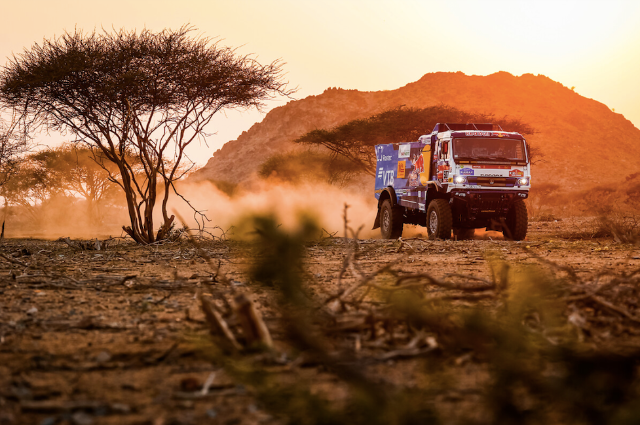
One of those problems was navigation; the role performed by the navigator – Sotnikov was partnered with Ruslan Akhmadeev – is vitally important. This year, a new electronic roadbook was delivered to the teams 10 minutes before the start of the stage. This came with its challenges.
“The new electronic roadbook was difficult for everyone, especially in the first half of the race, because we hadn’t used these devices before. It meant that the team that was best able to work with the navigation would have an advantage. The roadbook was more intense; for me personally it helped me to concentrate more and to be more attentive. We drove carefully and this tactic brought a good result,” he points out.
A good start
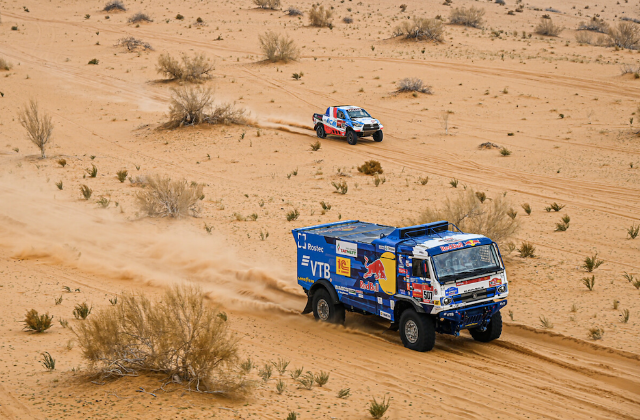
Another of his tactics was to get a good start to the event. “The key part was the first half of the race. We managed to win four special stages. This meant that we had a time margin, and this allowed us to proceed in a calmer and more accurate way,” he explains.
But it wasn’t plain sailing for the Russians. “Not everything went smoothly, there were problems with navigation, punctures and dangerous riverbeds, where you could easily be stuck for 30 to 40 minutes. We tried to stick to our pace, not slowing down much. I felt that we should simply hold our pace,” Sotnikov reveals.
Varied driving style
While the pace remained consistent, Sotnikov says he had to vary his driving style. “I believe that the driving style should include aggressive driving, cool-headed driving and tactical driving too. I like the aggressive style the most. In the first half of the Dakar, it was like this. But in the second part of the race, it was more tactical and cool-headed.”
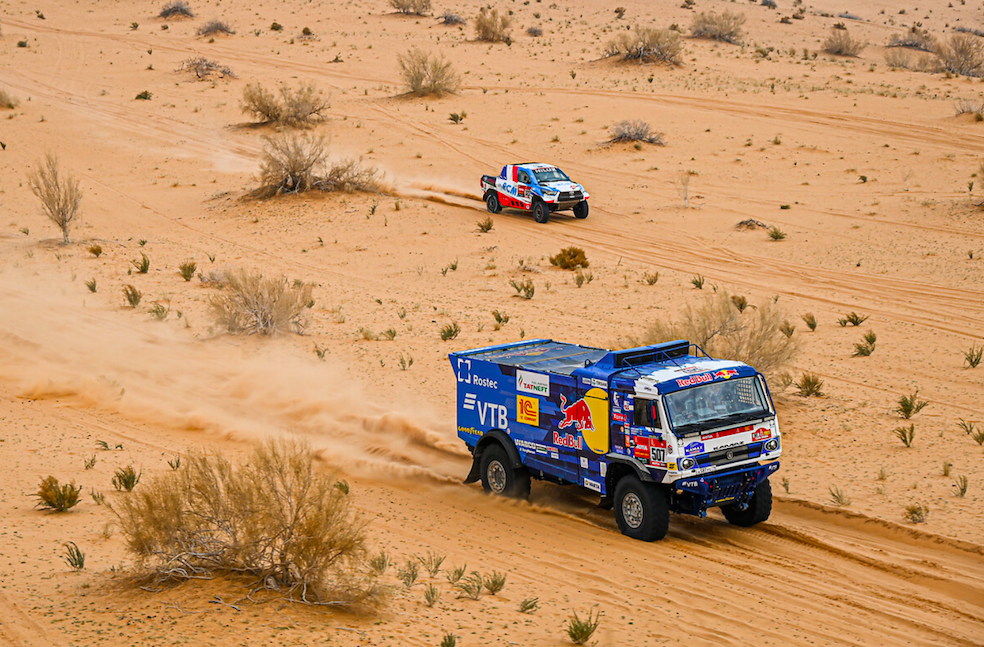
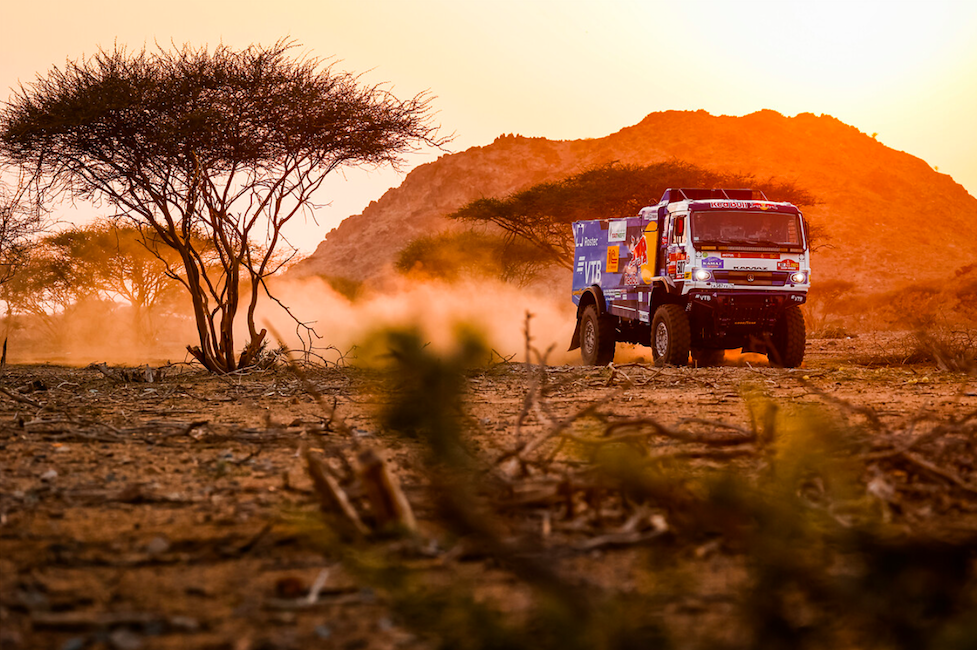
He’s quite at home racing over varied terrains too. The Dakar is notorious for throwing all sorts of terrains at the teams – anything and everything from rocky stretches to soft desert sand, dunes and narrow and winding routes. “I believe that, if you want to drive in the leading group on the Dakar and you want to win, you should feel comfortable over all these terrains, starting with stones and finishing with dunes. Unless you love all these surfaces, you won’t be strong enough to struggle for the first position. I try to train on all terrains equally,” says Sotnikov.
Truck’s role vital
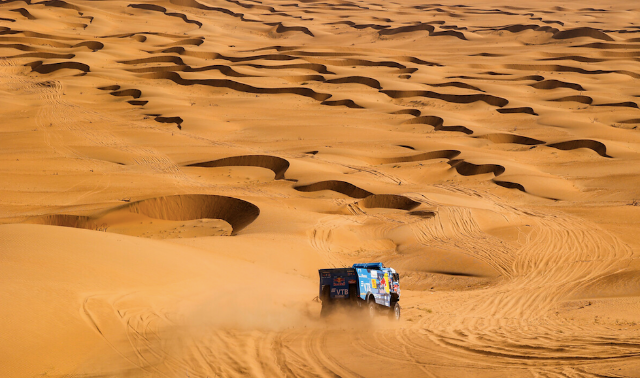
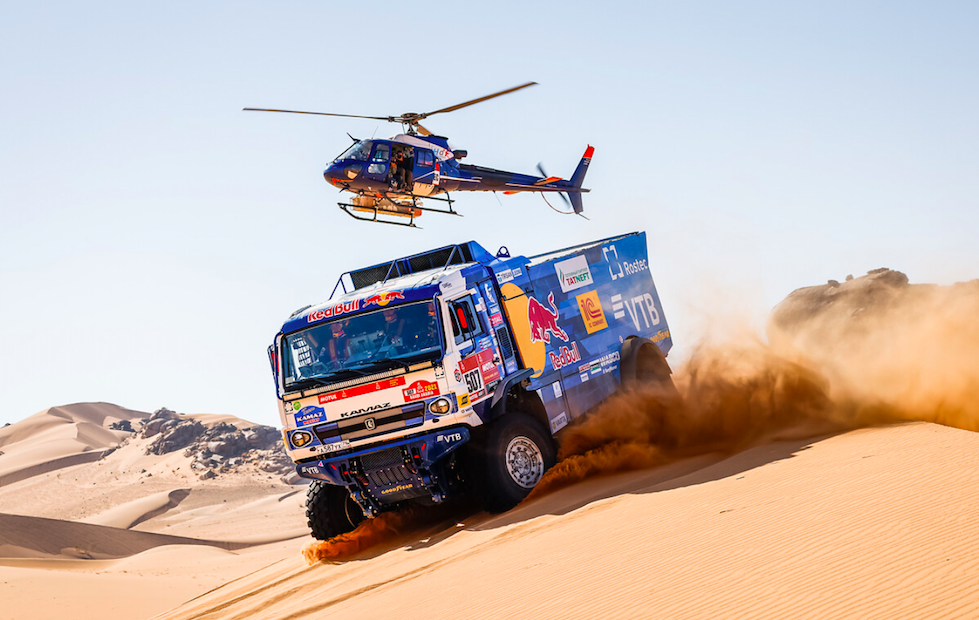
While he’s open to varied driving styles and terrain, there’s one thing he would never change: his Kamaz 4309 with its 13-litre Dongfeng-Cummins engine and automatic gearbox. “The role of the truck is big; I would say that 50% of the role is the vehicle and 50% are the people in the cab of the vehicle. The truck is a fruit of the whole team’s labours, not only this year but in previous years as well. The level of the team rises every year and I consider our trucks to be one of the best when it comes to technical specifications. This statement also applies to the engine; its power allows me to overcome dunes and sandy riverbeds. We’re constantly developing our truck – not only the engine but also the chassis. At the same time, the crews train constantly; they’re working towards raising their level of competence,” he notes.
So, ultimately, when a Kamaz cruises over the finish line in the first position (as it is likely to do once again in the 2022 event), it’s a real joint effort. “Victory is a result of the whole team, as well as the correct preparation of the trucks and the people,” Sotnikov points out. And that joint approach is something that the Kamaz team appears to be mastering (no pun intended).