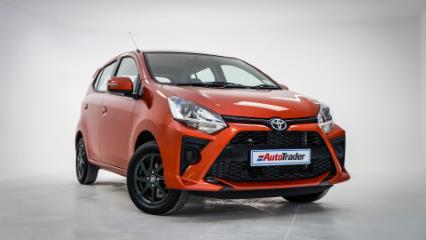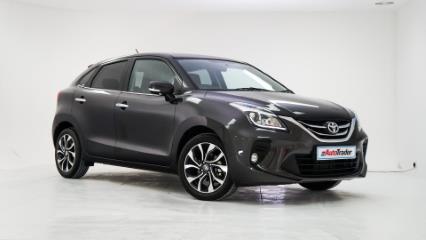

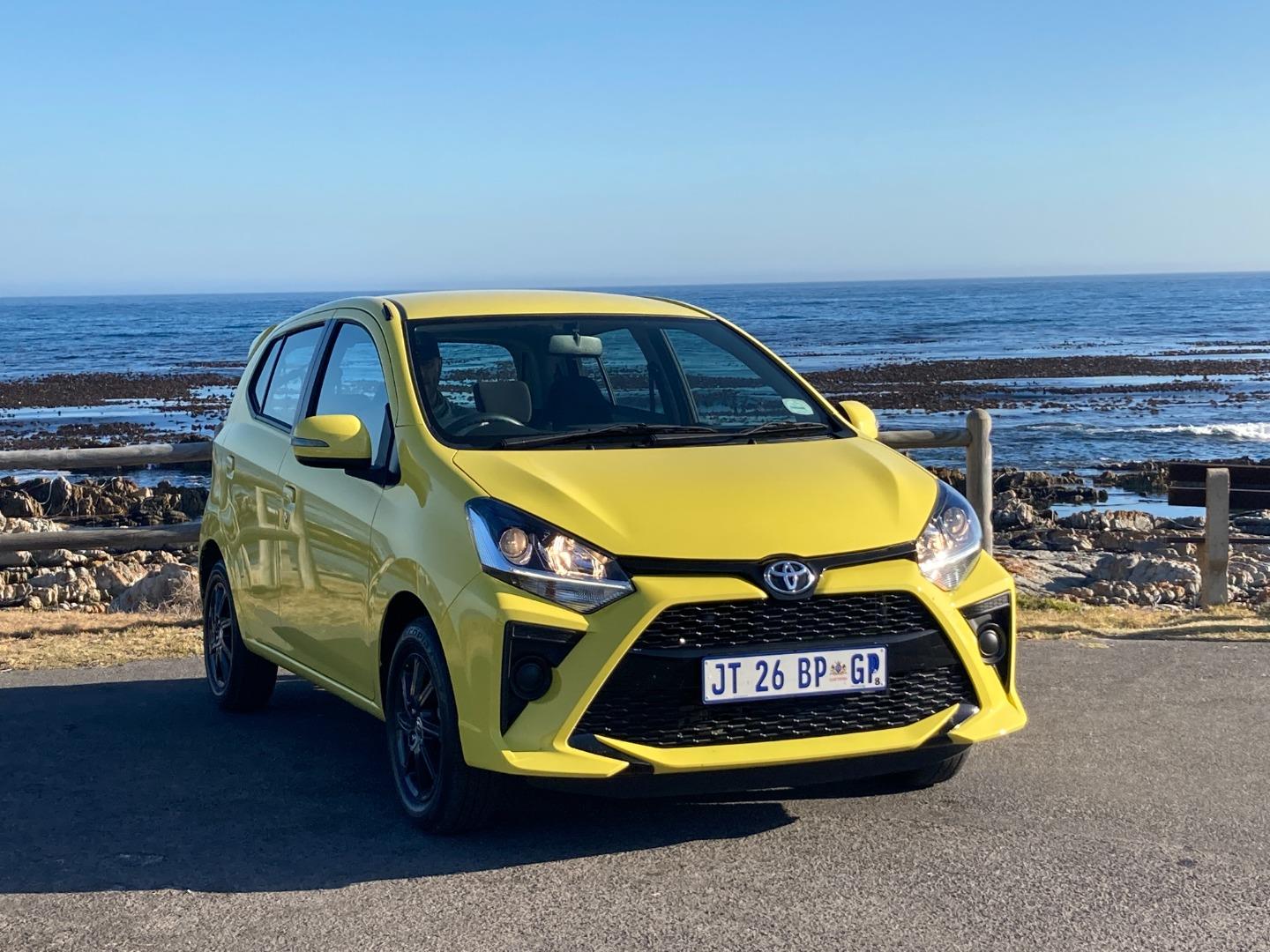
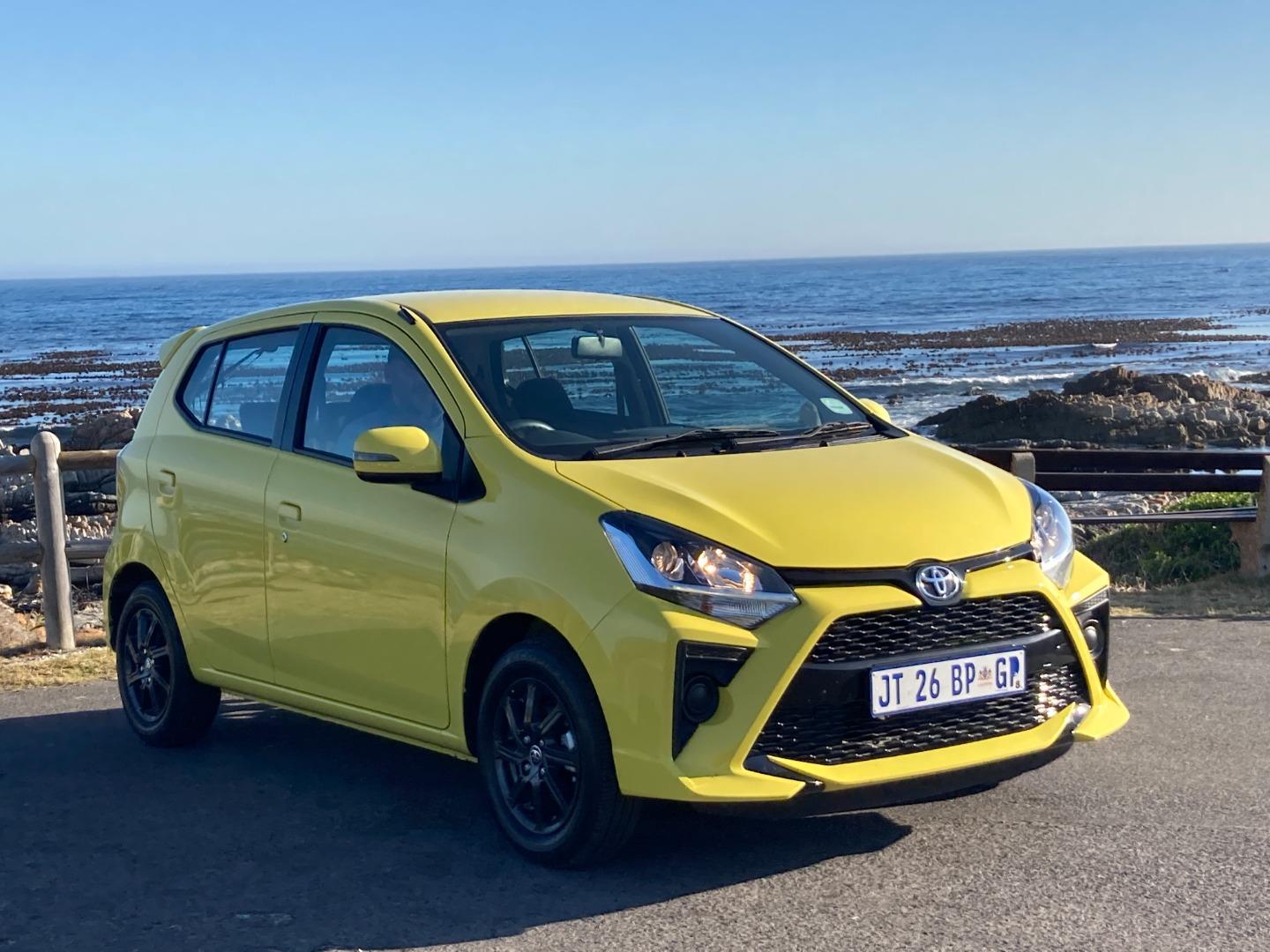
With its angular styling and blacked-out wheels, the new Toyota Agya stands out among the generic-looking entry-level contestants, and is sure to attract the younger crowd. But if you're a small family with no more than two kids, or you're single parent, offerings like the affordable Agya start to look more appealing, especially if you're looking for a car that's also cheap to run and easy to park.
Related: First Drive - Toyota Agya 2021
We recently spent a month with the new and improved Toyota Fortuner, and getting into the tiny Agya after returning the large SUV was a different experience, but also a welcome change. Want to do a U-turn? No sweat. the Agya is capable of a 360-degree turn on a R5 coin. And the world is your oyster if you need parking; anybody living in Cape Town's city bowl / Atlantic seaboard will be able to tell you that driving anything larger than a small hatchback is just an inconvenience. The nimble little Agya can squeeze in wherever it pleases.
First Drive of the new Hyundai Atos - It's back!

Interior space and comfort
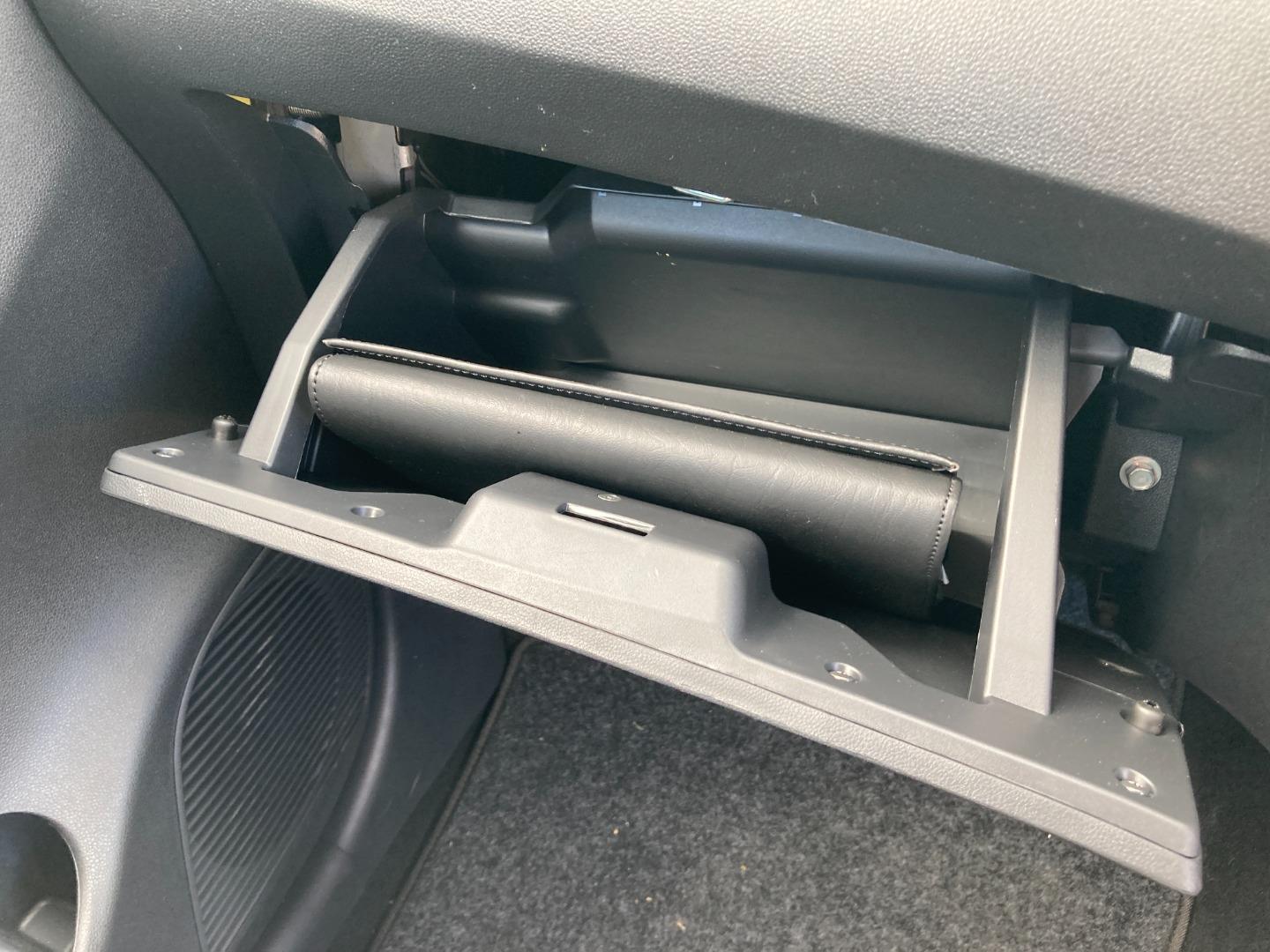
It's most certainly larger than the Aygo, especially on the rear bench. There are enough bottle holders for everyone's drinks and the cubby hole is quite sizeable, allowing one to store phones and wallets along with the rather thick user manual. A plus point is the cheerful seat material. It feels durable and is of high quality, but is soft to the touch. This material is also echoed in the two front doors.


Infotainment
The Agya may not have a touchscreen with Apple CarPlay/Android Auto like some of its rivals, but this can be specified at extra cost. Toyota is big on in-car tech and the Agya already has onboard Wi-Fi. You don't even need to opt for the above-mentioned touchscreen system for full online functionality. As is, the Agya can be had in normal and audio spec; the latter includes a double din radio/CD player with AUX input and a USB port (which works in conjunction with the MyToyota App for your phone).
Once my iPhone was plugged in, I was able to utilise the Spotify app for music streaming, and as is expected, Bluetooth is standard on this model as well. There are no satellite buttons on the steering wheel, but other features such as a push-button start, climate control and a full set of electric windows make up for it. Just bear in mind that the entry-level Agya doesn't have an audio system, Bluetooth, AUX- or USB ports; these are all optional.

Safety
The Agya has basic safety features such as anti-lock brakes with EBD (electronic brake-force distribution) and 2 x airbags for the front passengers. There is no safety rating available yet, but we're pretty sure that the AA, together with GlobalANCAP, will be conducting crash tests soon. The Toyota Etios was awarded three stars, so I wouldn't be surprised at a three-star score (or more) for the Agya. It's all down to structural engineering and if the cabin can withstand the load, so we'll have to wait and see.
The outer rear seats have ISOFIX anchorage points, and the rear middle seat has a three-point safety belt instead of the lap belt one usually finds in this segment. Child locks ensure that the little ones can't unlock car doors when on the move.

Drivability and power
The Agya is powered by a 1.0-litre 3-cylinder petrol engine with 49 kW and 89 Nm of torque. The 5-speed manual model is good for a 0-100 km/h sprint figure of 16.4 seconds which is hardly fast, yet it gets the job done very well. The Agya feels secure and stable at highway speed, but once you push it to the 120 km mark there's plenty of road and wind noise. That said, even with the Southeaster blowing at full force, the Agya felt very planted, and as long as you keep stirring the 5-speed manual gearbox, the Agya won't run out of steam very easily; not at the coast and certainly not when the car isn't fully loaded. The Agya has a sense of sturdiness that is hard to find in this segment.
The 4-speed auto is slightly slower to the 100 km/h finish line, but who cares; as long as you can keep comfortable in heavy traffic.

Fuel consumption
Toyota's claimed figure for (average) fuel consumption is just under 5 litres per 100 km, and they reckon you'll be able to drive around 687 km before having to refill the 33-litre tank. In my experience, the Agya wasn't quite as light on petrol as I had hoped, returning a combined figure of about 7 litres per 100 km. The harder you drive this little champ, the higher your fuel consumption will be. Just be gentle and you'll not only save on petrol, but also on brake pads and tyres.

Verdict
The Agya's spacious and comfortable interior with family-friendly features and the reliability of the Toyota badge all work together to create an excellent little runabout that never feels flimsy or unstable. I would opt for the Toyota Agya before the Renault Kwid any day of the week, but when compared to the recently-refreshed Hyundai Grand i10, which is also roomy in the back and has been a trusted entry-level car in SA for a while now, the competition gets ever-so-slightly tougher. The Polo Vivo will always be a firm favourite but can't be had new for under R215 000. Other worthwhile options include the new Suzuki Swift and the Nissan Micra Active.
If you're not too concerned about the legroom on the rear bench, the accomplished Kia Picanto (from R183 995) is a sensible choice, especially if you have little ones who are still in their kiddie seats, as ISOFIX child seat anchorage points on the outer rear seats are a standard feature. The well-rounded Kia Picanto was also a finalist in the 2018 South African Car of the Year Competition.
Related: Hyundai Grand i10 vs Kia Picanto vs Suzuki Swift - Here's our winner (2019)

Pricing for the new Agya is as follows:
Toyota Agya 1.0 (5-speed manual transmission), R178 600
Toyota Agya 1.0 (audio), R182 400
Toyota Agya 1.0 (4-speed auto transmission), R192 500
Toyota Agya 1.0 auto (audio), R196 300
Recommended next
New vs. previous Toyota Aygo: What are the top 3 differences?
Citroën C1 vs. Peugeot 108 vs. Toyota Aygo: here's our winner
Hyundai Grand i10 vs. Toyota Aygo vs. VW Up! Which one has the lowest running costs?