
Hyundai Grand i10 vs Toyota Aygo vs Volkswagen up!: which one has the lowest running costs?
Hyundai Grand i10 vs Toyota Aygo vs Volkswagen up!: which one has the lowest running costs?


By Farzana Chaumoo
We compare the running costs of three popular city cars.
Hyundai Grand i10
Running costs on the Hyundai Grand i10 is low due to its lightweight construction and small petrol engines. Its most thirsty engine is a 1.2-litre automatic which claims 6.9l/100km on a combined cycle.
Waving the fuel-saving flag is a 1.0-litre automatic, paired to a manual gearbox, which claims 5.4l/100km on a combined cycle.
Factors like low rolling resistance tyres and a maximum of four seats also assist in keeping emissions low. The cleanest in the range is the 1.0-litre manual that emits 132g/km.
Buyers of a new Hyundai Grand i10 should be able to expect high levels of reliability as many owners of previous models reported issues relating to the cheaper fit and finish. Which is not so much of a problem on newer models. Trim squeaks and rattles are also kept at bay as the newer models have higher levels of build quality and a stronger body shell.
What may seal the deal for many buyers is Hyundai’s confidence-boosting seven-year, 200,000km Manufacturer’s Warranty and a 5-year/150 000 km Roadside Assistance.
Starting price: R167,900
Toyota Aygo
Powered by a 53kW 1.0-litre engine, you can expect the Toyota Aygo to have low running costs.
This 1.0-litre claims a very low fuel economy of 4.3l/100km, however, in real-world driving you should expect to see more.
Despite the conventional petrol engine, the Toyota Aygo is a very green car and emits 97g/km of CO2 emissions.
In terms of reliability, Toyota’s are not generally very problematic and the Aygo is sold with a 3 years/100,000km warranty. Service intervals can be expected around 15,000-16,000km.
Starting price: R171,900
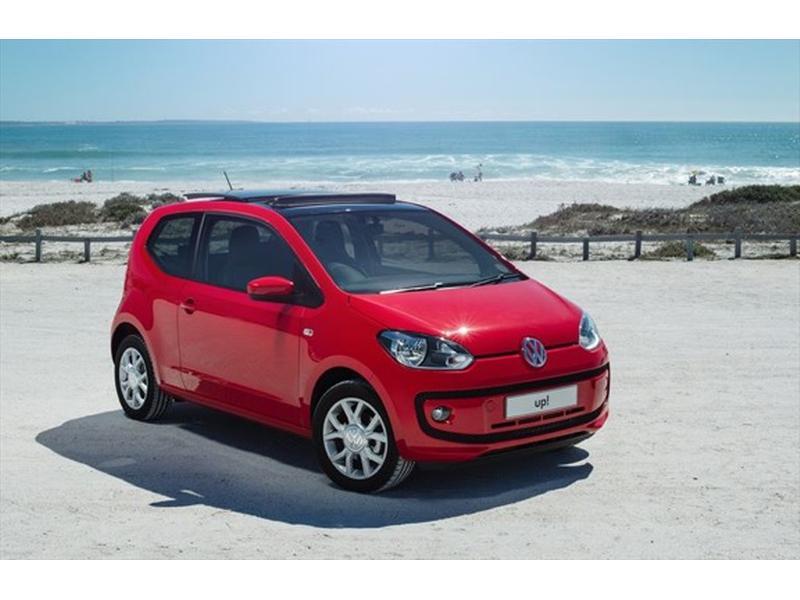
Volkswagen up!
Despite the Volkswagen up! having a relatively simple design, it is very well built for its class. Cabin quality, as well as the general level of fit and finish, are said to be on par with more premium Volkswagen models, and therefore outshines its rivals. Equipment levels are good and there are no fancy gadgets to malfunction, which is also because the up! has been worked from other models in the automaker’s range.
Regardless of its trim, the up! has been made to be one of the cheapest cars to run. Fuel economy, tax and insurance will also be relatively low.
The up! is powered by a 1.0-litre engine that claims 4.6l/100km which can be expected to be higher under real-world driving. The CO2 Emissions released from the up! are rated at 106g/km.
The up! is sold with a 3-year/120 000 km manufacturer warranty and a 12-year anti-corrosion warranty. Service intervals take place every 15,000km.
Volkswagen up! residual values are solid, and servicing packages are available for it. However, some city car rivals with less premium badges can be cheaper to service.
Starting price: R175,600
Verdict
The VW up! is good to drive and has a tasteful cabin and is a fine buy if you choose carefully.
If you're looking for a practical city car, the Hyundai Grand i10 could be one of the better buys despite it having the highest fuel consumption and CO2 emissions here. But it does also come with a solid warranty.
The Toyota Aygo is cheap to run and has some good options for personalization. It’s also stylish and offers competitive running costs. It feels right at home around the city, however, other city-car rivals offer more space and practicality while also offering a better drive.