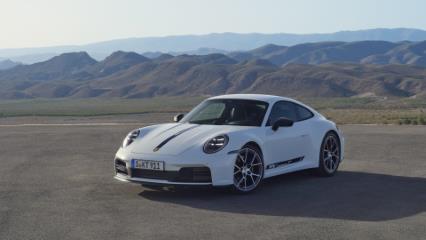


The Porsche GTS range of models has become known as the sweet spot within Porsche's various model families, somehow infusing some GT-car character into some of the more vanilla models if such a thing exists from the brand. The latest model to receive the GTS treatment is the updated Cayenne, and a Carmine Red example was recently made available for me to experience for a few days.
Related: Porsche Macan T (2024) Review
Pros:
-Sonorous V8 soundtrack
-GTS suits the coupe look
-Excellent balance of usability and performance
-Superb quality
Cons:
-Smaller boot space in coupe
-Not that owners care, but the fuel consumption is high
A History of Cayenne
The Porsche Cayenne was first introduced in 2002, marking Porsche's entry into the SUV market. Indeed, by many estimates, the product, alongside the Boxster, saved the brand from potential financial ruin. This move was initially met with scepticism, as the brand was known primarily for its high-performance sports cars like the 911. However, the Cayenne's commercial success meant a market for more practical products from the legendary sports car maker. most certainly exists.
First Generation (2002-2010): The first Cayenne, known as the E1, was developed in collaboration with Volkswagen, sharing a platform with the VW Touareg. Its surprisingly adept dynamic qualities and impressive off-road performance meant that customers immediately resonated with the, at times, ungainly-looking SUV.
Second Generation (2010-2018): The second-generation Cayenne, the E2, arrived in 2010 with a more refined and luxurious design, improved fuel efficiency, and added hybrid options. This iteration focused on weight reduction and technological advancements, which led to better handling and performance. With learnings from the first-gen model, Porsche produced a more polished final product, which was a massive success.
Third Generation (2018-present): Released in 2018, the third and current generation Cayenne E3 is built on the VW group's MLB Evo platform, which it shares with the Bentley Bentayga, Audi Q7/Q8, and Lamborghini Urus. This generation also spawned the Cayenne coupe variant, a sportier version with a sloped roofline.

Styling
It's difficult to miss the GTS, particularly in our press unit's loud red paint scheme with contrasting black wheels and design elements. I am more on board with the coupe derivative in GTS guise than I am with the lower-rung models within the range, and I think it's because the GTS's sloping roofline, added sporty trim element, and generally more menacing intent is more aligned with the coupe body style.

Interior & Space
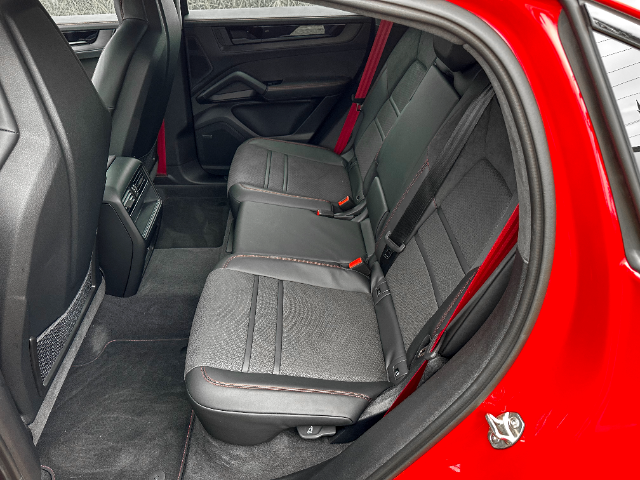
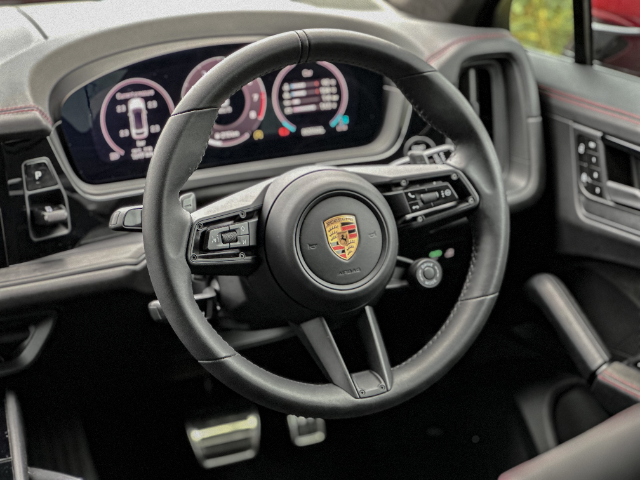
Like its exterior, the GTS interior takes a regular Cayenne S and adds some dynamic flavour, with suede and leather seats with red contrast stitching and GTS logos embossed on the headrests. The same gloss black haptic glass adorns the centre console and is used to adjust climate control and various other functions, which looks fantastic when it's clean but decidedly less so when it's not.
Porsche has made great strides in infotainment over the past decade. Our GTS press unit had three screens for the front occupants to use: one for the front passenger, a digital instrument cluster for the driver, and a central screen that both parties could use. The system uses the latest PCM software, which supports wireless Apple CarPlay and Android Auto. It features great resolution, responds quickly to inputs, and connects effortlessly to your phone.
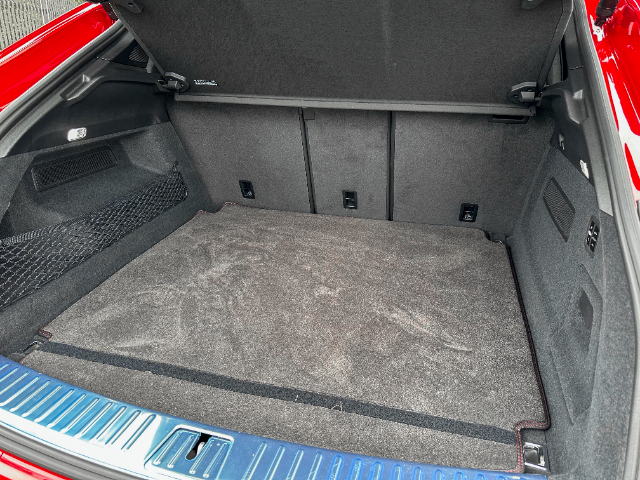
Regarding practicality, the coupe variant of the Cayenne sacrifices quite a bit of its usable space in favour of a sloping rear roofline. The regular Cayenne offers 656 litres of space, which expands to 1708 litres with the rear seats folded flat, while the coupe offers 554 litres, which expands to 1502. While certainly ample, there has to be a practical consideration here, with protective buyers weighing up the pros and cons of the standard GTS and the coupe version. Regarding other metrics, the GTS coupe matches the regular Cayenne, with a braked towing capacity of 3 500kg, a ground clearance figure ranging from 189-234mm depending on the driving mode selected. At the same time, the approach angle is 23.3 degrees, the break-over angle is 20.7 degrees, and the departure angle is 20.7 degrees, although I don't envision many GTS owners heading off-road.

Related: Porsche Cayenne S (2023) Review

Drivetrain

Driving impression
Before I get into the nitty-gritty of the driving experience in the GTS, I have to applaud Porsche for producing a product with a truly epic soundtrack during a period in which increased regulations have forced many brands to tone down their offerings from an aural perspective. I have no idea how the GTS passes noise regulations, and I'm not complaining either; it's just refreshing to see a brand producing products that car enthusiasts will enjoy, even if those enthusiasts have had to migrate to high-riding SUVs as they take on the school run in place of track days.
Suffice it to say that the engine dominates the GTS driving experience, with the V8 mill (and its active valves in the exhaust) producing a great sound and a rather healthy dollop of power and torque. The 0-100km/h sprint is dispatched in a claimed 4.4 seconds, although a glance at our Dragy app clocked the car at 4.3 seconds while the top speed is claimed at 275km/h. Those performance figures, in isolation, are impressive for a 2.2-ton SUV, but when taken in context, the GTS is rather tame compared to some of the super SUVs on the market, which is crazy, when you think about it.
There's a recalibrated air suspension system and more focussed gearbox mapping aimed more at dynamic driving; however, one is always aware of the product's height and weight when pushing on, something its ballistic weapon-grade sibling Turbo GT is so good at disguising.
That being said, don't for a second think that this is a straight-line bruiser. There's loads of grip, strong braking performance, and even some grin-inducing oversteer as the all-wheel drive system sends power to all the right places when the mood strikes in Sport+ mode. The dichotomy of the Cayenne GTS, and indeed, all of the models from the brand that wear the moniker, is their inherent ability to retain the usability of the more mundane models on which they're based while infusing some angry GT-car DNA. In Normal driving mode and the exhaust in quiet mode (who does that?), the GTS becomes as approachable as a regular Cayenne S, with a reasonably good ride quality for a car on 21-inch low-profile tyres.
Fuel economy
Porsche claims that the GTS will consume fuel at a rate of 12.3 L/100km, a figure we doubted would be possible; however, our 15.1L/100km figure is realistic. At this price point, fuel economy doesn't matter as much from a financial implication but more from a driving range and convenience perspective. A 90-litre fuel tank means that around 600km of driving range is realistic.

Safety
Euro NCAP crash-tested the Cayenne range in 2017. It achieved a 5-star rating with 95% for adult occupant safety, 80% for child occupant safety, 73% for pedestrian safety, and 62% for its safety assistance systems. This rating has expired and needs revisiting.
Pricing*
The Cayenne GTS is priced at R2 562 000 before options, placing it in competition with the Mercedes-AMG GLE 53 (R2 485 414) and the BMW X6 M60i
(R 2 239 215).
*The Cayenne GTS comes standard with a 3-year/100 000km maintenance plan
Verdict
The Cayenne GTS is an SUV for car enthusiasts with responsibilities. It offers the soundtrack, styling, performance and quality one would associate with a Porsche product, but it targets those with a family and a need for practicality. Those looking to fly under the radar need not apply, but those wanting to stand out while not spending R4.0 million plus on a Turbo GT may once again find the GTS, dare I say it, as the proverbial sweet spot within the Cayenne line-up.