
MINI Hatch vs Ford Fiesta vs Nissan Micra: which one has the lowest running costs?
Seeing as the MINI Hatch is a somewhat eclectic choice from a brand with a premium image, comparing its running costs with two similarly-priced opponents will answer an interesting question: does a premium-brand car cost more to run than offerings from non-premium brands? In this running cost investigation, the MINI Hatch goes up against two mainstream alternatives to find the answer.



The entry-level MINI Hatch is priced just on the far side of the R 300 000 mark, which allows it to compete with some thoroughly contemporary products from mass-market manufacturers. In 3-door form, the MINI One costs R 313 000, with the 5-door costing exactly R 10 000 more – before options, it must be said. That price point puts the MINI One up against high-trim variants of the new Ford Fiesta and equally-new Nissan Micra.
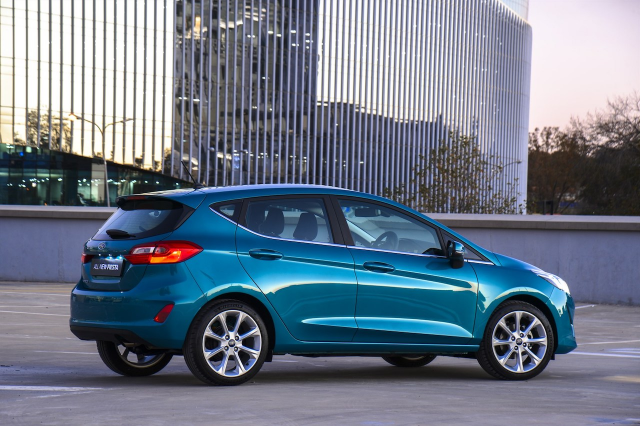
To keep matters fair, we’ve selected the 5-door MINI with a manual gearbox, matching the basic specifications of the Ford Fiesta 1.0T Titanium and Nissan Micra 66 kW Acenta Plus Tech.
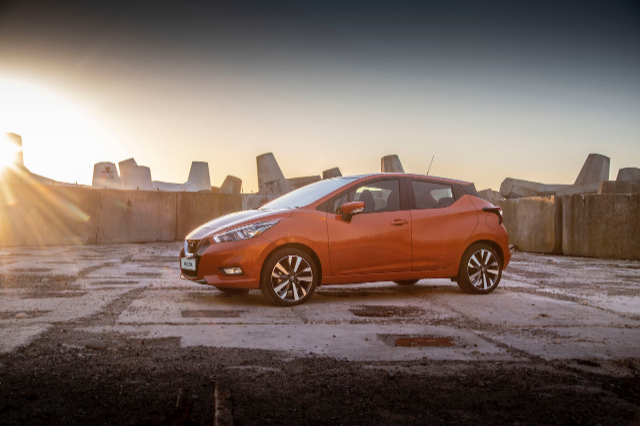
Purchase price, warranty, service plans, and depreciation
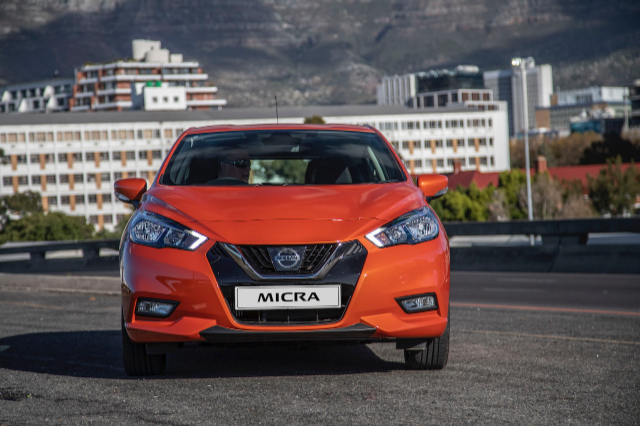
They’re even more closely-matched than you might think, because they all feature 3-cylinder turbo petrol engines, and the difference between the least- and most expensive challengers amount to less than R 20 000. The least expensive car in this comparison is the Nissan Micra, which looks like a bargain in this context at R 305 900. It has the strongest warranty in this group (6 years or 150 000 km) and a service plan for 3 years or 90 000 km included in its list price.
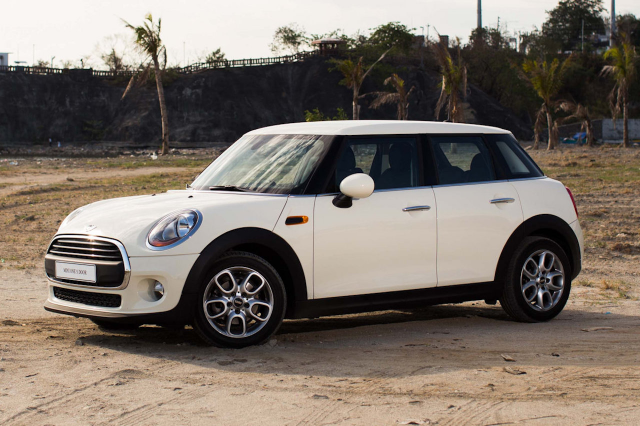
Splitting the price difference between the Micra and the MINI, the Ford Fiesta 1.0T Titanium costs R 314 900, and includes a warranty for 4 years or 120 000 km and a service plan for 4 years or 60 000 km. The MINI One 5-door is the costliest at R 323 000, which includes a 2 year/unlimited mileage warranty and a maintenance plan (which is better than a service plan) for 3 years or 75 000 km.
Which option is preferable? Well, the Micra has the longest warranty, and its service plan covers a greater distance than either of the other two. However, the MINI’s maintenance plan will ensure that all expenses except tyres and fuel will be covered for its duration, rather than just mere servicing. The Ford will however likely cost the least to run over the short term, because its service plan will be active for a longer time.
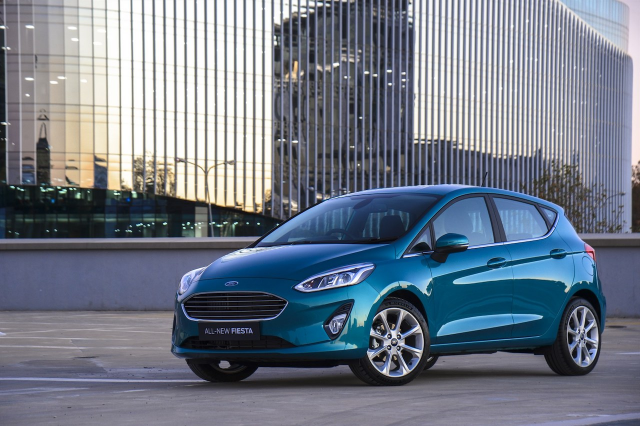
Resale value is likely to favour the Micra, mainly based on the proven popularity of previous-generation Micras in the pre-owned market, but the Fiesta will probably run it quite close. Because the 5-door MINI is such a specialised product, it’s unlikely to have wide appeal among used-car shoppers, leading to steeper depreciation than the others.
Parts prices
According to the 2019 AA Kinsey report, normal servicing should be the least expensive for the Nissan Micra, with a service parts basket which costs R 3 303 – less than half the price of a similar parts basket for the Fiesta (which will cost R 6 929). The same discrepancy applies when maintenance and mechanical repairs are considered, although the Fiesta will be markedly less expensive to repair in the event of an accident.
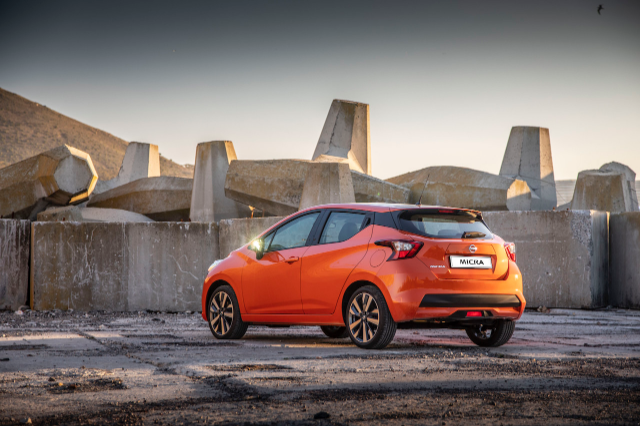
Unfortunately, the AA Kinsey Report doesn’t list any parts basket prices for the various MINI models, but being a BMW Group product, it’s likely to suffer from the same historically high parts prices as its German-branded siblings. That said, its maintenance plan should cover most of the expensive stuff for the first three years, which should provide some peace of mind. Overall, the Nissan Micra should cost the least to run as far as servicing and repairs go once its warranty has expired, followed by the Ford Fiesta, with the MINI taking up the last position here.
Tyre costing
This section is a clear win for the MINI, because it uses 175/65R15 tyres in basic trim – a very common and relatively inexpensive size. Of course, should you decide on a set of optional oversized wheels and fatter tyres, that advantage will most likely disappear. Thanks to its comparatively modest power output, the MINI will also put less strain on its tyres, and (like the Micra), should last for at least 50 000 km in conservative driving.
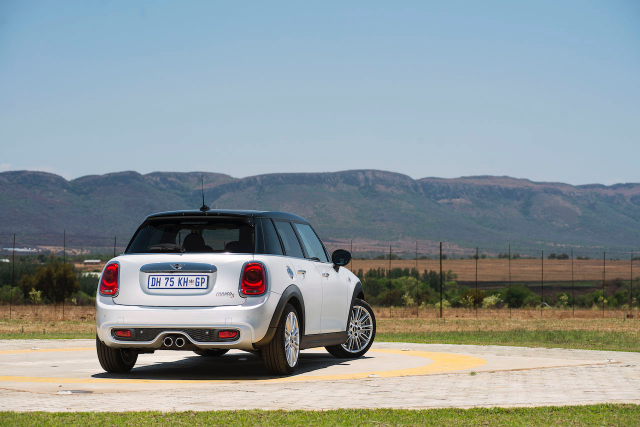
The considerably more powerful and heavier Fiesta will place greater demands on its tyres, so they may not last as long as the tyres on the other two will. The Micra and the Fiesta are at a further disadvantage here, because they both roll on 205/45R17 tyres, which counts among the costlier sizes you could get for 17-inch wheels.
Fuel economy
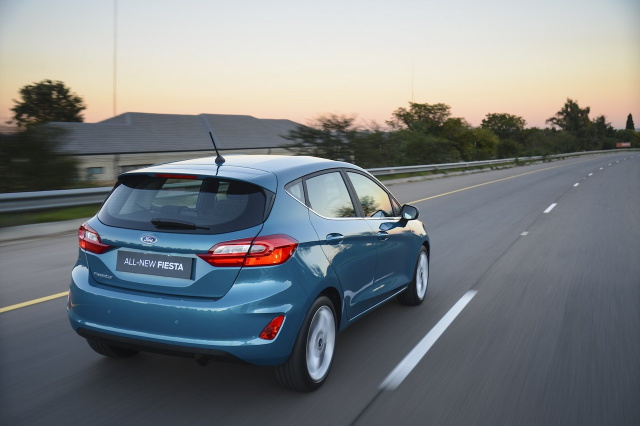
All three manufacturers make some rather optimistic claims regarding the official average consumption of their products, with the Fiesta laying claim to the lowest consumption at 4.3 litres/100 km, the MINI claiming 4.9 litres/100 km, and the Micra supposedly using 5.1 litres/100 km. This makes the Fiesta our official winner here, although all three cars will likely exhibit similar thirst in normal driving.
Because all three car will likely return low-to-mid 5 litres/100 km in real-world driving, the Micra’s official claim is probably closer to accurate than the others, but in reality, none of these cars can be called heavy on the go-juice. It must however be borne in mind that fuel consumption figures will vary widely, depending on the owner’s driving style and operating conditions. Consumption will drop on the freeway (and with gentle driving), and go up in town (or if the driver has a heavy foot), so it’s really up to the driver to maximise their car’s fuel efficiency.
In addition, both the Fiesta and MINI can be had with super-frugal diesel engines, which will see a dramatic reduction in fuel consumption, compared to the petrol-powered cars described up till now. If you do lots of long-distance driving, either one of these two diesels will do nice things for your wallet, but won’t be that much more economical in town (compared to their petrol-powered counterparts).
Also consider that diesel engines are generally more expensive to service and maintain than petrol mills, and that mechanical problems will invariably prove to be extremely costly. For this reason, we’d still recommend petrol engines over diesels for cars which spend most of their time in congested traffic.
Our verdict
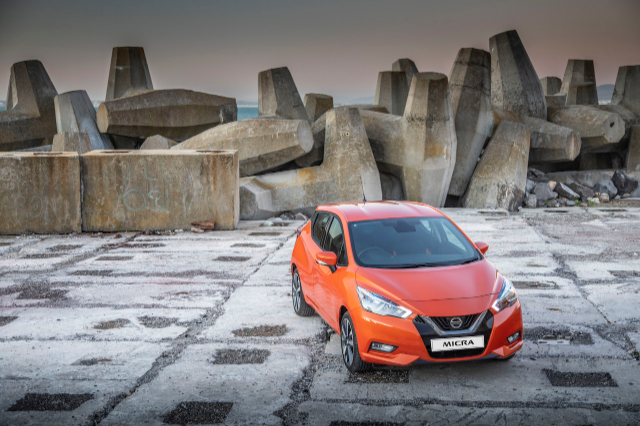
Over a longer ownership period, the Nissan Micra should have the lowest running costs in terms of servicing and general maintenance, purely because it has the longest-running warranty, and the least-expensive parts basket prices. In contrast, the Fiesta’s extended service plan and (on-paper) fuel consumption advantage will largely even things out a little, while the MINI’s parts price disadvantage and steeper depreciation will be cancelled out by its maintenance plan as well as its much cheaper tyres. However, it’s likely not the car to choose when you’re planning to buy a car with an eye on long-term ownership.
Related reading:
We tested the 5-door MINI (albeit in higher-powered Cooper trim), and rather liked its practicality.
We also found much to recommend about the Micra Acenta Plus Tech.
If you’re interested in a Ford Fiesta, you can read everything you need to know here.
We also pondered the advantages of petrol vs diesel power in the Ford Fiesta.
The diesel-powered Fiesta impressed us on test as well, though we still prefer the petrol version.
The full AA-Kinsey Report compares parts prices across various market segments. Read more here.