
By Stuart Johnston
Ford Fiesta: Which is better, petrol or diesel?
Ford Fiesta: Which is better, petrol or diesel?


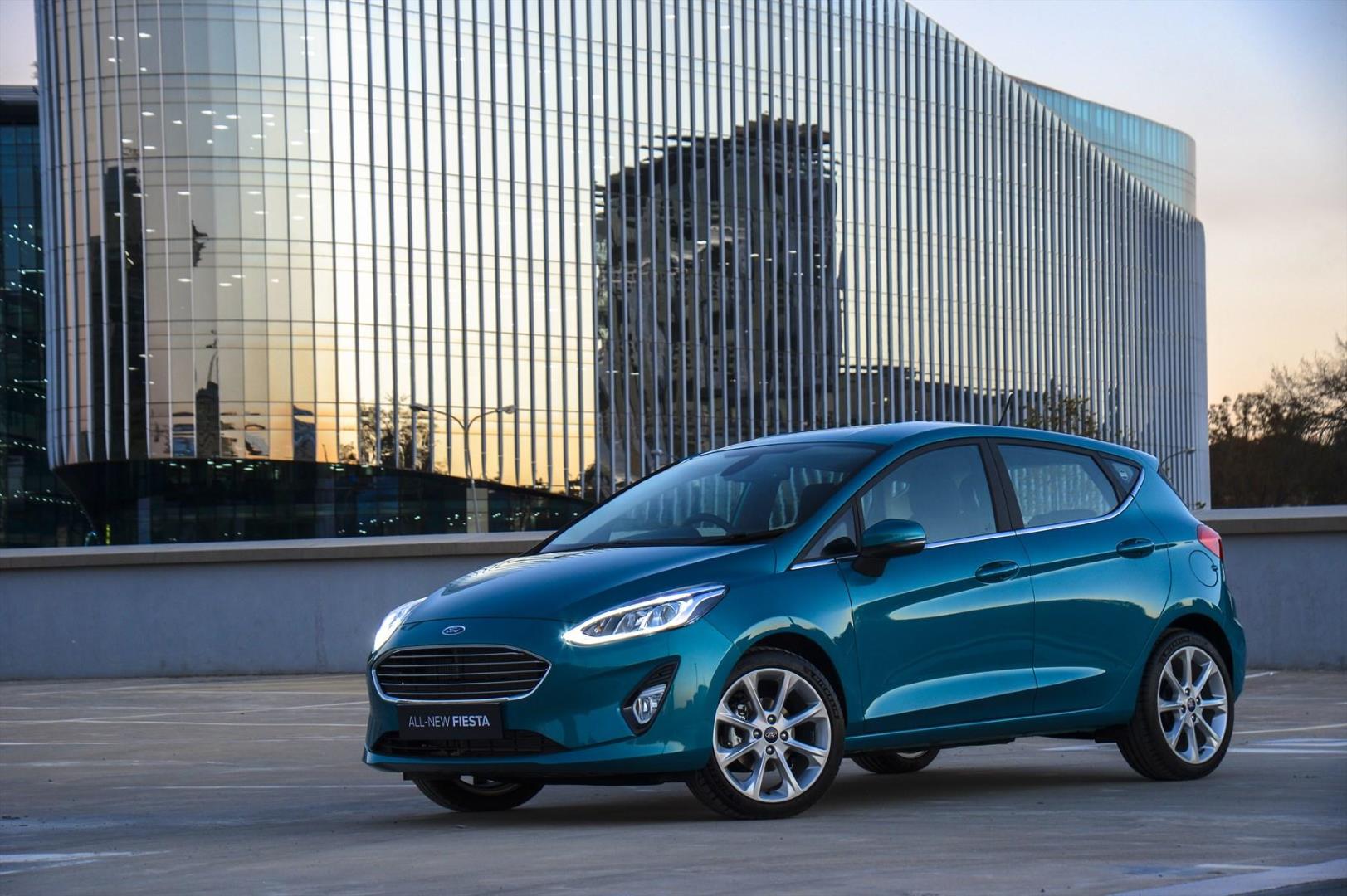
When it comes to choosing the best engine for a Ford Fiesta, you have the option of two turbocharged petrol offerings and a diesel. Which one you choose depends on your budget, and your motoring priorities.
Ford’s Fiesta has been around in Europe for many decades and has been sold in South Africa since 1997. It was a South African Car of the Year winner in 1998 despite only having modest power, but since then that power offering has improved significantly.
The latest generation of Ford Fiestas are offered with 74 kW and 92 kW versions of its zesty three-cylinder one-litre turbo petrol engine, and a 63 kW turbodiesel offering that displaces 1,5 litres from its four-cylinder design.
The Fiesta is a stylish little hatchback, with excellent handling and an interior that has also improved markedly over the years. The latest model (the fourth generation in South Africa) features Ford’s Sync 3 infotainment system, some soft-touch cabin trim, notably on the dashboard, and reasonable space for a car of this size.
Sales performance
Such a neat, aesthetically-pleasing car probably deserves to sell better than it does. Given Ford’s very large dealer network, we continue to be surprised that the Fiesta does not offer more of a challenge to the top-selling model in South Africa, the Volkswagen Polo Vivo. In the first three months of 2019, a total of 1 039 Fiesta sales were logged, compared to the 5 500 Volkswagen Polos sold in the same period. So VW is still out-gunning Ford here by a ratio if five-to-one!
The petrol engines
The three-cylinder 1,0-litreT turbocharged petrol engines were launched here a few years back and they instantly gained lots of attention for producing high power outputs for their size, as well as good (theoretical) fuel consumption figures. The petrol Trend models get a 74 kW version of the little triple, with 170 Nm of torque, while the Titanium model comes with a 92 kW rating. Interestingly, both tunes of the turbo petrol motor are rated with identical torque figures of 170 Nm, but the lower-powered unit produces its torque peak at 1 500 rpm, whereas as the 92 kW motor has its torque peak pegged at a slightly lower 1 400 rpm.
The diesel engine offering
Just the one diesel engine is offered, this being a rather more conventional 1 499 cc four-cylinder unit, rated at 63 kW and 175 Nm of torque at 1 750 rpm. The diesel is only available in Trend trim, while the 1.0T models are offered in Trend and more lavish Titanium trim levels.
Transmission options
The diesel is only available with a six-speed manual gearbox, driving the front wheels. The 74 kW petrol models, also with front-wheel-drive, are offered with a six-speed manual or a six-speed automatic. But the 92 kW petrol engine is only on offer with a six-speed manual.
Pricing
The least expensive models are the petrol 74 kW 1.0T Trend models. These cost R269 900 for the manual model and R285 500 for the six-speed automatic.
The 1.5 TDCi Trend manual (diesel) costs R300 900. The two Titanium trim (petrol) models cost R304 900 for the 92 kW 1.0T six-speed manual, and R319 900 for the (74 kW) 1.0 T six-speed automatic.
Performance
The petrol and diesel engines offer very different styles of driving. The turbo petrol performance is excellent for a one-litre, especially in 92 kW form, with a 0-100 km/h claimed time in the region of 9,8 seconds. The diesel model has a 0-100 km/h time of 12,5 seconds, and offers far more sedate overall performance. For a road review on the Ford Fiesta 1.5 TDCI,
Fuel Consumption
Of course, the diesel model wins at the fuel pumps, and perhaps by a greater margin than one might think. While Ford initially claimed consumption figures of well below 5,0 litres/100 km for the 1,0-litre petrol turbos in advertisements (achieved in theoretical EU tests), reality has proven that in general use here in South Africa you are more likely to get figures in the 6,2 to 7,0 litres/100 km range, depending on your driving style and motoring environs.
The 1.5 TDCi diesel model will, however, give you excellent real-world consumption figures. It will be easy to realise an overall consumption of under 5,0 litres/100 km, and on an economy run the writer did last year in a Fiesta diesel, a figure of 3,2 litres/100 km was achieved! It should be noted that this figure was logged by running at unrealistically low speeds on the open road, and using extremely small throttle openings. For a report on this economy run as well as further analysis on Fiesta models
So which is best: Petrol or diesel?
If you are a young performance-minded person, you probably won’t be that happy with the diesel’s rather leisurely approach to acceleration, although it is quite adequate. If budget constraints are a big factor, it should be noted that the 74 kW 1.0T Trend manual is some R30 000 less expensive than the diesel model in the same trim, also with a manual transmission.
But if you are more mature, favouring a more relaxed approach to motoring, the 1.5 TDCi diesel is the model for you. Especially if you are planning to keep your Fiesta for a number of years. We suspect that this under-stressed engine will prove more reliable than the more highly-strung 1,0-litre turbo petrol model over the longer term.
For used values on Ford’s Fiesta click here.