South Africa’s road death statistics read like the script of a horror movie. According to Arrive Alive, drunk driving is one of the biggest threats to road safety in South Africa. So, how much are you allowed to drink to stay within the limit if you plan on driving, or should you rather just not drink at all?
Know the legal limit and what it entails
Research indicates that 50% of people who die on the roads have a blood alcohol concentration above 0.05 grams per 100 ml, which is the legal limit. And while many of us understand the mortal dangers of driving under the influence of alcohol, we mostly still don’t take the law very seriously.
(Here are ten tips to keep alert and focused on the road this holiday season.)

While most of us probably don’t consider ourselves to be a danger to others or to ourselves after a beer or two, there are certain physiological changes that occur immediately after you’ve taken those first few sips of that drink.
How drinking and driving affect you
From only 0.01g/100 ml (which is one-fifth of the legal limit), your speech, memory, attention, and coordination already start showing signs of impairment, depending on whether you’re male or female, how fit you are, whether you’ve eaten a proper meal or not, how much you weigh, if you’re on certain types of medication, what your general health and hormone levels are like, or how old you are. This also means that your reaction time on the road will be significantly slower by the time you’re halfway through that beer.
In other words, where you could have probably reacted quickly enough to swerve for that pedestrian, you might now be unable to, regardless of whether you are over the legal limit or not! If you kill or seriously injure a pedestrian or cyclist, the law is not on your side.
10 Holiday road-trip tips to keep you safe

So, how much can I drink before hitting the road?
Preferably, nothing at all. But if you weigh more than about 70 kilograms and plan to get into the driver’s seat later on after a drink or two (which we again do not condone at all!), roughly one unit of alcohol per hour is recommended for you to stay within the legal limit. Also, assuming you are female and weigh less than the above-mentioned figure, it means you will have to wait even longer than one hour between drinks.
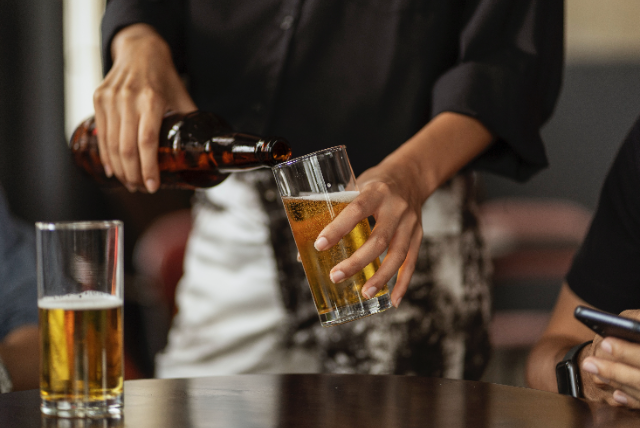
What makes up one unit of alcohol?
- One Windhoek Lite (alcohol percentage 2%). If you drink just one Castle Lite, it means you're already over the limit.
- 75 ml of red or white wine (containing 12-14 % alcohol—that's only 5 tablespoons. Why bother?)
- 250 ml (one full cup) of a ‘normal’ beer or spirit cooler such as Smirnoff Spin, Castle Light or Amstel (4-5%)
- A 25 ml shot of hard tack (such as vodka, brandy, gin or tequila—a shot glass or one tot measure)

Can you make alcohol get out of your system more quickly?
The bad news is that you can’t. No amount of water, coffee, jumping jacks, or slap chips is going to get the alcohol out of your bloodstream any more quickly. This is why you should just play it safe, and call a cab, or ask a friend to drive you.
Coffee and cold showers cannot accelerate the liver's metabolism of alcohol. The best idea is to sleep till sober, even in your parked vehicle (but not behind the wheel). It's even better to have a dedicated teetotaller driver available or to have a store-bought alcohol-level test on hand to ensure that you're within the legal limit if you don't have someone to drive you. Remember, a criminal record, a heavy fine, suspension of your driving license for 6 months (first offender), not to mention the legal costs for that last drink is a terribly high price to pay. - Adrian Louw, attorney and road traffic law expert
And on that note, here's what you need to know if you get stopped at a roadblock this festive season.
Top tips to stay alert behind the wheel
What about other substances paired with alcohol?
While marijuana or dagga has been legalised for private use, you should be very, very careful, especially if you plan on having a drink as well. Mixing alcohol and marijuana is not recommended, as the side effects of both substances are more acute when combined. Don’t hit the road if you plan on indulging in either of the two.

Did you know? Drinking's "health benefits" have been debunked
If you are serious about your general appearance, liver, and future brain health, it's been proven that it's healthiest to become a teetotaller, but if you must drink, no more than two drinks per week.
But don't take my word for it. Listen to Dr. Andrew Huberman, who is a tenured professor of neurobiology (and ophthalmology) at Stanford University School of Medicine. You can listen to his podcast, What Alcohol Does to Your Brain, here.
Also, it's becoming increasingly unfashionable to drink. For this reason, many people have switched to non-alcoholic drinks like de-alcoholized wines, mocktails, beers, and ciders.
Please note that this is just a rough guide and that results may differ from one person to the next.
Disclaimer: AutoTrader carries no responsibility for individuals who exceed the local limit based on our guidelines stipulated above. AutoTrader does not condone any drinking and driving: We have a zero-tolerance policy. If you want to drink, get an Uber or Taxi, or ensure that you have a designated driver who can get you home safely.