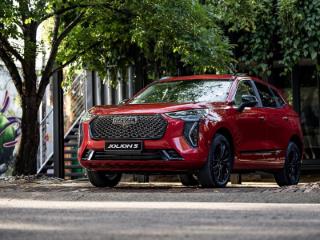


There's no denying that the Haval brand has made significant strides since the switch from GWM to Haval. While still owned by GWM, the Haval sub-brand focuses purely on SUVs, allowing them to focus all their efforts and energy on creating the best SUV they can. Their tech-laden offerings provide comfort and convenience for individuals and families and manage to do so at an agreeable and manageable price. Haval consistently sells more than a thousand new vehicles monthly, rivalling some of the more established players in the local market.
Related: Is a used Haval a good car?
It's easy to see why so many consumers flock to showroom floors. The value-for-money proposition is too hard to ignore, and many are finding that switching to a more affordable Haval saves them money without needing to sacrifice comfort and convenience. You may be looking to do the same but have concerns about their fuel consumption. Below, we take a look at the various engines offered in the current Haval lineup and see what you should expect from their fuel consumption.

Haval fuel consumption comparison
The current Haval range consists of three models: the Jolion, H6, and H6 GT. There are a variety of powertrain combinations, and these even include a hybrid option. In this comparison below we quote the claimed fuel consumption figures as that is the most consistent. You may see variations as fuel consumption can vary based on your driving style, traffic patterns, and even location.

Haval Jolion
The Jolion is the 'smallest' offering in the range, but it still manages to be a spacious crossover SUV with great visibility out over the road and lovely road manners. Three powertrain options are presented: a 1.5-litre turbocharged, inline 4-cylinder that produces 105 kW and 210 Nm, a 130 kW and 270 Nm version of the 1.5-litre, and a hybrid option that also employs a 1.5-litre petrol engine, combined with the electric drive system.
| Model | Powertrain | Claimed consumption |
| Haval Jolion 1.5T City | 1.5-litre Turbo petrol - manual | 7.5 l/100km |
| Haval Jolion 1.5T Luxury | 1.5-litre Turbo petrol - manual | 7.5 l/100km |
| Haval Jolion 1.5T Premium | 1.5-litre Turbo petrol - Automatic | 7.5 l/100km |
| Haval Jolion 1.5T Luxury Auto | 1.5-litre Turbo petrol - Automatic | 7.5 l/100km |
| Haval Jolion 1.5T Super Luxury | 1.5-litre Turbo petrol - Automatic | 7.5 l/100km |
| Haval Jolion 1.5T S Super Luxury | 1.5-litre Turbo petrol - Automatic | 7.5 l/100km |
| Haval Jolion 1.5 HEV Luxury | 1.5-litre Hybrid - CVT | 5.0 l/100km |
| Haval Jolion 1.5 HEV Super Luxury | 1.5-litre Hybrid - CVT | 5.0 l/100km |

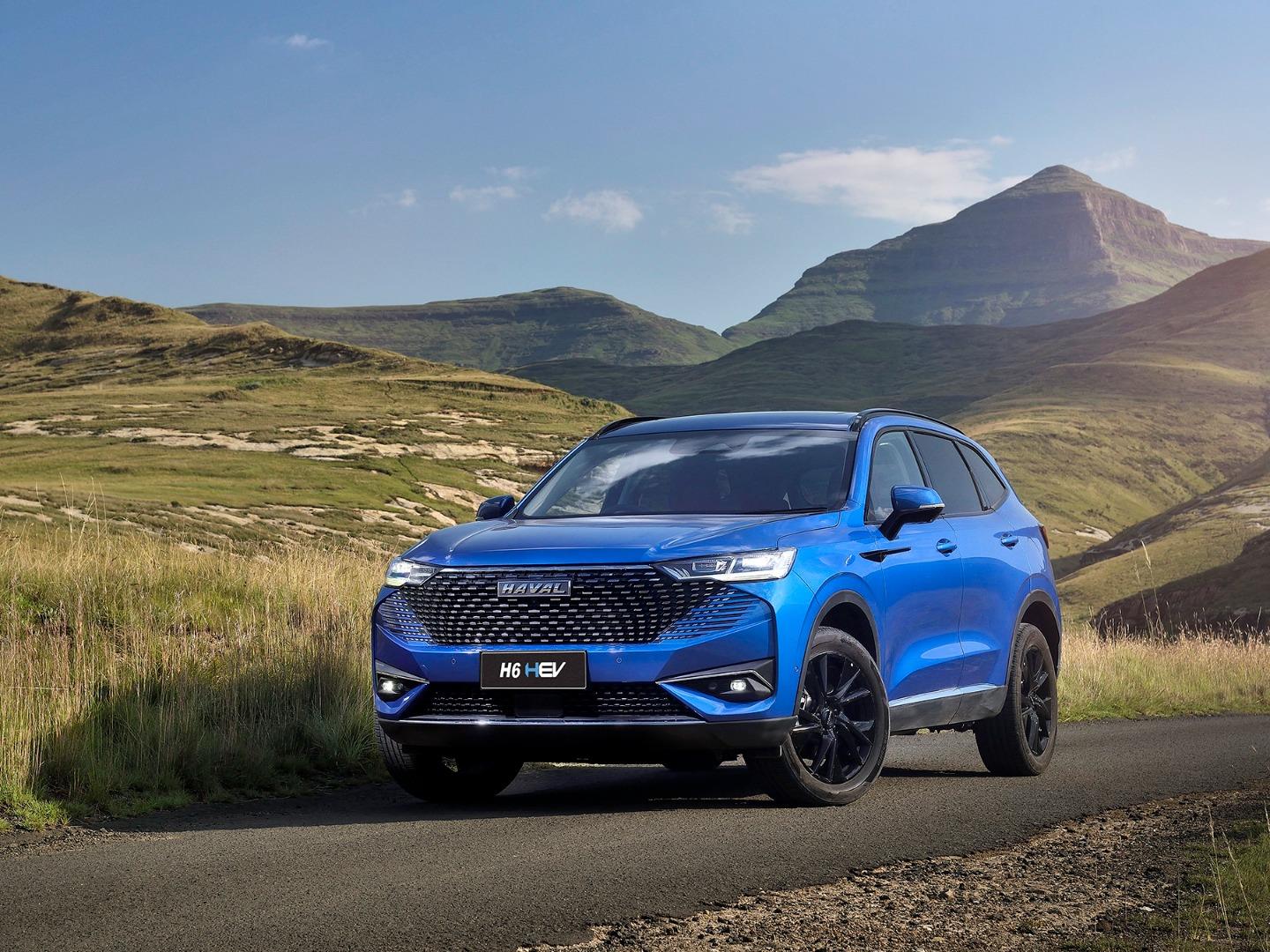
Haval H6
Stepping up to the largest offering in the current Haval range, the H6 is a slightly more robust offering with more space, a larger engine and the option of selecting an 4WD drivetrain. All versions use a 2.0-litre except for the hybrid model. The 2.0GDIT engine is a turbocharged petrol engine that produces 150 kW and 320 Nm torque while the hybrid sees an electric powertrain paired with a 1.5-litre turbocharged petrol engine for a combined output of 179 kW and 530 Nm.
| Model | Powertrain | Claimed consumption |
| Haval H6 2.0GDIT Premium | 2.0-litre Turbo petrol - Automatic | 7.4 l/100km |
| Haval H6 2.0GDIT Luxury | 2.0-litre Turbo petrol - Automatic | 7.4 l/100km |
| Haval H6 2.0GDIT 4WD Luxury | 2.0-litre Turbo petrol - Automatic | 8.3 l/100km |
| Haval H6 2.0GDIT 4WD Super Luxury | 2.0-litre Turbo petrol - Automatic | 8.3 l/100km |
| Haval H6 1.5T HEV Ultra Luxury | 1.5-litre Hybrid - CVT | 5.2 l/100km |

Haval H6 GT
The crown jewel in the Haval range is the H6 GT, an SUV with more than just sporty pretensions. This performance-orientated SUV has an improved powertrain and features special gearbox programming and suspension tuning to make the most of the additional power. The 2.0-litre engine produces 155 kW and 325 Nm and sends the power to all four wheels through a 7-speed dual-clutch gearbox.
| Model | Powertrain | Claimed consumption |
| Haval H6 GT 2.0GDIT 4WD Super Luxury | 2.0-litre Turbo petrol - Automatic | 8.4 l/100km |

Verdict
The hybrid Jolion comes out on top of the fuel consumption battle, returning a claimed average of only 5.0 l/100km. Paired with a 55-litre fuel tank, the electrified Jolion will yield a range of 1154 km from a full tank. The self-charging nature of the Jolion HEV means that you don't have to worry about charging it either, simply fill up and drive, allowing the automated systems to do the rest.