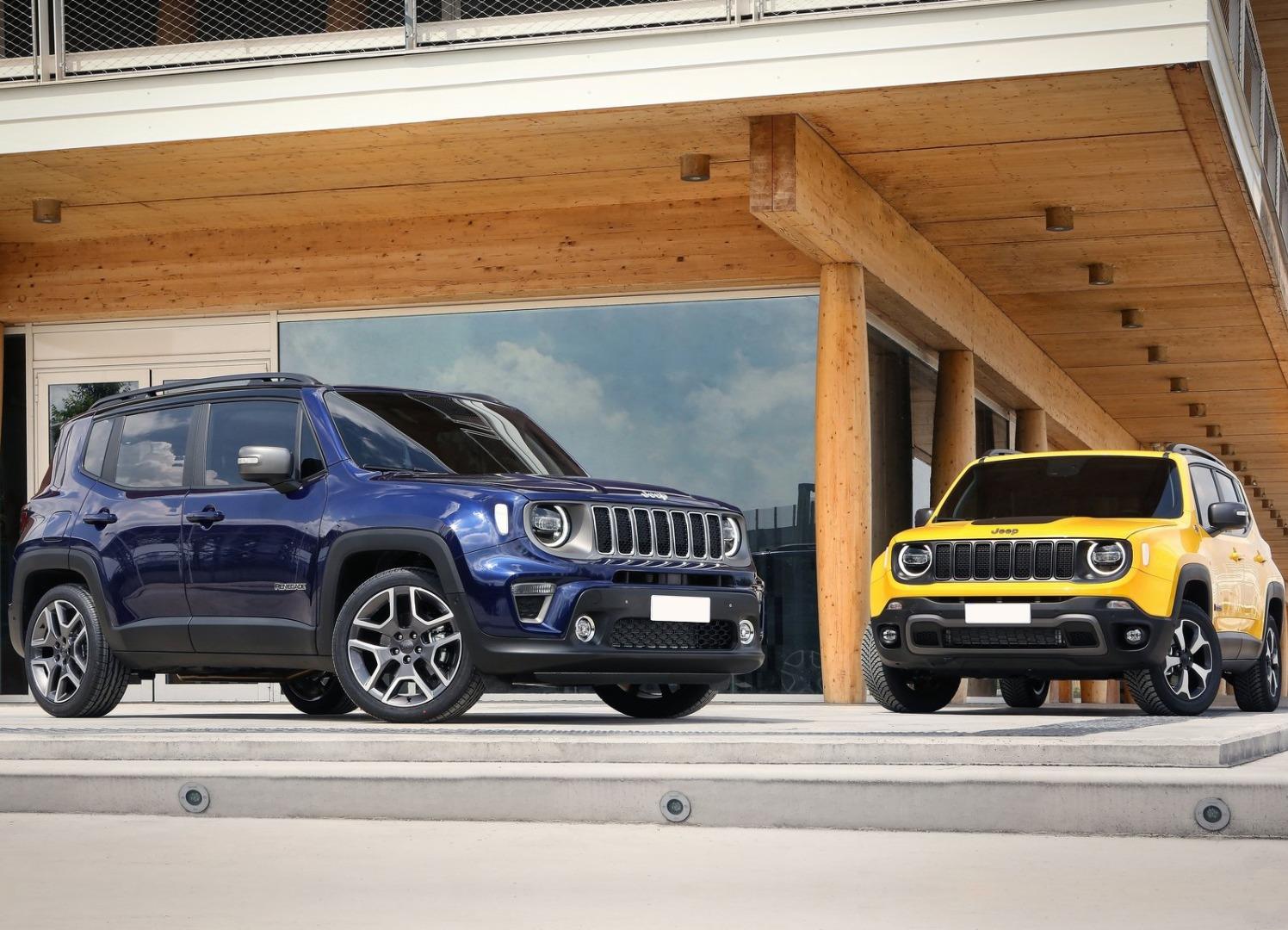


The Jeep Renegade is offered in four derivatives starting with the Sport and right to the Trailhawk flagship model. Between these two feature the Longitude and Limited variants which along with the Sport, comes fitted with the same 1.4-litre, turbocharged, 4-cylinder petrol engine. The top of the range Trailhawk model sees a 2.4-litre, naturally-aspirated, 4-cylinder petrol motor fitted.
Related: 3 Jeep Renegade accessories you didn’t know you needed.
The Sport model is the only in the range to come with a manual transmission, whereas the Longitude and Limited derivatives see the fitment of a 6-speed, dual-clutch automatic transmission. The flagship Trailhawk variant also gets its own transmission option which takes shape as a 9-speed automatic.

The figures
As mentioned earlier in the article, the Jeep Renegade is offered in four derivatives, three of which utilise the same motor. At the top of the range, the Trailhawk, however, comes fitted with a unique engine and transmission pairing. Let us compare the different specifications to wee which is the most efficient.
| Jeep Renegade Trailhawk | Jeep Renegade Limited | Jeep Renegade Longitude | Jeep Renegade Sport | |
| Engine | 1.4-litre, turbocharged, 4-cylinder petrol | 1.4-litre, turbocharged, 4-cylinder petrol | 1.4-litre, turbocharged, 4-cylinder petrol | 2.4-litre, naturally-aspirated, 4-cylinder petrol |
| Transmission | 9-speed auto | 6-speed dual-clutch auto | 6-speed dual-clutch auto | 6-speed manual |
| Power | 137 kW | 103 kW | 103 kW | 103 kW |
| Torque | 232 Nm | 230 Nm | 230 Nm | 230 Nm |
| 0-100 km/h | 9.8s | 11.0s | 11.0s | 10.9s |
| Top speed | 180 km/h | 181 km/h | 181 km/h | 181 km/h |
| Fuel consumption | 7.5 L / 100 km | 5.9 L / 100 km | 5.9 L / 100 km | 6.0 L / 100 km |
| CO2 emissions | 175 g/km | 137 g/km | 137 g/km | 140 g/km |
*This table was populated using information gathered from www.duoporta.co.za

Verdict
Even though three of the vehicles share the same motor, the entry-level Sport variant seems to differ ever so slightly from the Longitude and Limited models, due to the manual transmission fitted to the Sport. While the manual transmission sees to it that the Sport reaches 100 km/h 0.1 seconds faster than the next two models in the line-up, it does increase the average fuel consumption by 0.1 L / 100 km and the CO2 emissions by 3 g/km.
Unsurprisingly the Trailhawk derivative differs significantly from the rest of the line-up. Not only does it offer an additional 34 kW but will also sprint to 100 km/h in 9.8 seconds, 1.1 seconds faster than the second quickest. This I might add is no easy feat as unlike the other models, the Trailhawk comes fitted with a heavy 4X4 system which results in its tare weight being 1575 kg, 225 kg more than the other models in the range.
All that extra weight and the larger engine on the Trailhawk means it has a higher fuel consumption average, even with the 9-speed transmission. While it might seem as though the Longitude and Limited models might be the best options here when only considering fuel consumption, the Trailhawk is not a long way off and it offers more utility with its 4X4 drivetrain. It is because of this that we crown the Trailhawk as the most efficient taking all the features into consideration, however, if you are only looking for a city crawler, both the mid-range models will not disappoint.
Recommended next: