If you are an urban commuter staring down the barrel of rising fuel costs and Eskom curveballs, these bite-sized EVs are suddenly looking less like lifestyle accessories and more like sensible daily transport. But can a budget-friendly EV genuinely pull its weight as your household's only set of wheels? Let us look at the numbers, the battery anxiety, and the unexpected perks of living electric in SA.
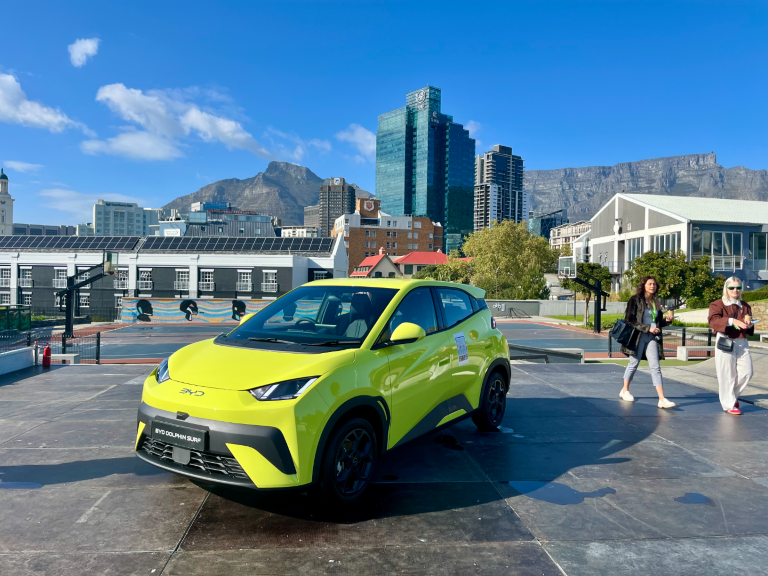
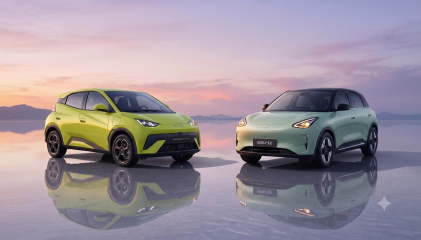
The BYD Dolphin Surf is one of the top EV choices for budget-oriented city dwellers.
Daily living and running costs: The maths that wins the argument
The real magic of small-scale EVs is not just about 'saving the planet'; it's about saving your hard-earned cash at the plug rather than at the pump. Charging an EV overnight on a standard domestic tariff costs small change compared to watching the numbers tick relentlessly upward at a local petrol station.
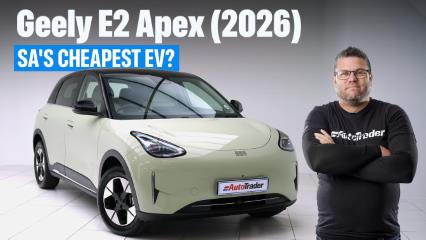
Here at AutoTrader, we have tested every electric car on the market since EVs first came to SA, but none of us has ever owned a small, new-generation EV like the ones in the title of this article.
To learn more about what life is like with one, we chatted to seasoned EV campaigner Justus Visagie, who runs the e-mobility platform
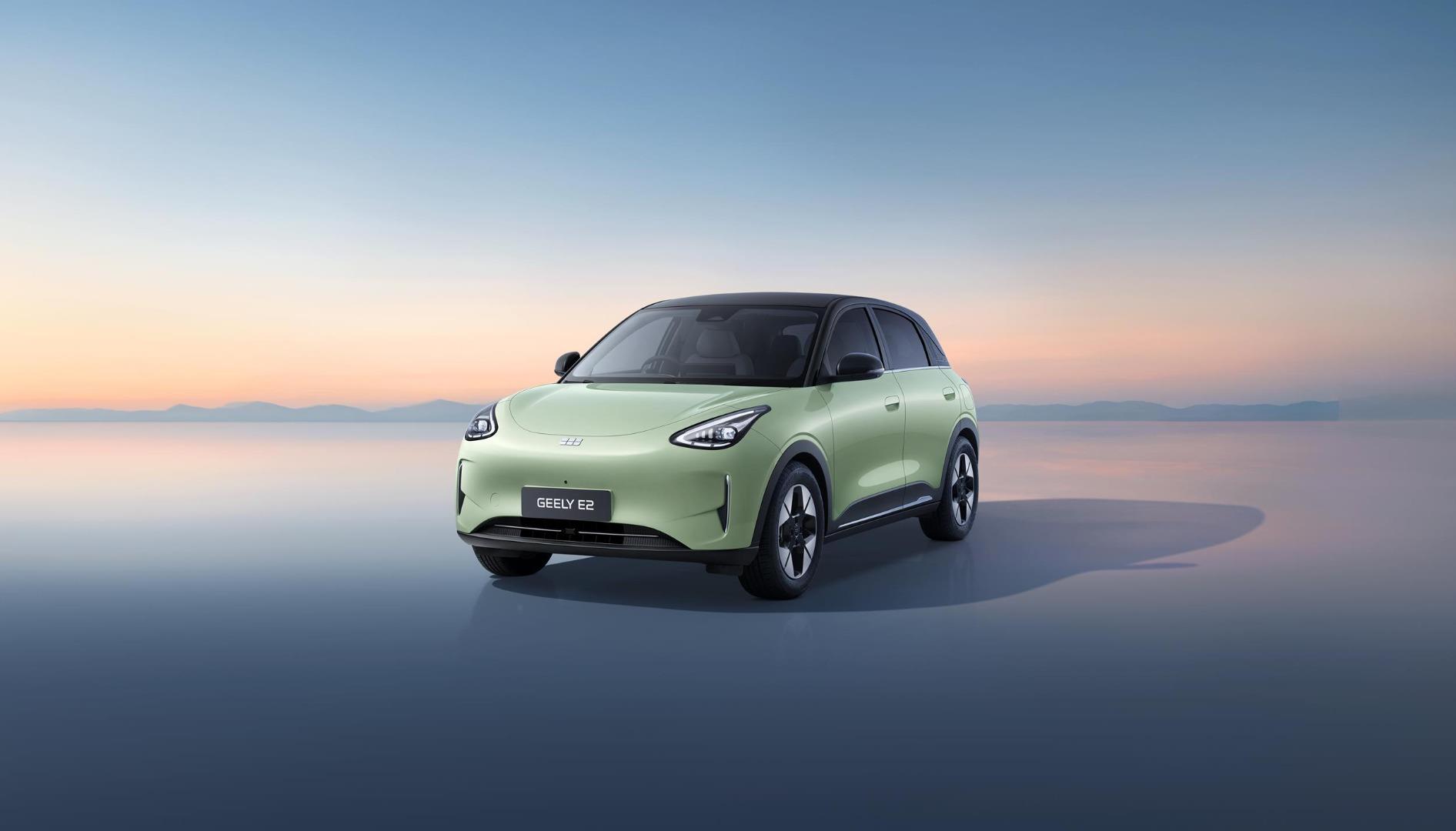
EV NOW and is currently leasing a Geely E2 Aspire. He reckons that the financial argument is practically bulletproof:
“EVs are finally affordable in South Africa thanks to sub-R350,000 models like the Geely E2 Aspire. Running costs seal the deal: R100 buys 300km of driving, and my insurance is only R796 monthly.”
While early luxury EVs faced exorbitant insurance rates due to scarce parts and specialised repair logistics, these newer, mass-market Chinese imports share parts logistics with conventional ICE equivalents or are increasingly supported by local insurers (like Hollard, Naked, and Safire) who price them comparably to similarly valued petrol hatchbacks.
Opinion: Is SA's EV boom outrunning the grid?
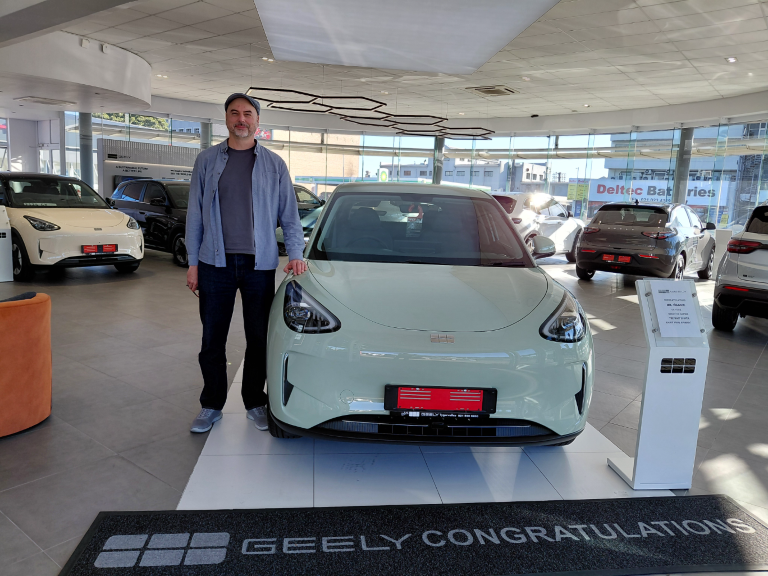 Justus with his new Geely E2 earlier this year. He is happy to report that mobility costs him only 45c per km, excluding the monthly leasing fee and insurance.
Add in the fact that electric motors have a fraction of the moving parts of an internal combustion engine, meaning fewer services, no spark plugs, and no clutch replacements, and your day-to-day overheads start looking remarkably pocket-friendly. For deeper guidance on managing energy use, you can also check out
our practical guide on electric vehicle efficiency and range tips.
Battery longevity and degradation: Debunking the 10-year fear
Ask EV skeptics about their biggest fear, and it’s always a dead, useless battery five years down the line.
That fear is outdated. Modern liquid-cooled batteries handle extreme heat and fast charging without losing stamina.
As Justus notes, the tech has matured past those early growing pains:
“Concerns over battery degradation stem from early-generation electric cars built over a decade ago. Modern battery chemistries and thermal management systems are far ahead. Over a 10-year period, I expect no more than a 5% loss in total driving range.”
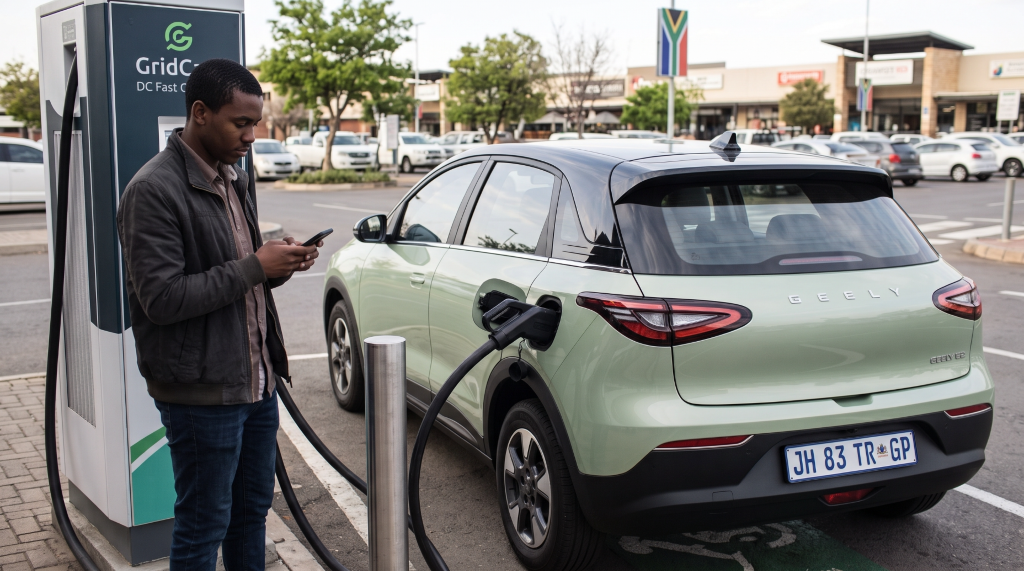
Battery longevity is better in the newer-gen EVs we now see in SA.
Depreciation and resale risk: Managing future value
Rapid tech advances used to threaten EV resale values. Today, structured finance options like Guaranteed Future Value protect buyers.
Explaining his decision to lease, Justus highlights why structured financial packages change the game for risk-averse motorists:
“Geely’s Guaranteed Future Value guarantees your car’s minimum trade-in price upfront, shifting resale risk to the bank.”
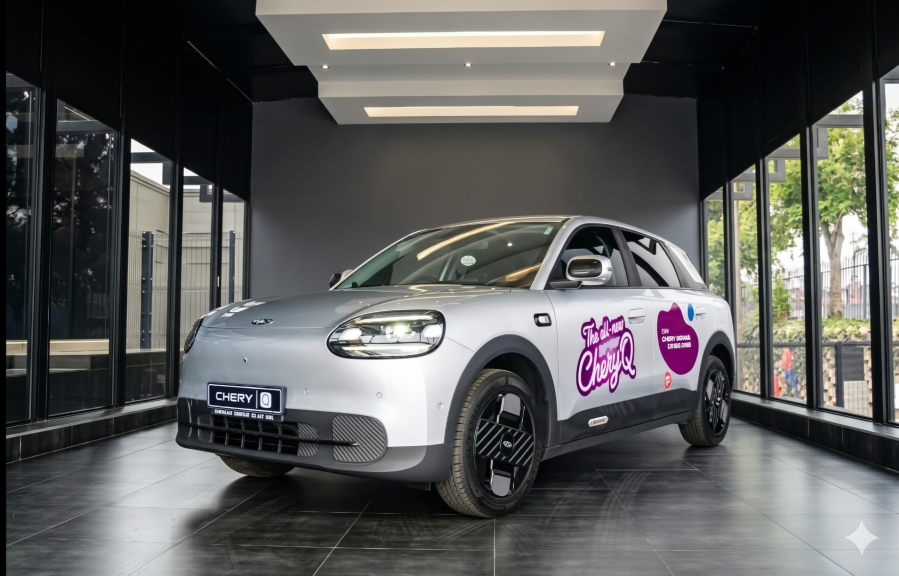
Structured Guaranteed Future Value plans are available on the Chery Q via Chery Financial Services.
Navigating load shedding and outages: Turning an EV into a home backup
Critics assume driving an EV during blackouts is asking for trouble. In reality, most owners plug in overnight when household demand drops and the grid rests
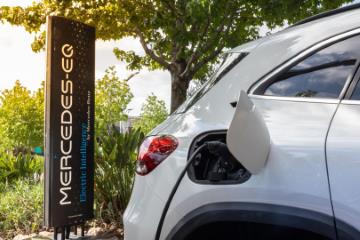
Better yet, many of these entry-level contenders come packed with Vehicle-to-Load capabilities. Instead of just consuming power, your car becomes a high-capacity mobile power bank on four wheels. If you want to explore how domestic charging integrates with home infrastructure, take a look at
our guide on home charging setups and solar compatibility.
Justus explains how EV drivers are using their cars to beat the blackout blues:
“Electric vehicles are giant power banks. In Johannesburg and Pretoria, where grid failures are common, drivers use Vehicle-to-Load technology to charge elsewhere and bring power home to run air fryers, induction hobs, and washing machines.”
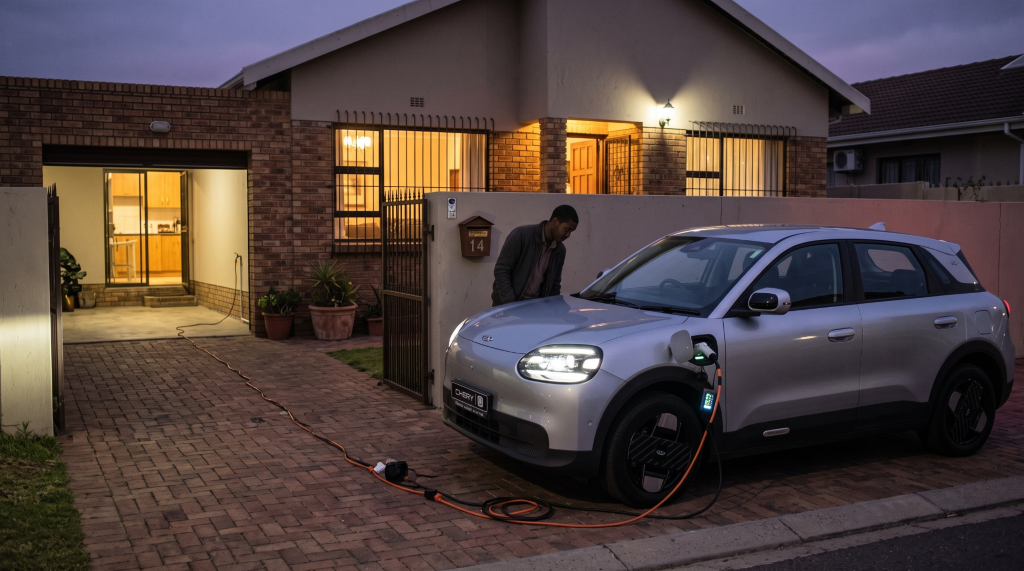
Blackout? Your electric car can help keep your lights on.
All electric vehicles under R400 000 in South Africa
If you are shopping around the sub-R400k bracket, the market has expanded well beyond just one or two options. While manufacturers love quoting generous optimal ranges on paper, remember to shave off a bit for real-world highway speeds. (Please note that Chery’s claim is for NEDC and Geely’s is for WLTP. The latter is more realistic.)
| Model & Variant | Price Range (Approx.) | Claimed Range | Real-Life Estimated Range |
| Geely E2 Aspire / Apex | R339 900 – R389 900 | 325 km | 260 km – 280 km |
| BYD Dolphin Surf (Comfort / Dynamic) | R341 900 – R395 900 | 300 km – 400 km | 240 km – 330 km |
| Dongfeng Box (E2 / E3) | From R349 000 | 430 km | 330 km – 360 km |
| Chery Q (Comfort / Elite) | R349 900 – R389 900 | 400 km | 310 km – 340 km |
The verdict: Can an entry-level EV be your only car?
For daily commutes, school runs, and weekend trips, an EV under R400 000 is a smart move. Between rock-bottom running costs, guaranteed financing, durable batteries, and blackout-busting V2L power, electric motoring in South Africa has finally grown up.