OPINION: Is South Africa's EV Boom Outrunning Its Grid?
I spent a few weeks in a row moving between three very different new-energy vehicles, a Chery Q, an iCaur V23, and a Toyota RAV4 PHEV, trying to live with them the way an ordinary buyer would rather than the way a press launch wants you to. What I hadn't expected was how quickly the story stopped being about the cars at all.



I'll set the scene. I pull up to a fast-charging station in Johannesburg in our iCaur V23 test car and find two cars already waiting ahead of me. The drivers are leaning against their bonnets or scrolling through their phones while a single working bay works through the queue, one vehicle at a time. It happened again the following week at a different site, where a car sat on a DC charger for close to two hours on a job that should have taken 15 minutes. Then I finally got to test the newly launched Chery Q's fast-charging, but only after an electric Uber and a security company's BYD Dolphin Surf had finished first.
Three cars, three charging profiles, and the same bottleneck every time: not enough working chargers, in not enough places, moving too slowly for the number of people who now seem to want one.
That small frustration previews a much bigger question. South Africa's EV market has gone from a rounding error to a genuine growth story. It is growing into an electricity system that has only just recovered from the worst blackout crisis in its history, and into a charging network never built for this kind of demand. So is what I ran into at a charger queue a temporary growing pain, or an early warning that the grid and infrastructure planners haven't caught up with yet?
The surge nobody quite expected
For years, electric vehicles barely registered in South Africa. A few hundred were sold each year, mostly to early adopters willing to pay a premium and gamble on the charging network. That has changed abruptly.
On the new-car side, naamsa's figures show battery-electric sales rising 96–97% in the first quarter of 2026, from 276 units to 544, with monthly records set through the first half. Combined new-energy vehicle (NEV) sales, meaning battery-electric, plug-in hybrid and conventional hybrid, reached 16 289 units in the first seven months of 2026. That's an 88% jump, already close to 2025's full-year total of 16 716.
The showroom figures are only half the picture. AutoTrader's 2026 Mid-Year Car Industry Report shows the same surge in the used market:
- 4 703 used NEVs sold between January and June 2026, up 92% year-on-year, against 8% growth for the used market overall.
- Used BEV sales up 98%.
- BEV listings up 66%, to more than 1 651.
- Average BEV price down 13%, from R980 542 to R856 722, as cheaper new entrants pull the market down.
The most-listed used BEV on AutoTrader is now the BYD Dolphin Surf, at an average asking price of R371 430. BYD's sales on the platform grew more than twelvefold year-on-year, and searches for the brand rose 147%. Cheaper Chinese-built EVs like the Dolphin Surf, the Geely E2 and now the Chery Q, all priced from under R400 000 new, are widely credited with breaking the affordability logjam that kept EV adoption below 1% of new sales for most of the past decade.
Our CEO, George Mienie, puts it simply in the report's foreword: the constraint was never appetite; it was the price-to-value delta. Solve price, range and practicality, and consumers respond. They are responding now.
Not every NEV plugs in, but the ones that do are growing fastest
The headline NEV numbers need one important caveat before anyone draws grid conclusions from them. According to our data, 83% of used NEVs sold in the first half of 2026 were hybrids. The Toyota Corolla Cross Hybrid leads in both sales and listings among new-energy vehicles, with 1 416 units sold. It offers more than 500km of range for under R450 000, and it never goes near a plug.
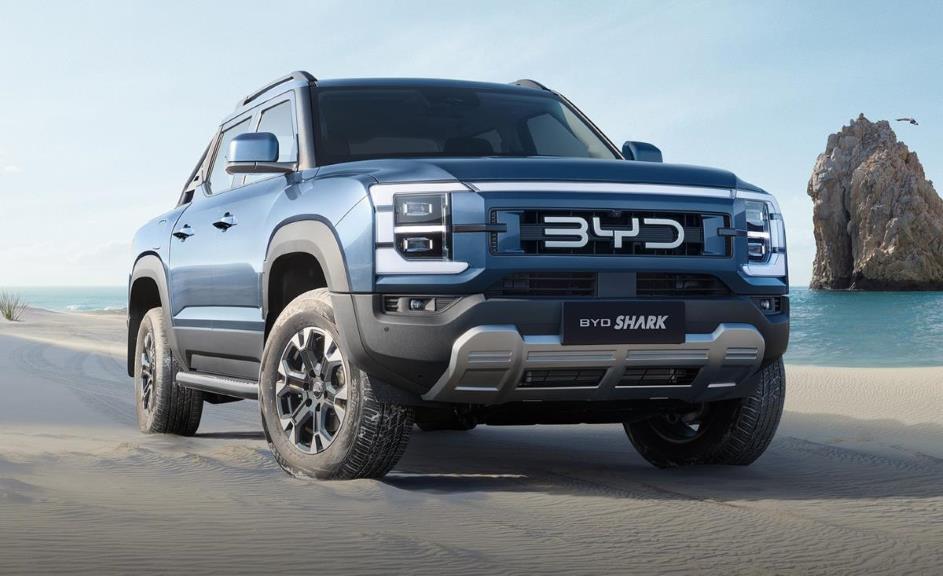
Conventional hybrids make their own electricity from fuel and braking, so they add nothing to anyone's evening peak. The hybrid category does include plug-in models, such as the BYD Shark 6, but self-charging hybrids dominate the top of the table. Of roughly 4 700 used NEVs sold, around 3 900 were hybrids and only about 800 were battery-electric.
So the grid-relevant fleet is smaller than the headline figure suggests. It is also the part of the market that is growing fastest, becoming cheaper and more widely available to a broader pool of buyers. A falling average BEV price is good news for consumers. It also means plug-in ownership is spreading beyond the early adopters who installed dedicated chargers and planned their charging around a solar system.
Where the cars are is where the risk is
AutoTrader's provincial data covers all used passenger cars, not NEVs specifically, but it clearly shows the pattern. Gauteng accounts for 56% of used-car sales and, together with the Western Cape (18%) and KwaZulu-Natal (13%), makes up 87% of the market. The public charging network is concentrated in the same places: Johannesburg, Cape Town and Durban.
As we'll see, these are also the metros whose local electricity networks are under the most strain.

The "energy-weak country" narrative is out of date
Any story built on South Africa's reputation for load-shedding has to deal with an inconvenient fact first. As of early September 2026, Eskom had gone 476 consecutive days without load shedding. That is its longest stable stretch in years, and it includes the first full winter free of load-shedding since the crisis began.
Eskom's Energy Availability Factor climbed to 67.79%, its best level since 2020. Several things drove the recovery:
- Koeberg's nuclear units returning to service.
- Better performance at Medupi and Kusile.
- A record 1 920 MW of independent power producer capacity reaching commercial operation in the first half of 2026 alone.
There were still outages, and I ran into a few. They appear to be local, caused by cable theft or equipment failures at specific substations, rather than by a shortage of generating capacity.
So the grid disaster story isn't the 2023 version. The risk hasn't disappeared, though; it has moved and changed shape. There are four places to look: generation in the medium term, the distribution networks that actually deliver power to a driveway, the thin public charging network, and a fiscal problem few people are discussing.
Risk #1: The generation recovery has an expiry date
Eskom's own Medium-Term System Adequacy Outlook (2026–2030) flags a real risk that load shedding could return around 2029–2030. Its five oldest coal stations, Camden, Grootvlei, Hendrina, Arnot and Kriel, must decommission by 2030 as a condition of their emissions exemptions. The gas and renewable capacity meant to replace roughly 8.4 GW of retiring coal is not yet on a firm build timeline in the 2025 Integrated Resource Plan. Only about half of the renewable projects awarded grid allocation since the 2019 IRP have actually been built.
The current stability is a genuine turnaround, not a solved problem. If plug-in ownership continues to compound at the rates AutoTrader and Naamsa are recording, it will add concentrated evening-peak demand at exactly the point where Eskom's planners expect the safety margin to tighten.
Risk #2: The problem lies with the municipalities, who can't afford to fix it
This is the part of the story most coverage misses. Eskom's transmission grid is only one link in the chain. The local distribution networks run by City Power in Johannesburg, Tshwane, eThekwini and Cape Town are generally older, under-maintained and never designed for EV load. Risk assessments ahead of winter 2026 singled out Johannesburg, Tshwane and eThekwini as the most exposed during evening peaks due to ageing primary infrastructure. These are the same metros where most of South Africa's used cars are bought.
EV charging makes this worse in a specific way. It concentrates demand in the early evening, when people get home, household demand already peaks, and solar output drops to zero. A single suburban street with a handful of home chargers can push an ageing transformer past its rating long before Eskom's national figures show any strain. That kind of failure never appears in a "days without load shedding" statistic.
The municipalities that would need to pay for upgrades are in worse financial shape than ever. Municipal arrears to Eskom rose from R94.6bn to R111.6bn in a single financial year, reaching roughly R119bn by June 2026. Eskom's own financial plan projects the figure could reach R358bn by 2031 if nothing changes. The Minister of Electricity and Energy has put the growth rate at around R3bn a month.
National Treasury's debt-relief programme has largely failed to change this. Only 15 of the 71 participating municipalities have consistently met their conditions, and Eskom had processed just R4.2bn in write-offs by March 2026, less than 4% of the debt. Eskom's "distribution agency agreements," under which it takes over distribution and billing in chronically defaulting municipalities, now cover Emfuleni, Maluti-a-Phofung, Merafong and a handful of others. That is a start, but it's a handful out of hundreds.
Industry voices are already warning about the load-management side. Speaking at Enlit Africa 2025, GridCars director Winstone Jordaan cautioned that uncoordinated "dumb" home and workplace chargers, units that can't manage load or respond to grid signals, could overwhelm local networks, as happened in the UK before regulators stepped in. His recommendation was for South Africa to go straight to smart, connected charging. Whether cash-strapped municipalities have the capacity or political will to enforce that before the problem arrives is, on current form, doubtful.
Risk #3: The charging network is still a patchwork
South Africa has roughly 650 public chargers across 445 sites, up from around 200 stations in 2022, but still tiny for a country this size. Outside the big three metros, coverage thins dramatically. The roughly 300km stretch of the N1 between Beaufort West and Three Sisters, and parts of the N2 between East London and Durban, are regularly cited as gaps.
Some new investment is going around the grid instead. The DBSA backed a R100-million rollout by Zero Carbon CHARGE of solar-powered, battery-buffered, fully off-grid fast-charging hubs on the N3. The two sites, at Reitz Interchange and near Colenso-Winterton, switched on in May 2026. Depending on who you ask, that is either ingenuity or a quiet admission that nobody fully trusts the grid to carry this load on its own timeline.
Risk #4: A shrinking fuel-tax base
Every car that switches from petrol to electricity stops paying the General Fuel Levy, which raised just over R83bn in 2024/25 and goes into the general fiscus, not ring-fenced for roads. EV owners also skip the CO2 emissions levy on new combustion cars. EVs do pay more in other places: a 25% customs duty on EU and UK imports versus 18% for combustion-equivalent vehicles, and an ad valorem tax calculated on higher purchase prices.
Tax experts surveyed in late 2025 broadly agreed that the revenue risk is overstated in the short- to medium-term. The same compounding logic still applies, though. Modelling for the Western Cape's road-funding review projects suggests that fuel tax revenue per vehicle could fall by up to 48% by 2040. The Western Cape is already piloting a distance-based Road Use Charge with Stellenbosch University.
A charging-specific levy would require metering capable of distinguishing a car from a geyser. That is essentially the same smart-charging infrastructure needed to protect suburban transformers. If South Africa builds one, it gets the other. Political appetite is thin while most commuters depend on fuel-powered minibus taxis. Still, the 2029–2030 window for renewed generation strain is also roughly when the fuel-levy question becomes real.
Why "small numbers" isn't the same as "no problem"
The standard industry rebuttal is that EV volumes are still tiny next to the roughly 600 000 new vehicles South Africa sells each year, and most NEVs are self-charging hybrids anyway. Both points are true today. Three things make them less reassuring than they sound:
- Growth compounds fast. Plug-in sales roughly doubling each year, in both the new and used markets, would put volumes an order of magnitude higher within four to five years. That lands close to when Eskom expects its margin to tighten.
- Grid strain is local. A healthy national reserve margin says nothing about one transformer in a Gauteng suburb where three neighbours bought EVs and all charge on the same feeder, especially when the municipality responsible is falling further behind on its Eskom account every month.
- Charging habits are forming now. With no smart-charging standard in place, today's buyers are setting the default: uncoordinated evening charging. That will be far harder to change once hundreds of thousands of chargers are installed.
What would head this off
Based on what utilities and regulators elsewhere have done when they saw this coming, South Africa's options look fairly clear:
- Mandate smart charging for new home and workplace installations before volumes scale, instead of reacting after a suburb's transformers fail.
- Fund municipal distribution upgrades for EV load, specifically.
- Extend distribution agreements and off-grid charging models.
- Publish distribution-level risk data, the way Eskom now publishes national adequacy outlooks, so municipalities and developers can see local strain coming.
- Treat this as a decade-long planning problem tied to the 2029–2030 window, not something today's stability has solved.
Related: CHARGE wants your EV data, here is why
What this means if you're buying or selling
For car shoppers, our data show the market is becoming easier to enter. Used BEVs are cheaper than a year ago, there's more choice, and the compact hatchbacks from BYD, Geely and Chery have brought entry prices within reach of mainstream budgets. Before you buy, check a few practical things. Can your home supply handle a charger? Will your installer fit a smart unit that can schedule charging for off-peak times? How reliable are the public chargers on the routes you actually drive? If the honest answer is "not sure," the hybrids that make up 83% of NEV sales remain a sensible bridge. They offer electric efficiency without depending on your local transformer.
For dealers, the mid-year numbers are hard to ignore. Plug-in stock is moving faster, listings are growing, and prices are falling as new brands arrive. Buyers are weighing a BEV's spec sheet and monthly instalment against the practicalities of charging. Dealers who can answer the charging question confidently will close more of these deals.
The bottom line
South Africa is not heading for the blackout-driven EV disaster that would have been easy to write about in 2023. Eskom's generation recovery is real and has lasted well over a year. The story has moved two levels down: first to municipal wires and transformers, and then to the municipal balance sheets meant to pay for them, which are getting worse.
Our latest data shows demand isn't waiting for the infrastructure to catch up. Plug-in cars are getting cheaper, selling faster, and concentrating in the same three metros where the local networks are most fragile. If there is a disaster, it won't come with a load-shedding schedule. It will look like a transformer failing in a Johannesburg suburb on a winter evening in 2029, with three EVs on the block plugged in, a municipality that owes Eskom money it can't pay, and nobody having planned for either.