
Opel Crossland X vs Volkswagen T-Cross vs Hyundai Kona: which one has the lowest running costs?
You can get quite a lot of premium features in a non-premium brand’s products, if you’re prepared to throw some money at the problem. This trio of compact crossovers are all new releases in our market, look the part, and offer specification- and option sheets as long as your arm. But which one should prove the least expensive to run? We compare the Opel Crossland X to the Volkswagen T-Cross and Hyundai Kona, to determine which one has the lowest running costs.



How can you pre-determine your car’s running costs?
When considering a car’s running costs, it’s important to look at it over the full life-cycle. This allows third- or fourth owners of older cars to get a clearer picture of possible future expenses, and it helps first owners to determine at what age their cars may become too expensive to run. Unfortunately, most of the cars available new on our market are still too young to give accurate long-term information.
There are however certain key points which could give an idea of a car’s general upkeep requirements. This includes the length of the service intervals, the cost of replacement tyres, and the prices of service parts. For new-car buyers, the emphasis might perhaps shift more towards resale value, service plans, insurance premiums, and fuel consumption.
With these considerations in mind, we decided to pitch the Opel Crossland X against the Volkswagen T-Cross and Hyundai Kona in a running cost comparison. To level the playing field, all three cars have automatic gearboxes. Their engine layouts are quite different, but all of them are front-wheel drive, with no AWD option on offer.
Let’s meet the contenders!
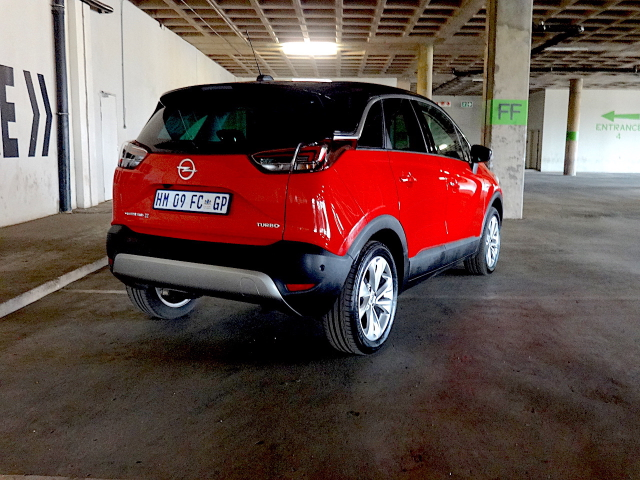
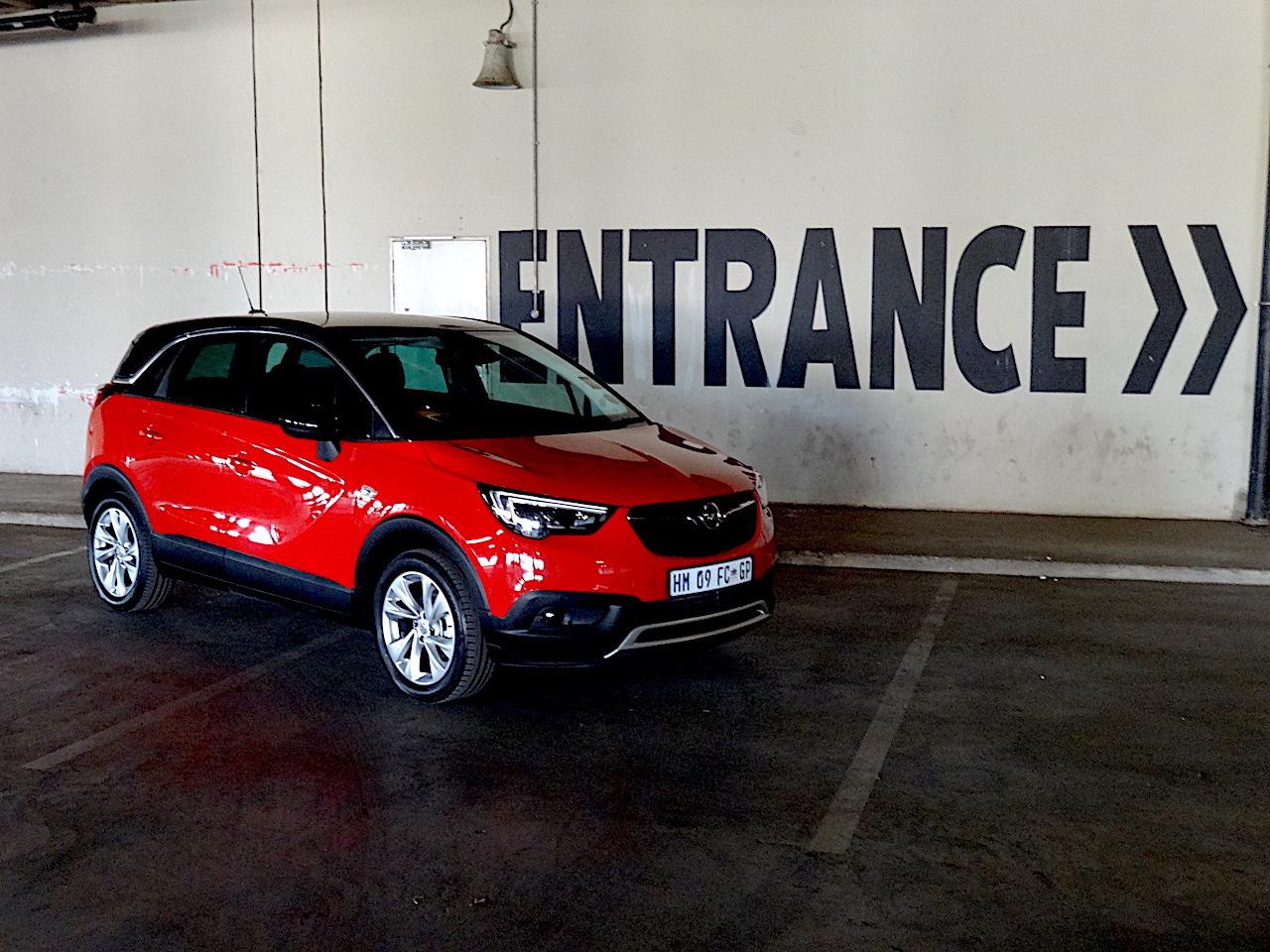
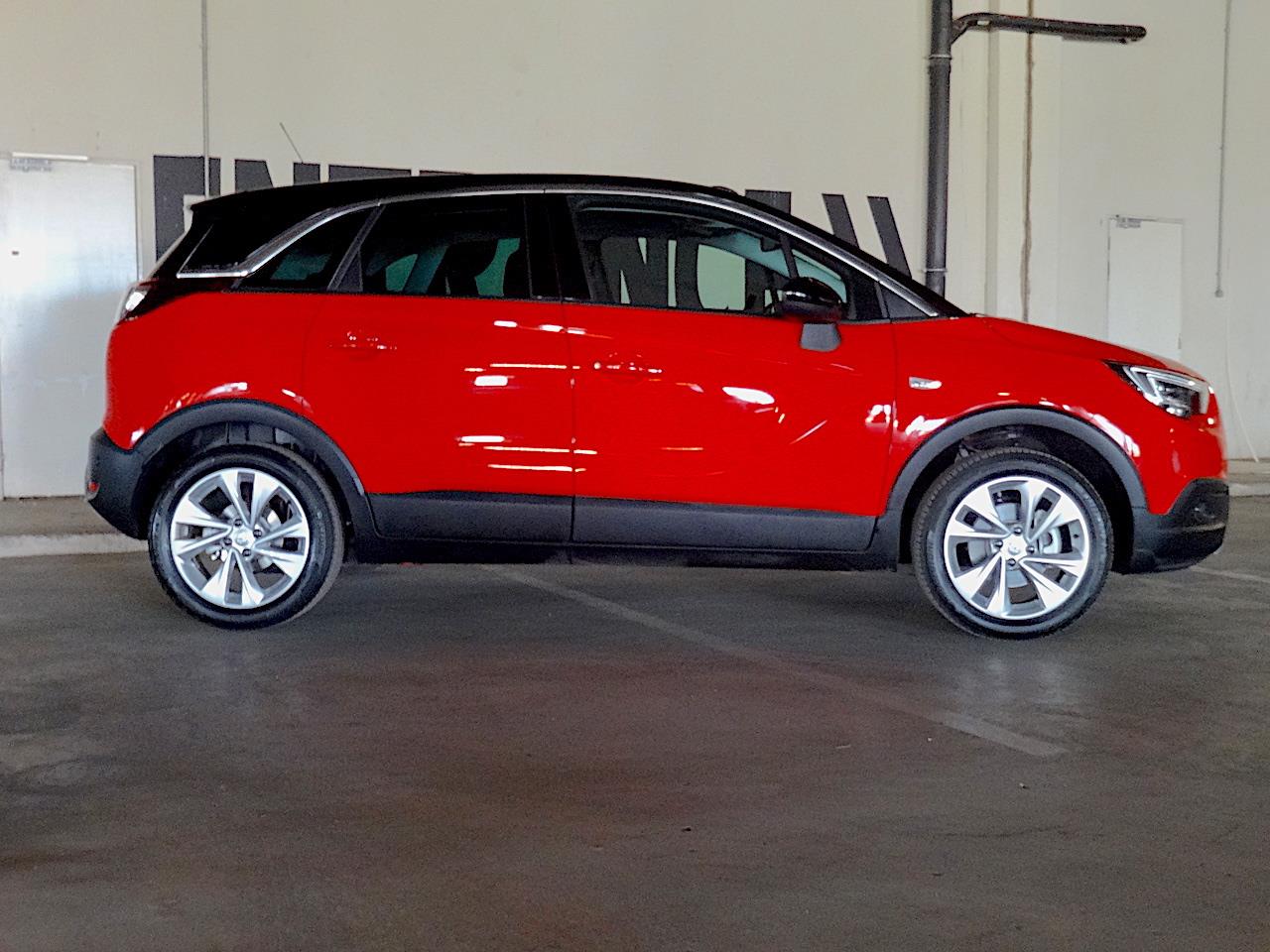
1. Opel Crossland X 1.2 Turbo Cosmo auto (R 399 000).
Positioned right at the top of the Crossland X range, the Cosmo trim includes plenty of nice, big-car features in a smaller wrapping. Climate control, power windows all round, a reverse camera with front and rear parking sensors, IntelliLink colour touchscreen infotainment with smartphone mirroring, lane departure warning, and a driver assistance pack (which includes forward collision alert and automatic emergency braking) are included as standard equipment.
Safety is boosted by 6 airbags, ABS, stability control, and ISOFIX child seat anchors, and an optional technology pack can add a head-up display, navigation, parking assistant, and blind spot monitoring. Under the bonnet is a 1.2-litre turbocharged 3-cylinder petrol engine (good for 81 kW and 205 Nm), paired to a 6-speed torque converter automatic gearbox.
Related: Read our review of the Opel Crossland X 1.2 Turbo Cosmo Auto here.
2. Volkswagen T-Cross 1.0TSI 85 kW Highline R-Line (R 393 100)

Highline is the top-level T-Cross trim (at the time of writing – more derivatives are sure to follow), which is then further enhanced with the R-Line package. The latter upgrade is mostly cosmetic, and includes a body kit, fancier (but no larger) wheels, and nicer upholstery inside. Standard equipment in Highline variants include climate control, automatic wiper- and headlight controls, a colour touchscreen infotainment system, LED headlamps, and front- and rear parking sensors.
Safety is of a similar standard as the Crossland X, and it has an even longer options list which includes a digital dashboard, navigation, blind spot monitor, lane departure warning, and dual-zone climate control. All T-Crosses are powered by a 1.0-litre turbocharged 3-cylinder petrol engine (capable of 85 kW and 200 Nm), with a 7-speed dual-clutch transmission transferring the power to the wheels.
Related: What's it like to spend 30 days with a Volkswagen T-Cross?
3. Hyundai Kona 2.0 Executive (R 409 900)

The Kona is the odd one out in this company, with its 2.0-litre naturally-aspirated engine. There’s a cheaper 1.0-litre turbo in the range as well (and it’s actually the nicer one to drive), but it only comes with a manual gearbox, and would thus be ineligible to compete in this comparison. No matter, because this is the most powerful car in this trio, with 110 kW on tap, although the absence of a turbo means a torque deficit, with only 180 Nm available – significantly less than these turbo opponents.
It’s well-equipped, though, with similar standard trimmings as the Opel and the Volkswagen, albeit without the VW’s LED headlamps and the front PDC on offer in the others, but, like the Opel, with a standard rear-view camera. Once again, safety equipment is up to a similar standard, with practically nothing to choose between these in the event of a collision.
Which one has the lowest running costs?
Purchase price and depreciation

It’s not often that one sees a top-trim Volkswagen undercutting its opponents on price, but the T-Cross manages to do just that. It has the lowest purchase price of this trio, and is also likely to hold its value better in the long run purely based on the Volkswagen brand equity. The T-Cross is also one of very few cars which actually command a price premium in the used-car market, with many nearly-new (and undoubtedly well-specced) 2020 examples listed here on AutoTrader for more than the price of a brand-new one.
The Opel Crossland X is the next-cheapest, and sneaks in just below the R 400 000 barrier. Its short-term depreciation performance isn’t as rosy as that of the Volkswagen, though: there are new and nearly-new 2020-model Cosmo autos listing for as little as 75% of the official pricetag. This makes for great used-car shopping, but with such steep depreciation, it will end up losing more value, a lot quicker than it really should – upping the running costs.
The Kona fares somewhat better as far as short-term depreciation goes, with the least-expensive 2020-example listed on AutoTrader still commanding 90% of its value when new. Hyundai’s reputation in the used-car market has been steadily improving on the back of their excellent warranties and some customer loyalty resulting from many years of solid, dependable products.
But, as good as the Kona’s value retention is, it’s still no match for the T-Cross’s over-retail sales prices. We’ll have to wait and see how long this trend for the Volkswagen will be sustained, once the initial demand has been met, but, for the moment, it has to win this category.
Fuel efficiency

There should be another win heading the Volkswagen’s way, because its official average fuel consumption of 5.3 ℓ/100 km puts it at the head of this group. However, real-world testing during our reviews showed that high-6 ℓ/100 km figures should be the norm in mixed-cycle driving. In heavy traffic, it could reach as high as 7.5 ℓ/100 km, but on the open road, it will eventually drop below the 6 ℓ/100 km mark.
In theory, the Crossland X should be nipping at the T-Cross’s heels, with its claimed average of 5.4 ℓ/100 km not very far off from the Volkswagen’s claim. However, this is again rather optimistic, having registered an average of 8.0 ℓ/100 km when we reviewed a Crossland X Cosmo. That’s still better than the 9- to 10 ℓ/100 km (in town driving) our Kona review revealed, but high-7 ℓ/100 km figures should be attainable by conservative drivers. This places the Kona in the last position, with the Crossland X in second and the T-Cross again in the lead.
Related: We compared Hyundai Kona engines, and the efficiency crown goes to....
Warranties, maintenance plans, and service intervals

This is where the T-Cross takes a serious knock, because while its warranty for 3 years or 120 000 km is reasonable, its service plan runs for only 3 years or 45 000 km. The Crossland X has an identical warranty, though its service plan runs for 60 000 km (but still only for 3 years). All fair and well, but nowhere near the cover provided by the Kona.
Its warranty runs for 5 years or 150 000 km on the vehicle itself, and 7 years or 200 000 km on the drivetrain. The Kona also offers the best service plan (5 years or 90 000 km) in the group, which means that it will take longer before the Hyundai will start costing its owner servicing money. This pushes the Crossland X into the second place again, and puts the Volkswagen’s comparatively measly cover to third-placed shame.
Related: What is usually covered under a manufacturer’s warranty?
It looks even better for the Hyundai over a very long-term owner in this regard, because of its relative mechanical simplicity. There are no turbos or direct injection at play, so out-of-warranty maintenance costs should be lower, and its driveline commonality with other Hyundai/Kia cars should make it reasonably affordable to repair mechanical bits.
Volkswagen has similar parts commonality with other popular vehicle brands as well as strong aftermarket- and internet support, meaning that very-long-term ownership would be possible, if not necessarily cheap. The Crossland X’s shared genes with the Peugeot 208 and 2008 unfortunately doesn’t help it in this regard, as that model isn’t very common in South Africa, either.
Related: What is covered under the Volkswagen T-Cross manufacturer's warranty?
Insurance

The least-expensive to insure among this trio is the Hyundai Kona, with the Crossland X coming near enough as to make no difference. It seems like the T-Cross’s popularity also extends to the long-fingered set, as its quoted insurance premiums were on about 8% higher than the mid-placed Crossland X. Please note that insurance quotations may vary according to the vehicle’s parking security, intended use, and owner risk profile, and varies widely between insurers.
Related: Top tips to save on your car insurance.
Tyre replacement

Standard tyre prices play a significant part in any running cost evaluation, but it’s not always a given that smaller tyres will be less expensive – if they’re less commonly used, they might be harder to find and more expensive to replace than larger tyres which are in wider use.
Related: How long is a tyre supposed to last?
The Crossland X uses 215/50R17 tyres, which appears to be quite an unusual and expensive size: enquiring at a major tyre retailer had prices for 6 tyre brands, ranging from R2000 a tyre and up, and with mostly premium-brand tyres on offer. It’s looking even worse for the T-Cross, as its 215/45R18 tyres cost from R2300 a tyre upwards – and that’s the cheapest of the 3 available options. Ouch.
The Kona scores big here, too, because its 215/55R17 tyres are far more common (13 different options) and a lot more affordable – the cheapest replacement comes in at about R1800 apiece. On this basis, the Hyundai Kona has to notch up another category win, with the Crossland X again in second place and the T-Cross’s flashy 18-inchers earning it a last place here.
Verdict

There’s a significant temptation to award a joint second place to the Hyundai Kona and Opel Crossland X, but in the end, the Kona’s service plan, least-expensive insurance and tyre pricing just makes too strong a case. Scoring in the middle across most disciplines, the Opel’s projected depreciation deals it the death blow here, to land it in third place.

In the end, the Volkswagen’s lower purchase price, fuel consumption advantage, and far stronger value retention gives it the upper hand over the Kona. It’s a close call, though – the Hyundai will likely be the less-expensive option for very long-term owners, due to its slightly more conventional engineering and excellent warranty.
* Prices were accurate at the time of writing, but may change without prior notice.
Recommended Next:
Shop for new and used Volkswagen T-Cross cars for sale here.


