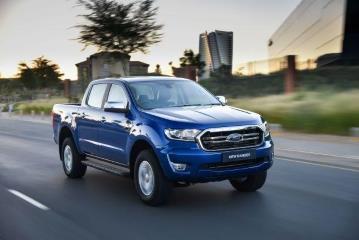
More next-gen Ford Ranger details released, and new Everest shown
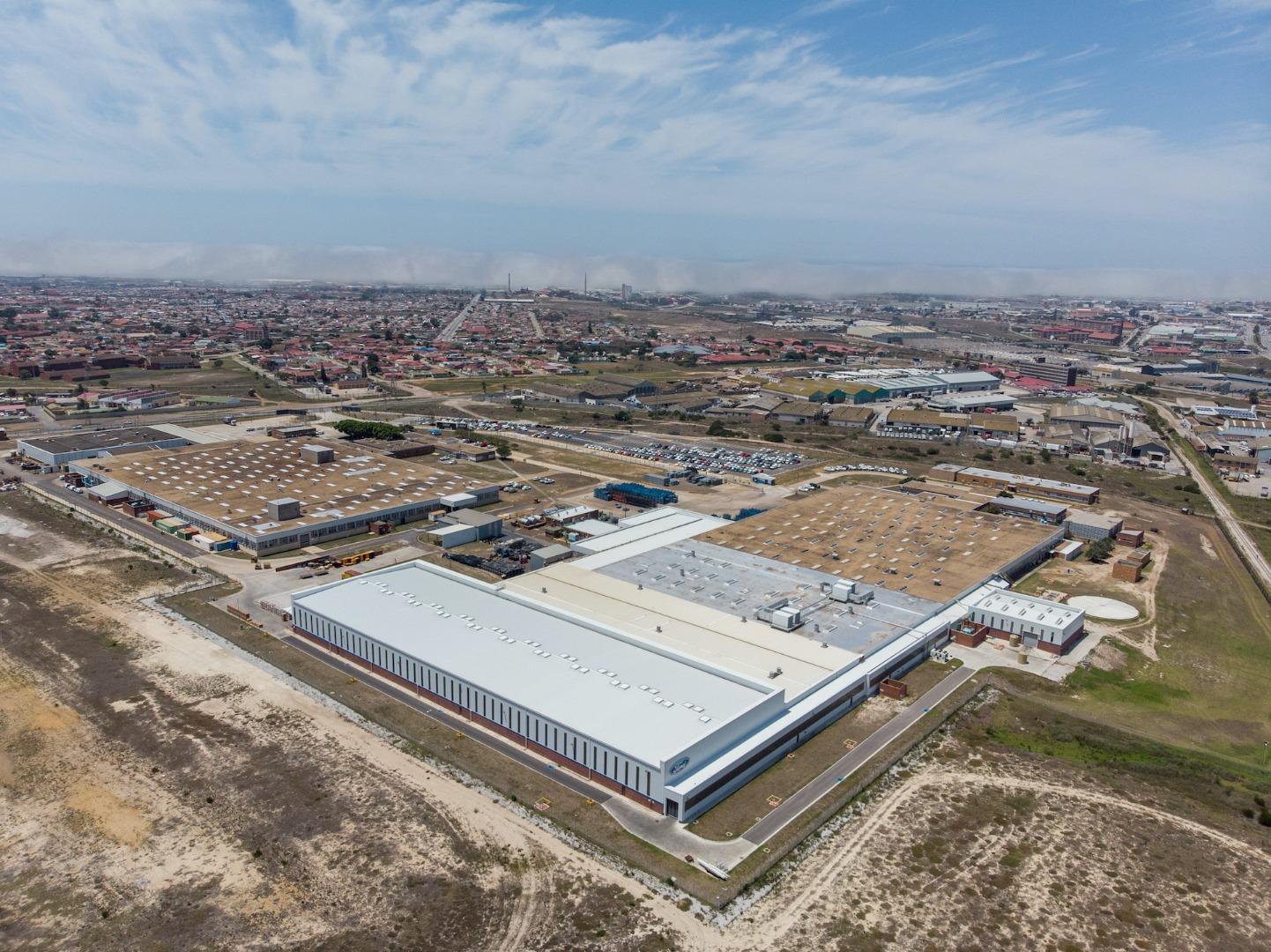
The next phase in Ford’s protracted next-gen Ranger launch program played off in Silverton recently, where the media was treated to a tour of their gigantic new assembly plant, and got to meet the new Ranger and Everest in the metal for the first time. More details about the upcoming model were also released, and we were there to get the story.



Massive local investment
There’s more to the new Ranger and its Everest sibling than the vehicles themselves, and it revolves around the massive investments made by Ford into expanding their South African operations. In support of the new models, US$1-billion was spent on the new assembly line in Silverton and the development of its surrounding supplier base, and another R 600-million was dropped on the Struandale engine plant in Gqberha.
Big money indeed, and indicative of just how seriously Ford takes the Ranger/Everest project. And it’s money well spent, too, because this production expansion brings direct employment to an extra 1,200 people (for a new total of 5,500 local Ford employees), and create an estimated 10,000 new jobs through Ford’s supplier network.
Ranger specifications
Apart from showcasing their impressive facility, Ford also released more details about the new Ranger. Please note that the local model line-up is yet to be announced, so some of this info may vary, depending on the market and trim level.

What we do know is that the new Ranger’s powertrain selection receives a pretty comprehensive make-over. It’s not clear whether the existing 2.2-litre turbodiesel will carry over to the new range, but it is a certainty that the high-tech 2.0-litre 4-cylinder turbodiesel will feature heavily.
For the new Ranger, the single-turbo version of the 2.0-litre will be available in two output levels, giving either 110 kW/350 Nm or 125 kW/405 Nm. In its turn, the twin-turbo 2.0-litre will be detuned slightly to 155 kW and 500 Nm, further differentiating it from the new, range-topping turbodiesel V6.

While Ford’s engineers treated the 3.0-litre V6 as a new engine, it’s really distantly related to the V6 turbodiesel that has served in various Land Rover- and Jaguar products in the past, albeit heavily revised for bakkie duty. Outputs are rated at 184 kW and 600 Nm, and it (and the 2.0 Bi-Turbo) will be mated exclusively to Ford’s 10-speed automatic transmission.
Transmission choices for the various single-turbo variants will include the carry-over 6-speed automatic, as well as newly-developed 5- and 6-speed manual gearboxes. No mention was made of any petrol-powered variants, however, so it’s safe to assume that the mainstay Rangers will stick to a diesel-only line-up.
Related: When Ford first showed the new Ranger, we were there to get the initial details.
Under the skin
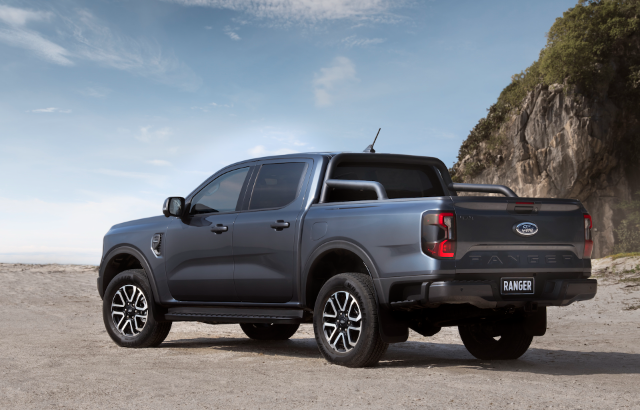
While the new Ranger and Everest ride on a development of the outgoing model’s platform, it’s been re-engineered to the point where it could really be described as all-new. Not only is the chassis frame stronger and stiffer than before, but the suspension has also been extensively revised to create a wider track and give a longer wheelbase.
The rear shock absorbers are now relocated to attach outboard of the leaf springs, improving suspension control and ride quality alike, while giving better load-carrying ability and greater handling stability at the same time. So, even though the cab section’s shape looks familiar, it’s all-new underneath.
About the new Everest
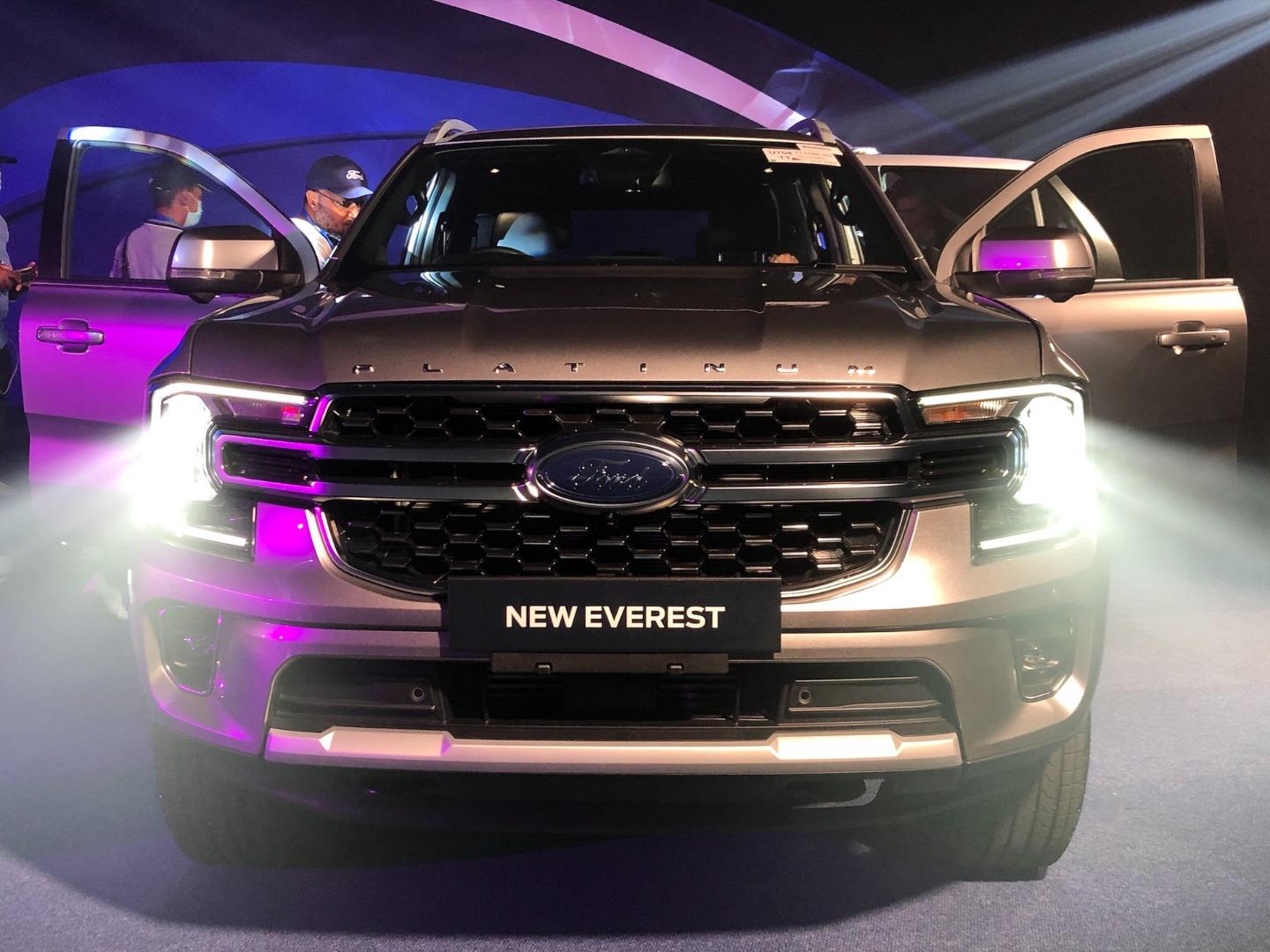
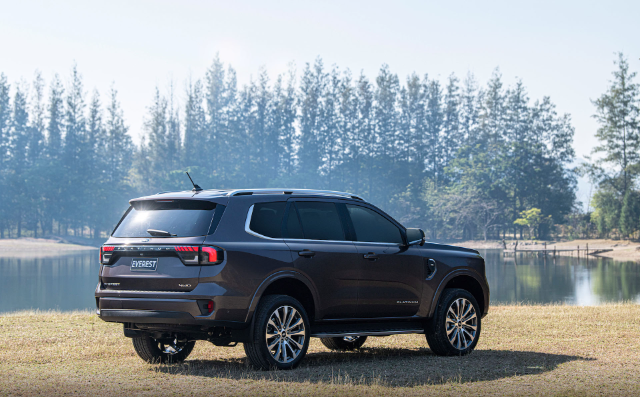
At the same event, Ford also showed the next-generation Everest in the metal for the first time. As before, it’s based on the Ranger, but with a host of model-specific features to set it apart from the pick-up.
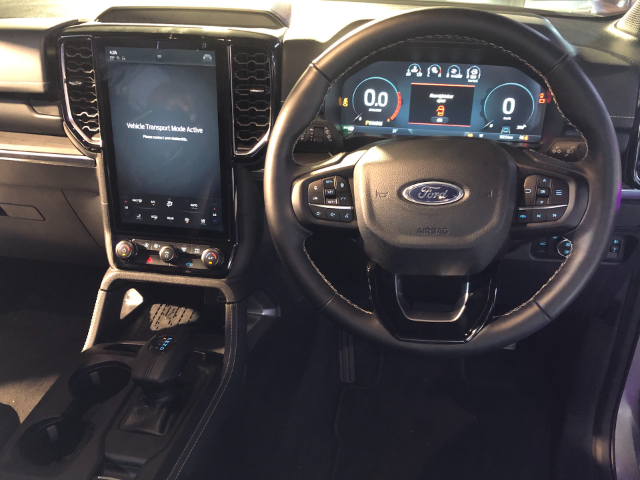
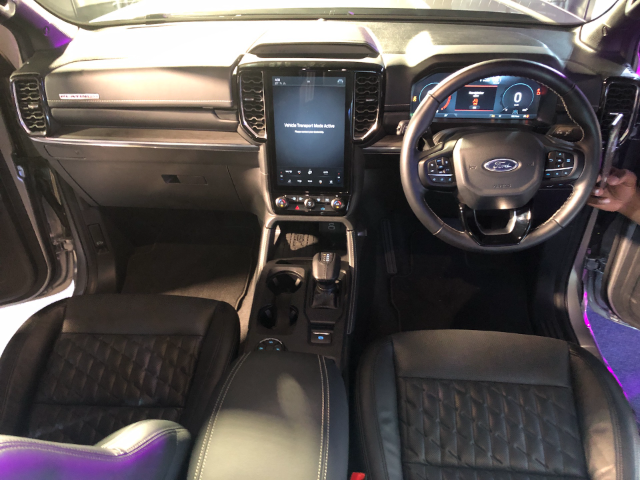
It’s also clear that the next Everest is moving further upmarket, with the same all-new cabin design as the Ranger and a huge range of tech- and trim enhancements, compared to its predecessor. In fact, perusing the pre-production example on display, it appears to be closer in concept to a Prado, although lower-end versions will still compete with the Fortuner, Pajero Sport, and Isuzu MU-X.
The new Everest will offer many engines from the Ranger’s selection, including the range-topping V6 turbodiesel, and yet again, there’s no mention of petrol power for the local market. That’s fine, because most buyers in this segment prefer a torquey and frugal diesel anyway.

As for its styling, the next Everest mirrors the new Ranger’s bold and assertive nose, mated to a more squared-off rear end. LED lighting elements obviously feature heavily inside and out, and the overall effect looks quite a lot fancier than the outgoing model.
The example on display proudly sported “Platinum” badging, denoting a new high-end derivative. It’s suitably plush inside, with plenty of gadgets, diamond-pattern leather upholstery and soft-touch trimmings, and material quality appears to be of a higher level than before. And, while we are still to drive any of the new Ranger/Everest models, their on-paper abilities move the goal posts for their segments.
Related: We attended the world-wide (virtual) reveal of the new Everest.
Verdict
These teasers and previews of the new Ranger and Everest are tantalising in own right, but we really can’t wait to try them out in the real world. It’s one thing to admire them from up close, on paper, or on photos, but it’s another thing entirely to actually get behind the wheel and see what it’s really about.
But, going on the drops of information and exposure we’ve now experienced, there are strong signs that Ford threw everything they had at the new models, which should continue presenting compelling alternatives in their various market segments.