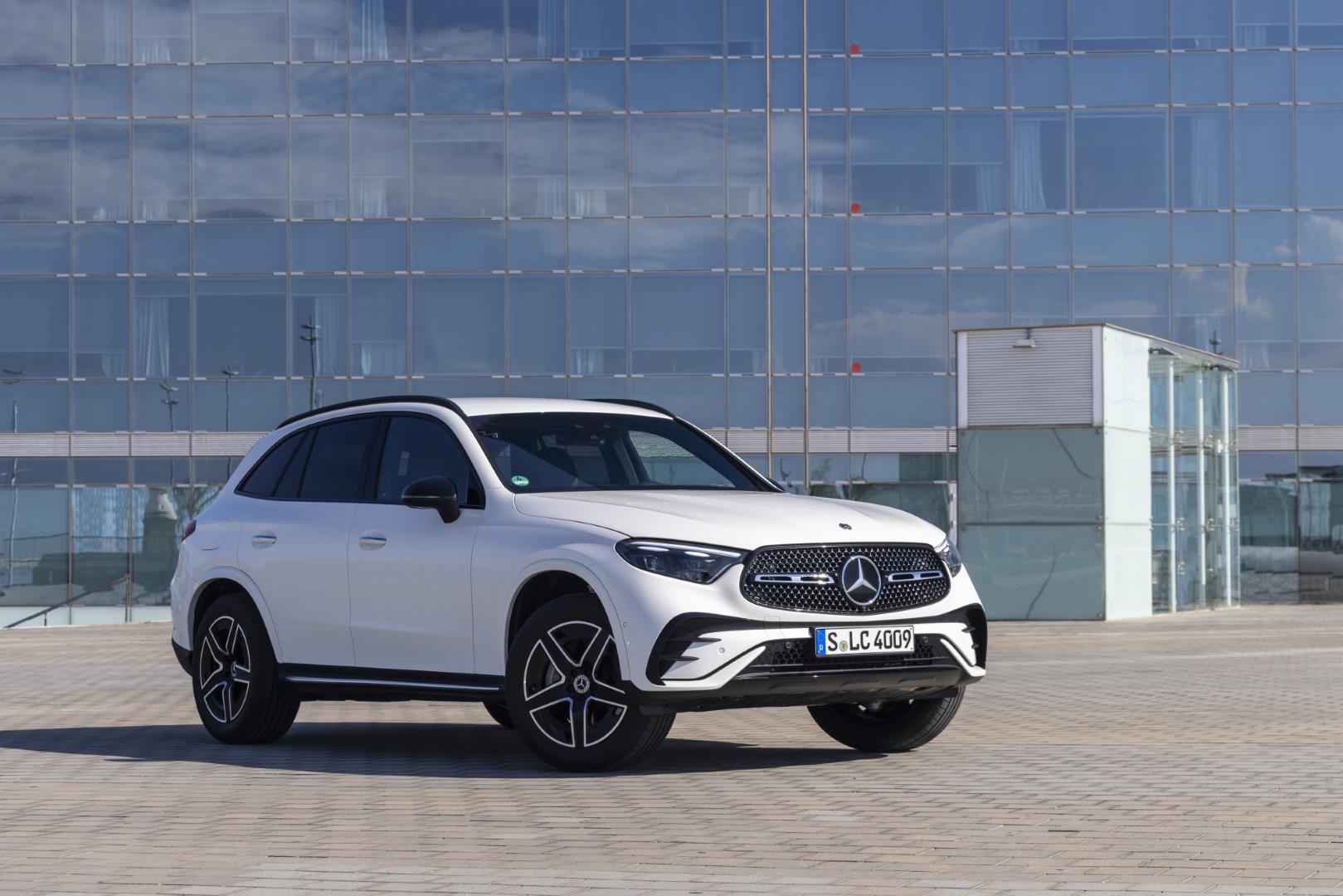


With the rise of SUVs in place of traditional sedans in the premium segment, products such as the GLC are effectively the new C-Class for a brand such as Mercedes-Benz when looking at future sales, so the arrival of the updated GLC recently was important for the German brand. While the updated GLC is impressive, we must compare it with two key rivals in the form of the BMW X3 and Land Rover Discovery Sport to determine which is best!
Related: Mercedes-Benz GLC 300d coupe 4Matic AMG line (2024) Review
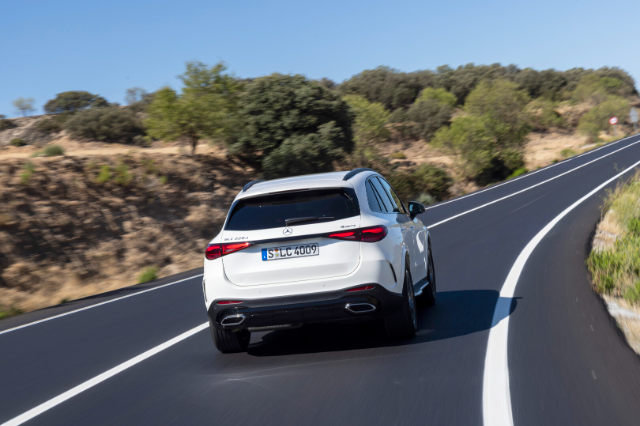
Mercedes-Benz GLC220d 4Matic AMG Line
Powertrain and performance
In this guise, the GLC is powered by a 2.0-litre turbodiesel engine with a 48-volt mild-hybrid setup. Some 145kW (+17kW e-boost) and 440Nm (+200Nm e-boost) are sent through all four wheels via a 9-speed automatic gearbox. Fuel consumption is claimed to be 5.2 L/100km, and the 0-100km/h time is claimed at 8.0 seconds.
Standard equipment
The GLC, in 220d AMG Line trim, gets 19-inch alloy wheels, a multifunction steering wheel, adaptive suspension, lane keep/departure assist, cruise control, keyless start, digitised climate control, suede/artificial leather covered seats/steering wheel, electrically adjustable front seats, a digitised instrument cluster, colour screen infotainment system, cruise control, electrically adjustable side mirrors, LED headlights/daytime running lights, front and rear PDC with a rear-view camera, as well as roof rails and an electrically operated tailgate.
Safety
The GLC has been crash-tested by Euro NCAP in 2022, where it achieved a 5-star rating.
Practicality
The GLC features a 620-litre boot, while its braked towing capacity is 2500kg.
Price and value proposition
At R1 348 212, the GLC220d 4Matic AMG Line isn't exactly cheap but is reasonable considering its specification and how recently it was updated.
The competition
BMW X3 xDrive30d M Sport
The X3 is due to be replaced soon; however, it has a rather potent 3.0-litre turbodiesel engine with 195kW and 620Nm sent through all four wheels via an 8-speed automatic gearbox. Claimed fuel consumption is 6.6 L/100km, and the 0-100km/h is said to be 5.8 seconds.
The X3 is similar to the GLC in the specification department, but gets 20-inch alloy wheels and does without the semi-autonomous aids as standard. The X3 was crash-tested by Euro NCAP in 2017, achieving a 5-star rating, which has since expired. Practicality-wise, the X3 features a 550-litre boot and a braked towing capacity of 2 000kg.

Land Rover Discovery Sport D200 Dynamic HSE
The Discovery Sport is a bit of a left-field option and, indeed, the only model of the three to offer seven seats. Powering the derivative in this shootout is a 2.0-litre turbodiesel engine that produces 147kW and 430Nm of torque and is paired with a 9-speed automatic gearbox that sends power to all four wheels. The Discovery Sport will consume fuel at a claimed rate of 6.1 L/100km, and its 0-100km/h sprint time is 8.6 seconds.
The Land Rover, in HSE specification, is the priciest product in this comparison but has the most features, matching the BMW and Mercedes-Benz, but adding adaptive cruise control, keyless entry, heated and electrically adjustable genuine leather seats, matrix LED headlights and a panoramic roof. The Discovery Sport was crash-tested by Euro NCAP in 2022, where it too, achieved a 5-star rating. With seating for seven, there's just 157 litres of boot space; however, with the third row folded away, there's a massive 1 036-litres of space available, while its 2 380kg braked towing capacity is the second best of the bunch!

Related: The 5 best similar cars to the BMW X3
Facts and figures:
Mercedes-Benz GLC220d 4Matic AMG Line |
BMW X3 xDrive30d M Sport |
Land Rover Discovery Sport D200 Dynamic HSE | |
Engine size (cyl/size) | 4-cyl, 2.0-litre turbodiesel with mild hybrid | 6-cyl, 3.0-litre turbodiesel | 4-cyl, 2.0-litre turbodiesel |
Power/Torque | 162 kW/440 Nm (+200Nm) | 195 kW/600 Nm | 110 kW/250 Nm |
CO2 emissions | 153 g/km | 173g/km | 167 g/km |
Airbag count | 7 | 6 | 6 |
Fuel tank capacity | 54 litres | 55 litres | 58 litres |
Ave Consumption * | 6.7 L/100 km | 6.6 L/100 km | 7.3 L/100 km |
Driven wheels | All | All | All |
Boot volume | 620-1 680-litres | 550-1 600-litres | 157-1036-1651 litres |
Service plan | 5-yr/100 000km (maintenance) | 5-yr/100 000km (maintenance) | 5-yr/100 000km (maintenance) |
Price | R1 348 212 | R1 338 096 | R1 363 400 |
* Manufacturer's claimed figures.
Pricing was all-inclusive at the time of writing but may change without prior notice.
Verdict
Having examined the data of the trio assembled here, the Land Rover emerges as a surprise package. Offering practicality, efficiency, and solid features, it grants it the narrowest victory over the relatively pricey Mercedes-Benz and the soon-to-be-replaced BMW.