
Is the Volvo XC40 good for new drivers? Here’s our verdict.
The vast majority of newly-licensed drivers are from a young-ish age group, and these young drivers usually get behind the wheel of something older and cheaper – call it a starter pack car. But some new drivers are from a different demographic, where they might be forced to start driving at a later age, due to circumstance, but with a fair budget to buy a nice car. We look at the Volvo XC40 against this background, to see how well it will serve a new driver’s needs.


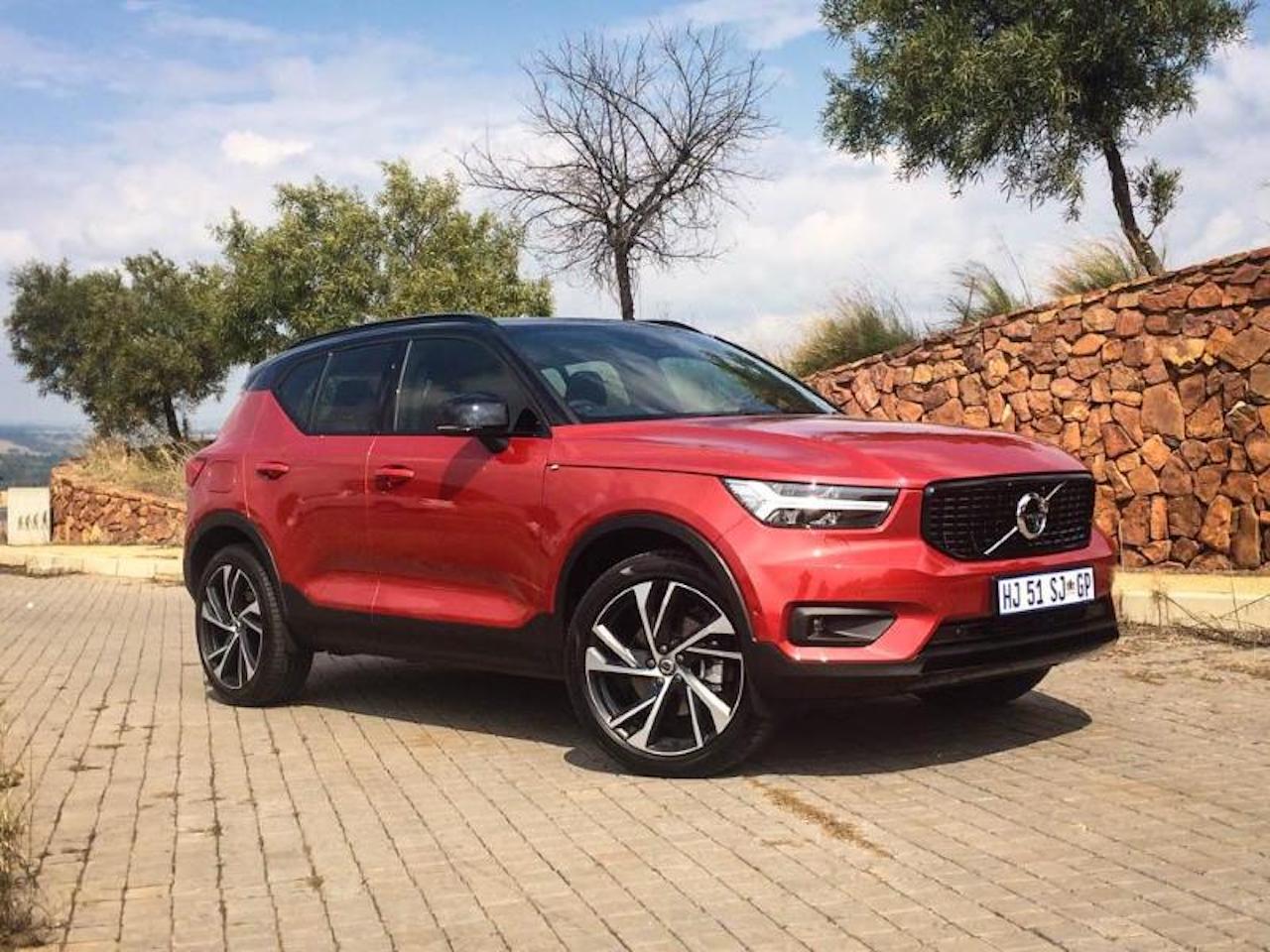

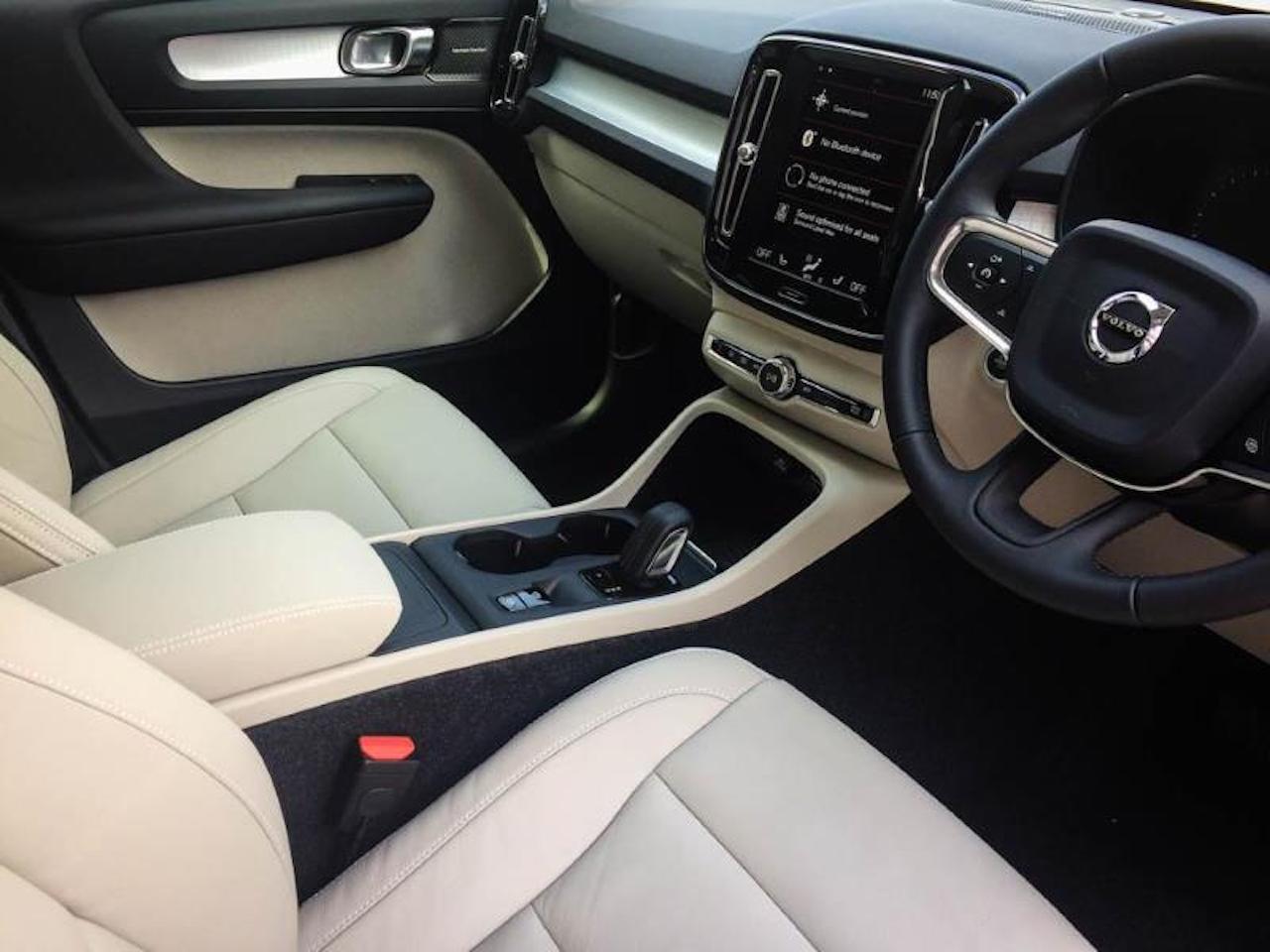
There are a number of elements which influence the suitability of a car for a new driver’s need. First of all, it needs to be easy to operate: the inexperienced driver should not have to struggle to control the car’s motions and various driving functions. This seems like a no-brainer, but some modern cars are surprisingly difficult to operate properly.
Sightlines and a clear idea of the car’s (hopefully compact) physical dimensions are also of paramount importance, as is the driver’s seating position. It also has to be safe, with reasonably body protection against parking miscalculations and very good brakes. And it’s even better if the car has plenty of sensors and cameras to assist a nervous driver when manoeuvring in traffic and confined spaces.

So, from the perspective of a new driver, how well does the Volvo XC40 serve their needs? Is this a good choice for an inexperienced driver? Let’s look at the car in some detail, to see how it measures up.
Related: Volvo XC40 vs BMW X1 vs Audi Q3: Which one has the lowest running costs?
Size and space
With an overall length of 4.425-metres and a width of 1.863-metres, the Volvo XC40 is just about perfectly sized – not too big to handle, but large enough to be usable. Luggage space is quoted as a generous 460 litres, which will even make it easy to carry a decent amount of shopping or sports gear. However, due to its compact build, rear-seat space isn’t overly generous – not that this it too relevant to the driver, mind you.
A big advantage for the Volvo XC40 is its elevated seating position – sitting that bit higher up may make heavy traffic less daunting, and enables its driver to look a little bit further down the road in today’s world of big bakkies and towering SUVs. There is a serious sightline oversight in the XC40, however, but we’ll get to that shortly.

Safety
This is a Volvo, so occupant safety is obviously the first priority. It starts off with a 5-star Euro NCAP crash test rating and 6 airbags, with the usual alphabet soup of safety assistants present as well: ABD with EBD and BAS, DSC (stability- and traction control), rear parking sensors, ISOFIX child seat anchors, automatic emergency braking, and lane-keeping assist are all on the standard spec sheet. All XC40s except the entry-level T3 variants also feature all-wheel drive for added security in slippery conditions.
Ticking some option boxes will also net you rear- or surround view cameras, front parking sensors, blind-spot monitoring, Pilot Assist (Volvo’s suite of semi-autonomous driver aids), and cross-traffic alert. The latter 3 form part of the R 22 750 “Driver Support Pack”, and is actually quite affordable for the level of tech it adds.

Related: 6 extras you should fit on a new Volvo XC40.
Ergonomics and tech
Volvo’s cabin ergonomics are first-rate, and once the driver’s used to navigating that massive touchscreen, it’s fairly easy to operate all control-related functions. There are three must-have options, though: the Driver Support Pack (which includes blind spot monitoring), the front parking sensors and the surround-view camera setup. The self-parking system could also prove invaluable as a further option.
The need for these add-ons arise from the Volvo XC40’s rather poor outward visibility. The front 180-degree vision is okay, although that raised bonnet can make it difficult to spot smaller obstructions in front of the car, hence the need for front parking sensors.
A more serious problem arises with the rear three-quarter vision, where the XC40’s small and angled rear side glass conspires with the thick rear roof pillars (C-pillars) to create massive blind spots in the rear 180-degree field of vision – hence the need for blind spot monitoring, cross-traffic alert and a wide-view camera system. Without these systems added to the spec sheet, the XC40 may prove to be rather daunting for inexperienced drivers, but including these options will make it all a breeze.

Related: Watch our video review of the Volvo XC40 D4 here to see what’s on offer.
Fuel Economy
Official claimed average fuel consumption for the Volvo XC40 range varies between 5.0- and 7.7 ℓ/100 km, with the mid-range D4 (140 kW/400 Nm) being the most economical and the T5 (with 185 kW and 350 Nm) being the thirstiest. The T3, with its 1.5-litre turbopetrol 3-cylinder, strikes the middle ground, with 125 kW, 265 Nm, and a claimed average consumption of 6.3 ℓ/100 km. This variant strikes a nice balance between performance and economy, and is also the least-expensive in the range.

Related: Which Volvo XC40 is better: petrol or diesel?
Verdict
The Volvo XC40 meets most of the requirements for a new driver very nicely, but only when the optional camera- and driver assistant packages are added to the base spec. Without these options, the XC40’s restricted outward visibility may just make it too difficult for a novice to manoeuvre, and creates unnecessary risks in parking-, freeway-, and city driving scenarios.
With that said, at least some of these options should really be standard equipment anyway, because they will also make the lives of experienced drivers a lot easier. For the rest, the XC40 is well-suited to a new driver’s needs, with its easy-driving characteristics and built-in safety features. Just remember to budget a bit more than the base price would suggest...

Related: Top 3 things you need to know about the Volvo XC40.
What else is available at this price point?
The Subaru XV is an opponent which immediately springs to mind, especially in rage-topping ES format. It’s a lot less expensive than the XC40, and matches it in most safety criteria. It’s also much easier to see out of, and comes with a rear-view camera and blind-spot monitor as standard (albeit without PDC).
Related: Top 3 things you need to know about the Subaru XV
The recently-refreshed Toyota C-HR has also received a safety spec update, and now boast just about the same equipment- and safety add-on list as the XC40. It also offers a rear-view camera and blind-spot monitoring (its outward visibility is even worse than the XC40, in fact), and costs a fair bit less than the Volvo, as it should, considering its considerably lower power outputs.
Related: Read all about the facelifted Toyota C-HR in our launch review.
Recommended Next:
Shop for new and used Volvo XC40 cars for sale here.