
Which Volvo XC40 is better: diesel or petrol?
Which Volvo XC40 is better: diesel or petrol?


By Stuart Johnston
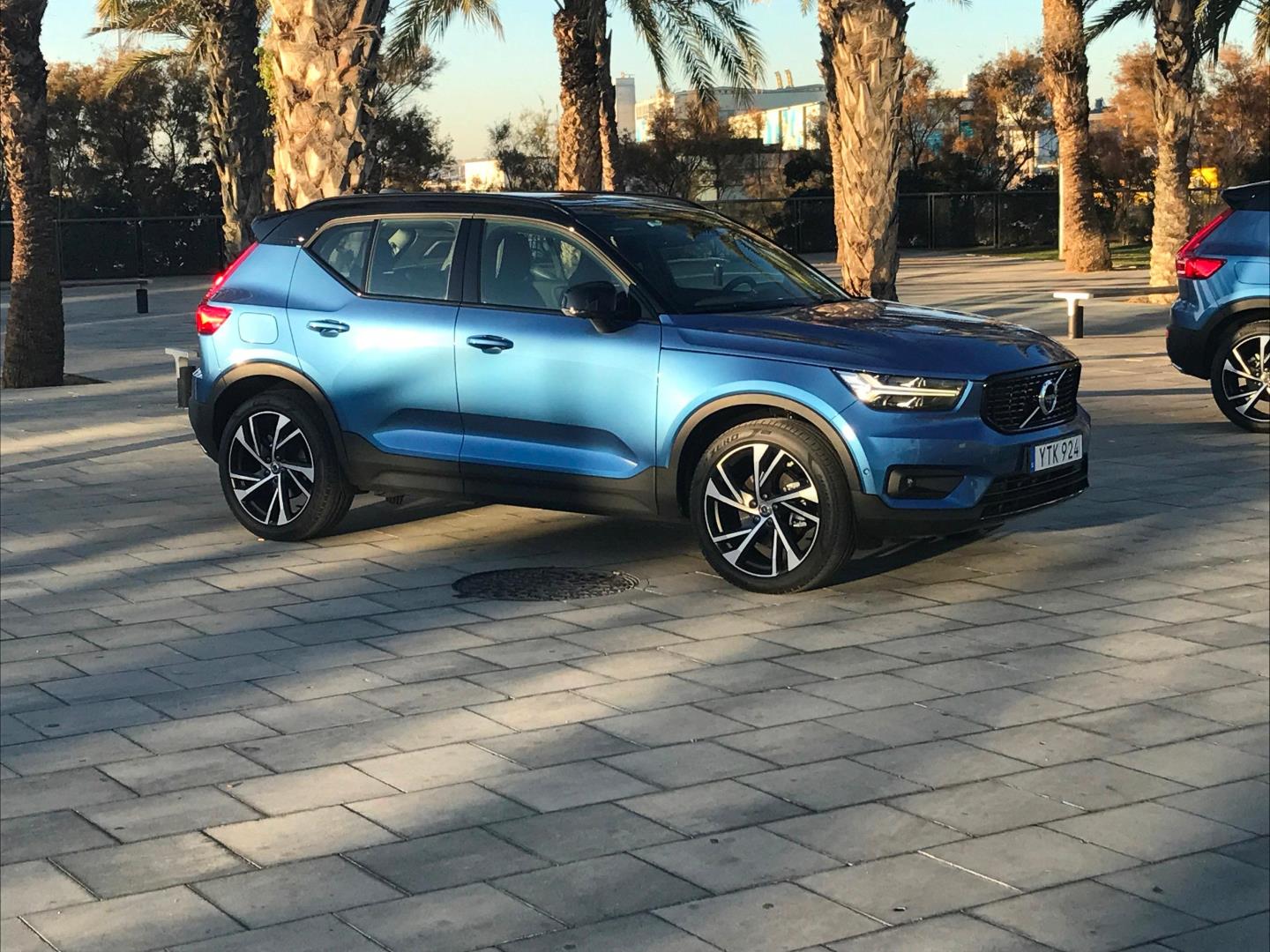
Volvo’s XC40 comes with a 1,5-litre three-cylinder petrol, a 2,0-litre turbo petrol four-cylinder, or a 2,0-litre turbodiesel four-cylinder engine. We make our selection in this article, and our choice may come as a bit of a surprise.
Volvo’s XC40 has been on sale here for just over a year and has been very well received. Considering Volvo’s relatively small dealer network in South Africa, sales of up to 80 units a month have been excellent. And no wonder. This is an extremely accomplished smaller SUV in the premium segment, well worthy as a rival to the leading German brands.
Car of the Year successes
In 2018 the Volvo XC40 won the European Car of the Year tile, possibly the most prestigious COTY competition on the planet. And in our 2019 South African Car of the Year competition (for cars launched in 2018), it was a strong contender to win the overall prize. Click here to see a report on how the XC40 shaped up in the 2019 AutoTrader Car of the Year Competition.
The XC40 range
The current model range sees three basic models, and all of them are available in three trim levels. There is the entry-level T3 model, available in front-wheel-drive, the D4 AWD (all-wheel-drive) and the T5 AWD (all-wheel-drive.
All three of these models are available in basic Momentum trim, Inscription trim, and the racy R-Design trim. The Inscription and R-Design trim levels add to the basic price pegged by the Momentum trim in each of the three models, by a very similar amount.
Engines available in the XC40
The engines on offer are as follows:
T3: This entry model to the XC40 range uses a petrol fuelled three-cylinder turbocharged unit, displacing 1 477 cc. The maximum power is a useful 115 kW, and torque is impressive at 265 Nm, developed between 1 850 and 3 850 rpm. The T3 models all use a six-speed manual gearbox driving the front wheels
Fuel consumption is rated by the manufacturer at 6,2 litres/100 km, while the 0-100 km/h sprint takes 9,4 seconds. Top speed is a useful 200 km/h. Price of the T3 Momentum is R514 200.
D4 AWD: This model uses a 1 969 cc four-cylinder turbodiesel engine. Maximum power is 140 kW, competitive in its class, and torque is strong at 400 Nm, developed between 1 750 and 2 500 rpm. The transmission is via an eight-speed gearbox to all four-wheels, with torque-on-demand varying the power split between front and rear axles, depending on grip levels of the four tyres.
Average claimed fuel consumption is 5,0 litres/100 km. The 0-100 km/h time is 7,9 seconds and top speed is 210 km/h. The D4 AWD Momentum costs R630 700. For a review on the Volvo XC40 D4, click here.
T5 AWD: The T5 petrol turbo engine has exactly the same capacity as the diesel, at 1 969 cc. It features a fairly racy specification, the engine developing a very healthy 185 kW and 350 Nm of torque between 1 800 and 4 800 rpm. Transmission is once again via an eight-speed automatic gearbox and variable all-wheel-drive. Consumption is rated by the manufacturer at 7,7 litres/100 km, and the top speed is 230 km/h.
Which engine would we choose?
The choice here is between frugality and driving pleasure. The small three-cylinder petrol motor is impressive, and comes with the lowest price tag in the XC40 range. But ultimately with 115 kW and 265 Nm tasked with moving a relatively large car, it is always going to lose out to the larger-capacity engines.
The D4 diesel is very pleasant as far as a diesel engine goes, although it does make its presence heard in the cabin. It’s a smooth unit at higher revs, and of course the consumption is a factor in its favour. In the real world you are likely to achieve about 6,5 litres/100 km, and that’s very good for a car of this size. Some people feel the diesel perfectly suits the XC40’s attributes of solidity.
But ultimately it’s the T5 turbocharged petrol engine that we would go for here. This 185 kW engine brings the XC40s excellent road manners to life, giving it a crisp cut-and-thrust ability that you don’t always associate with a Volvo. True, fuel consumption in everyday use is likely to rise to the 9,5 litres/100 km level, but we think it’s worth that extra expense because of the fun-factor.
This is above all a fun, funky Volvo, and it deserves an engine to suit!