
2021 Toyota Hilux gets a power boost and fresh trimmings
Since its arrival in South Africa early in 2016, the current-generation Toyota Hilux has been, as expected, a huge sales success. But the competition is closing in, and they threaten the Hilux’s dominance by offering more power and features, as alternatives to Toyota’s reputation for durability. This mid-life refresh addresses these issues, and introduces a logical model range reshuffle at the same time.


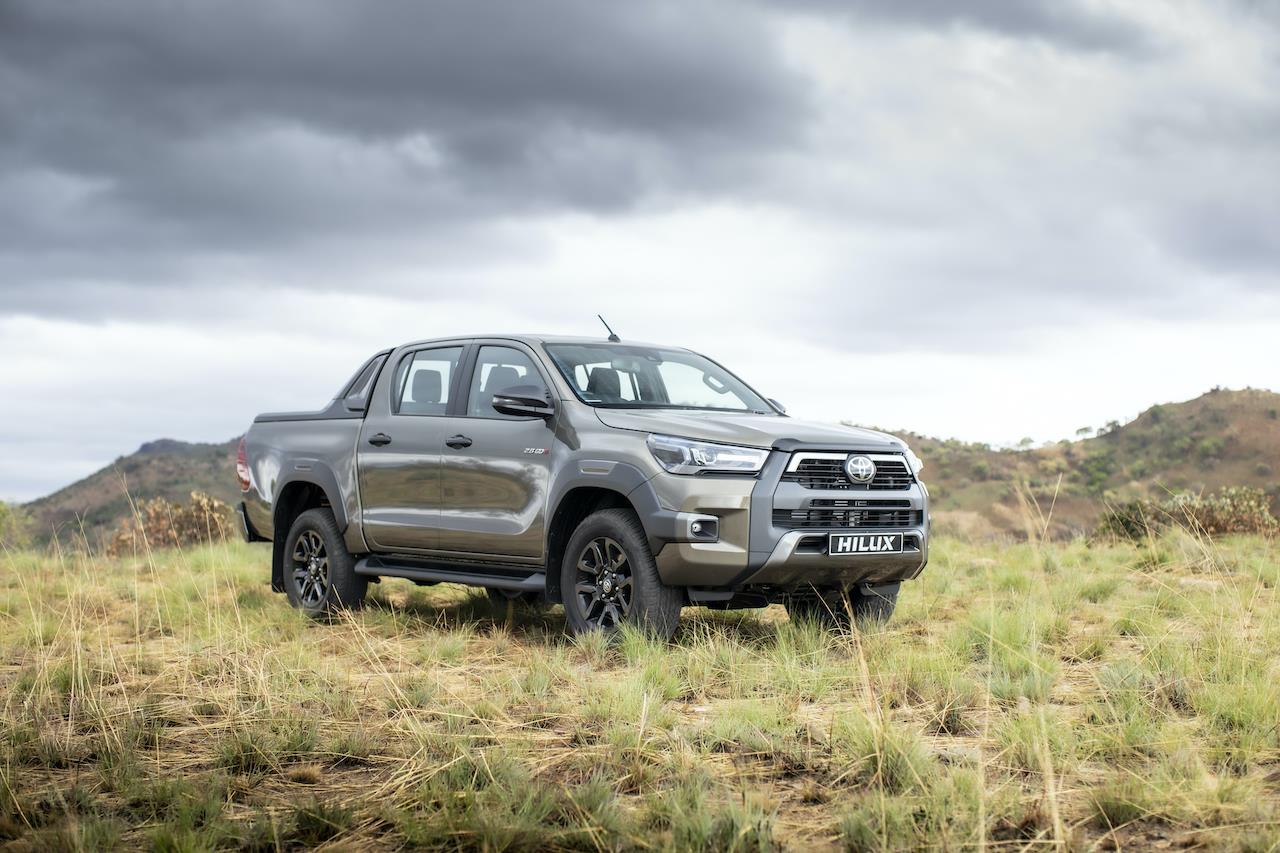
Having occupied the top spot on local sales charts since forever, South Africa’s national vehicle, the Toyota Hilux, is now just about midway through its current model cycle. And, to be honest, it’s been looking a tad stale lately – a bunch of recently redesigned or updated opponents have caught up to (and even passed) the current-generation Hilux in the areas of performance, comfort, safety- and convenience equipment, and styling.
The latter attribute got off to a shaky start with this generation as it is, with widespread buyer’s disapproval of the chromed “beak” and weak jawline of the 2016-vintage models resulting in an early but successful restyling job in 2018. Well, at least as applied to the higher-grade variants, that is – the entry-level Hilux S and SR still carry that old face to this date (albeit without the chrome), and continues to do so after this facelift as well.
Related: A taste of good things to come – we reviewed the 2018 Toyota Hilux Dakar.
Model range reshuffle
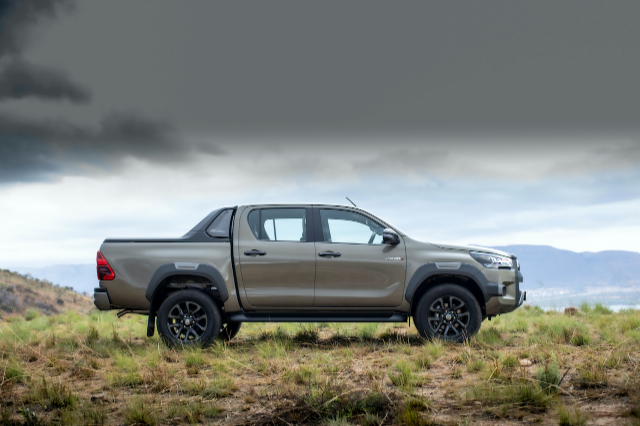
Once again, the action is focused on the mid- and top-end trim levels, where the previous semi-lux SRX name disappears in favour of a revised Raider spec level. The new range-topper, slotting in above the Raider, is called the Hilux Legend. No longer a commemorative-edition designation (as used on the Legend 35/40/45/50 of old), the Legend label now adorns the upgraded top-spec variants in the Hilux Xtra Cab and Double Cab models.
The expanded Raider series includes all three body types, 4x2 and 4x4 drivetrains, 6-speed gearboxes in either manual- or automatic flavours, and a choice between 2.4- and 2.8-litre GD-6 engines. The Xtra Cab Raider only offers the 2.4, however, and requires an upgrade to Legend trim to get a 2.8-litre – in fact, all Legends have the 2.8-litre engine as standard.
Related: The top 3 features that makes a Toyota Hilux stand out from the competition.
Uprated 2.8 GD-6 engine becomes the automatic choice
Extensive mechanical revisions to the 2.8 GD-6 automatic’s engine results in a welcome performance boost. More than merely fiddling with the engine computer’s software, this power upgrade also involves reinforced internal components, improved cooling, a larger turbocharger, and a different fuel injection system – all to ensure that the extra oomph doesn’t come at the cost of durability.
The revised engine’s outputs are rated at 150 kW and 500 Nm, putting its numbers fairly close to those of the Ford Ranger’s bi-turbo 2.0-litre (which has 157 kW and 500 Nm). It should also be noted that the 500 Nm torque peak, while matching that of the Ranger, stretches over a wider rev range, largely negating the need for more ratios in the autobox.

Strangely, Toyota still limits the outputs of the 2.8-litre engine to 130 kW and 420 Nm when it’s hooked to a manual gearbox, but with the Legend aimed squarely at the upper leisure/family bakkie market, the automatic is likely to be the most popular choice anyway.
The other engines remain unchanged, with the 2.4 GD-6 Raiders producing 110 kW and 400 Nm, regardless of the gearbox behind it, and the 4.0 V6 petrol 4x4 automatic hangs in there as well, but only in Legend double-cab format. Other mechanical refinements nonetheless apply across the whole range: the springs and dampers were re-tuned, the suspension bushes were redesigned, and the cabin mounts are modified to reduce noise- and vibration transmission between the cabin and the chassis frame.
Related: Five things you need to know about the Toyota Hilux Legend 50.

Refreshed Raider, Edgy Legend
The limited-release Hilux Dakar from 2018 rectified the earlier versions’ cosmetic ills, and its overall design themes (since applied to other higher-trim Hiluxes) largely carries through to the new Raider trim.
There’s a broader-rimmed chromed trapezoidal grille surround and redesigned front bumper, flanked by new slim-line headlight clusters containing bi-LED headlamps and daytime running lights on 2.8 GD-6 variants. (The 2.4 GD-6 Raiders get redesigned halogen lamp clusters and no LEDs, unfortunately, so they also miss out on the 2.8 Raider’s LED tail lights.)
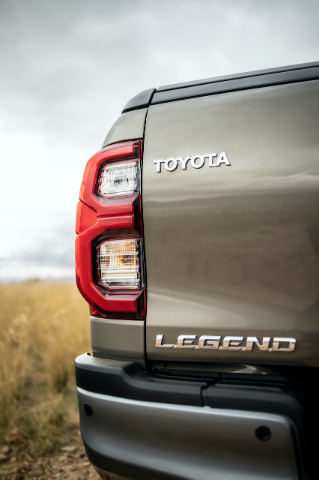
Legend status means a whole different level of body-kittery to make sure that the high-end Hilux will stand out in a crowd. The front bumper/grille assembly is restyled to include a blacked-out surround that runs right across the bonnet’s leading edge before folding over to surround the chrome-accented grille, number plate, and lower middle air intake.
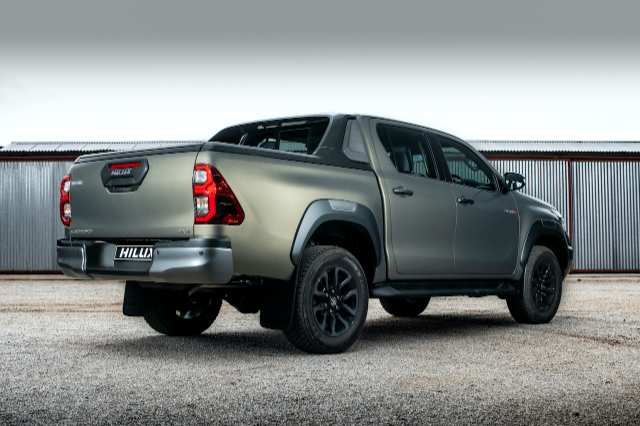
The merriment doesn’t stop there, either. The overfenders (wheel arch extensions) are just as blockily styled, and Legend trim also sees the wheels grow from the Raider’s 17-inch alloys to 18-inchers. For even meaner looks, there’s an “RS” (for Rolling Shutter) option package for the Legend that includes a power-operated retracting loadbay cover, graphite-coloured styling bar, an assisted tailgate and a dust-protected, rubberised loadbed.
Related: The complete guide to buying, owning, and selling a Toyota Hilux.

More toys inside, and better safety
Raider and Legend double-cabs all feature 7 airbags, standard parking sensors front and rear, and the usual combination of rear ISOFIX child seat anchors, stability control, and ABS brakes – much as it was in the outgoing Raider, then. The Legend 4x4 adds some more modern driver aids to the mix, with adaptive cruise control and lane departure warning featuring on the spec sheet for the first time.
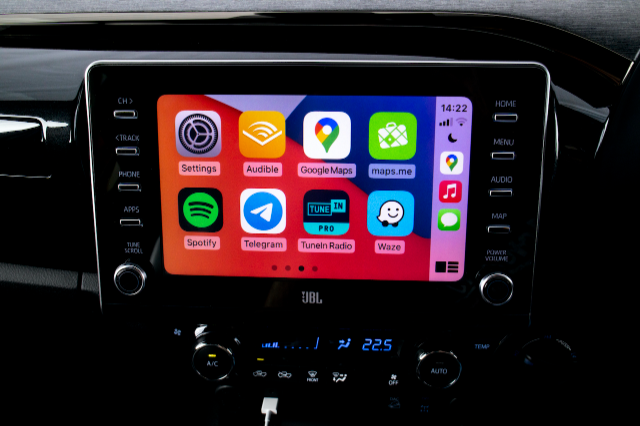
Improved cabin features include an enlarged driver’s information display in the lightly restyled instrument cluster, all-black interior with leather trim, electric driver's seat adjustment and a 9-speaker audio system for double-cab 4x4 Legends, and a new colour touchscreen system with smartphone mirroring (and actual control knobs) for both Raider and Legend, finally bringing the Hilux’s infotainment up to modern standards.
Related: We compared the outgoing Toyota Hilux’s infotainment system with those of two competitors.
Pricing
The Hilux range is extremely extensive, so let’s break it down into body types. Single cab Raiders start at R 447 800 (2.4 GD-6 manual, 4x2) and run to R 602 400 (2.8 GD-6 auto, 4x4). Legend trim isn’t available with the single-cab body format at all, but may make an appearance at some point in the future.
Xtra Cabs start at R 460 000 (Raider 2.4 GD-6 manual, 4x2) and peak at R 647 300 (Legend 2.8 GD-6 auto, 4x4), while the comparable double cabs range between R 505 200 and R 765 600. The 4.0 V6 auto 4x4 Legend lists at R 765 200.
* All prices were accurate at the time of writing, but may change without prior notice.
** All Hilux models have a manufacturer’s warranty for 3 years or 100 000 km, and a 90 000 km service plan (9 services).
Related: Toyota Hilux refresher – the top 10 facts and figures you need to know.

Verdict
As far as the Hilux Raiders go, this refresh amounts to improved refinement, a wider powertrain choice, more power (in the 2.8 GD-6 automatics), evolving styling, and a nice new infotainment system. Extroverts will love the Legends, however, because it comes factory-fitted with the bigger engine as standard, more standard toys, and the kind of styling add-ons hitherto only found on the aftermarket.
The probable pick of the bunch? The Raider 2.8 GD-6 automatic 4x4 double cab: At R 706 400, it strikes the perfect balance between optimised performance, creature comforts, all-round ability, and value. We'll be driving the new Hilux in a week's time, to see how completely the promised improvements translate to real-world benefits.
Related: Which Toyota Hilux is better – petrol or diesel?