Suzuki Swift Buyer's Guide (2008–2026)
For nearly two decades, the Suzuki Swift has quietly rewritten the rules of affordable motoring in South Africa. No gimmicks, no grandstanding – just honest engines, low running costs and a reputation for bulletproof reliability. From the early Japanese-built cars to today’s three-cylinder newcomer, we unpack every generation, the common faults to watch for, what you should be paying, and which Swift is the smart money choice.


The compact car that has changed South African motoring has done so because it has kept the recipe simple, functional, and affordable. While others have tried to lure you in with promises of features and fanfare, the little Swift just gets on with it - and it's for that very reason that it has an endearing character.
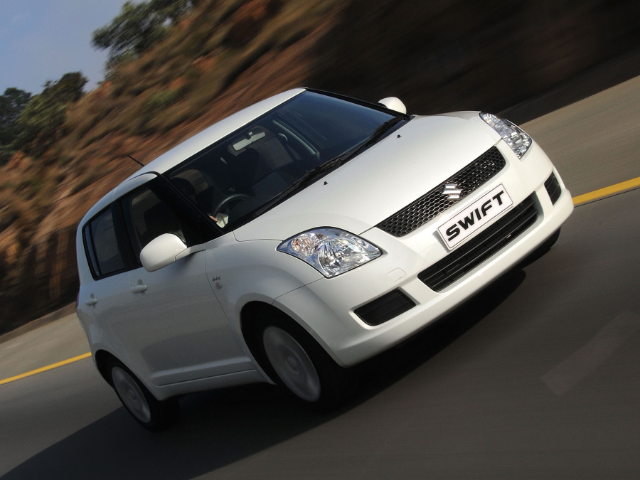
Suzuki Swift model line-up (SA: 2008–2026)
The Suzuki Swift was first introduced into South Africa in 2008. It joined us late, as Suzuki South Africa was still setting up shop on our shores after having been absent for several years.
First Generation (2008-2011)
The origin of the story.
- ZC21 - an economical 1.5-litre compact hatchback.
- 1.5-litre, 4-cylinder, naturally aspirated (Code: M15A).
- 74 kW and 133 Nm.
- GL and GLS trims.
- 5-speed manual or a 4-speed auto option in GLS trims.
- Built in Japan. - ZC31 - The first Swift Sport.
- 1.6-litre, 4-cylinder, naturally aspirated (Code: M16A).
- 92 kW and 149 Nm.
- 0-100 km/h in 8.9 seconds.
- 5-speed manual only.
- Limited to 100 units.
- Built in Hungary.
4-star Euro NCAP rating*

Second Generation (2011-2017)
Similar look, fresh new engine options. Facelifted in 2014 to include new wheels, LED Daytime Running Lights, Bluetooth connectivity, and Cruise Control.
- ZC82 - A sensible 5-door compact hatch. (2011-2017)
- 1.4-litre, 4-cylinder, naturally aspirated (Code: K14B).
- 70 kW and 130 Nm.
- GL and GLS trims.
- Built in Japan. - ZC62 - The first Maruti Suzuki Swift in SA. (2014-2018)
- 1.2-litre, 4-cylinder, naturally aspirated (Code: K12M).
- 63 kW and 113 Nm.
- GA and GLS trims.
- 5-speed manual or 4-speed auto in GLS trims.
- Built in India. - ZC32 - The last NA Swift Sport. (2011-2017)
- 1.6-litre, 4-cylinder, naturally aspirated (Code: M16A).
- 100 kW and 160 Nm.
- 0-100 km/h in 8.7 seconds.
- 6-speed manual only.
- Built in Japan.
5-Star Euro NCAP rating on selected models*. All models are equipped with dual airbags as a minimum.
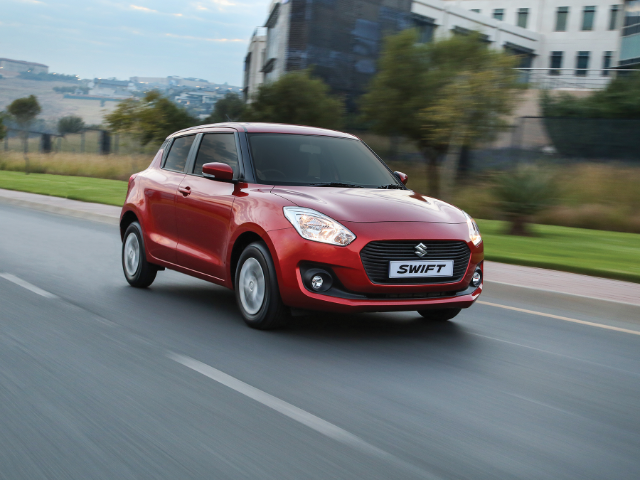
Third Generation (2018-2024)
A rise to popularity. Facelifted in 2021 to receive a new grille, two-tone paint, and additional convenience and safety features.
- ZC63 - A South African favourite.
- 1.2-litre, 4-cylinder, naturally aspirated (Code: K12M).
- 61 kW and 112 Nm.
- GA, GL trims, with GLX added in 2019.
- 5-speed manual or 5-speed Automated-Manual (AMT).
- Built in India. - ZC33 - The first turbo Swift Sport. Facelifted in 2023.
- 1.4-litre, 4-cylinder, turbocharged BoosterJet engine (Code: K14C).
- 103 kW and 230 Nm.
- 6-Speed manual or 6-speed automatic.
- 0-100 km/h in 8.0 seconds.
- Built in Japan.
3-star Euro NCAP*

Fourth Generation (2024-present)
Continuing the success.
- AOL - Even more economical
- 1.2-litre, 3-cylinder, naturally aspirated (Code: Z12E).
- 60 kW and 112 Nm.
- 5-speed manual or CVT (in GL+ and GLX trims).
- GL, GL+, and GLX trims.
- 6 airbags in all trims.
- Built in India.
3-star Euro NCAP*

Common problems and strengths of the Suzuki Swift.
Strengths
Exceptionally reliable with very few documented failures and few recalls.
Fuel efficient.
Non-Sport models are affordable to maintain.
Common Problems (by Generation)
- - ZC21
- Steering racks and tie rod ends can wear prematurely. Check high-mileage examples for excessive steering play. - - ZC31
- Oxygen sensors prone to failure. This will present asn an engine warning light. - - ZC82
- Keyless entry faults. Sometimes rectified with a battery change. - - ZC62
- Prone to premature clutch wear. Vehicles around 100,000 km may require a new clutch.
- Bodywork corrosion has been reported. Coastal vehicles are more susceptible to body and frame rust. Corrected in 2021. - - ZC32
- Oil usage in high-mileage examples. - - ZC63
- Bodywork corrosion has been reported. Coastal vehicles are more susceptible to body and frame rust. Corrected in 2021. - - ZC33
- Engine mounts and rear shock absorbers prone to premature wear.
- Sensitive to fuel quality. May present as a miss. - - AOL
- Intermittent ESP light illumination. Does not require attention. Known 'quirk' and doesn't affect the drive or safety.

Running costs — what to expect (SA buyer)
Earlier Suzuki Swifts will be a little more difficult to get parts for, as the numbers were nowhere near as prolific as they are today. Service parts may not be too troublesome, but some replacement parts, such as shock absorbers and brakes, may require a lead time.
In general, the non-Sport variants are affordable to maintain and should not require serious repairs if maintained according to the mannufacturers schedules.
| Variant | Engine Size | Fuel Consumption (ℓ/100km) | Routine Service Cost | Parts Availability (SA) |
|---|---|---|---|---|
| ZC21 | 1.5 ℓ | 6.1 (M) 6.6 (A) | Low to moderate | Medium |
| ZC31 | 1.6 ℓ | 6.6* (M) | High | Imported |
| ZC82 | 1.4 ℓ | 5.5 (M) 6.2 (A) | Low | Good |
| ZC62 | 1.2 ℓ | 5.7 (M) 6.3 (A) | Low | Good |
| ZC32 | 1.6 ℓ | 6.5* (M) | High | Imported |
| ZC63 | 1.2 ℓ | 4.9 (M) 4.9 (A) | Low | Good |
| ZC33 | 1.4 ℓ (turbo) | 6.1 (M) 6.1 (A) | High | Imported |
| AOL | 1.2 ℓ | 4.4 (M) 4.6 (CVT) | Low | Good |

General car-buying advice
Tyres: Quality tyres = decent owner. Mismatched brands suggest tyres of different ages and grip levels.
Modifications: Affordable cars attract affordable modifications which may not have been carried out correctly.
Service history: Full documented history (dealer or reputable specialist) is preferred. A car is only as reliable as it's been maintained.
Accident damage: Check panel gaps, paint quality, and fitment of trim pieces.
Which Suzuki Swift is for me?
| Buyer profile | Recommended variant | Rationale |
|---|---|---|
| Student or first-time driver | ZC62 or ZC63 1.2 GL | Good mix of features and affordability. Light on fuel. |
| Experienced commuter | ZC63 GL | Good mix of features and affordability. Light on fuel. |
| Driving enthusiast (budget) | ZC82 GLS Manual | Slightly older, but still great fun to drive without breaking the bank. |
| Driving enthusiast | ZC33 Swift Sport Manual | Great little pocket rocket at any altitude. |
| Family person | ZC82 Manual | Any Swift will work for short trips, but are not ideal for larger families. ZC82 offers great torque for when loaded up. |

Test drive checklist
| Checkpoint | Affected Variant(s) | What to Do / Listen For |
|---|---|---|
| O2 Sensors | ZC31 | Watch for check engine lights that remain lit |
| Loose steering | ZC21 | Sloppy, or noisy steering action |
| Oil usage | ZC32 | Smoking on startup |
| Clutch wear | ZC62 | High clutch action, or slipping under load in higher gears |
| Corrosion | ZC62 & ZC63 | Inspect undercarriage and suspension for signs of rust. Any stone chips in the paint may show signs of rust. |
| Engine mounts | ZC33 | Rough engine vibrations |
| Shock absorbers | ZC33 | Instability at highway speeds |

Recalls
There has only been one major recall issued in June 2025 for the 2024 model year Swift for overheating gearbox fluid. Check any 2024 model for recall status by entering the VIN into the suzukiauto.co.za recall site: Suzuki SA Recalls
How much should I pay for a Suzuki Swift in South Africa?
Based on current listings and market trends in South Africa:
ZC21 (2008-2011) - From R70,000 to R110,000
ZC82/62 (2011-2017) - From R90,000 to R160,000
ZC32 (2011-2018) - From R100,000 to R160,000
ZC63 (2018-2024) - From R120,000 to R250,000
ZC33 (2019-current) - From R260,000 to R495,000
- AOL (2024-current) - From R140,000 to R300,000

Our verdict: Which Suzuki Swift should you buy?
The pick of the litter for the average consumer would be a late model (2016/2017) ZC82 1.4 with a manual gearbox. This was the last Japanese-made Suzuki Swift, and there is a slightly noticeable difference in the overall build quality when compared to the Maruti Suzuki - primarily in fit and finish. The 1.4 litre engine strikes a great balance between economy and power, but still has all the reliability you would want.
Paired with the manual gearbox, you will be able to rev out the engine (and the K14B loves to be revved!) to make highway travel more agreeable while not consuming a lot of fuel. Steady driving will get the consumption figures below the claimed 5.5 ℓ/100km.
*The Euro NCAP ratings are indicative of the testing process of the time. As time has passed, the test has become more stringent with stars harder to come by. Ratings are not comparable with today's testing and should be compared with peers of the same time period.