Nissan Navara D23 (2017- 2021) Buyer's Guide
The Nissan Navara set the bar for luxury leisure double cabs before the segment even existed. After a decade-long absence from the market, Navara returned in 2017 with a new look, a new engine and drivetrain and an amazing suspension system. This is everything you need to know about the D23 model range from 2017 to 2021

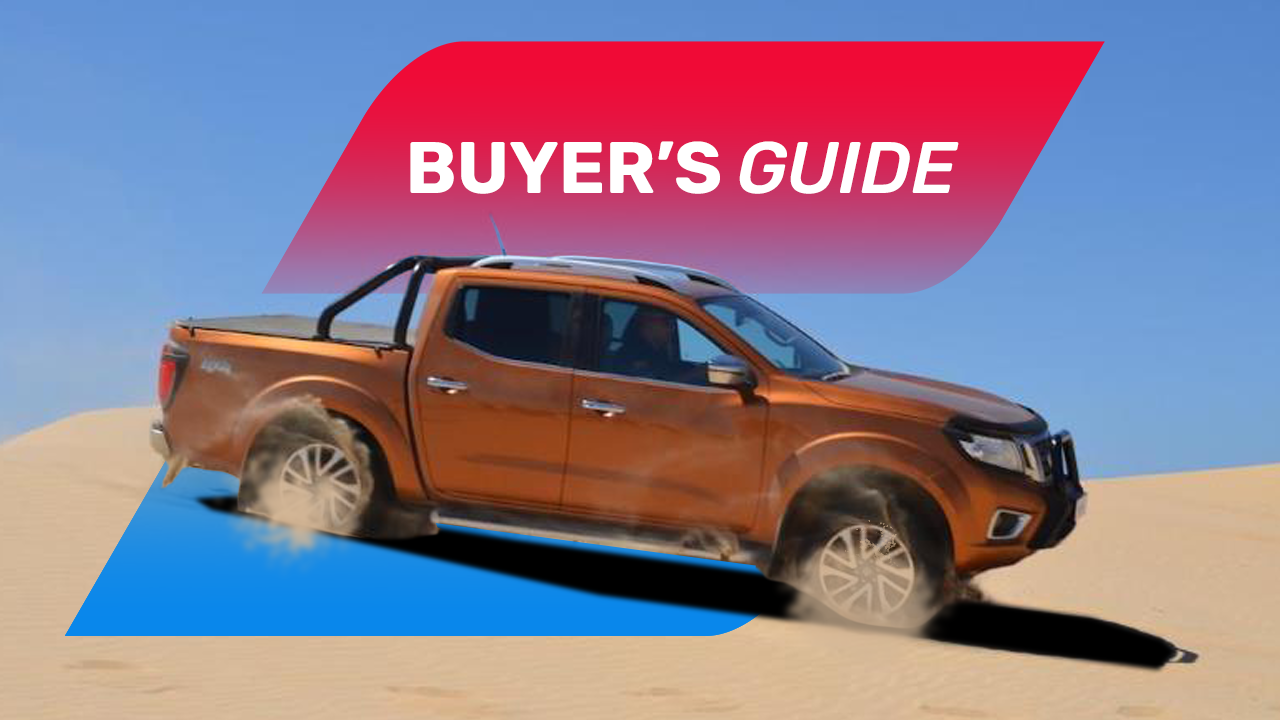
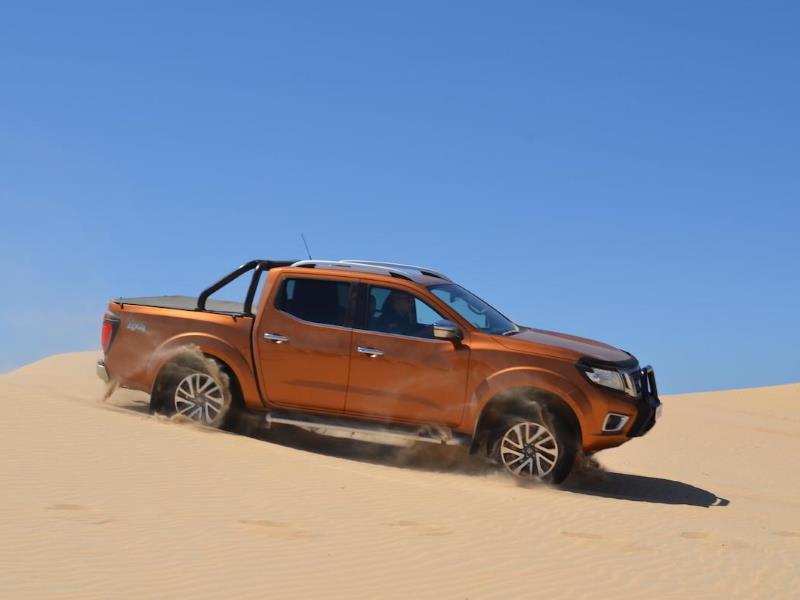
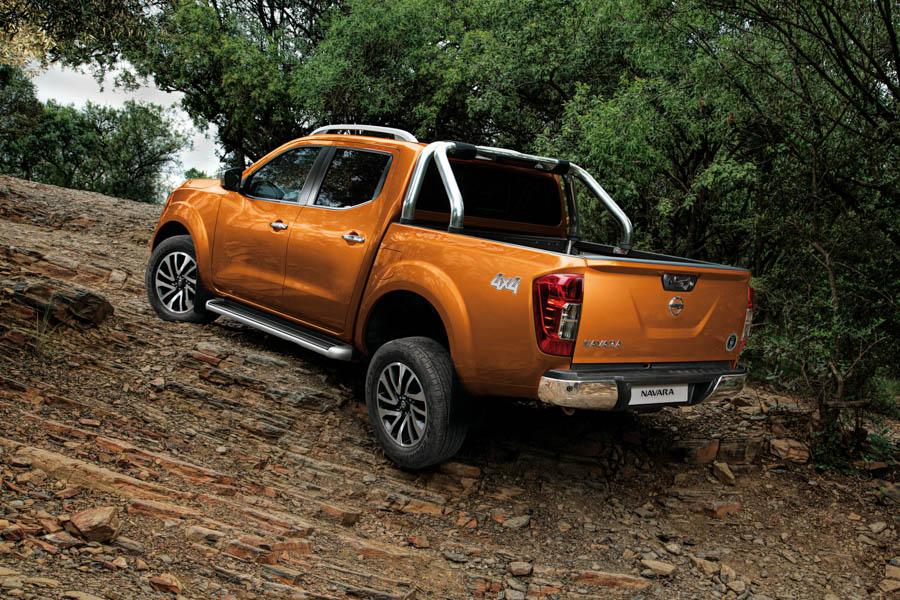
The Nissan Navara in South Africa is currently undergoing a major transition. While it remains one of the most comfortable and rugged "bakkies" on the market, its status as a locally manufactured vehicle is coming to an end. The nameplate first entered SA with the D40 and the 3.0L V6; the chassis was still very much a rough-and-ready ladder frame.
Related: New Nissan Navara - Dune Conqueror (2017) FDI
While the D23 launched globally in 2014, it reached South African shores as an import only in 2017. It made waves by being the first mainstream bakkie in SA to ditch traditional leaf springs for a five-link coil-spring rear suspension, giving it the best ride quality in its class. A major turning point came in 2021, when Nissan invested R3 billion to modernise the Rosslyn plant to build the Navara locally. This allowed them to introduce single-cab versions and more affordable workhorse trims, finally replacing the ageing NP300 Hardbody, which was discontinued that same year. If you find yourself lusting after a D23 model, this is everything you will need to know before buying one safely.
Nissan Navara 2.5 LE 4x4 AT (2021) First drive - Local is lekker
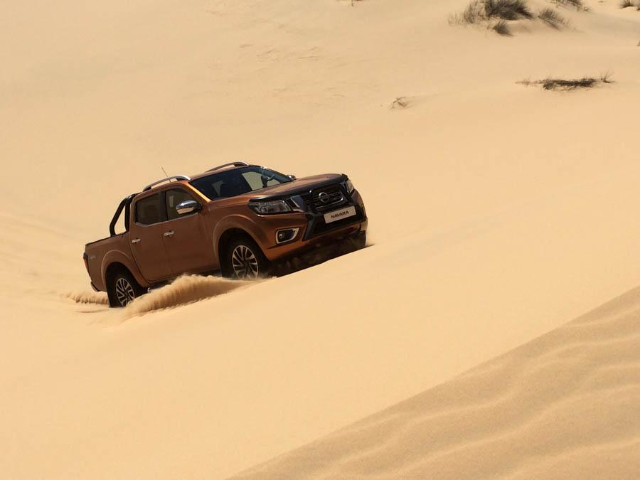
Common problems and strengths with the D23 Nissan Navara
The 2017–2021 Nissan Navara (D23), often simply called Navara in South Africa, was a pivotal model for Nissan. It shifted from being a pure workhorse to a more lifestyle-oriented bakkie, specifically with the introduction of its coil-spring rear suspension. While it's a solid contender against the Hilux and Ranger, it has a specific set of South African "quirks" you should know about.
Strengths
Superior ride quality: Thanks to the five-link coil-spring rear suspension, the Navara offers one of the smoothest unladen rides in its class. It feels more like an SUV than a bouncy bakkie on gravel roads.
Fuel efficiency: The 2.3-litre twin-turbo diesel (YS23DDTT) is notably frugal. In local South African conditions, owners often report real-world figures around 8.0–9.0 L/100 km, which beats many of its larger-displacement rivals.
Manoeuvrability: It has a shorter wheelbase and a tighter turning circle than the Ford Ranger, making it much easier to park in tight shopping mall bays or navigate technical off-road trails.
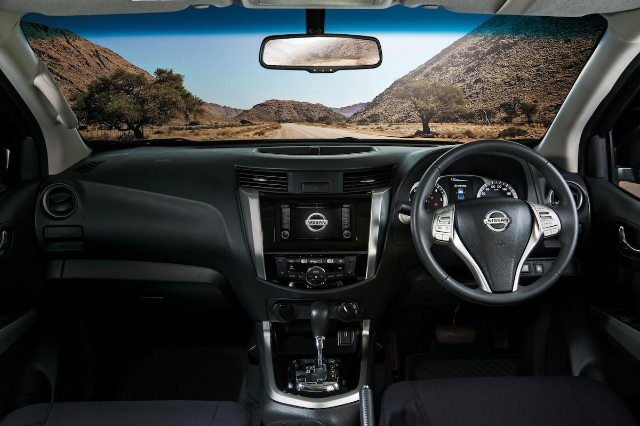
Interior comfort: The "Spinal Support" seats are highly rated for long-distance hauls (such as the Johannesburg-to-Cape Town trek).
Local support: Since production moved to Nissan’s Rosslyn plant (Pretoria) for the 2021 facelift, spare parts availability and dealer support have improved significantly.
Common Problems & Concerns
1. Engine & Mechanical
DPF clogging: Like many modern diesels in SA, the Diesel Particulate Filter (DPF) can clog if the vehicle is used primarily for short city trips. It needs regular highway runs to regenerate.
Turbo hose failures: Reports have surfaced of turbo intercooler hoses splitting or blowing off under high pressure, resulting in a sudden loss of power and limp mode.
Timing chain stretch: While less common than on the older D40 models, some high-mileage YD25 engines (found in entry-level 2021+ models) still show signs of timing chain wear if oil changes are skipped.
2. Transmission & Drivetrain
Automatic gearbox "hunting": Some owners find the 7-speed automatic can be indecisive or "jerky" when towing heavy loads uphill. Regular transmission fluid flushes (every 60,000–80,000 km) are recommended despite "sealed for life" claims.
Clutch wear (manuals): Manual versions can feature a relatively heavy clutch, and some owners have reported premature wear when used frequently for heavy towing or technical 4x4 work.
3. Suspension & Chassis
Rear sag under heavy loads: The coil-spring setup is great for comfort, but it can sag significantly when the bin is fully loaded or when towing a heavy caravan. Many South African owners install airbags or heavy-duty progressive springs to fix this.
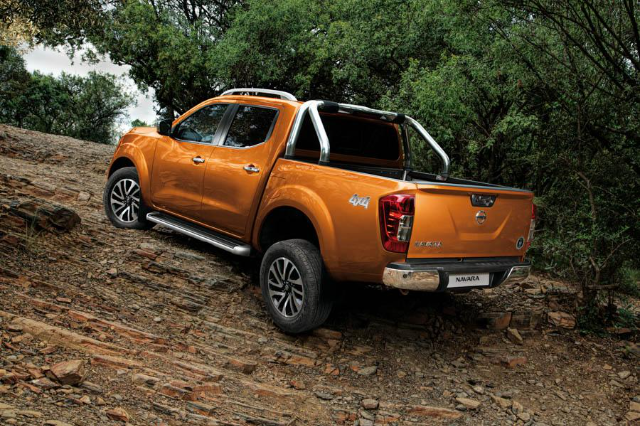
Dust ingress: A common complaint on SA dirt roads is that the tailgate seal isn't perfectly dust-proof, though this is often solved with aftermarket dust-sealing kits.
Running costs
The 2017–2021 Nissan Navara (D23) is often praised for having some of the lowest "on-paper" fuel consumption in the bakkie segment, but this is offset by higher-than-average replacement part costs. Here is a breakdown of the estimated running costs for the 2017 models
1. Fuel consumption
The 2.3L twin-turbo diesel engine is the Navara's strongest suit when it comes to daily running costs. It is generally more efficient than the 2.8L Hilux or the 3.2L/2.0L Bi-Turbo Rangers.
Claimed: 6.3 – 6.8 L/100 km (Manual) | 7.0 L/100 km (Automatic)
Real-world (SA): Expect 8.2 – 9.5 L/100 km for mixed daily driving.
Towing/heavy loading: This can climb to 11.5 – 13.0 L/100 km.
Monthly fuel budget: At roughly 2,000 km per month, expect to spend approximately R4,200 – R5,000 on diesel (depending on current pump prices).
2. Service & maintenance costs
Service intervals are every 15 000 km or 12 months. If the vehicle is still under its original 6-year/90 000 km service plan (common for 2020–2021 models), your scheduled costs are covered. If not:
Minor service (Oil, filters, safety check): R2 500 – R3 800.
Major service (Fuel filter, brake fluid, air filter, etc.): R5 500 – R8 500.
Wear-and-tear parts:
Front brake pads: R1 800 – R2 600 (parts only).
Set of All-Terrain Tyres (255/60 R18): R12,000 – R18,000 per set.
Clutch Kit (Manual models): R12 000 – R16 000 (excluding labour).
3. Repair & Spare Parts
South African data (such as the AA Spare Parts Basket report) has historically shown that Nissan Navara body and mechanical parts can be 20%–40% more expensive than those for a Toyota Hilux or Ford Ranger.
Out-of-warranty repairs:
Turbocharger replacement: R15 000 – R25 000.
Fuel injectors: Approx. R4 500 – R6 000 per injector.
Headlight assembly (LED versions): R10,000+ per unit (this makes insurance vital).
4. Insurance & Depreciation
Insurance: Because the Navara is less frequently targeted by hijackers than the Toyota Hilux, insurance premiums are often slightly lower. Expect to pay between R1 200 and R2 200 per month, depending on your profile.
Depreciation: The Navara does not hold its value as stubbornly as a Hilux. You can often find a 2018/2019 model at a significant bargain compared to a same-year Toyota, but you will also get less for it when you eventually sell.
Summary for the SA buyer
(Assuming 2,000 km/month, out-of-warranty, financed)
| Expense category | Estimated Monthly Cost (ZAR) |
| Fuel (diesel) | R4 500 |
| Maintenance fund | R800 (setting aside for services/tyres) |
| Insurance | R1 600 |
| Tracking/security | R250 |
| Total (excl. finance) | R7 150 |
General car buying advice
- Tyres: Ensure the tyres are a reputable brand, as this is usually a sign of how well a car is treated. If the owner/dealer cut corners by purchasing cheap tyres for a performance or off-road vehicle, where else did they cut corners?
- Modifications: A modified car is a far greater risk than a used car, especially a standard model. A person who modifies their performance vehicle generally drives it harder, creating a double whammy.
- Service history: The Ranger will provide you with many years of reliable service, provided it has been serviced regularly with high-quality oil. Therefore, ensure your vehicle has a comprehensive service history.
- Accident damage: Inspect the paint and check key weld points under the bonnet and in the vehicle's boot to ensure the car has not been in a major accident. Some spray work on front and rear bumpers is standard, but walking away is better when the vehicle's structure has been damaged.
Which D23 Nissan Navara model should I buy?
Choosing the right Navara in South Africa is a bit like choosing between a Global city-slicker and a Local rugged workhorse. In 2021, Nissan South Africa shifted from importing the Navara from Thailand to building it locally at the Rosslyn plant in Pretoria. This changed more than just the badge; it changed the engine, suspension, and even the character of the bakkie.
2017 – 2020 imported D23
If you spend 90% of your time on tarmac and want the most car-like experience, look for a pre-facelift model (usually the 2.3D LE 4x4 Automatic).
Engine: 2.3-litre Twin-Turbo (140kW/450Nm). It is more refined and quieter than the newer local engine.
Best Feature: The coil-spring rear suspension on these models was tuned for maximum comfort. It is arguably the most comfortable unladen bakkie of that era.
Why buy this? You want a fuel-efficient, SUV-like bakkie for family trips and city commuting.
The Catch: The suspension can "sag" significantly if you load the bin heavily or tow a heavy caravan.
2021+ Locally Built D23
If you plan to load up for the Kgalagadi or tow a heavy trailer, the 2021 facelift (built in Rosslyn) is superior. Look for the 2.5DDTi LE Plus or PRO-4X.
Engine: Switched to the older but more robust 2.5-litre Single-Turbo (140kW/450Nm). It’s noisier but handles the high-sulfur diesel found in some neighbouring countries better.
Suspension: The 5-link coil setup was "Africanised"—stiffened and strengthened to handle 1-ton payloads without sagging like the earlier imports.
Why buy this? Better tech (Apple CarPlay/Android Auto) and much better safety (Autonomous Emergency Braking, 360° camera on PRO-4X).
The Catch: Slightly higher fuel consumption than the 2.3L engine.
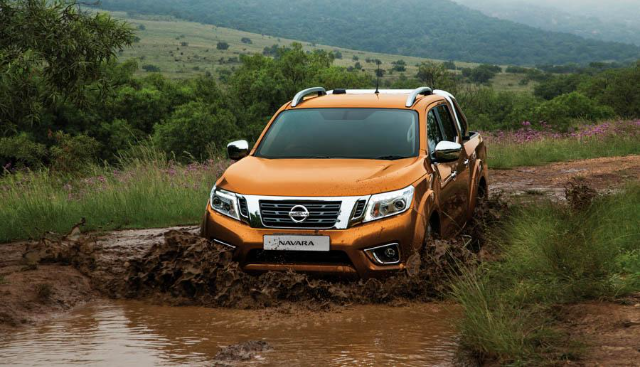
Nissan Navara test drive checklist
| Area | Item to check | Chery specific focus | Status |
| Exterior | Paint, body panels | Check panel gaps, particularly around the rear hatch and bonnet, for signs of accident repair. | ☐ |
| Tires & wheels | Look for curb rash/scratches on alloys. Check tyre wear: excessive wear on the inner/outer edge can indicate poor alignment or suspension issues. | ☐ | |
| Suspension check | Push down firmly on each corner of the car; it should rebound smoothly once, not bounce repeatedly. | ☐ | |
| Engine bay | Oil/coolant levels | Crucial: Check the coolant reservoir for a white/pink/red powdery residue around the cap or hoses—this is a common sign of a failing water pump/thermostat housing (a known Golf issue). | ☐ |
| Oil condition | Dipstick oil should look clean, not excessively dark or gritty. Check for any sludge under the oil cap. | ☐ | |
| Interior | Seat bolsters | Check the driver's seat side bolsters for excessive wear/tearing, which indicates heavy use. | ☐ |
| Sunroof (if fitted) | Test the open/close operation. Important: Pour a small amount of water into the drain channels (if possible and safe) to ensure they aren't blocked and to prevent leaks inside the cabin. | ☐ | |
| Service history | Confirm that the DSG fluid (every 40k miles/60k km) has been serviced on schedule. | ☐ |
| Test | Action | Expected result | Status |
| Brakes | Perform a gentle stop and a firm, quick stop (safely). | Smooth, straight stopping. No grinding, squealing, or pulsing through the pedal. | ☐ |
| Steering | Turn the steering wheel lock-to-lock slowly while stationary. | Smooth, quiet operation. No clicking or heavy effort, which could indicate power steering or worn suspension joints. | ☐ |
| DSG (Automatic) | Engage drive (D) and reverse (R). | Engagement should be immediate and smooth, without excessive clunking or hesitation. | ☐ |
| Tight turns | Drive slowly in a full-lock circle (left and right). | No clicking or knocking sounds from the front wheels (could indicate worn CV joints). | ☐ |
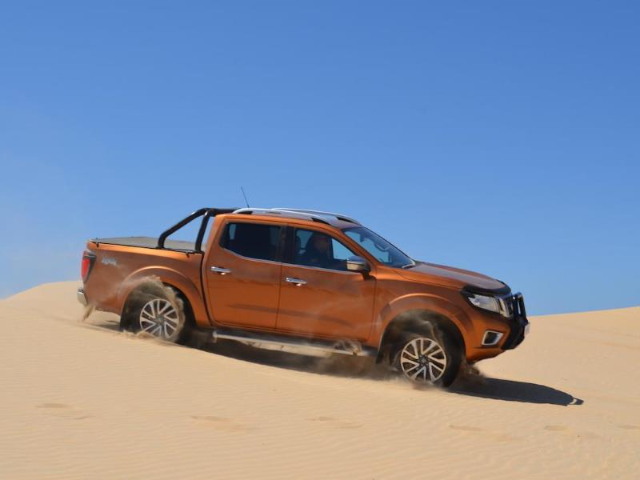
Reliability of the Nissan Navara
The 2017–2021 Nissan Navara (D23/NP300) has a strong reputation for mechanical durability, but its reliability is maintenance-sensitive. Unlike older models (D40), which were plagued by snapping chassis and catastrophic timing chain failures, the D23 is a significantly more robust machine. However, there are specific areas where it requires close attention in South African conditions.
1. Engine & Turbo Reliability
2.3L twin-turbo (Imported 2017–2020): This is a sophisticated Euro-spec engine. Its main reliability hurdle is oil quality. Using the wrong oil or stretching service intervals can lead to premature turbo wear, i.e., whistling noises or oil loss.
2.5L single turbo (Local 2021+): This uses the older YD25 engine architecture. It is considered bulletproof for African conditions because it’s simpler, but the timing chain should still be inspected for stretch or rattling around the 150 000 km mark.
DPF Clogging: This is the No. 1 reliability complaint in SA. If the vehicle is only driven in city traffic, the Diesel Particulate Filter will clog, triggering limp mode. It requires a regenerative highway drive (20+ minutes at 100 km/h) every few weeks to stay healthy.
2. Drivetrain & Transmission
7-Speed automatic: Generally very reliable, but it is sensitive to heat. If you plan to tow heavy trailers through the Karoo or over mountain passes, installing an auxiliary transmission cooler is a common and wise reliability upgrade.
Manual gearbox: The Dual-Mass Flywheel (DMF) is the weak point here. If you are aggressive with the clutch or tow frequently, you may experience shuddering, which often requires replacing both the clutch and the flywheel.
3. Suspension & Chassis
Chassis strength: Good news— the snapping chassis issues of the previous generation (D40) were largely solved in the D23. The 2021+ locally built models received further chassis reinforcement for heavy-duty use.
Rear coil springs: While reliable, they are prone to sagging if the bakkie is permanently loaded with a canopy or drawer system. This isn't a failure so much as a limitation of the comfort-first design.
Dust ingress: Not a mechanical failure, but the tailgate seals on the D23 are notoriously poor for SA gravel roads. This can lead to dust getting into the rear electrics or locking mechanisms over time.
Reliability verdict
| Component | Reliability rating | Maintenance tip |
| Engine (2.3L) | 4/5 | Must use 5W-30 Low-SAPS oil to protect the DPF and turbos. |
| Engine (2.5L) | 4.5/5 | Change oil every 10 000 km (ignore the 15k-20k suggestions). |
| Gearbox (Auto) | 4.5/5 | Service the fluid every 80 000 km, even if Nissan says "sealed." |
| Chassis | 5/5 | Regular high-pressure washes to prevent mud-trapped rust. |
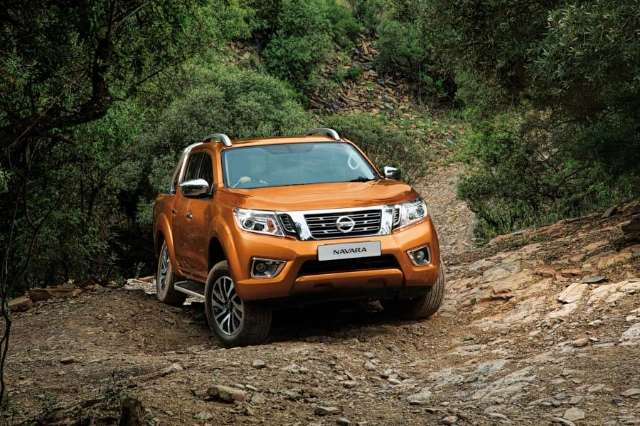
How much should you be paying for a used Nissan Navara?
As of early 2026, the South African used market for the D23 Navara has stabilised, but there is a clear price gap between the earlier imported 2.3L models and the later locally built 2.5L versions. This is what you should expect to pay based on current market trends:
1. The first imports (2017 – 2020)
These models (2.3L Twin-Turbo) have depreciated the most. They are currently the value play for someone wanting a modern bakkie without the premium price tag.
High Mileage (150 000 km+): R240 000 – R310 000
Average Mileage (80 000 – 120 000 km): R330 000 – R410 000
Low Mileage/Mint (Under 60,000 km): R420 000 – R460 000
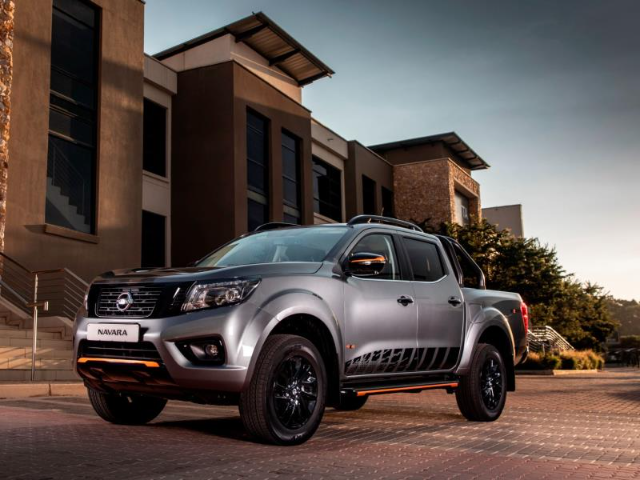
Specific Model Note: The Stealth special editions from 2019/2020 still command a small premium (roughly R20k–R30k more) due to their visual appeal.
2. The locally built Rosslyn models (2021)
The 2021 model year is the most complex because it contains both the last of the imported stock and the first of the local facelifts. The facelifted models (2.5L Single-Turbo) hold their value significantly better.
2021 SE/SE Plus (Mid-range): R390 000 – R460 000
2021 LE (Luxury trim): R470 000 – R530 000
2021 PRO-4X (Flagship): R540 000 – R610 000
Price Comparison Table
| Year | Model | Good price (ZAR) | Good deal (ZAR) |
| 2017 | 2.3D LE 4x4 AT | R295 000 | < R270 000 |
| 2019 | 2.3D LE 4x4 AT | R385 000 | < R350 000 |
| 2021 | 2.5DDTi LE 4x4 AT | R510 000 | < R480 000 |
| 2021 | 2.5DDTi PRO-4X 4x4 | R580 000 | < R540 000 |
Factors that affect the price in SA
Service History: A Navara without a full Nissan dealer history should be discounted by at least R30 000 – R50 000. The complexity of the twin-turbo setup makes buyers nervous without proof of correct oil usage.
Suspension Upgrades: If a 2017–2020 model already has Old Man Emu, IronMan, or Airbags installed, it’s a massive plus that adds about R15k in value, as you won't have to fix the rear sag yourself.
Warranty/Service Plan: 2021 models may still have a small portion of their 6-year/150 000 km warranty remaining. This significantly increases the price compared to the 2019/20 models, which are now likely out of coverage.
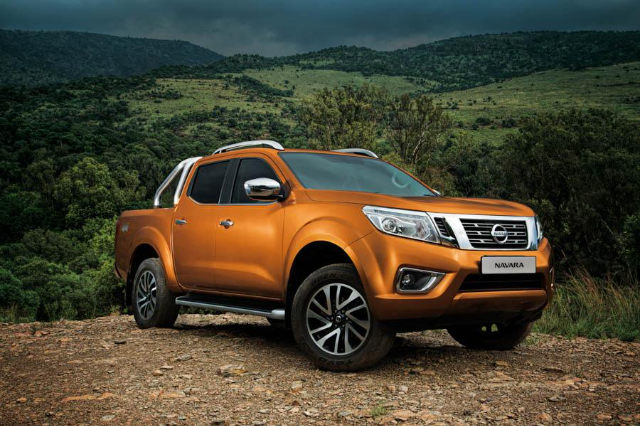
Verdict - Which model should you buy?
If your bakkie is primarily a family vehicle or a daily commuter with light weekend adventures, these imported models (usually from Thailand) are the most car-like.
Model to buy: 2.3D LE 4x4 Automatic
Why: The 2.3-litre twin-turbo engine is smoother and quieter than the newer 2.5L. The suspension on these early models was tuned for maximum comfort on tarmac and light gravel.
The Sweet Spot: Look for a 2019/2020 Stealth edition. It added blacked-out styling and a canopy/roll bar as standard, which usually makes it a better value on the used market than a "plain" LE.
- For the budget-conscious: Look for a 2018 2.3D LE. You get the legendary coil-spring comfort at nearly half the price of a new bakkie, provided you verify the turbo health during the test drive.
| Feature | 2.3L Twin-Turbo (2017-2020) | 2.5L Single-Turbo (2021+) |
| Character | Refined, quiet, fuel-efficient. | Rugged, reliable. |
| Best For | City driving & long highway trips. | Towing, loading, and bush travel. |
| SA Benefit | Better fuel economy (approx. 8.5L/100km). | Better parts availability (local production). |