Toyota's 2026 SOMI outlines the future of SA's auto industry
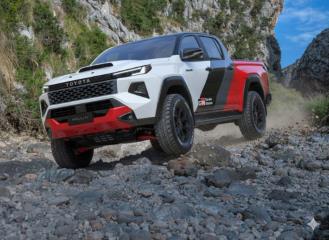
We recently attended the 2026 edition of Toyota's State of the Motoring Industry (SOMI) in Gauteng. The Japanese brand has a big 2026 in store, with a new Hilux, a new FJ, a new RAV4, an electric car, and a host of new Lexus models. We also gathered some key insights into the local and global motoring industry from experts in their field.


One in four new vehicles sold in South Africa wears a Toyota badge. That's quite an impressive figure, and when you combine it with the fact that the brand accounts for 17% of all car sales on the AutoTrader platform, it's safe to say that Toyota is SA's biggest automotive player.
Disruption
The theme of this year's SOMI was "Driving through disruption", where the President and CEO of Toyota Motors Africa, Mr Andrew Kirby, addressed the media and key stakeholders. Below is what we gathered from the presentation at SOMI, and it makes for very interesting reading:
The figures
Growth in new vehicle sales of 15.7% in 2025 compared with 2024, the first time we have exceeded pre-pandemic sales levels. Only 33% of new cars sold in SA were locally produced, with the goal being to increase this. Despite 1.2% economic growth, artificial growth in the automotive industry was driven by a shift towards more budget-friendly options. A record 411k vehicles were exported from SA in 2025. We need a healthy domestic market and a healthy export market to drive improved local production.
Related: South Africa vs Morocco: Can the 2026 NEV tax incentive reclaim Africa’s top auto producer spot?
Navigating Transition
The South African automotive industry is currently navigating a complex intersection of local volume recovery, shifting export dependencies, and a global pivot toward New Energy Vehicles (NEVs). While 2025 showed signs of robust domestic growth, the sector faces structural challenges and a rapidly closing window to align with international regulatory standards.
Domestic Market
The South African domestic market experienced a significant surge in 2025, rising 15.7% to 597,000 units. This growth was primarily stimulated by lower selling prices, which successfully unlocked higher sales volumes.
However, the recovery remains relative. The market has yet to return to the peak volumes seen in 2006 (703,000 units). Furthermore, the nature of what is being sold has changed:
• The CKD (Completely Knocked Down) Mix: Has declined from 56% in 2006 to just 33% in 2025.
• Price Sensitivity: The market is heavily concentrated in the lower price brackets. 61% of the passenger car market is now in the R150k–R400k range, with the "Sub B" and "A" segments seeing the most consistent activity.
Manufacturing and the Export Dilemma
While domestic sales are rising, SA production levels have not yet returned to their 2019 pre-pandemic levels. Total production for 2025 stood at 609,000 units.
The most striking trend is the industry's extreme Export Orientation:
• Export Reliance: In 2025, exports accounted for 68% of total production (411 000 units).
• Geographic Concentration: South Africa’s reliance on Europe and the UK has reached a critical point. In 2006, the export portfolio was balanced (Europe was 21%); by 2025, 81% of all exports were destined for the EU/UK.
• The African Market Gap: Despite the geographical proximity, exports to Africa have halved from 19% in 2006 to just 8% in 2025, highlighting an urgent need for the AfCFTA (African Continental Free Trade Area) to revitalise regional trade.
The NEV Transition
As global regulations tighten, the transition to New Energy Vehicles (NEVs) is no longer optional. The EU and UK have moved to 90% and 100% ICE (Internal Combustion Engine) bans, respectively, for 2035, though the EU recently softened its stance to allow a 10% margin.
The NEV Landscape in SA
South Africa currently accounts for only 4% of global NEV model availability, significantly trailing the EU (40%) and China (30%). Within the local market:
• NEV Market Share: NEVs represented 2.8% of the total market in 2025.
• Dominant Players: Toyota and Lexus dominated this space with a 58% market share of all NEVs sold.
• Winning Models: The Toyota Corolla Cross (HEV) is the clear leader, followed by the RAV4 and Corolla.
Strategy: HEV vs. BEV
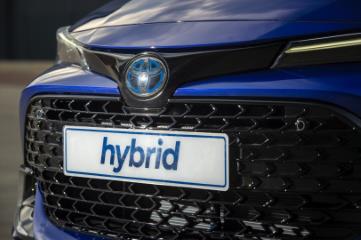
The data suggests a divergence in strategy between global outlooks and Toyota’s specific path. While BloombergNEF predicts a massive global surge in Battery Electric Vehicles (BEVs), Toyota is emphasising Hybrid Electric Vehicles (HEVs) as the primary "electrification pathway" for the immediate future. This pragmatic approach aligns with South Africa’s current infrastructure and the price-sensitive nature of the local consumer.
Risks and Outlook
The industry stands at a crossroads. The heavy reliance on the EU/UK market (81% of exports) creates a massive regulatory risk. As those regions transition to zero-emission mandates, South African production lines must pivot or risk losing their primary customers.
Key Priorities for 2026 and Beyond:
1. Policy Acceleration: Aligning South African manufacturing with global net-zero goals to protect export contracts.
2. Market Diversification: Reducing the 81% reliance on Europe by strengthening trade within the African continent.
3. Affordable Electrification: Expanding the HEV and entry-level NEV offerings to meet the "Price-Sensitive" reality of the SA consumer.
5. The Manufacturing Crisis: A Shrinking Industrial Base
While the automotive sector is a "catalyst" for growth, it faces severe headwinds from a declining domestic manufacturing environment.
• GDP Contribution: Manufacturing’s share of South Africa’s GDP has eroded from 19% in 2000 to just 13% in 2024.
• The Productivity Gap: South Africa’s industrial output per worker is currently $11 000, significantly trailing the G20 average of over $34 000.
• Stagnating Value: The Manufacturing Value Added (MVA) per capita—a measure of industrial health—has dropped by $80 over the last 24 years, while peers like Türkiye have significantly increased their industrial output.
Export Dynamics: Stability Amidst Policy Shifts
The industry reached a record-breaking export value of R270.8 billion in 2023, though 2024 saw a slight correction to R268.8 billion.
• Export Reliance: Approximately two-thirds (391 000 units) of South African vehicle production is destined for international markets.
• Trade Challenges: The expiration of the AGOA trade agreement in late 2025 and the implementation of a 25% US tariff on automotive imports in May 2025 have disrupted traditional trade routes to North America.
• European Dependency: The EU and UK remain the primary destinations, receiving 75.7% of all vehicle exports (roughly 3 out of every 4 cars produced).
The 2026 Strategic Pivot: New Energy Vehicles (NEVs)
2026 marks a pivotal inflection point for the industry as it begins to address the global shift toward electrification.
• Toyota’s BEV Entry: After leading the hybrid market with a 67% share, Toyota has announced plans to launch three fully electric (BEV) models in South Africa in early 2026.
• Local Production Goals: While these early BEVs will be imported, the government is updating the APDP2 framework to incentivise local EV manufacturing, aiming for the first locally produced units as early as 2026.
• Policy Evolution: The EV White Paper implementation seeks to ensure that decarbonisation leads to "re-industrialisation" rather than further decline, focusing on a dual-platform approach that supports both ICE and NEV production through 2035.
Looking Ahead: SAAM 2035 Targets
To reverse the trend of deindustrialisation, the industry is doubling down on the South African Automotive Masterplan (SAAM) 2035 objectives:
• Production: Aiming for 1.4 million vehicles per year (1% of global output).
• Local Content: Increasing the proportion of South African-made parts in every vehicle from 39% to 60%.
• Employment: Targeting a doubling of the workforce in the automotive supply chain to approximately 240,000 jobs.
• Transformation: Requiring all participants to achieve a B-BBEE Level 4 rating to unlock incentive support.