The Desert Sprints: My First Dakar Experience
The 2026 Dakar Rally, the 48th edition of the world's most famous rally-raid, concluded on January 17, 2026. It featured a massive loop across Saudi Arabia, starting and ending in the coastal city of Yanbu. I was there for the last few days as a guest of TGRSA.


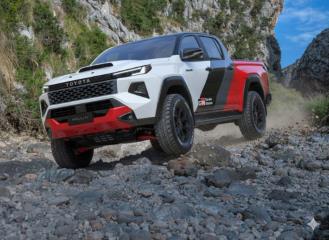
Standing on a rocky outcrop in the middle of the Saudi Arabian desert, I watched the horizon ripple in the desert heat. First, it’s a faint hum, then a plume of dust, and suddenly, a T1+ machine screams past, going at speeds that are hard to believe considering our ride into the barren landscape in an SUV was exceedingly bumpy across less intense terrain and negotiated at a third of the speed. These cars are covering some of the toughest terrain imaginable at speeds that quite literally need to be seen to be believed.
This was my first Dakar, and it was a revelation. I spent my days trekking to viewing points—from that jagged rocky outcrop where the cars and bikes looked like toys battling a giant, to the final stage where I watched them float across a beach as the Red Sea breeze mixed with the scent of race fuel. It wasn’t just a race; it was a 7 000km+ marathon that has somehow evolved into a 100% flat-out sprint.

Fast Facts
| Category | Key Information |
| Dates | January 3 – January 17, 2026 |
| Host Country | Saudi Arabia (7th consecutive year) |
| Total Distance | Approx 7 976 km |
| Timed Specials | Approx 4 809 km |
| Start / Finish | Yanbu / Yanbu |
| Rest Day | January 10 in Riyadh |
| Structure | 1 Prologue + 13 Stages |
| New Features | Introduction of two "Bivouac Refuge" stages (hybrid 48h chrono/marathon stages) |
Major winners (Overall standings)
Ultimate (Cars): Nasser Al-Attiyah (The Dacia Sandriders) claimed his 6th career victory, marking a debut win for the Dacia brand.
Motorcycles: Luciano Benavides (Red Bull KTM Factory Racing) took the top spot in a nail-biting finish, winning by a margin of only 2 seconds over Ricky Brabec.
Challenger: Pau Navarro (BBR Motorsport)
SSV: Brock Heger (RZR Factory Racing)
Trucks: Vaidotas Žala (Nørdis Team De Rooy FPT)
Key highlights
Dacia’s debut: The new Dacia Sandrider proved remarkably robust, with all four crews finishing in the top 11.
Stage wins: Nasser Al-Attiyah equalled the all-time record for Dakar stage wins (50), a record previously shared by Stéphane Peterhansel and Ari Vatanen.
- A South African shines: Our very own Saood Variawa claimed victory in Stage 8
The Route: The course focused on the western and central regions, notably skipping the "Empty Quarter" in favour of unexplored terrains in Al-Bahah, Aseer, and Jizan.
A modern endurance sprint
I couldn’t help but draw parallels to Le Mans. Much like the 24-hour classic has shifted from a battle of physical and mechanical attrition to a day-long qualifying lap, the Dakar has lost its "slow and steady" mantra. The gaps in the top ten have decreased dramatically—sometimes just seconds after hours of racing.
TGRSA Dakar driver Guy Botterill mentioned there were 21 potential winners at the start of this year's race, which is impressive and unique in the world of motorsport, where, at most, a handful of competitors are usually touted as potential winners in any specific discipline. You can't just aim to finish anymore; you have to push every single meter. This intensity was visible on the faces in the pits. I watched the mood in the bivouac—a mobile city of 5 000 people—shift from a thick, vibrating tension during the heat of the race to a quiet, profound relief once the engines finally cut out on the beach at Yanbu.

The South African soul
There’s a specific pride in being there as a South African. Most of the Toyota Gazoo Racing (TGRSA) fleet is produced and engineered in SA. Seeing them being so competitive on a global stage is incredible, but the technical challenges were immense this year.
• The tyre crisis: The team faced 36 punctures. BF Goodrich had reinforced the tread to handle the speed, but the thinner sidewalls became the Achilles' heel in the canyons.
• The youngster: The fact that Saood Variawa took the win on Stage 8 was the highlight of the trip. At just 20 years old, he became the best SA finisher of 2026 (10th place), proving he is the future of this "sprint" era.

The human element
Dakar is, above all, a team sport. No driver, no matter how skilled, survives this alone. The mechanics work through the night in the dust because they believe in the project. You see it in the eyes of the navigators who have taken the strain of 12 days of high-speed chess.
As the race ended, the realisation hit: simply finishing is a massive achievement. Whether it's the all-new car coming in 2027 or the upcoming battle between the W2RC and SA Rally Raid calendars, TGRSA’s journey is far from over. They’ll take it race by race, fuelled by a passion that only the desert can forge.

The road ahead: 2027 and beyond
The evolution never stops. TGRSA is already looking toward the future:
• The all-new 2027 Car: Plans are already in motion for a new machine to meet the rising competition from the likes of Ford and Dacia.
• Strategic racing: The team will manage their calendar on a race-by-race basis, balancing the W2RC and the SA Rally Raid series, as the dates currently allow for both.
Dakar 2026 taught me that simply finishing is an achievement of a lifetime. It is a gruelling, expensive, and beautiful madness—and as the Springboks do for us on the rugby field, TGRSA hold the South African flag high for us in the world of off-road motorsport!