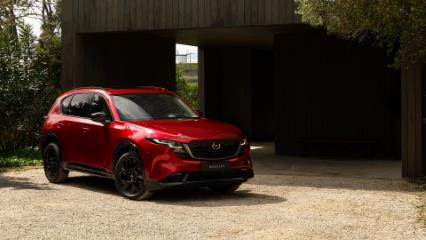
The Great Electric Pivot: How OEMs Are Reshaping Their EV Strategies
The automotive industry's electrification journey is accelerating, but not always in a straight line. This article delves into how major OEMs adapt their EV strategies, balancing ambitious targets with market realities, and the profound impact this has on the future of mobility.


Several major automakers are increasingly rethinking their vision of an exclusively all-electric future for personal mobility. This shift underscores the critical need for a diversified approach to mobility, acknowledging the complexities of consumer demand, infrastructure readiness, and technological evolution. Recent research highlights a growing trend of car manufacturers re-evaluating or scaling back their aggressive all-electric targets.
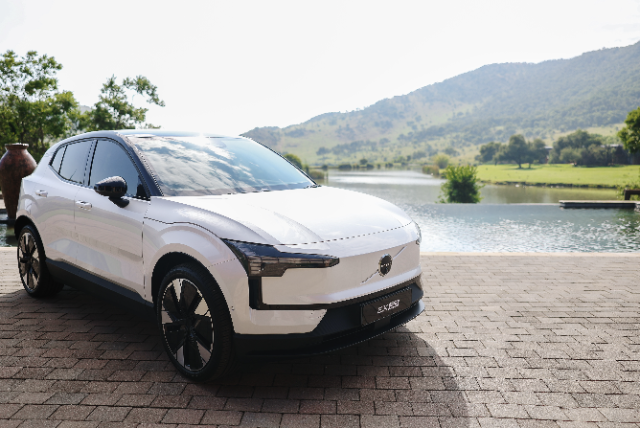
Related: Volvo EX90 Ultra Twin Performance (2025) - Review
Brands that have pivoted
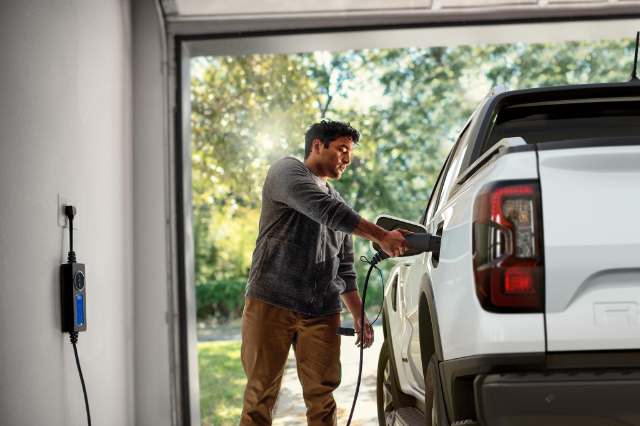
Ford has paused a significant $12 billion(approx R210-billion) EV investment, pivoting towards hybrids and adjusting factories to produce a mix of vehicle types due to a decline in EV demand. In South Africa, Ford's Silverton plant is now the global production hub for the Ranger Plug-in Hybrid (PHEV), having commenced full-scale production in March 2025 for export markets. While a local launch date for the Ranger PHEV is yet to be confirmed, this strategic decision reflects Ford's recognition of hybrids' intermediate role, particularly in markets like South Africa where charging infrastructure is still developing and load shedding remains a reality.
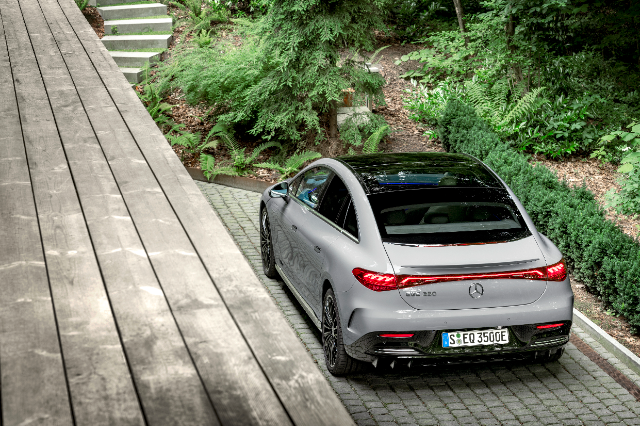
Mercedes-Benz, while not discontinuing its electric vehicle range, is significantly adjusting its strategy and branding. It has pushed back its goal of being fully electric by 2039, acknowledging a slower-than-expected transition. Furthermore, Mercedes-Benz is phasing out the "EQ" branding for its new electric models, opting instead to integrate EVs into its existing nomenclature (e.g., the electric G-Class is now known as the "G 580 with EQ Technology" rather than EQG). The company is also temporarily pausing U.S. production of some current EQ models (EQS Sedan, EQS SUV, EQE Sedan, and EQE SUV) from September 1, 2025, to align with customer and market demand. Globally, Mercedes-Benz is reportedly cancelling the development of its next-generation MB.EA Large EV platform was intended for successors to the EQS and EQE due to slower sales of the current EQ models. This indicates a move towards a more flexible "dual-technology" strategy, ensuring that high-tech hybrid and combustion engines will remain in its lineup longer than initially envisaged.
While maintaining its 2030 targets for EV sales percentages in Europe, the US, and China, Volkswagen has warned about slowing demand and even halving a battery plant's capacity. Porsche is also rolling back its EV goals due to a lack of sustained interest from clients while investing over R16-billion into its internal combustion engine project.

JLR (Jaguar Land Rover), despite Jaguar's continued push towards an all-electric future, has seen Land Rover reduce its immediate EV model rollout plans, citing a slowing EV market.
Volvo notably scrapped its target of going all-electric by 2030, now expecting to offer hybrid models still and aiming for 90-100% electrified (fully electric or plug-in hybrid) sales by 2030, with up to 10% mild hybrids. In South Africa, Volvo has been a strong performer in the EV segment, delivering 406 electric vehicles in 2024, largely thanks to the popularity and affordability of models like the EX30, which was the best-selling EV in the country for that year. This local success, however, is likely due to strategic pricing and specific model appeal rather than a widespread rapid embrace of full EVs across all segments.
Stellantis has suspended production of the fully electric Fiat 500 due to sluggish demand. In South Africa, Stellantis is undergoing a significant strategic repositioning under its "Dare Forward 2030" strategy, focusing on brand consolidation and local manufacturing, with a new plant in a Special Economic Zone by 2025. Given that over 74% of new car sales in South Africa in Q1 2025 were under R500 000, its global shift away from solely EV production for certain models could influence future local offerings towards more affordable ICE and potentially hybrid vehicles.

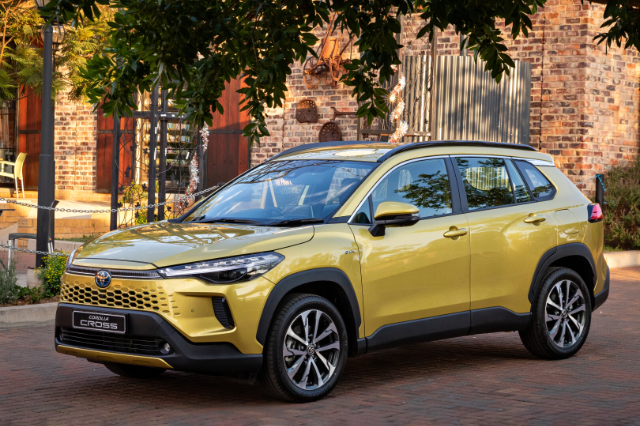
Toyota, a long-time proponent of hybrid technology, reportedly cut its 2026 EV sales target, reinforcing its diversified approach. In South Africa, Toyota has actively participated in discussions regarding proposed battery import tariffs, indicating its interest in New Energy Vehicles (NEVs) and a cautious approach to full EV adoption, strongly emphasising hybrids. Data from the National Association of Automobile Manufacturers of South Africa (Naamsa) shows a significant surge in Plug-in Hybrid Electric Vehicle (PHEV) sales locally, with PHEV sales increasing by 70.9% year-on-year in Q1 2025. Traditional hybrids (HEVs) continue to dominate NEV sales in South Africa, accounting for a massive 85.2% of NEV registrations in Q1 2025, thanks largely to models like the Prospecton-built Corolla Cross. This aligns with Toyota's long-standing strategy and consumer preference for hybrid flexibility.
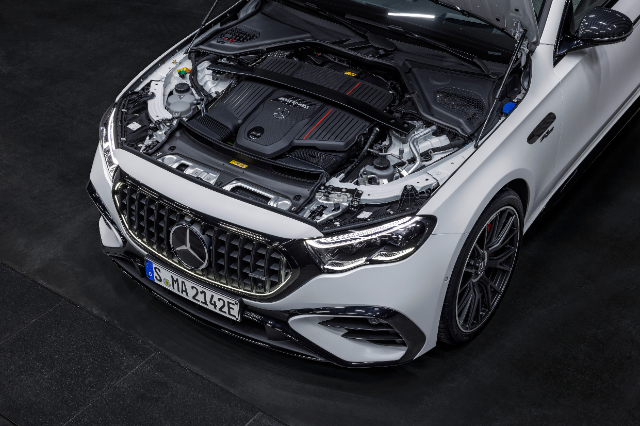
Adding to this trend, BMW's M Division CEO, Frank Van Meel, recently confirmed that the iconic M models will continue to offer V8 and inline-six (I6) engines, emphasising that these traditional powerplants will be adapted to meet future emissions regulations while maintaining their performance and characteristic feel. In South Africa, where performance vehicles hold a significant cultural cachet and petrolheads are a vocal segment on social media, this announcement has been met with widespread approval. Online discussions frequently highlight the "soul" and "sound" of these traditional engines, with many expressing relief that pure driving exhilaration will not be entirely sacrificed for electrification, at least in the short to medium term.

Audi, another premium German automaker, has also shown signs of a more pragmatic approach. While Audi South Africa has made significant investments in EV charging infrastructure, installing 76 fast and ultra-fast EV chargers across the country in partnership with GridCars and Rubicon by early 2023, and has pledged to introduce at least one new EV model each year from 2022, its global stance and local market realities suggest flexibility. Although Audi globally aims for all new models introduced from 2026 to be fully electric, the pace of adoption in the South African market for their e-tron range has been steady rather than explosive.
This reconsideration by major players reflects a broader industry response to the reality of slower EV adoption, driven by factors such as higher upfront costs for consumers, limited charging infrastructure, and increasing competition from more affordable Chinese rivals. The surge in hybrid and plug-in hybrid vehicle sales in South Africa, with NEV sales increasing to 3 487 units in Q1 2025 (up 14.0% compared with Q1 2024), indicates a consumer preference for a more immediate and practical compromise. While BEV sales in South Africa saw a dip of 16.4% year-on-year in Q1 2025 (to 276 units), the overall NEV market continues to grow, primarily driven by hybrids. This highlights that while interest in EVs is present, affordability remains a major hurdle, with most new car sales in South Africa being in lower price brackets.
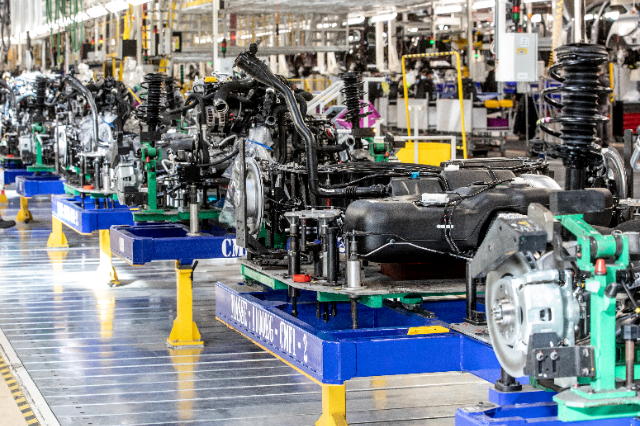
This dynamic necessitates an automotive industry that is agile and resilient, embracing flexible manufacturing plants capable of producing internal combustion engine (ICE), hybrid, and EV models. This strategy ensures that manufacturers can adapt to evolving market demands and consumer preferences, ultimately underscoring the vital role of diversified mobility solutions for a sustainable and accessible future in South Africa and globally.
Context
Allow me to preface the following sections with some context. I'm not anti-progress, and I quite like the idea of electric cars and feel that they have their place, but I have also been beating the same drum for the past decade, one that sounds like diversification of mobility solutions. Yes, there's a place for electric cars, but there is also one for hybrids, petrol, diesel and other propulsion. The single-track mindset of the legislation forcing people into one form of mobility would always be a problem because there isn't a one-size-fits-all for mobility. Some people will find electric cars massively beneficial, cheap to run and easy to live with, but others will find them inconvenient and unsuitable, and the same can be said for all forms of propulsion. Options and diversification are the answer in the short to medium term, and it has to be said that the world's biggest automaker, Toyota, predicted this and has a strong diversified lineup that will stand in good stead in the future.
The depreciation situation
The South African market is grappling with the alarming depreciation of electric vehicles (EVs), mirroring the rapid obsolescence of mobile phones and other consumer electronics. Just as a top-tier smartphone loses a significant chunk of its value the moment a newer model is announced, or a cutting-edge gadget becomes antiquated within a few years due to technological leaps, so too are EVs plummeting in resale value. This swift devaluation creates a substantial hurdle for local consumers considering the high upfront cost of these vehicles.
Data from other countries corroborates this trend. In the USA, a March 2025 iSeeCars study found that EVs lose an average of 58.8% of their value within five years, a significantly higher drop than traditional combustion-powered cars (around 45.6%) and hybrids (40.7%). Luxury EVs and early-generation models tend to lose value fastest, with the Jaguar I-Pace depreciating by 72.2% and the Tesla Model S by 65.2% over five years. This rapid depreciation is attributed to factors like concerns over battery health and expensive replacement costs (estimated at R260 000 to R350 000), and crucially, the rapid technological advancements that make older EV models prematurely obsolete, much like how a two-year-old smartphone feels outdated when a new generation offers vastly improved features.
Similarly, in Europe, while used EV sales are booming and prices have softened, they often depreciate more quickly than petrol and diesel cars in the initial years. For instance, an iSeeCars analysis (November 2022 to October 2023) showed EVs losing 49.1% of their value within five years, which is 10% more than the market average for all vehicles. Even in the UK, the average price of a used EV dropped by over £7,000 (roughly R166 000) in just two years (May 2023 to May 2025). This fear of significant financial loss on an asset that depreciates faster than a traditional internal combustion engine (ICE) car could severely dampen EV adoption, making buyers hesitant to invest in a technology that feels like a rapidly depreciating liability rather than a long-term asset, ultimately slowing the transition to an electrified fleet in the South African context.
Does the depreciation negate the running cost savings?
Here's a breakdown of how the increased depreciation of electric cars interacts with their running cost savings:
Running Cost Savings of EVs:
Fuel/Electricity Costs: The most significant saving a person can make in a EV is in the running costs since
Maintenance Costs: EVs generally have fewer moving parts than internal combustion engine (ICE) vehicles, meaning no oil changes, spark plug replacements, or complex exhaust systems. This typically translates to lower maintenance and service costs, often cited as 30% cheaper than petrol or diesel vehicles.
Tax Incentives (Vary by region): While South Africa is still developing its EV incentive framework, some countries offer tax breaks or subsidies that can further reduce the overall cost of ownership.
The Impact of Depreciation:
Higher Initial Purchase Price: EVs often have a higher upfront cost than comparable ICE vehicles. For instance, the electric Mini Countryman SE costs over R1 million, while its ICE counterpart starts from just over R700 000, a difference of over R350 000. This larger initial outlay means there's more value to lose through depreciation.
Steeper Depreciation Rate: As discussed, studies from the US and Europe show EVs depreciating faster than ICE vehicles in the initial years (e.g., 58.8% vs. 45.6% over five years in the US according to iSeeCars). This rapid value loss can amount to tens or even hundreds of thousands of Rands, depending on the model.
Technological Obsolescence: The rapid pace of EV battery and charging technology can make even relatively new models feel outdated quickly. A car bought today with a 400km range might seem less desirable in a few years when newer models offer 600km+ ranges and significantly faster charging times. This "smartphone effect" can accelerate depreciation.
Battery Concerns: Despite improvements in battery longevity and warranties, consumer perception about battery degradation and expensive replacement costs can dampen resale values.
How long does an EV battery last?
Potential buyers often worry about the lifespan of an Electric Vehicle (EV) battery. Here's a breakdown of what you can expect regarding EV battery lifespan, particularly relevant to the South African context:
1. General Lifespan Expectation:
10 to 20 years or more: Most current EV batteries are expected to last between 10 to 20 years or more. This is significantly longer than many people initially assume.
Hundreds of thousands of kilometres: Many EVs have already clocked well over 300 000 km (and even over 600 000 km in some cases) on their original batteries, still retaining a very usable range.
2. Battery Degradation:
Gradual, not sudden: Like any battery, EV batteries experience a gradual loss of capacity over time, known as degradation. This isn't a sudden "death" but rather a slow reduction in the maximum range the car can achieve on a full charge.
Average degradation rate: Studies like those by Geotab (analysing data from 10 000 EVs) have shown that EV batteries degrade, on average, by about 1.8% per year. This is an improvement from previous years, indicating ongoing advancements in battery technology.
Non-linear degradation: While often averaged as linear, degradation tends to be slightly faster in the initial period of ownership, then slows down considerably.
"State of Health" (SOH): An EV battery's condition is often referred to as its "State of Health" (SOH), which starts at 100% and decreases over time.
3. Manufacturer Warranties:
Industry standard: Manufacturers' long battery warranties offer EV buyers some reassurance. The industry standard is typically 8 years or 160 000 km whichever comes first.
Capacity retention guarantee: These warranties usually guarantee that the battery will retain at least 70% to 80% of its original capacity within the warranty period. If it drops below this threshold, the manufacturer will repair or replace the battery free of charge.
Longer warranties: Some manufacturers, like Hyundai and Kia, offer longer warranties (e.g., 10 years or 160 000 km).
Transferable: Most EV battery warranties are transferable to subsequent owners.
4. Factors Affecting Battery Lifespan:
Temperature: Extreme temperatures (both very hot and very cold) can accelerate degradation. In South Africa's warm climate, managing heat is important. Modern EVs have sophisticated thermal management systems to mitigate this, but it is worth considering.
Charging Habits:
Frequent Fast Charging (DCFC): While convenient for long trips, excessive reliance on DC fast charging can generate more heat and put additional stress on the battery, potentially accelerating degradation. It's best to use Level 2 (AC home charging) for daily use.
"20-80 Rule": Keeping the battery charge level between 20% and 80% for daily driving is often recommended to minimise stress on the battery cells. Avoiding frequent charging to 100% or letting the battery consistently drop to very low levels can help.
Avoiding prolonged full or empty states: Leaving the battery at 100% or 0% for extended periods (especially in hot weather) can also contribute to degradation.
Driving Style: Aggressive acceleration and sudden braking can put more strain on the battery, though modern battery management systems are very good at handling this. Regenerative braking, in fact, helps extend brake pad life and is beneficial for the battery.
Software Updates: Regular software updates from the manufacturer can optimise battery management and extend its lifespan.
5. Battery Replacement (If Needed):
Rare: Battery replacement is still relatively rare for most EV owners, especially for newer models.
Cost: The cost of battery replacement can be high (e.g., around R175 000 for some first-generation EVs in South Africa), but it's important to remember this is not a routine maintenance item. Prices are also expected to decline as battery technology advances and production scales up.
Upgrades: For older EV models, battery replacement can sometimes even offer an opportunity to upgrade to a higher capacity battery, significantly increasing the car's range.
In essence, an EV battery is designed to last the practical lifetime of the vehicle; you just don't want to be on the tail end of an EV's lifecycle, as the cost of replacing a battery is eye-watering at this point.
Does it Negate the Savings?
Let's examine whether the initial cost of an EV is offset by its running costs.
Short-term ownership (e.g., 1-3 years): For those who frequently upgrade their vehicles, the high initial depreciation of an EV is likely to significantly offset, or even fully negate, any running cost savings. The large capital loss on resale can outweigh the fuel and maintenance benefits accrued in that short period.
Long-term ownership (e.g., 5+ years): Over a longer ownership period, the cumulative savings from lower running costs (electricity and maintenance) can start to outweigh the initial depreciation hit. If a buyer plans to keep the EV until the end of its useful life, the depreciation becomes a less immediate concern, and the ongoing savings are more impactful.
Specific EV Model: Some EV models hold their value better than others. Premium brands or those with strong demand might depreciate less steeply, making the cost-saving argument stronger.
Charging Habits: The ability to charge at home, with regular rates or solar, drastically reduces running costs and makes the case for EV ownership more compelling, even with depreciation. Reliance on expensive public fast chargers will reduce the savings.
While EVs offer undeniable advantages in terms of daily running costs, the current reality of higher depreciation, particularly in the initial years, means that the total cost of ownership for a new EV may not always be lower than a comparable ICE vehicle, especially for those who sell their cars relatively quickly. For long-term owners who maximise home charging, the running cost savings are more likely to offset the depreciation eventually. As the EV market matures, battery technology stabilises, and more affordable models become available, the depreciation curve for EVs is expected to align more closely with that of ICE vehicles, making the financial case for EVs stronger in the future.
Does the government want to subsidise EVs?
The South African government generates significant revenue from the fuel levy each year. While pressure from the global audience may force their hand, we cannot ignore the enormous revenue stream the government generates from us filling our tanks each year. Based on recent reports:
General Fuel Levy (GFL): In the 2023/24 financial year, the General Fuel Levy (which goes directly to the National Treasury and can be used for any government purpose) generated R93.37 billion.
Road Accident Fund (RAF) Levy: This levy is separate from the GFL and is specifically allocated to the Road Accident Fund to compensate victims of road accidents. In the 2019/20 fiscal year, the RAF levy generated R41.2 billion. More recent figures suggest the RAF levy is expected to total R48 billion in the current financial year.
Therefore, combining these two major levies, the total amount collected from fuel taxes by the South African government (or allocated to entities like the RAF) is well over R100 billion annually.
It's important to note:
The General Fuel Levy is the government's fourth-largest source of tax revenue, contributing around 5% of its total tax revenue.
The National Treasury had estimated a decline in GFL revenue for the current financial year (around R89.3 billion) due to the levy being unchanged and reduced fuel demand.
The general Fuel Levy for petrol and diesel (16 cents and 15 cents per litre, respectively) was recently increased, effective June 4, 2025, to counter revenue losses from other tax adjustments.
The shift towards electric vehicles and hybrids is also starting to impact this revenue stream, with annual fuel tax reduction projections due to increased NEV adoption.

Let's do the calculation!
Let's compare the annual running costs of a similarly priced electric car and a petrol car in South Africa, considering typical usage and current prices (as of July 2025).
Assumptions for Comparison:
Average Annual Distance Driven: 20 000 km (based on South African averages).
Price Point: We'll assume a vehicle price point where petrol and electric options are available, for instance, in the R600 000 - R800 000 range. At this stage, an EV is more costly than its ICE equivalent. This is important as higher-end EVs might have different efficiency/maintenance profiles, and lower-end ICE cars might have different fuel consumption.
Electric Car Charging: Primarily AC charging at home.
Petrol Car Fuel: 95 Unleaded.
Key Data:
Electricity Price (Residential AC at home): R3.71 per kWh (average of what I have paid when testing EVs).
Petrol Price (95 Unleaded Inland): R21.87 per litre (July 2025).
Average Petrol Car Fuel Consumption: 7.0 L/100km (a reasonable average for various models).
Average Electric Car Efficiency: 19 kWh/100km (average across EV models I have tested)
Fuel Levies (Petrol): Roughly R6.19 per litre (General Fuel Levy + Road Accident Fund levy).
Maintenance: EVs generally have lower maintenance costs due to fewer moving parts.
Road Tax/Vehicle Registration: EVs save on fuel levies.
Insurance: EVs can sometimes have slightly higher premiums due to complex technology and specialised repairs. However, this can be offset by lower overall running costs and potentially safer driving habits (insurers may view EV drivers as less risky). These are assumptions, I am not an insurance specialist.
Calculations:
1. Petrol Car Annual Running Costs:
Annual Fuel Consumption:
Annual Fuel Cost:
Annual Fuel Tax Contribution (included in fuel cost):
Maintenance: Petrol cars generally require more frequent and potentially more expensive maintenance (oil changes, spark plugs, filters etc). Let's estimate R4 000 - R7 000 annually for routine maintenance, excluding major unforeseen repairs. For this comparison, let's use R5 500.
Total Estimated Annual Petrol Car Running Cost (Fuel + Maintenance):
2. Electric Car Annual Running Costs (AC Home Charging):
Annual Energy Consumption:
Annual Charging Cost (at home): At around R3.71 per kWh and 3800 kWh per annum it would cost R14 098 to charge an EV at home per year (Note: Public charging DC (25kW-200kW) can range from R5.88 to R8.12 per kWh, while AC charging (7kW-22kW) is typically around R5.88 per kWh, but home charging is the most cost-effective.)
Maintenance: EVs have fewer moving parts (no engine oil, spark plugs, exhaust systems, etc.) and benefit from regenerative braking, which extends brake pad life. Annual maintenance is significantly lower. Let's estimate R1 500 - R3 000. For this comparison, let's use R2 250.
Total Estimated Annual Electric Car Running Cost (Charging + Maintenance):
Summary of Annual Running Costs:
Additional Considerations:
Levies: EVs benefit from not contributing to the General Fuel Levy and Road Accident Fund levy through fuel purchases, which is a significant saving.
Insurance: While EV insurance premiums might be slightly higher initially due to repair complexities and parts cost (especially the battery), the overall lower running costs might balance this out. Consumers must get quotes for specific models.
Tyre Wear: EVs are often heavier due to their batteries, which can lead to slightly faster tyre wear. Other savings usually offset this minor cost difference.
Depreciation is a more complex factor and can vary significantly by model, brand, and market demand. Historically, EVs have depreciated faster, but this trend may change as the market matures and the charging infrastructure expands.
Upfront Cost: While EVs' running costs are significantly lower, their initial purchase price is often higher than that of comparable combustion cars in South Africa. Although this gap is slowly closing due to reduced import duties and increasing competition, this initial outlay is a major factor for many buyers.
Charging Infrastructure: While home charging is economical, relying on public charging for long distances can add to costs, especially fast DC charging.
Solar Power: If an EV owner has a solar panel system with battery storage at home, the charging cost could be reduced to near zero, offering even greater savings. Solar is expensive initially, but as a total energy solution, it has gained in popularity in one of the sunniest countries on earth.